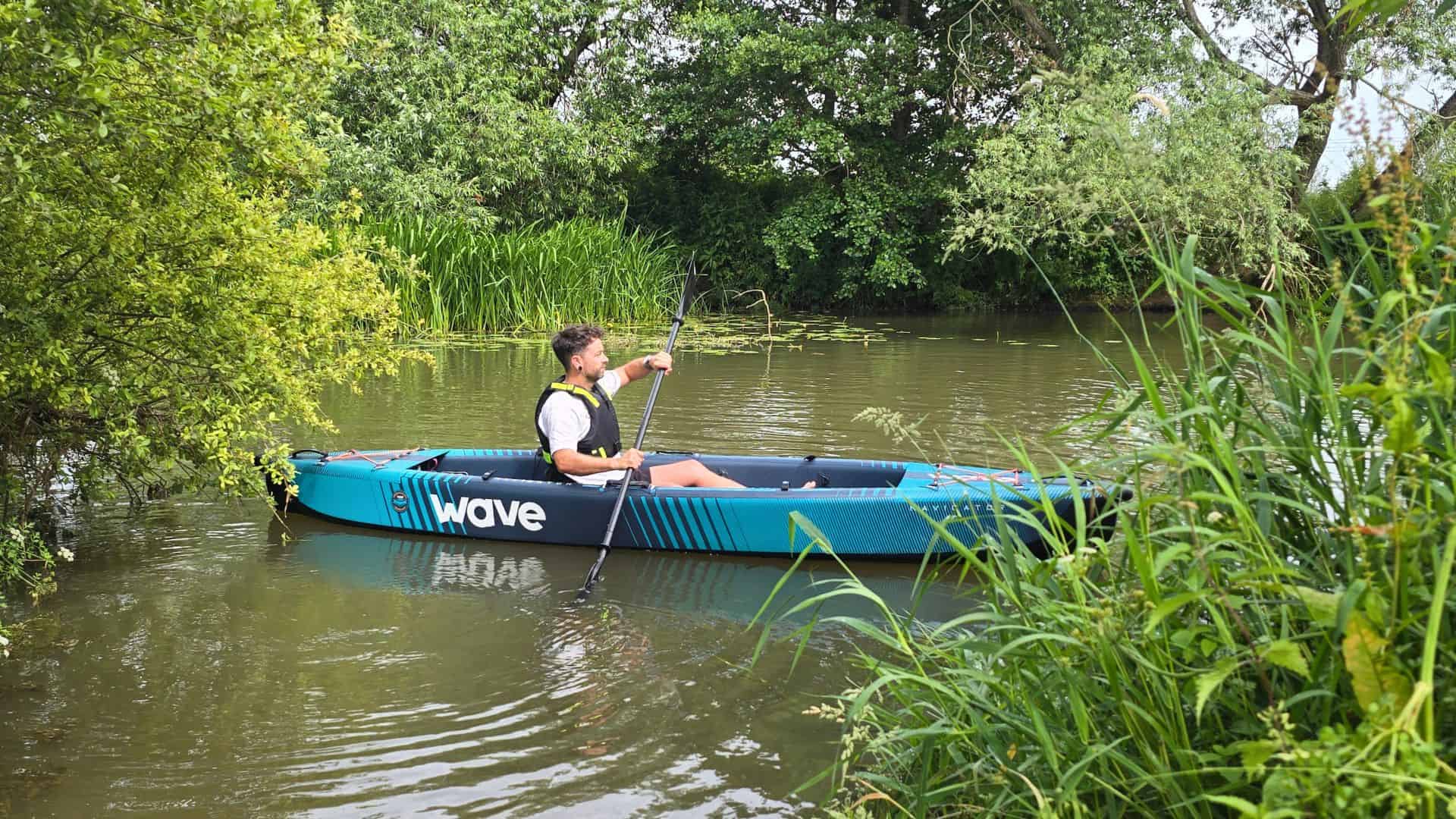
If you’ve spent any time shopping around for an inflatable kayak, you’ll know most of them feel like exactly what they are — an inflated tube with a seat strapped to it. The Wave Navigator 3.0 doesn’t. It’s the latest version of Wave’s performance inflatable kayak, built with the same drop-stitch construction you’d find on a quality paddleboard, and after taking it out on the River Ouse at Barcombe Mills, it’s clear that’s exactly the point.
In this review, I’ll cover how it sets up, how it handles on the water, what’s included in the kit, and whether the price stacks up — so you can decide if it’s the right kayak for you.
Thanks for your support – I may earn a small commission from affiliate links in this article Learn more
Wave gifted the Navigator 3.0 for review. All opinions are my own.
- Build Quality
- Performance
- Accessories & Kit
- Value for Money
My Verdict
The Wave Navigator 3.0 is a well-built inflatable kayak that doesn’t feel like a compromise. The drop-stitch construction and solid bow and stern give it a level of rigidity most inflatables can’t match, and the complete kit means you’re not left buying accessories separately. It’s best suited to intermediate paddlers who want genuine performance, though a confident beginner who’s done a session or two would have no trouble settling in.
Pros
Cons
Where to Buy
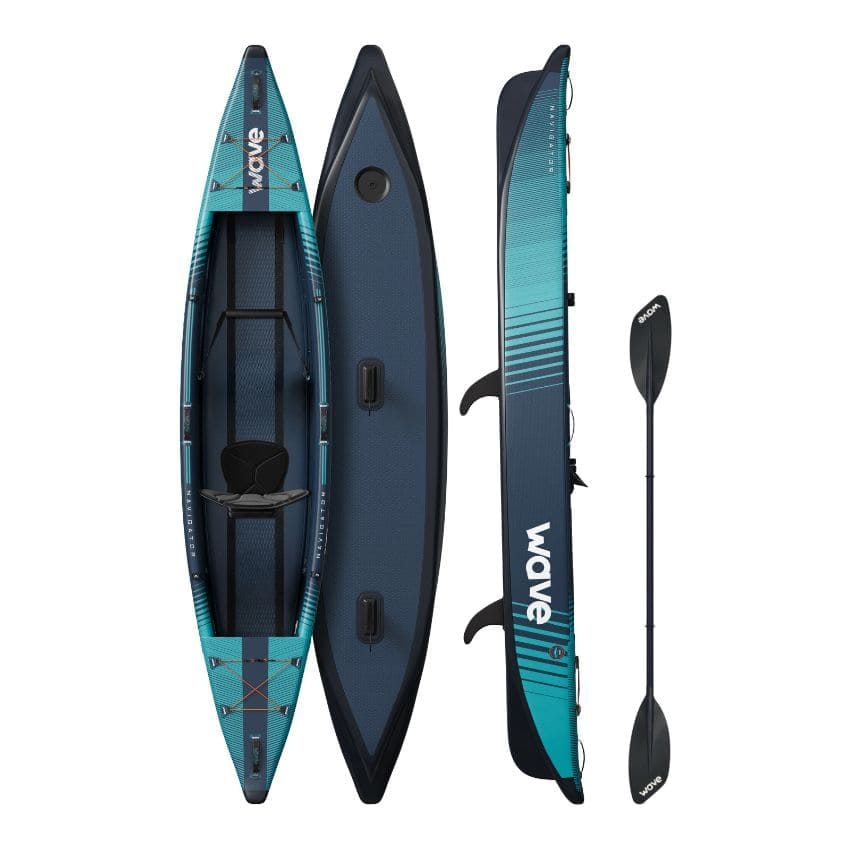
Wave Navigator 3.0
My Verdict: “A well-built inflatable kayak that doesn’t feel like a compromise, rigid, drop-stitch construction and a complete kit, best suited to intermediate paddlers.”
Save 10% off Wave SUPs and gear via this link ↑
Best For: Intermediate paddlers wanting genuine performance on lakes, rivers, and coastal water — though a confident beginner would settle in fine after a couple of calmer outings.
Price: £410 (1 Seater) / £430 (2 Seater) / £500 (3 Seater) – Save 10% off via my links
Warranty: 2 years
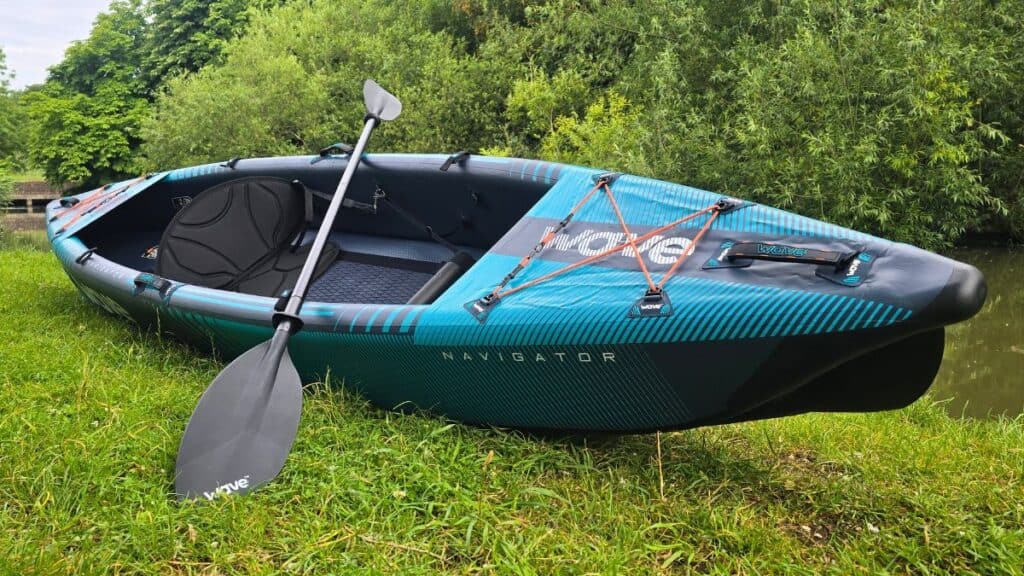
The Navigator 3.0 is Wave’s performance inflatable kayak, built around the same drop-stitch construction used in quality paddleboards rather than the basic air-tube design most inflatable kayaks rely on. It comes in three sizes, two colourways, and a full kit that’s ready to paddle straight out of the bag.
Tested on the River Ouse at Barcombe Mills, Sussex, in mild conditions with an occasional cross-breeze.
Top Features of the Wave Navigator 3.0
Inflatable kayaks live or die on a handful of details: how the hull tracks, how solid the construction actually feels once it’s full of air, and whether the kit that comes in the bag is worth using or destined to be replaced.
The Navigator 3.0 covers all three, which is what sets it apart from the cheaper end of the market. If you want to see how it stacks up against the rest of Wave’s range, I’ve covered every model in my Wave kayaks guide.
Drop-Stitch Construction
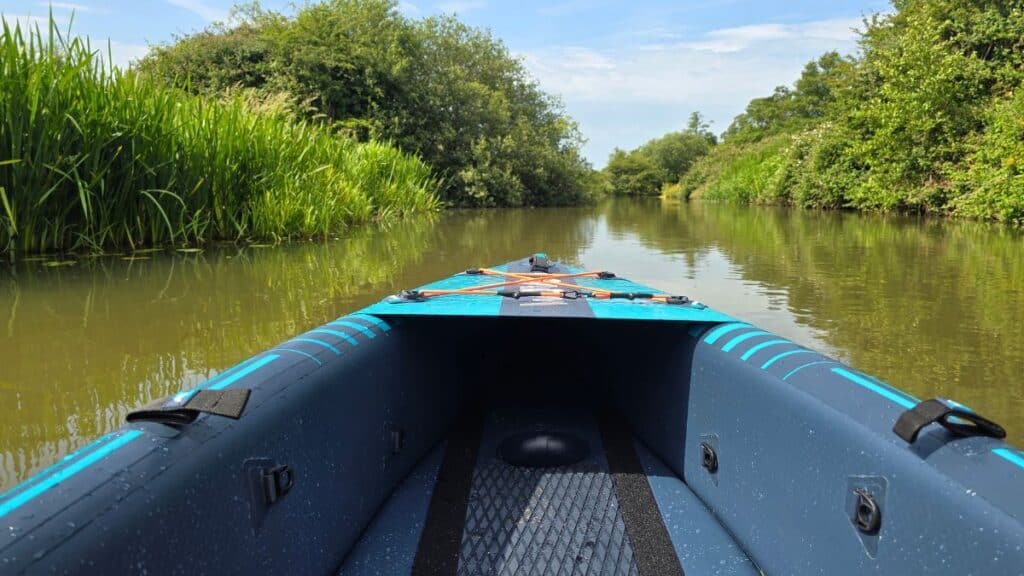
Rather than feeling like an inflated tube, the Navigator has the same dense, solid feel as a quality paddleboard. It’s a noticeably different experience from other packable kayaks built from basic PVC chambers.
Solid V-Shape Bow and Stern
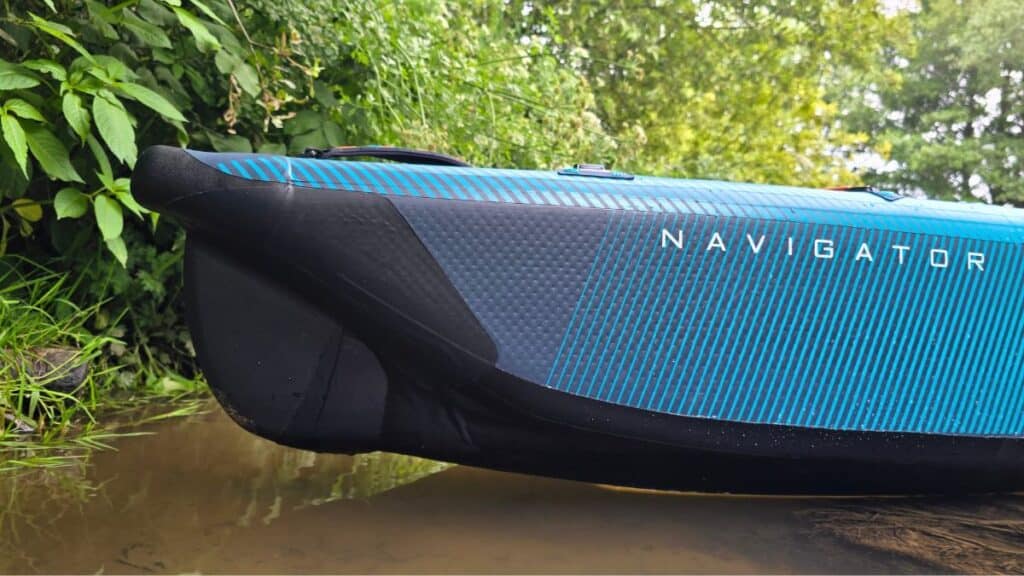
The bow and stern are solid sections rather than inflatable chambers, designed to cut through chop and hold the kayak’s line, with the added benefit of being a consistent shape every time you set up.
Three Sizes, Two Colourways
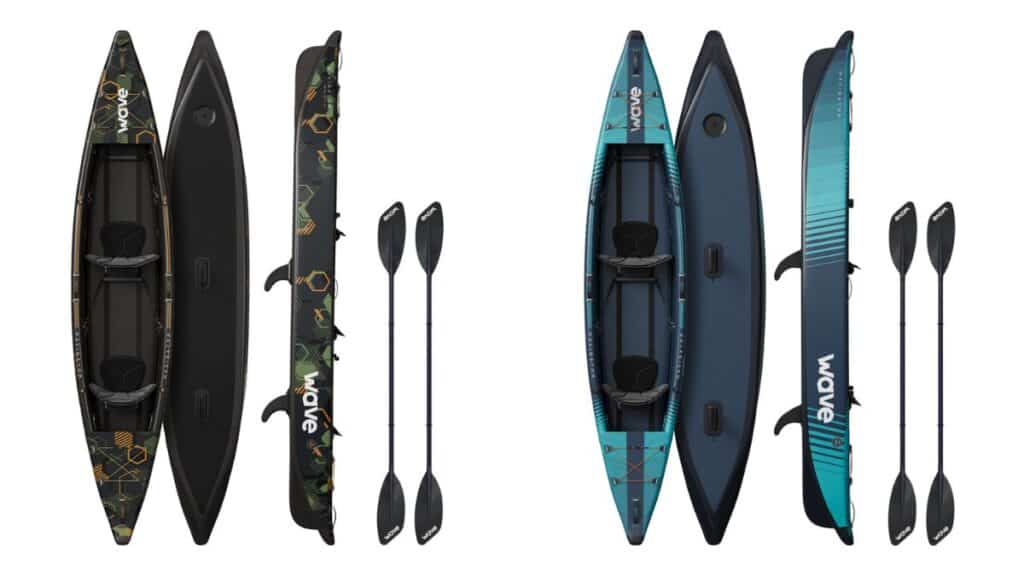
The Navigator comes as a 1, 2, or 3 seater, in either Navy (navy and teal with orange accents) or Camo. Both colourways look the part — this isn’t a kayak that blends into the background.
Adjustable Seat and Footrest
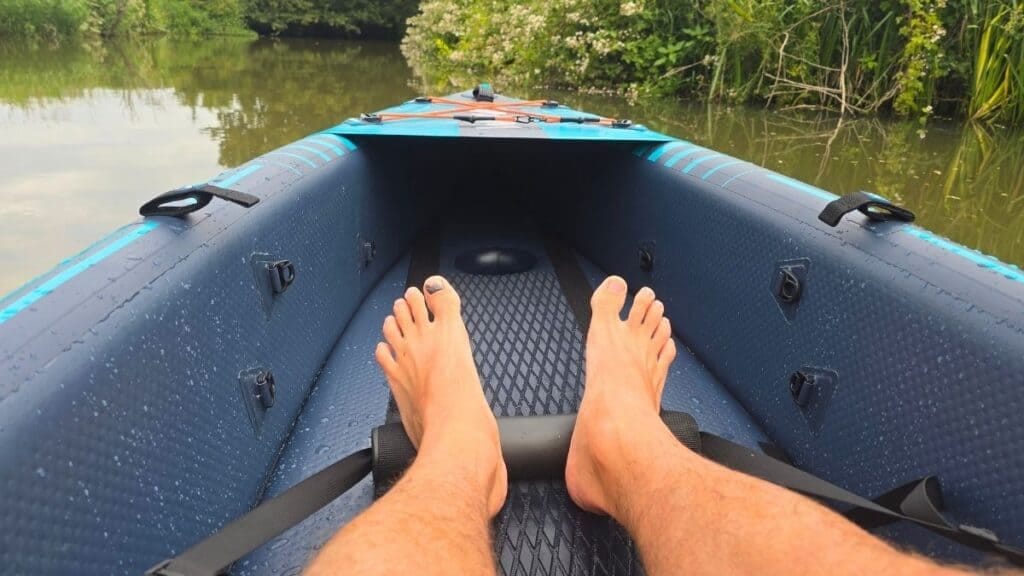
A padded, ergonomic seat and footrest Velcro onto an EVA deck pad running down the centre of the kayak, then clip into place on the interior walls. The seat sits low at the back, which worked well alongside a life jacket.
Quick-Clip Fins and Velcro Paddle Storage
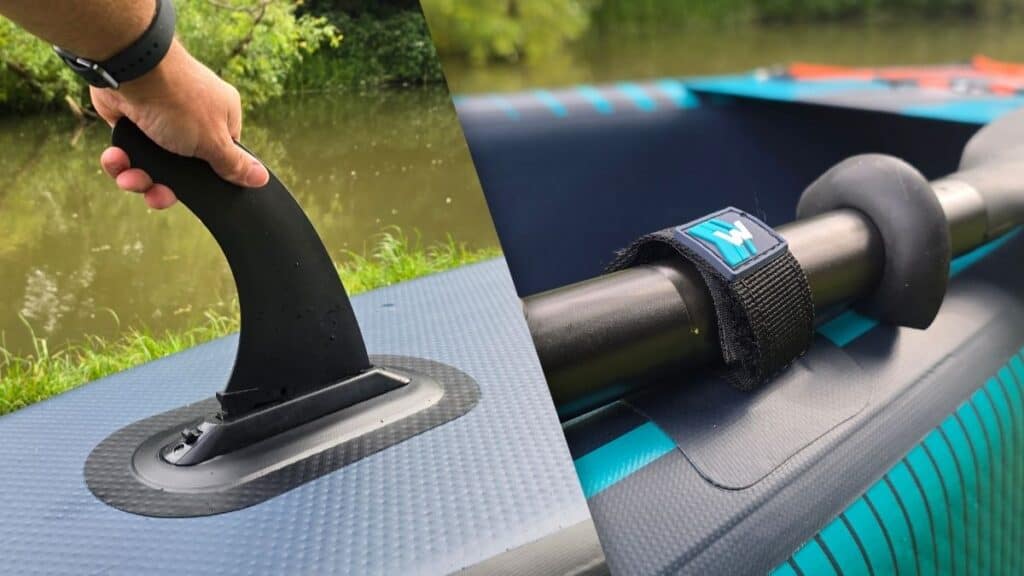
Two fins clip onto the underside in seconds. The double-ended paddle is made up of four pieces and can velcro to the side of the kayak when not in use — useful when transporting your kayak to the water.
Reinforced Cargo Areas
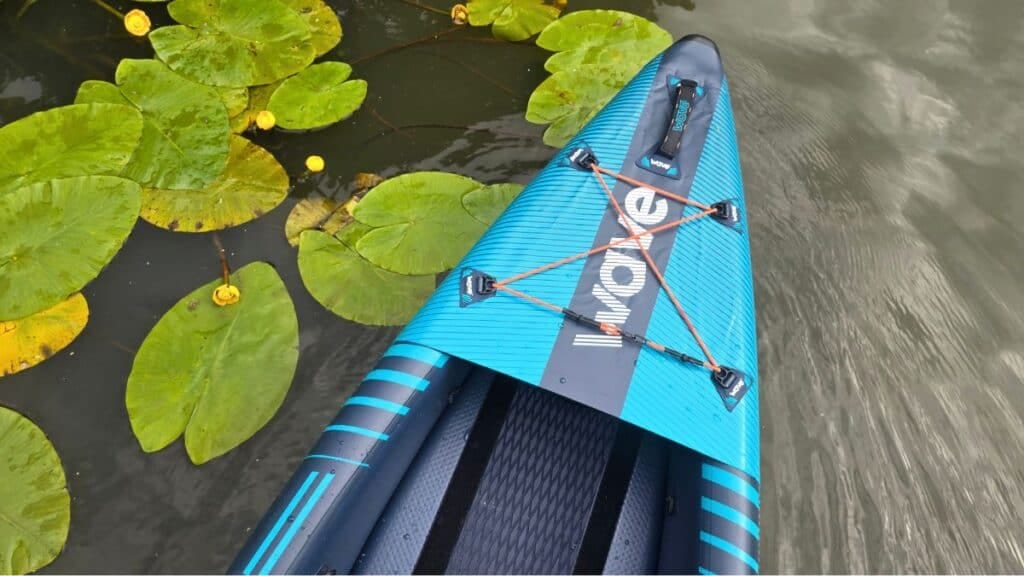
Storage at both the front and back, inside the kayak, and on top under bungee cords, gives you a ton of storage options for dry bags, gear, and anything else you don’t want to lose overboard.
Wave Navigator 3.0 Specifications
| Spec | Details |
|---|---|
| Weight | 1 Seater: 15.1kg, loaded bag 22.83kg · 2 Seater: 16.8kg, loaded bag 24.61kg · 3 Seater: 18.4kg, loaded bag 26.51kg |
| Dimensions | 1 Seater: 380×80×35cm · 2 Seater: 420×82×35cm · 3 Seater: 464×82×35cm |
| Loaded Bag Dimensions | 1 Person: 110×52×31cm · 2 Person: 108×60×37cm · 3 Person: 117×51×38cm |
| Materials | Military-grade PVC with drop-stitch construction, 1000D denier rating |
| Max Load Capacity | 1 Seater: 120kg · 2 Seater: 220kg · 3 Seater: 260kg |
| Max PSI | Side walls: 15 PSI · Floor: 10 PSI |
| Skill Level | Intermediate or group kayaking |
| Price | £410 (1 Seater) / £430 (2 Seater) / £500 (3 Seater) |
| What’s Included | Kayak, adjustable double-ended paddle, dual-action pump, quick-clip fins, padded seat, footrest, carry backpack, repair kit |
Against the wider inflatable kayak market, the Navigator’s 1000D denier rating and military-grade PVC put it well ahead of the budget tube-style kayaks that dominate the entry-level price bracket, while the weight stays competitive enough that solo transport is still realistic.
My Personal Experience with the Wave Navigator 3.0
I tested the 1-seater version of the Navigator 3.0 in the Navy colourway on the River Ouse at Barcombe Mills, Sussex. This is a wildly different kayak to the first inflatable I ever owned — the Itiwit 100 from Decathlon — and that difference is obvious the moment you start setting it up.
Setup and Inflation
The first thing you notice is the size of the backpack. It’s large, especially compared to the paddleboard bags I’m used to carrying down to the water, though it’s lighter than you’d expect — the 1-seater kayak alone weighs 15.1kg, with the loaded bag coming in at 22.83kg. I wouldn’t want to be carrying it too far in one go.
There are three air chambers to inflate — one for the floor (10 PSI) and one for each side wall (15 PSI). The dual-action pump that comes with the kit lets you switch pumping styles as you approach the target pressure, and it does the job. I’ll be honest, though — after the initial test with the hand pump, I switched to my electric paddleboard pump and had the whole kayak fully inflated in a matter of minutes. Despite having more chambers than a paddleboard, it actually felt quicker overall.
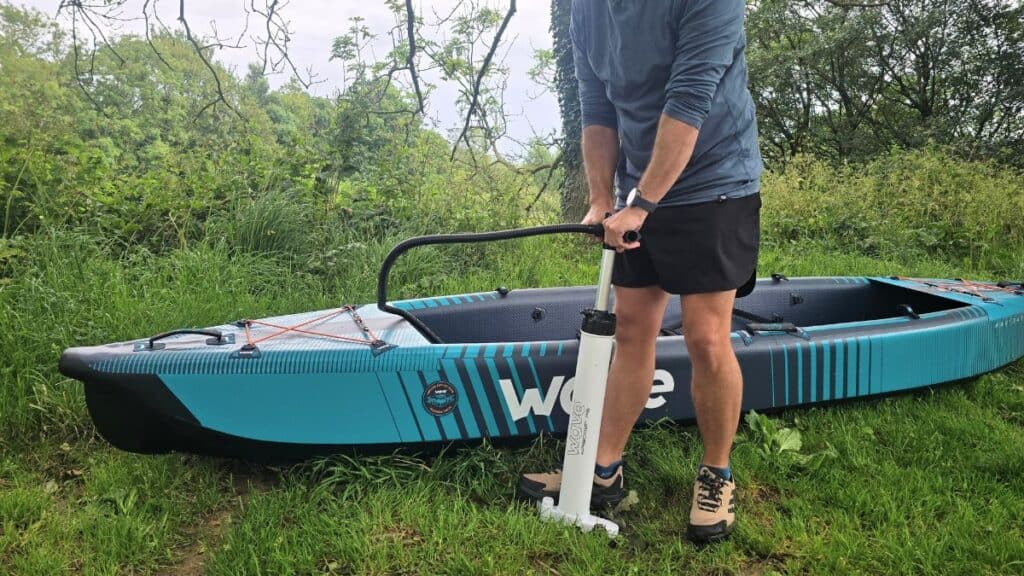
Once inflated, the rest of the setup was straightforward: two quick-clip fins onto the underside, and the double-ended paddle assembled from its four sections — the centre pieces have three different holes, so there’s some adjustment available if you want to change the paddle angle. The seat and footrest Velcro onto stripes running down either side of the EVA deck pad down the centre of the kayak, with a few clips securing them to the kayak walls.

Carrying and Launching
Carrying the kayak solo wasn’t the lightest job, but it was entirely doable. I had around 150 metres to walk from the car to the water, and found it easiest to lift the kayak overhead and rest it on top of my head, using the centre carry handles on either side. If you’ve got a second person, there are also handles at either end for carrying the kayak, which also came in handy when lowering it into the water.
For future outings though, I think I may invest in a small trolley to wheel it down rather than carry it – especially if I have more gear with me.
On the Water
Coming from paddleboarding, the Navigator felt a little wobbly the first time I got in, but that settled pretty quickly. I paddled for around two hours to get a proper feel for it, and it cut through the water cleanly — paddling felt close to effortless, and the whole session was really enjoyable.
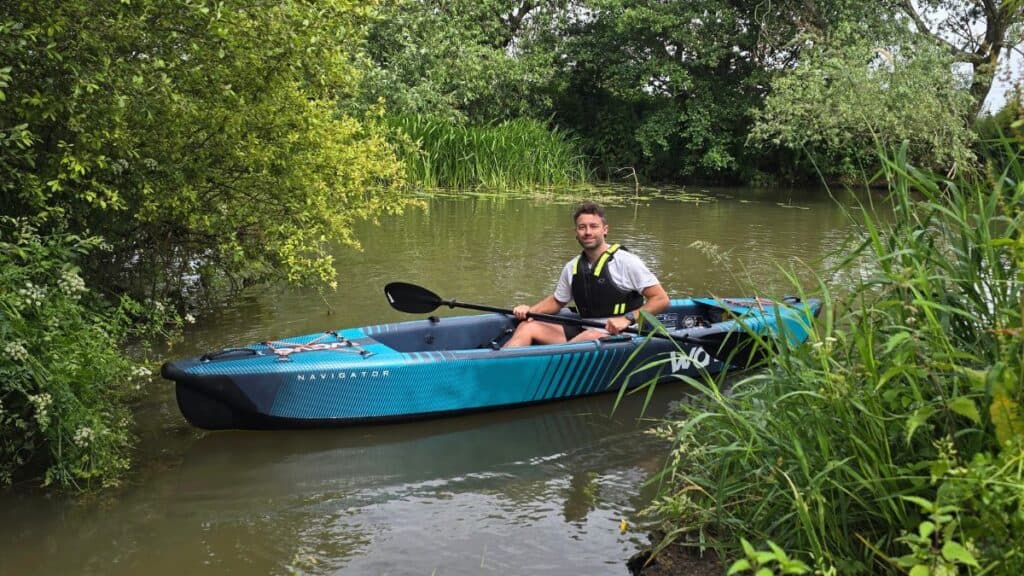
Conditions were mild with a slight breeze, and on a couple of occasions, a cross-breeze caught the kayak and turned it slightly, but it was easy to correct and didn’t disrupt the line for long. The solid V-shape bow and stern clearly make a difference on the water compared to an inflatable alternative.
The seat sits quite low at the back, which worked well with the life jacket I was wearing — it sat just below where the jacket finished, rather than pushing up against it.
Storage-wise, this kayak earns its keep. I was carrying a fair amount of gear — camera equipment, a tripod, snacks, spare clothes — in a couple of dry bags, and there was ample room for it all. Storage runs front and back inside the kayak, plus reinforced cargo areas front and back on top, secured under bungee cords. Between the interior and exterior space, you’re more likely to run out of things to pack than space to pack them in.
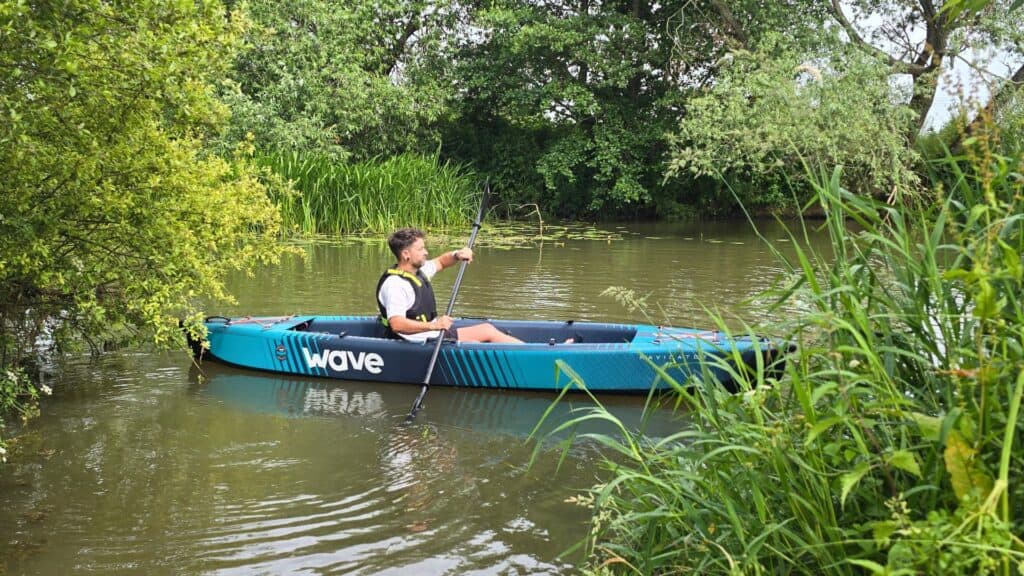
I don’t think I’ve ever had quite so many people come up and ask what I was paddling. Everyone who saw the Navigator on the riverbank wanted a closer look and was genuinely impressed, especially when I told them the price. It truly is a well-engineered piece of kit, and stylish-looking kayak — the Navy colourway in particular (navy and teal with orange accents) looks great on the water.
I tested the 1-seater setup, while not suitable for two adults, I will be taking this out with my younger boys over the summer too, one at a time — they’d simply sit in without the seat fitted.
Where to Buy
Wave Navigator 3.0
My Verdict: “A well-built inflatable kayak that doesn’t feel like a compromise, rigid, drop-stitch construction and a complete kit, best suited to intermediate paddlers.”
Save 10% off Wave SUPs and gear via this link ↑
Wave Navigator 3.0 Rating Breakdown
Build Quality — 5/5
The drop-stitch construction gives the Navigator a dense, solid feel that’s a world away from a typical inflated air-tube kayak. The solid V-shape bow and stern add a level of structural consistency that inflatable sections can’t quite match, and the 1000D denier-rated, military-grade PVC backs up Wave’s durability claims on paper. Nothing about the construction felt like a corner had been cut.
Performance — 4.5/5
On the water, the Navigator tracked cleanly with minimal correction needed, even when a cross-breeze caught it side-on during testing on the River Ouse. Two hours of paddling felt close to effortless once the initial wobble — coming from a paddleboarding background — settled down. It’s clearly built for flat water and gentle river conditions rather than anything more demanding, but within that remit it performs exactly as advertised.
Accessories & Kit — 4.5/5
The kit package is complete: pump, paddle, fins, seat, footrest, repair kit, and backpack all included, with sensible touches like Velcro paddle storage and a drainage hole. The only real usability friction is the bag itself — large, no wheels, and not the easiest thing to carry any real distance without a trolley.
Value for Money — 5/5
At £410 for the 1-seater rising to £500 for the 3-seater, the Navigator sits at a price point where it’s easy to forget you’re paddling an inflatable kayak at all. Given the drop-stitch build and the completeness of the kit, it compares well against similarly priced inflatables that cut corners on materials to hit the same price.
Top Alternatives to the Wave Navigator 3.0
Wave Roamer
The Roamer sits just below the Navigator in Wave’s own range, built around PU-Stitch construction — a step up from basic air-tube PVC, but a different tier to the Navigator’s full drop-stitch build. It’s positioned as a beginner-to-intermediate kayak for calm rivers, lakes, and coastal water, with a self-bailing system and a wide, stable hull that prioritises confidence over outright speed.
Decathlon Itiwit 100
My first inflatable kayak, and a completely different experience to the Navigator. The Itiwit 100 uses a basic air-tube construction rather than drop-stitch, so it doesn’t have the same rigidity or tracking performance, but it’s a simpler, cheaper entry point if you just want to get on flat water without a big outlay. Read my full Itiwit 100 review for the details.
Aquaplanet Inflatable Kayak
The Aquaplanet sits at the more accessible end of the market — a straightforward, triple-chamber kayak built for calm lakes, sheltered rivers, and family days on the water. It’s worth noting it inflates to just 1.5 PSI via a standard Boston valve rather than the high-pressure drop-stitch chambers on the Navigator, so it won’t feel as rigid underfoot — but for relaxed flat-water paddling, it does the job at a lower price point.
| Wave Navigator 3.0 | Wave Roamer | Decathlon Itiwit 100 | Aquaplanet Kayak | |
|---|---|---|---|---|
| Best For | Speed and efficiency on flat water | Beginners wanting a stable step-up | Budget flat-water paddling | Calm water, family paddling |
| Construction | Drop-stitch | PU-Stitch | Air-tube PVC | Triple-chamber PVC |
| Max PSI | 15 PSI (walls) / 10 PSI (floor) | 15 PSI (floor) / 5 PSI (sides) | Low pressure | 1.5 PSI |
| Kit Included | Full kit | Full kit | Basic kit | Full kit |
| Price From | £410 | £300 | £380 | £380 |
Final Thoughts
The drop-stitch construction, solid V-shape hull, and complete kit make the Navigator 3.0 one of the more serious inflatable kayaks at this price point. For under £500, I don’t think there’s a better inflatable kayak on the market. The Navigator 3.0 is the one I’d recommend to anyone asking — and the one I’ll be taking back out on the water all summer.
Where to Buy
Wave Navigator 3.0
My Verdict: “A well-built inflatable kayak that doesn’t feel like a compromise, rigid, drop-stitch construction and a complete kit, best suited to intermediate paddlers.”
Save 10% off Wave SUPs and gear via this link ↑
Wave Navigator 3.0 FAQ
Is the Wave Navigator 3.0 good for beginners?
It’s marketed at intermediate paddlers, and there’s a slight learning curve if you’re coming from paddleboarding rather than kayaking. That said, a beginner who’s had a couple of calmer outings would have no real trouble handling it.
How heavy is the Wave Navigator 3.0?
The 1-seater weighs 15.1kg with a loaded bag of 22.83kg, the 2-seater 16.8kg (24.61kg loaded), and the 3-seater 18.4kg (26.51kg loaded).
Can the Wave Navigator 3.0 be used on the sea?
Yes — it’s designed for lakes, rivers and coastal waters, with a hull built to track straight and handle some chop, though it’s still an inflatable kayak rather than a sea kayak and should be used in suitable conditions.
How long does the Wave Navigator 3.0 take to inflate?
Using the included dual-action hand pump it takes approximately 15 miutes to inflate all 3 chambers.
What sizes does the Wave Navigator 3.0 come in?
It’s available as a 1, 2, or 3 seater, with prices starting from £410 and rising to £500 for the largest size.
Does the Wave Navigator 3.0 come with a paddle?
Yes — a double-ended, adjustable paddle is included, along with a pump, fins, seat, footrest, repair kit, and carry backpack.
Related Guides & Reviews
The resources below cover the basics, common questions, and related kit to help you get more out of your time on the water.
- Best Inflatable Canoe UK: Top Picks Compared
- Wave Tourer SUP Review | Best Paddleboard Under £200?
- Wave Cruiser vs Wave Tourer: Which Wave Board Should You Buy?
- Wave Pro SUP 3.0 Review
- Aquaplanet ALLROUND 10 Review 2026 | Best Beginner SUP?

Steve Cleverdon
Adventure-driven outdoor gear reviewer and paddleboarder, Steve has spent 20 years exploring rivers, coastlines, and trails across Britain and abroad, sharing what he’s learned along the way. Learn more about Steve or get in touch.