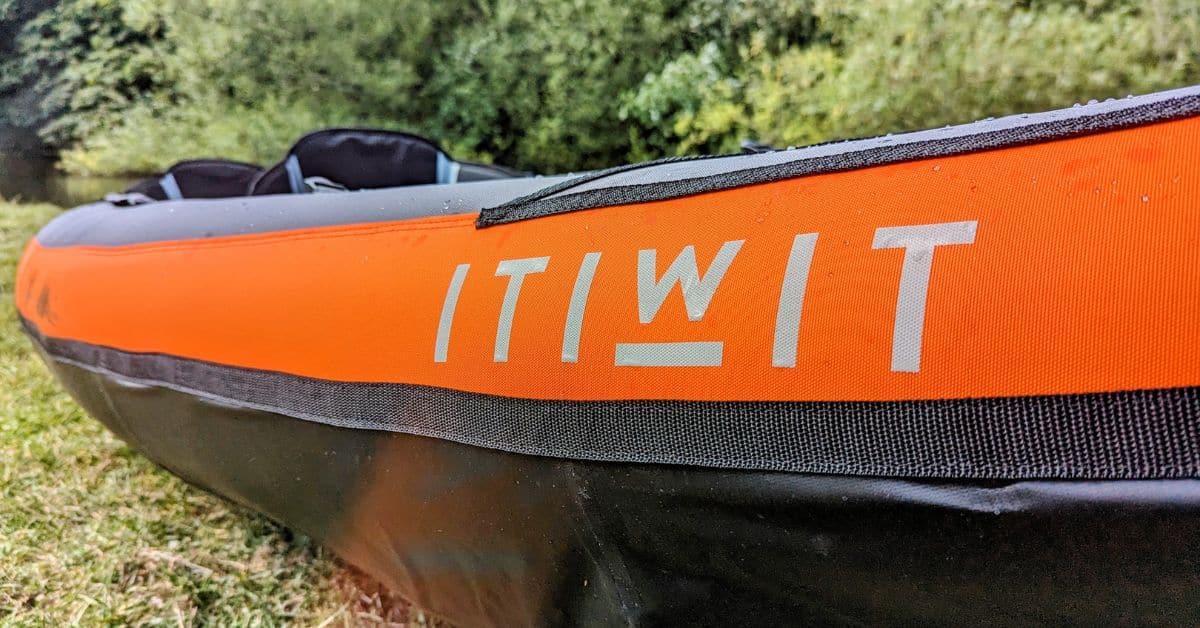
Finding an inflatable kayak that holds up over years of actual use — not just a sunny afternoon on a millpond — is harder than it looks. There are plenty at the budget end of the market that look passable out of the box but are struggling by year two.
The Decathlon Inflatable 2-3-Person Touring Kayak (the same kayak previously sold as the Itiwit 100) sits at a price point where you’d be right to ask questions. I’ve now owned this kayak for over three years, used it across Sussex rivers and reservoirs, introduced my young boys to paddling on it in all seasons, and once spent a January morning at Cuckmere Haven attempting to break through ice just for a sunrise paddle.
This review covers the full picture — setup, performance, long-term wear, and whether it’s still worth buying in 2026.
Thanks for your support – I may earn a small commission from affiliate links in this article Learn more
Decathlon gifted the Itiwit 100 Kayak for review. All other equipment was purchased by me at full price. All opinions are my own.
- Build Quality
- Performance
- Accessories & Kit
- Value for Money
The Verdict
The Decathlon Inflatable 2-3-Person Touring Kayak is a sensible, durable family inflatable that earns its value over multiple seasons rather than a single summer outing. Its stability and generous capacity make it an excellent choice for introducing younger paddlers to the water, and it holds up better over time than you’d expect at this price. The main frustration is that you’ll need to budget separately for a pump and paddles — an unnecessary omission at this price point. If you’re after a capable flat-water kayak for family use and casual touring on UK rivers and lakes, this remains one of the most straightforward buys in the market.
Pros
Cons
Where to Buy
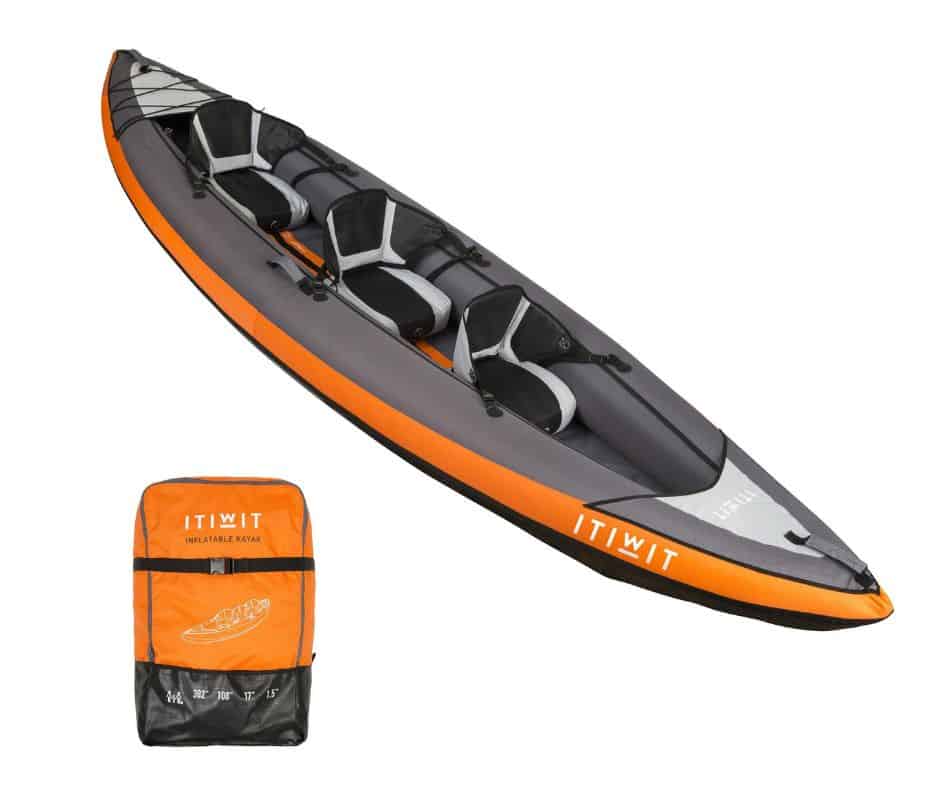
Itiwit 100 Inflatable Kayak
My Verdict: “A durable inflatable that’s built for years of family use, not just a single summer, with the stability and capacity to make it an easy choice for casual touring with kids.”
Best For: Families, beginners, and casual paddlers wanting a reliable multi-person inflatable
Price: £199.99 (RRP up to £299.99)
Warranty: 2 years (spare parts available for 10 years)
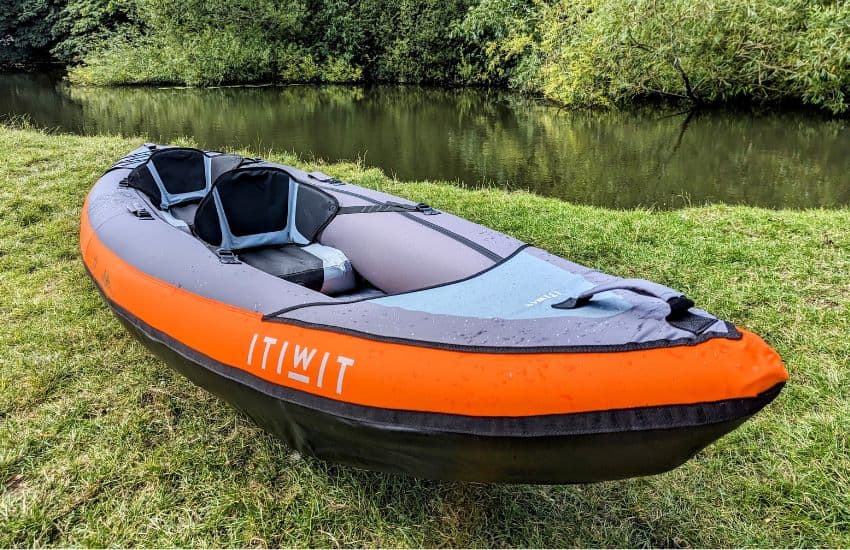
The Decathlon Inflatable 2-3-Person Touring Kayak is a wide, stable inflatable built for calm rivers, lakes, and flat estuaries. It packs down into a backpack-sized carry bag, inflates in around 10 minutes, and fits two adults and a child without feeling crowded.
It’s not a performance kayak — it won’t win any speed contests — but for family paddling and building confidence on the water, it’s one of the most sensible buys at this price in the UK market. Tested across multiple days out with family and friends across Sussex rivers and reservoirs over three full years.
Top Features of the Decathlon Inflatable Touring Kayak
At this price point, the features that matter most are the practical ones: does it go up and come down without drama, does it feel safe on the water, and can you actually carry it to the put-in? The Decathlon Touring Kayak focuses on stability, portability, and ease of use — and it delivers on all three in ways that matter for real family paddling rather than showroom spec sheets.
Patented Bow Shape

The pointed bow gives the kayak noticeably better forward glide than most budget inflatables, which tend to push water rather than part it. It’s still not going to track like a hardshell touring boat, but across flat river water the difference is real — you cover ground without working as hard.
Adjustable High-Backed Seats
Three inflatable seats sit on velcro strips that run the length of the kayak floor. They’re raised enough to keep you clear of any pooling water, and you reposition them based on how many paddlers are on board — diagrams printed on the floor show you where each seat goes. They’re comfortable enough for a couple of hours without complaint.
Three-Fin System
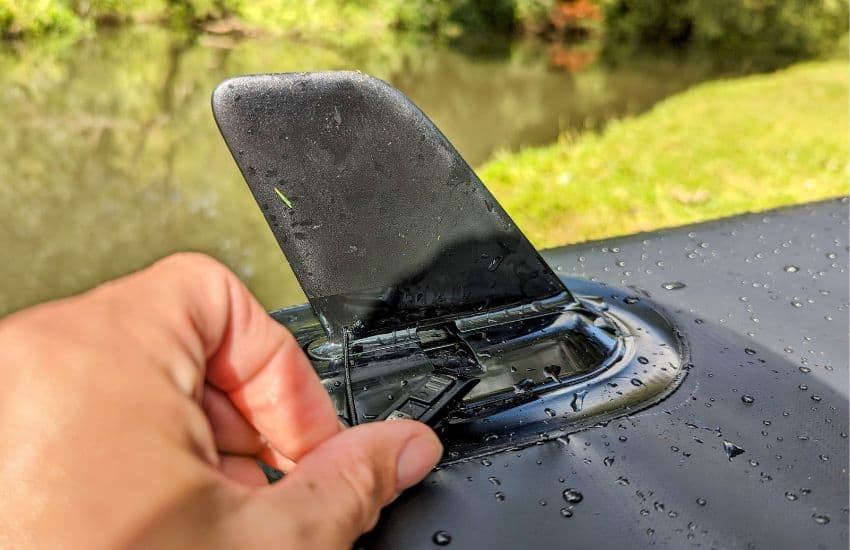
Three removable skegs clip onto the underside of the hull and lock in with a small catch. They make a genuine difference to straight-line tracking on open water. For shallow rivers where the bottom is close, you can leave them off entirely and save yourself the snagging.
Boston Valve Inflation and Deflation
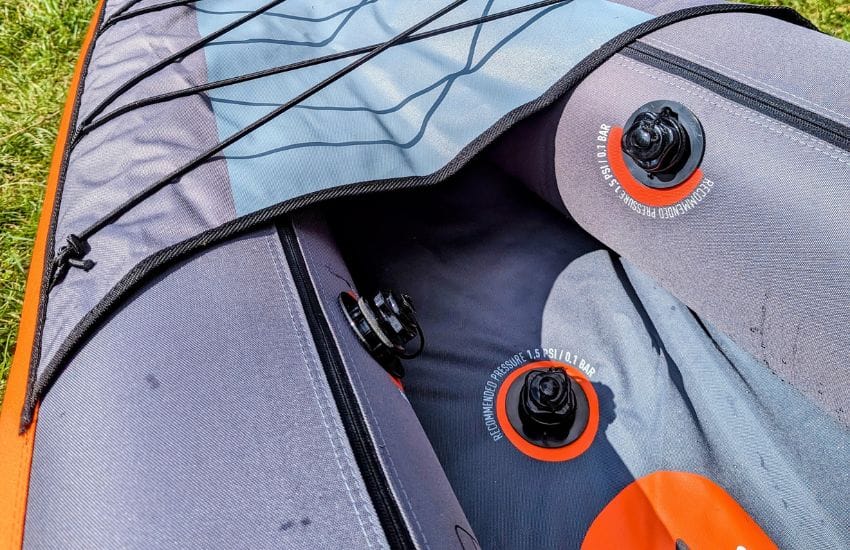
Three separate Boston valves handle each air chamber independently. Inflation is controlled — you do each section in sequence. Deflation is the real win: unscrew the valve caps and the chambers empty quickly without needing to wrestle the last bit of air out manually. The whole pack-down takes under 10 minutes once you’ve got the rhythm of it.
Replaceable Bladders
The left and right side bladders are separate and replaceable. If you ever get a puncture that can’t be patched, you replace just the damaged part rather than writing off the whole kayak. For something intended to last multiple seasons, that’s a worthwhile design decision.
Backpack Carry System
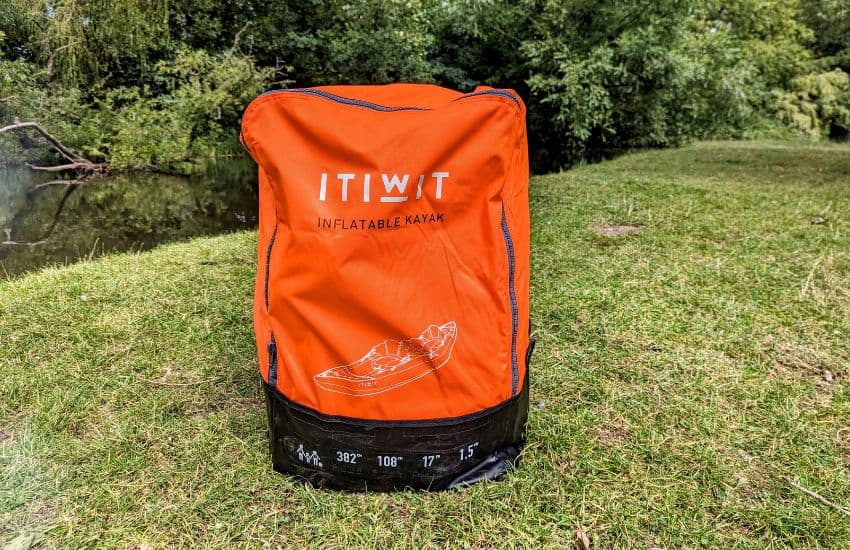
The carry bag has backpack-style straps and packs to 73 x 44 x 33 cm. At 17 kg it’s no ultralight daypack, but it sits comfortably on your back for the short carry most launch sites require. There are also carry handles on the kayak itself — on each side and at bow and stern — which make getting it from the bag to the water easy between two people.
Decathlon Inflatable 2-3-Person Touring Kayak Specifications
| Spec | Detail |
|---|---|
| Number of Paddlers | 2–3 person |
| Dimensions (inflated) | 382 x 108 cm |
| Weight | 17 kg |
| Weight Capacity | 230 kg |
| Packed Size | 73 x 44 x 33 cm |
| Inflation Pressure | 1.5 PSI (0.1 bar) |
| Material | Polyester / PVC |
| Included | Kayak, carry bag, repair kit, 3 fins |
| Not Included | Pump, paddles |
| Colour | Teal / turquoise blue (previous orange colourway discontinued) |
| Warranty | 2 years |
| Spare Parts | Available for 10 years |
At 382 cm long and 108 cm wide, this is a noticeably broad platform — wider than most hardshell kayaks of similar length, which is precisely what delivers the beginner-friendly stability. The 230 kg capacity is generous: two adults plus a child with kit comfortably inside the limit. At 17 kg it’s heavier than some rivals, but the packed dimensions are genuinely compact and it fits in any standard car boot with room to spare.
My Personal Experience with the Decathlon Inflatable Touring Kayak
I’ve been paddling this kayak for over three years across a reasonable spread of conditions for a flat-water inflatable. Summer rivers in Sussex, winter dawn sessions on the River Ouse near Lewes, and one memorable January attempt at Cuckmere Haven where my brother-in-law and I spent thirty minutes trying to break through ice to get the kayak in the water before eventually deciding it wasn’t going to happen. We were laughing the entire time, which is about the best you can say for a morning that yielded zero paddling.

First Use and Setup
Our first outing launched from a car park about 100 metres from the riverbank. We carried the kayak bag, pump, and paddles separately — the bag doesn’t have room for the paddles alongside the kayak, though I later found the small loops on the bag sides are designed for the pump and double nicely as paddle holders when secured under the top buckle strap.
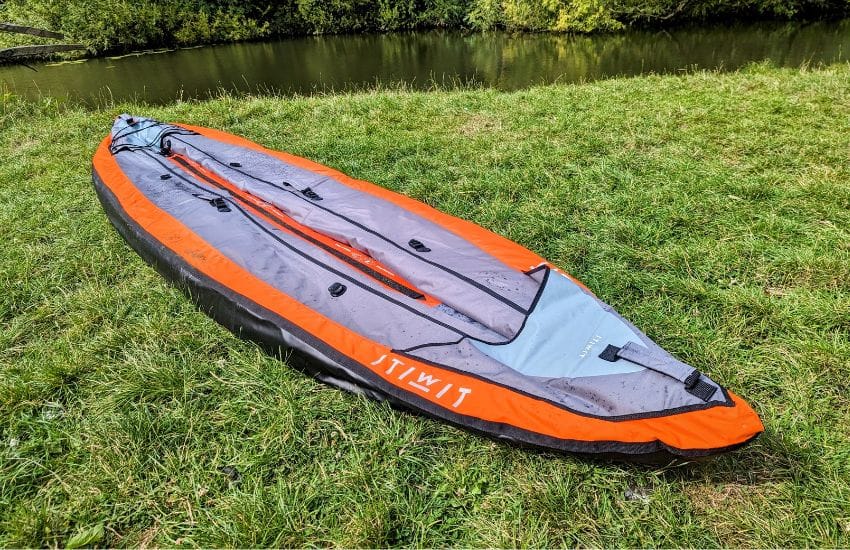
Setup on the first go took around 20 minutes. We inflated the floor first, then each side tube to roughly 50%, checked that everything was aligned before committing to full pressure, then inflated each section to the recommended 0.1 bar. Taking it in steps stops you from ending up with a misshapen tube you’re fighting to straighten. Once you know the sequence, you’d do it in 10 minutes — the first time always takes longer.
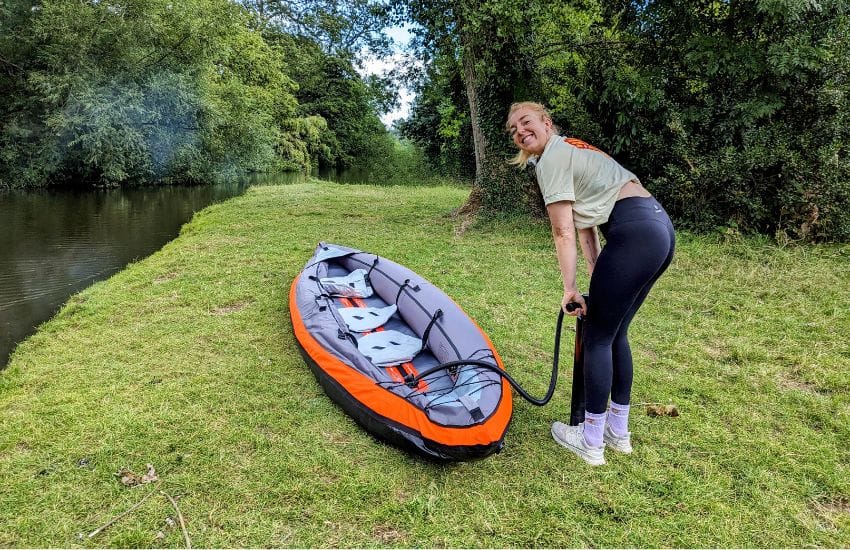
The seats store folded inside the kayak itself, which is a neat touch. Pull out the two you need, inflate them, and press them onto the velcro floor strips. The fins clip onto the base and lock with a small catch — simple enough to do kneeling beside the kayak on a riverbank.
One warning worth repeating from Decathlon: in high heat, slightly deflate the kayak when out of the water and don’t leave it fully inflated in direct sunlight. It’s easy to forget on a warm day and overinflation can damage the seams.
On the Water
Stability was the first thing that stood out. I tested it by giving the kayak a deliberate hard rock much to my passenger’s dismay, and it absorbed the movement without any drama. For anyone coming to inflatable kayaking nervous about tipping, this one is about as reassuring as they come.
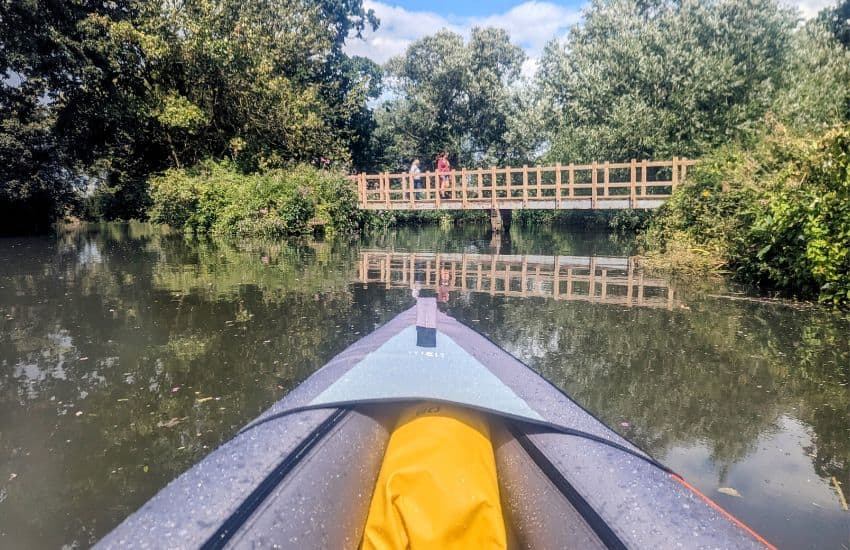
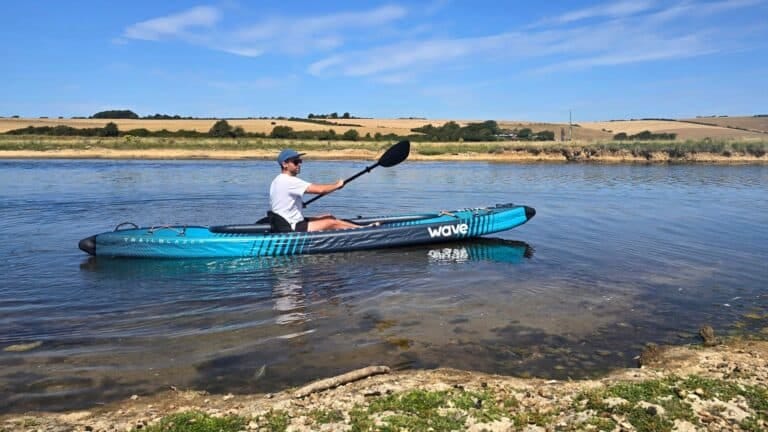
Manoeuvrability was good for its size. It responds cleanly to paddle strokes and tracks better than you’d expect from a broad-hulled inflatable when the fins are fitted. Two adults had ample room and could stretch out without crowding each other. Solo paddling works fine too — position yourself centrally and it handles well enough, though it’s clearly designed as a multi-person boat.

Carrying it fully inflated from the bank to the water was easy with the side and end handles — a two-person carry is comfortable and you get it in and out of the water cleanly. Deflation once we were done took well under 10 minutes from stepping ashore to packed bag.
Two Years On
Two years in, this kayak earns its place in my garage largely because of what it enables rather than what it is. My two boys have built most of their on-water confidence from sessions in this kayak.

The stable, seated platform is a much more sensible environment for introducing young kids to paddling than a SUP — they’re enclosed, lower to the water, and far less likely to end up swimming. My youngest is now relaxed and confident in the front seat on longer paddles, which I’m not sure would have happened as quickly any other way.

During the colder months I reach for this far more than the paddleboard. The seated position keeps you drier, the risk of going in is lower, and there’s something particularly good about a winter kayak session that a SUP doesn’t quite replicate.
One January morning on the River Ouse near Lewes — paddling downstream at sunrise, the sky running dark orange above the water, stopping midway for hot coffee from my Thermos and fresh pastries — that’s the kind of session that makes owning a kayak feel genuinely worthwhile.

After three years of regular use in all seasons, there’s no delamination I can find, no slow leaks, and the fins and valves work exactly as they did on day one. For a sub-£300 inflatable, that’s a decent track record.
Decathlon Inflatable Touring Kayak Rating Breakdown
Build Quality — 4/5
Three years of regular use, and this kayak hasn’t shown any meaningful deterioration. The polyester/PVC shell has handled dragging across river banks, a January attempt at paddling through ice, and seasons of storage without any obvious wear. The Boston valves seat and hold pressure reliably, the velcro floor strips still grip the seats properly, and the fin clips remain firm. It feels built to a sensible functional standard — not premium, but genuinely durable.
Performance — 4/5
For a wide multi-person inflatable, the flat-water performance is genuinely good. The bow shape delivers a better glide than the broad hull would suggest, and stability is the real standout — it’s confidence-inspiring for beginners and completely unruffled with two adults on board. It doesn’t enjoy a headwind and won’t keep up with anything purpose-built for touring, but for the calm rivers and lakes it’s designed for, it handles well and makes paddling feel easy rather than effortful.
Accessories & Kit — 3.5/5
The kayak comes with a carry bag, repair kit, and three fins — the essentials for getting on the water and dealing with minor damage. The fins clip in and out cleanly, the bag is a decent size and does the job for short carries, and the repair kit is a sensible inclusion. What costs it here is the absence of a pump and paddles, which are the two things you can’t actually paddle without. At this price point that’s a frustrating omission — you’re looking at an additional £30–£80 to get properly equipped, and it’s worth factoring that into the headline price before you buy.
Value for Money — 4.5/5
At £199.99, this kayak is difficult to argue with. A 230 kg capacity, two-year warranty, spare parts guaranteed for 10 years, and a demonstrated ability to hold up to real multi-season use — that’s a lot for the money. The missing pump and paddle sting a little, but even factoring in that extra spend, you’re getting a well-made, versatile family kayak at a fair price. There’s nothing else in the UK market at this price point that I’d rather own for flat-water family paddling.
Top Alternatives to the Decathlon Inflatable Touring Kayak
If the Decathlon doesn’t quite fit what you’re after, these are the alternatives worth considering from UK retailers.
Wave Roamer
Wave’s kayak range has grown significantly over the past couple of years, and the Roamer is a strong alternative option. It has a slightly more performance-focused hull compared to Decathlon’s, and Wave’s UK customer service and delivery track record is good. Better suited to paddlers who want a bit more speed and tracking performance; less focused on the multi-person family use case the Decathlon handles best. You can see how it compares against the rest of the range in my Wave Kayaks guide.
Aqua Marina Laxo
The Laxo comes in two- and three-person versions at a similar price point and competes directly with the Decathlon. It includes a foot brace system that makes a real difference on longer paddles — something the Decathlon lacks — and comes with adjustable high-backed seats. It’s widely available from UK retailers including Decathlon. A solid choice if you’re planning longer touring sessions and want that extra paddling control.
Aquaplanet Inflatable Kayak Two Person
The Aquaplanet two-person kayak sits at a higher price point — £449 — but it does include a 4-part aluminium paddle, manual pump, rucksack, two seats, and a footrest in the box, which closes the gap on the Decathlon somewhat once you account for accessories. At 330 x 96 cm it’s shorter and narrower, which makes it slightly more nimble but noticeably less stable than the Decathlon for less confident paddlers. Capacity is 160 kg, so it’s a firm two-person boat — no third seat option. A good choice if you want everything ready to go from day one and are paddling as a pair rather than with young children.
| Decathlon Touring | Wave Roamer | Aqua Marina Laxo | Aquaplanet 2-Person | |
|---|---|---|---|---|
| Paddlers | 2–3 | 2-3 | 1-2 | 1–2 |
| Capacity | 230 kg | 230 kg | 200 kg | 160 kg |
| Price | £199.99 | £449 | £349 | £449 |
| Pump included | No | Yes | Yes | Yes |
| Paddle included | No | Yes | Yes | Yes |
| Warranty | 2 years | 2 years | 2 years | 2 years |
Final Thoughts
The Decathlon Inflatable 2-3-Person Touring Kayak is the flat-water family inflatable I’d recommend to most people at this price. Two years in, mine is in good condition, has taken my young boys through their early water sport progression, and has produced some of my most enjoyable paddling sessions — including a few in conditions where the paddleboard would have been the wrong tool entirely.
The missing pump and paddles are not ideal, so budget an extra £30–£80 to get fully equipped and factor that into the actual cost. But even with that, it’s a strong buy for families and casual paddlers who want something that will handle multiple seasons on UK rivers and lakes without falling apart or letting them down.
Where to Buy
Itiwit 100 Inflatable Kayak
My Verdict: “A durable inflatable that’s built for years of family use, not just a single summer, with the stability and capacity to make it an easy choice for casual touring with kids.”
Decathlon Inflatable Touring Kayak FAQ
What is the difference between the Itiwit 100 and the Decathlon Inflatable Touring Kayak?
They are the same kayak. Itiwit is Decathlon’s paddlesports sub-brand, and the product has been gradually transitioned to Decathlon branding on the main listing. The core specs are unchanged — 382 cm long, 230 kg capacity, 2–3 paddlers — but the colour has moved from the original sunflower orange to a teal/turquoise blue, and the branding reflects the parent company rather than the sub-brand.
Does the Decathlon inflatable touring kayak come with paddles and a pump?
No. The kayak comes with the boat, a carry bag, a repair kit, and three fins. Paddles and a pump are sold separately. A decent double-action hand pump will cost around £20–£30, and adjustable kayak paddles start from around £30 at Decathlon. Budget for both when calculating the real cost of ownership.
How long does it take to inflate?
With a double-action hand pump, around 10 minutes once you’ve learned the sequence. On your first outing, allow 15–20 minutes while you get comfortable with inflating the floor first, then each side tube to 50% before repositioning and finishing to the full 0.1 bar. It becomes quick and straightforward with practice.
Can you use this kayak on the sea?
Technically yes on very calm, sheltered coastal water, but it’s rated and designed for flat inland water — calm rivers, lakes, and reservoirs. Open coastal paddling, significant tidal flow, or anything with wave action is outside its intended use case, and I wouldn’t take it there.
How long does the Decathlon inflatable kayak last?
Based on three years of regular use across all seasons, the construction holds up well. Decathlon backs it with a two-year warranty and guarantees spare parts for 10 years, so even if something fails you can repair rather than replace. Mine has shown no significant wear after consistent use.
Can you use this kayak solo?
Yes. Position a single seat centrally, leave the others out, and it handles fine. It will feel wide and a little slow compared to a purpose-built solo kayak, but it’s manageable, stable, and perfectly usable for one person who wants the flexibility to add paddlers later.
Where can I find more inflatable kayak comparisons?
My best inflatable kayaks in the UK roundup covers the current market in more detail, and my canoe vs kayak guide is worth a read if you’re still deciding which type of boat suits you best.
Related Guides & Reviews
The resources below cover the basics, common questions, and related kit to help you get more out of your time on the water.
- Wave Kayaks and Canoe: The Full Range Compared (2026)
- Wave Navigator 3.0 Review: The Best Inflatable Kayak?
- Best Paddle Board for Beginners UK: 8 Top SUPs Compared
- Best Budget Paddle Boards in the UK
- Best Paddleboard/Kayak Accessories

Steve Cleverdon
Adventure-driven outdoor gear reviewer and paddleboarder, Steve has spent 20 years exploring rivers, coastlines, and trails across Britain and abroad, sharing what he’s learned along the way. Learn more about Steve or get in touch.