After years of inflating boards by hand, I finally made the switch to an electric pump — and honestly, I should have done it much sooner. If you ask me, it’s the best accessory upgrade you can make to your paddleboard setup. What used to take 15 minutes of hard work now happens while I sort my kit and check the conditions. My arms are saved for actually paddling.
Most inflatable paddle boards come with a manual pump as standard, and they do the job — but they’re exhausting, especially if you’re inflating more than one board or heading out regularly. Electric SUP pumps solve this completely. You set your target PSI, press a button, and walk away. Modern pumps get a standard board to 15 PSI in 8–12 minutes; the faster battery-powered models can do it in under five.
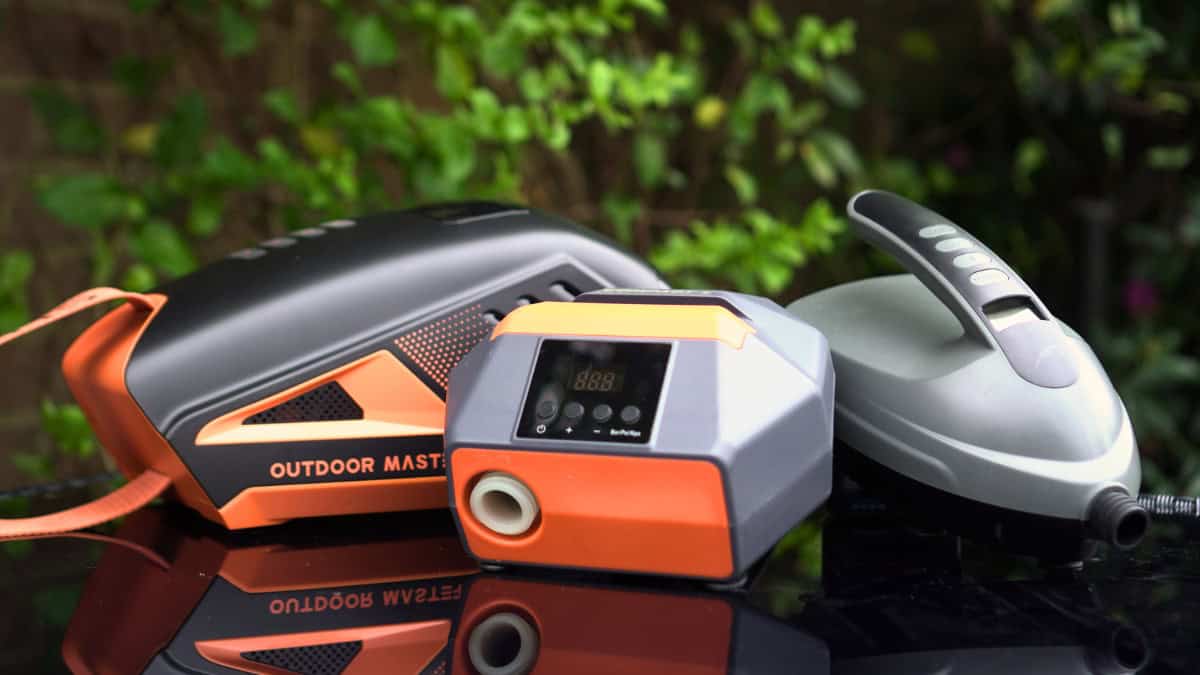
This best electric pump for paddle boards guide covers six pumps across the full range — from a straightforward budget option under £50 to the quickest battery-powered pump currently available. I’ve tested several of these personally, and I’m clear about which ones I haven’t when it comes to the assessments. Use the comparison table to narrow things down, then read the full entry for the ones that interest you.
Quick Picks
- Outdoor Master Shark 3 – Best SUP Pump Overall
- Wave Electric Pump – Best Battery SUP Pump
- Bluefin E-Swift Lite – Best 12V SUP Pump
- Aquaplanet Compact – Best Compact SUP Pump
- Jobe SUP 12V – Best Dual-Power Pump
- Decathlon 15PSI – Best Budget SUP Pump
Thanks for your support – I may earn a small commission from affiliate links in this article Learn more
Outdoor Master, Wave, Bluefin, and Aquaplanet gifted pumps for review. All opinions are my own.
Outdoor Master Shark 3
Best SUP Pump Overall
Pros
Cons
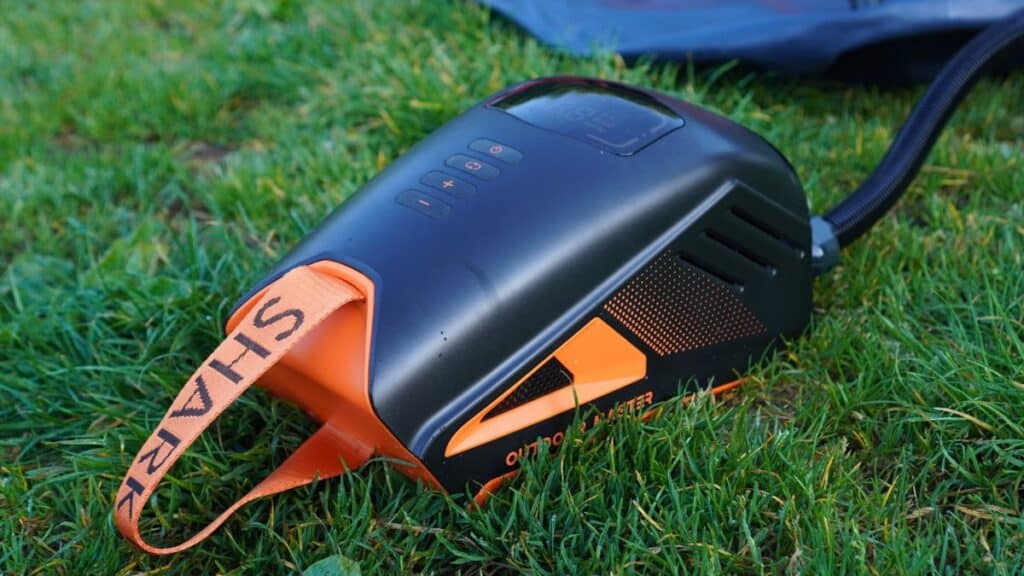
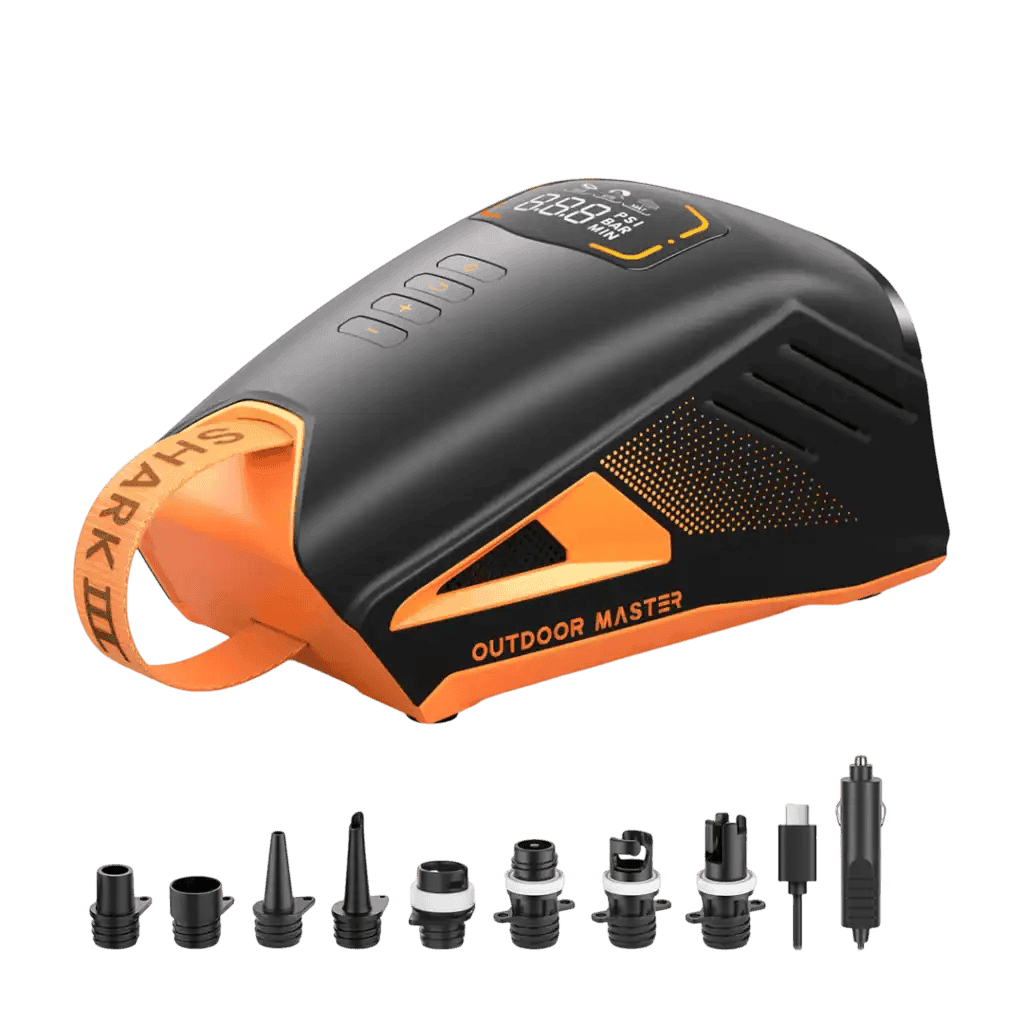
I’ve had the Shark 3 on my radar for a while. On paper — and from what early testing shows — this is a significant step up from the Shark II it replaces. The speed is the headline: where most 12V pumps take 8–12 minutes, the Shark 3 does it in under five on battery. It’s easily the fastest SUP pump I’ve ever used, and the board I tested it on was up to pressure in just under four minutes. For busy mornings or back-to-back sessions with the family, that difference adds up fast.
The dual-power setup is a smart piece of design. If you forget to charge it before leaving the house, plug it into the car’s 12V socket and it still works — just at the slower pace of a standard electric pump rather than stopping entirely. The battery also charges fully in two hours with a 45W fast charger.
The trade-off is the weight. At around 2.9kg, it’s noticeably heavier than most 12V pumps on this list, and the housing is larger to accommodate the battery and cooling mechanisms. For most paddlers, this won’t matter — it goes in the boot and stays there — but if you’re packing light for travel it’s worth considering.
The three preset inflation modes with memory recall mean you can save settings for each piece of kit. Once you’ve set it up the first time, the routine is quick.
Read my full review of the Outdoor Master Shark 3 here
Price: £165 (£140 with discount code ‘STEVE”)
Power Source: Battery + 12V
Max PSI: 20
Inflation Time: 3–5 min (battery)
Active Cooling: Yes
Key Benefits:
- Inflates a standard board to 15 PSI in 3–5 minutes on battery — the fastest widely available SUP pump
- 74Wh internal battery handles 3–4 boards on a single charge
- Dual power: runs on battery or falls back to 12V car connection if the battery is low
- Three smart inflation modes (SUP / MAT / KITE) with memory recall
- Built-in USB-C port doubles as a power bank for your phone
- 2-year warranty — the longest available in this category
- 8 nozzle attachments covering SUPs, kayaks, kites, air beds, and more
- 30–40% quieter than comparable electric SUP pumps
Where to Buy
Outdoor Master Shark 3
My Verdict: “The fastest SUP pump on the market — 15 PSI in under 4 minutes, with enough charge for several boards and no cable in sight.”
Save 15% off with the code STEVE
Wave Electric Pump 20PSI
Best Battery SUP Pump

Pros
Cons
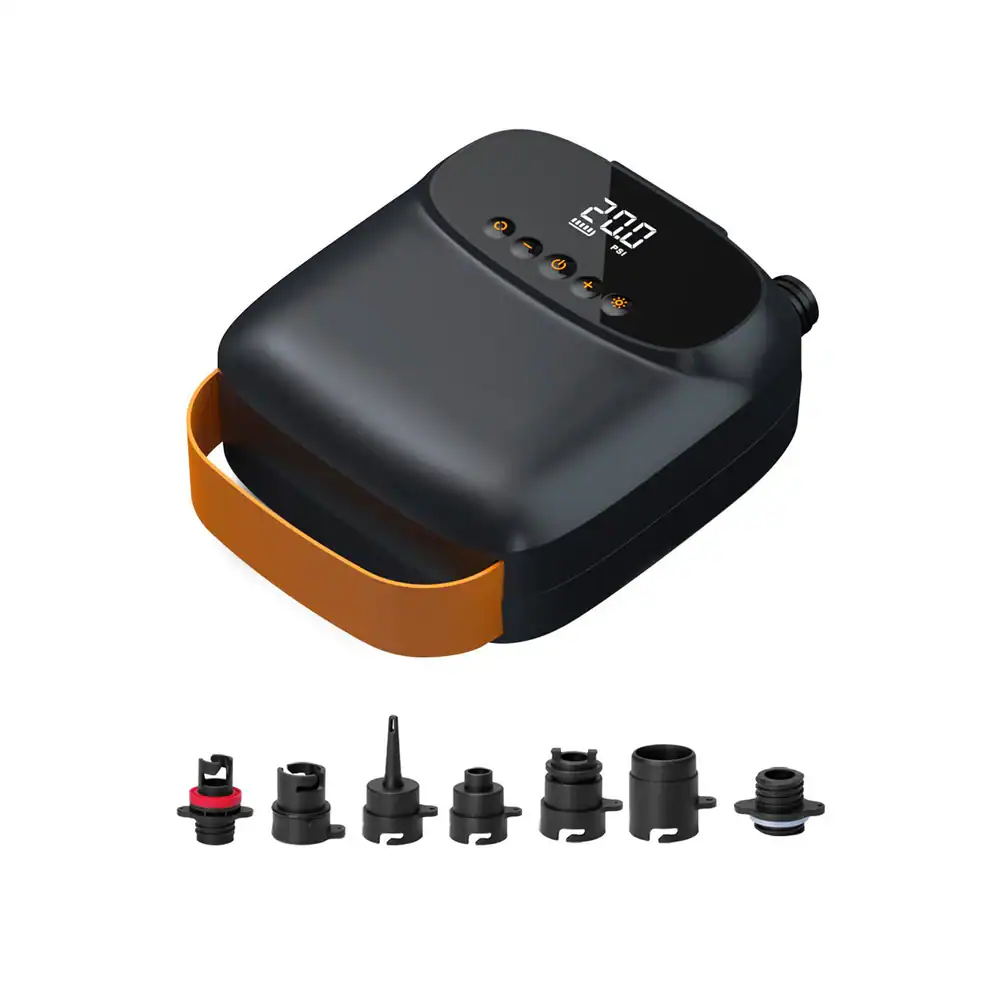
The Wave Electric Pump (A.K.A Airbank Puffer Pro) is a battery-powered, dual-stage pump small enough to go wherever your paddle board goes. At about the size of a kid’s lunchbox, it fits in a small drybag, so I can carry a deflated board to spots too far from the car park for a mains or 12V-only pump, then paddle off with the pump on the deck.
It took 11 minutes to inflate my Wave Cruiser to 15 PSI. That’s a little over Wave’s claimed 8–10 minutes, but in line with most electric pumps. On a single charge, it inflates four boards to 15 PSI, and the auto shut-off cut off the instant it hit the PSI I’d set. There’s a built-in light for late-night paddles, a deflate mode, and it doubles as a power bank for your phone. If the battery does run out, the 12V car plug has you covered.
The trade-off is that there’s no active cooling. After a 20 PSI run, it was noticeably warm, so I’d give it 10–15 minutes to cool down between boards. If you regularly inflate for a group and want it done fast, a bigger pump with active cooling is the better bet. But if you want a cordless pump that goes wherever you paddle, the Wave pump is hard to beat for the size.
Read my full Wave Electric Pump review here.
Price: £120
Power Source: Battery + 12V
Max PSI: 20
Inflation Time: 10–12 min (battery)
Active Cooling: No
Key Benefits:
- Cordless, with a rechargeable 5200mAh battery
- Four boards to 15 PSI per charge
- 12V car plug backup if the battery runs flat
- Precise auto shut-off, plus a built-in light and power bank
- 10% discount available via affiliate link
Where to Buy
Wave Electric Pump 20PSI
My Verdict: “A small, cordless electric pump you can take anywhere. It inflates a board at a decent pace; it’s easy to use, and the auto shut-off is precise”
Save 10% off Wave SUPs and accessories via this link ↑
Bluefin E-Swift Lite
Best 12V SUP Pump

Pros
Cons
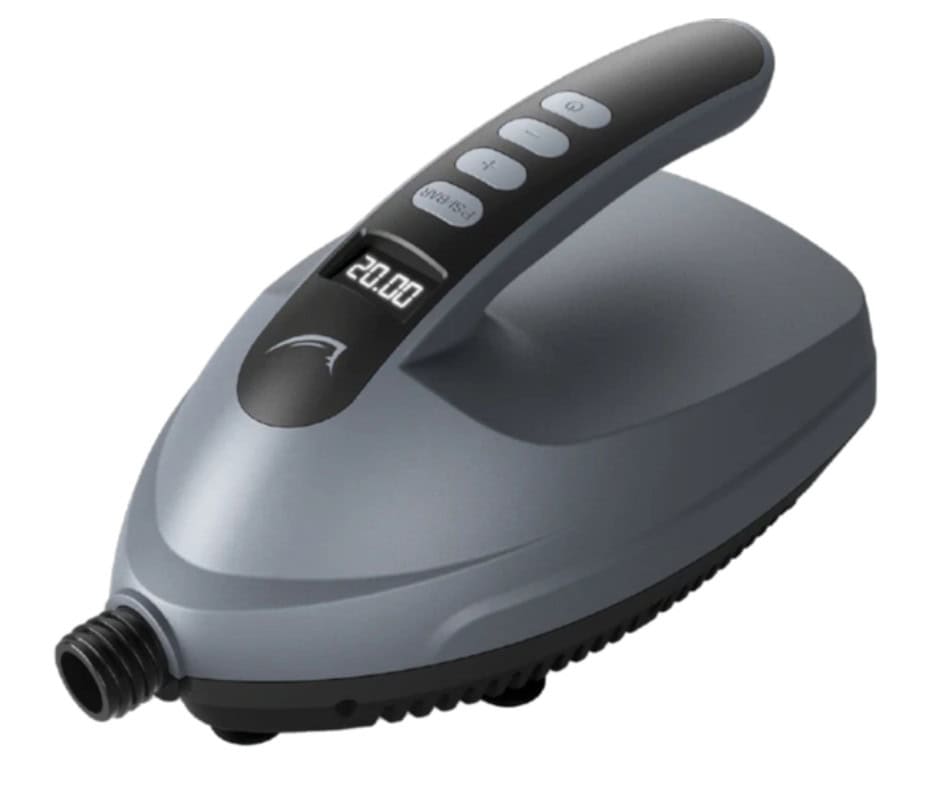
I’ve been using the E-Swift Lite with my Bluefin Cruise board since summer 25 and it’s become my default pump for solo sessions. The size is the first thing you notice — it tucks into any kit bag without dominating it.
It gets my Cruise to 15 PSI in around 12 minutes, and the power stays consistent throughout — it doesn’t slow down in the final few PSI the way cheaper pumps do. The auto shut-off is precise and reliable, and the deflate function speeds up pack-down at the end of a session.
The limitation is that it isn’t built for sustained multi-board use. Without active cooling, the manual recommends no more than 20 minutes of continuous running. For one or two boards that’s no issue at all — for a family of four, look at the Shark 3 instead.
Read my full Bluefin E-Swift Lite review here
Price: £130
Power Source: 12V
Max PSI: 20
Inflation Time: 8–12 min
Active Cooling: No
Key Benefits:
- Compact and lightweight at just 1.55kg
- 20 PSI maximum pressure with auto shut-off
- Clear LED digital display with real-time pressure readings
- Six valve adapters for compatibility across boards and inflatables
- Deflate function for faster pack-down
- Textured ABS housing for grip with wet hands
Where to Buy
Bluefin E-Swift Lite
My Verdict: “A compact, lightweight pump that takes the effort out of inflating — hits a full 20 PSI with smart auto shut-off, so you can leave it to do the work.”
Aquaplanet Compact Electric Pump
Best Compact SUP Pump

Pros
Cons
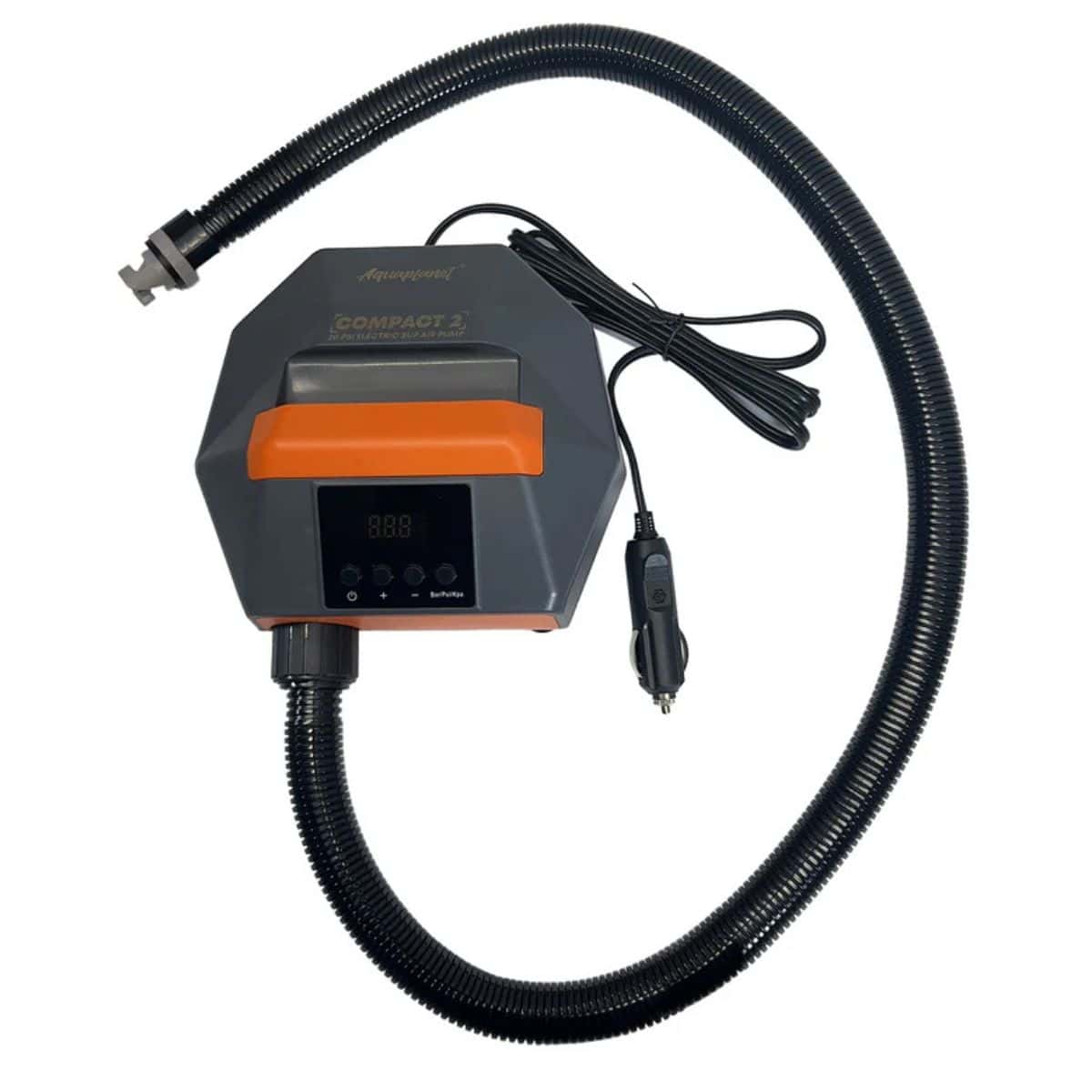
The Compact 2.0 is the upgraded version of Aquaplanet’s entry-level 12V pump, now reaching 20 PSI where the original topped out at 16. It’s a no-frills 12V plug-in pump with no battery, but it has active cooling and covers the basics at a sensible price from a brand that a lot of UK paddlers already trust for their boards.
It’s also worth knowing that this pump comes included as standard with the Aquaplanet Allround 10 paddleboard — so if you’ve picked one of those up recently, you may already have it in your kit. I’ve been testing the Allround 10, and the pump handles it well for solo sessions — reliable auto shut-off, consistent pressure throughout inflation, and compact enough to tuck away without thinking about it.
The limitation is what you’d expect at this price: there’s no wireless option, so it’s a straightforward 12V plug-in pump. But for a solo paddler or couple who want 20 PSI capability without spending mid-range money, it’s hard to argue with the value.
Price: £80
Power Source: 12V
Max PSI: 20
Inflation Time: 8–12 min
Active Cooling: Yes
Key Benefits:
- 20 PSI maximum pressure with auto shut-off
- 12V car socket powered
- Compact and lightweight — designed to fit unobtrusively in your kit bag
- Full set of nozzles for SUPs, kayaks, and other inflatables
- From Aquaplanet, the UK’s best-selling inflatable paddle board brand
Where to Buy
Aquaplanet Compact Pump
My Verdict: “A straightforward 12V plug-in pump for paddlers who want 20 PSI capability without spending mid-range money”
Jobe SUP 12V Pump
Best Dual-Power Pump

Pros
Cons
The Jobe SUP pump is a straightforward 12V option that covers the fundamentals without complication. The two-stage inflation process moves smoothly from high-volume to high-pressure, and the dual connection options — cigarette lighter or direct battery clamps — give it more flexibility than most at this price.
The main limitation is the analogue pressure gauge and PSI dial rather than a digital display. That’s a step behind the competition at this price point, and it means watching the gauge manually rather than setting a target and walking away. It works, but it’s less convenient than a digital auto shut-off setup.
Price: £134
Power Source: 12V
Max PSI: 20
Inflation Time: 10–15 min
Active Cooling: No
Key Benefits:
- 20 PSI maximum with two-stage low-to-high pressure inflation
- Dual connection options: cigarette lighter socket and alligator battery clamps
- Compact and lightweight for easy transport
- From Jobe, an established watersports brand
Where to Buy
Jobe SUP 12V Pump
My Verdict: “A no-nonsense 12V pump that covers the fundamentals — smooth two-stage inflation and dual power options give it more flexibility than most.”
Decathlon 15PSI Electric SUP Pump
Best Budget SUP Pump
Pros
Cons
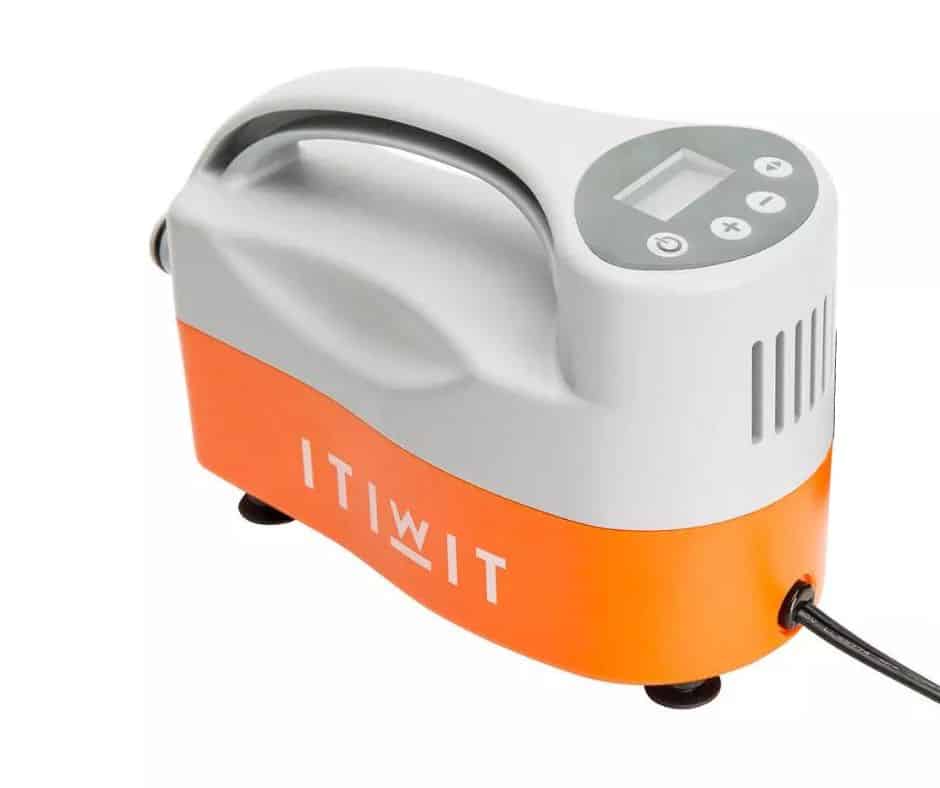
The Decathlon pump does exactly what it says. It’s the cheapest route into electric inflation, and for paddlers with a recreational board running happily at 12–15 PSI, it covers the job. The auto shut-off works reliably, the build is compact, and Decathlon’s returns policy gives you a reasonable safety net.
The ceiling is the limitation. At 15 PSI maximum, it won’t serve paddlers with higher-pressure boards — most mid-range and performance SUPs recommend 15–20 PSI, so if you’re near the top of that range, this pump will struggle at the end of inflation. There’s also no deflate function, which slows down pack-down.
If you’re new to paddleboarding, testing the water on cost, or simply don’t need more than 15 PSI, it’s a sensible starting point.
Price: £55
Power Source: 12V
Max PSI: 15
Inflation Time: 8–12 min
Active Cooling: No
Key Benefits:
- The most affordable electric SUP pump on this list
- Inflates a 300L board to 15 PSI in approximately 12 minutes
- 12V cigarette lighter connection with auto shut-off
- Compact and portable with carry bag
- Backed by Decathlon’s standard returns policy
Where to Buy
Decathlon 15PSI Electric Pump
My Verdict: “The most affordable way into electric inflation — reliable auto shut-off and easy setup make it a sensible starting point for recreational boards up to 15 PSI.”
What to Look For in an Electric SUP Pump
PSI capability: Most boards need 12–15 PSI, but having a pump that reaches 20 PSI means it won’t labour at higher pressures. Lower-rated pumps often slow down noticeably in the final stages of inflation.
Inflation speed: A decent pump should get a standard 10’6″ board to 15 PSI in 8–12 minutes. The premium battery-powered options are considerably faster — closer to 3–5 minutes on a full charge.
Cooling system: Cheaper pumps overheat after one board. If you’re inflating two or more boards regularly — family trips, group sessions — an active cooling system isn’t a luxury, it’s a necessity. Without one, you’re waiting 20–30 minutes between boards.
Auto shut-off: This lets you set your target PSI and walk away. The pump stops itself when it gets there — no over-inflation risk, no babysitting the gauge.
Power source: Most pumps run off a 12V car socket. Battery-powered pumps cut the cable entirely and work anywhere, but cost more. Worth it if you regularly paddle away from your vehicle.
Build quality: These get thrown in boots, dropped on beaches, and exposed to sand and moisture. Durable housing and solid connectors matter more than the spec sheet suggests.
My Take
The electric pump market has moved on considerably in the last couple of years, and the Shark 3 is the clearest evidence of that. For anyone inflating multiple boards regularly — family days, group sessions, teaching — it’s the standout pick. The battery speed alone justifies the premium over a 12V pump, and the dual-power fallback means you’re not stuck if you forget to charge it the night before.
For most solo paddlers or couples, though, the step up to Shark 3 pricing isn’t necessary. The Bluefin E-Swift Lite is my default pump for solo sessions and it’s been completely reliable across many trips with my Cruise board. It’s compact, consistent, and does exactly what it needs to without fuss.
On a tighter budget, the Aquaplanet Compact is the pick — 20 PSI performance for around £50 on sale is genuinely hard to argue with, and the active cooling means it handles back-to-back boards better than anything else at that price point.
Best Electric Pumps FAQ
Do I need an electric pump for paddle boarding?
No — every board comes with a manual pump and they work fine. But if you paddle regularly or inflate more than one board at a time, an electric pump saves significant effort and time. Most paddlers who make the switch don’t go back.
What PSI do most paddle boards need?
Most recreational SUPs run at 12–15 PSI. Higher-performance and racing boards often recommend 15–20 PSI. Check your board’s manual or the PSI label near the valve — and make sure your pump can reach that pressure comfortably, not just at its maximum.
Can an electric SUP pump over-inflate my board?
Any pump with a digital display and auto shut-off will stop at your target PSI, making over-inflation a non-issue in practice. Pumps without auto shut-off — like the Jobe’s analogue setup — require manual monitoring of the gauge. It’s one of the main reasons digital auto shut-off is worth prioritising.
How long does an electric SUP pump last?
Build quality varies considerably. Budget pumps (£40–£60) may last one to two seasons with regular use. Mid-range options (£80–£150) typically hold up for several years with normal care. Premium pumps with active cooling — particularly the Outdoor Master range — are built for long-term regular use and backed by a 2-year warranty.
Can I use an electric SUP pump without a car?
The Outdoor Master Shark 3 is the only pump on this list with a built-in battery, so it works completely independently of a vehicle. All other pumps on this list need a car’s cigarette lighter socket or, in the case of the Jobe, direct battery clamp connections. If you regularly launch away from your car, the Shark 3 is the only option here that gives you true wireless freedom.
Are electric SUP pumps noisy?
All electric pumps make noise — the motor is unavoidable. The Outdoor Master Shark 3 is notably quieter than most at around 80 decibels, roughly equivalent to a food blender. In a quiet natural setting you’ll still hear it, but it’s less grating than older models. If noise is a consideration at your usual spot, the Shark 3 is the best option on this list.
What’s the difference between a 12V pump and a battery pump?
A 12V pump needs to stay connected to your car’s cigarette lighter socket throughout inflation. A battery pump has an internal rechargeable battery and works anywhere without a cable. Battery pumps are typically faster and more capable of multiple boards — but they cost more. Of the pumps on this list, only the Shark 3 has a built-in battery.
Related Guides & Reviews
The resources below cover the basics, common questions, and related kit to help you get more out of your time on the water.
- How To Paddle Board: Complete SUP Guide for Beginners
- Best Budget Paddle Boards in the UK
- Best Paddle Board Accessories: Best SUP Gear
- Best Life Jacket for Paddle Boarding
- Electric vs Hand Pump: Paddleboard Pump Guide

Steve Cleverdon
Adventure-driven outdoor gear reviewer and paddleboarder, Steve has spent 20 years exploring rivers, coastlines, and trails across Britain and abroad, sharing what he’s learned along the way. Learn more about Steve or get in touch.