Carry all your water for a day in the hills, and you’re lugging an extra two or three kilos. Run out halfway along a ridge, and every stream starts to look tempting, but even clear, fast-flowing water can carry bacteria and parasites like E. coli and Giardia that’ll ruin the rest of your trip. A portable water filter lets you top up from whatever’s flowing and drink it safely.
This guide covers six of the best water filters, from pocket-sized screw-on filters to an 8-litre gravity system for groups. I’ve been testing them all across the UK this summer, and here’s how they stack up.
Quick Picks
- Sawyer Mini (SP128) – Best Overall
- LifeStraw Peak Series Solo – Best Lightweight
- MSR TrailShot – Best Pocket Hand Squeeze Pump Filter
- LifeStraw Peak Series Gravity – Best Large-Capacity Gravity Filter
- LifeStraw Go Series Stainless Steel 700ml – Best Insulated Filter Bottle
- Water to Go Eco 75cl Active – Best Eco-Friendly Filter Bottle
Thanks for your support – I may earn a small commission from affiliate links in this article Learn more
Most water filters on this list were gifted, others were borrowed or bought for review. All opinions are my own.
Sawyer Mini (SP128)
Best Overall Water Filter for Hiking

Pros
Cons
The Sawyer Mini is my top pick because everything you need is in the box. It comes with a 473ml (16oz) collapsible pouch that screws directly onto the filter, plus a drinking straw and a cleaning syringe, so you can take it out of the packaging and head straight for the hills. It also fits standard 28mm bottles, and hung upside down, it works as a simple gravity filter at camp.
There’s not a great deal between this and the LifeStraw Peak Solo. They’re similar in size and weight, they do the same job well, and I’d happily carry either. I prefer the Solo’s design, but the Sawyer wins overall because it’s complete without buying extras. Its 0.1 micron filter is the finest here, and Sawyer rates it to an eye-watering 100,000 US gallons (around 378,000 litres), which makes it excellent value if you look after it and backwash it regularly. For most hikers, it’s the one I’d recommend.
Price: £39
Weight: 57g (2oz)
Filter lifespan: Rated to 100,000 US gallons
Pore size: 0.1 micron absolute
Removes: 99.99999% of bacteria, 99.9999% of protozoa, 100% of microplastics
Compatibility: Standard 28mm threaded bottles
In the box: Filter, 473ml (16oz) pouch, drinking straw, cleaning syringe
Hollow fibre membrane / Backwashable, restoring up to 98.5% of flow / No replacement cartridges needed / Removes E. coli, Giardia, Vibrio cholerae and Salmonella typhi / Each filter air-tested three times / Fits pouches, bottles and hydration packs / Colours: Blue, Green, Camo
Where to Buy

Sawyer Mini
My Verdict: “A complete, lightweight kit that’s ready to go out of the box, with a huge rated lifespan for the price.”
LifeStraw Peak Series Solo
Best Lightweight Water Filter

Pros
Cons
At 48g, the Peak Solo is the lightest filter in this guide. It screws onto any standard 28mm bottle, so on hikes, I can fill a soft flask from a slow-moving stream, screw the Solo on and drink straight through it. LifeStraw rates the flow at 3 litres a minute, the fastest here, and it certainly feels quick, with none of the cheek-hollowing effort you get from some straw filters. Hold or hang the bottle upside down, and it works as a small gravity filter too.
There isn’t a great deal between this and the Sawyer Mini. I prefer the Solo’s design, which feels nicer and more thought-through, but it doesn’t come with a bag or bottle as standard, so you’ll need your own dirty-water container. LifeStraw does sell it in bundles that include one. If you already own a soft flask or a few old bottles and want to save every gram, it’s the one I’d buy.
Price: £31.95
Weight: 48g
Flow rate: 3L per minute
Filter lifespan: Up to 2,000L
Pore size: 0.2 micron
Removes: 99.999999% of bacteria, 99.999% of parasites, 99.999% of microplastics
Compatibility: Standard 28mm threaded bottles
Dimensions: 12.9 x 3.3cm
Membrane microfiltration / Removes E. coli, Salmonella, Giardia and Cryptosporidium / Leak-proof top and bottom caps / Threaded backwash syringe included / Made with 50% post-consumer recycled plastic / Meets US EPA and NSF P231 standards / B Corp and Climate Neutral Certified / Colours: Limeade, Blue Raspberry, Pink Lemonade, Gray
Where to Buy

LifeStraw Peak Series Solo
My Verdict: “My top pick: fast-flowing, light and pocket-sized, and it screws onto almost any bottle or bladder.”
MSR TrailShot
Best Pocket Hand Squeeze Pump Filter

Pros
Cons
The TrailShot works differently from everything else on this list. Rather than filling a bag or bottle with dirty water first, you drop the intake hose straight into your water source and squeeze the pump in your hand. Clean water comes out of the other end, so you can drink straight from it or pump it into a bottle, bladder, pot, or pan. On the slow-moving streams I tested the pump, it didn’t clog once, though the intake did pick up sand and grit and needed a wipe a few times.
What I like most is that you don’t need to carry a dedicated container for dirty water, which keeps things simpler and lighter. The trade-off is effort. The other (non-bottle) filters here can run on gravity while you get on with other jobs, whereas the TrailShot only works while you’re squeezing. MSR says it’ll fill a litre bottle in 60 seconds, which is fine for topping up on the move but can get tiring if you’re filtering for more than just yourself. For solo hikers and trail runners who want to drink on the go, it’s excellent.
Price: £79.99
Weight: 142g
Flow rate: 1L per minute
Filter lifespan: Up to 2,000L
Pore size: 0.2 micron
Removes: 99.9999% of bacteria, 99.9% of protozoa
Hollow fibre filter / Pocket hand squeeze pump with intake hose / One-handed operation / A few shakes restores flow, no tools needed / Cartridge replacement indicator / Replaceable cartridge / Meets US EPA and NSF P231 standards / Made in the USA
Where to Buy

MSR TrailShot
My Verdict: “Drink straight from the stream with no dirty-water bottle needed. Ideal for solo hikers who don’t mind squeezing.”
LifeStraw Peak Series Gravity Filter System
Best Large-Capacity Gravity Filter

Pros
Cons
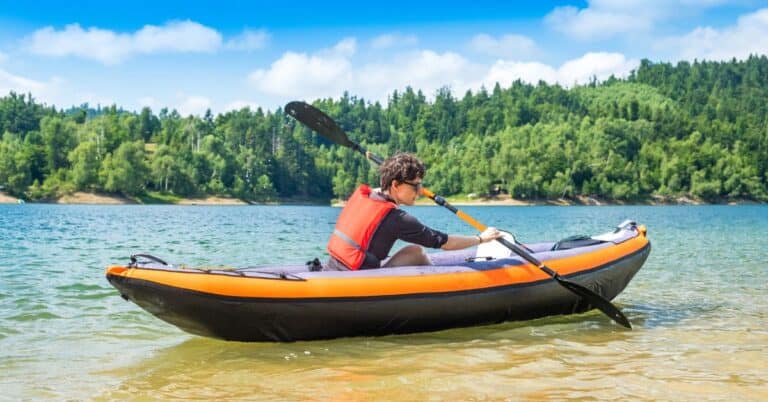
This summer, five mates and I canoed the Great Glen Canoe Trail from Fort William to Inverness, and this 8-litre gravity system basically did all of our filtering for the group. We’d fill it once or twice a day, hang it from a branch, and let the hose trail down into a collapsible bucket. Then we’d get on with pitching tents and cooking while it filtered water for all six of us.
LifeStraw quotes a flow rate of 1.5 litres a minute, which is plenty when you’re not standing over it, and the filter unit detaches so you can use it as a straw or on a bottle too. It’s far too big for a day hike, but LifeStraw also makes a 3-litre version at 228g that suits smaller groups of two or three. But for group expeditions, base camps and van life, where you want a big supply of clean water without anyone squeezing a pouch, it’s excellent.
Price: £99.95
Weight: 536g
Capacity: 8L
Flow rate: 1.5L per minute
Filter lifespan: Up to 2,000L
Pore size: 0.2 micron
Removes: 99.999999% of bacteria, 99.999% of parasites, 99.999% of microplastics
Hose length: 1.2m
Puncture and rip-resistant BPA-free bag / 1.2m hose with quick connector / Leak-proof cap for water storage / Carry strap and carabiner / Backwash accessory included / Detachable filter / Suits groups of 4–6 / Meets US EPA and NSF P231 standards / LifeStraw is a certified B Corp
Where to Buy

LifeStraw Gravity Filter System
My Verdict: “Hands-free filtering that easily keeps a group of six supplied. The one to take for base camps and van life.”
LifeStraw Go Series Stainless Steel 700ml
Best Insulated Filter Water Bottle

Pros
Cons
The LifeStraw Go feels like a nice upgrade on the plastic filter bottles I’ve used for years. It’s a double-walled stainless steel bottle with a two-stage filter inside, and it looks smart enough that it’s become my everyday water bottle for work, the car, and trips away, not just hikes. On sunny days, the insulation holds up well, and the carbon stage takes the edge off chlorine and odd tastes, which makes tap water from unfamiliar places far more pleasant to drink.
There are a couple of trade-offs. The filter takes up a fair bit of room inside, so dropping ice in to keep things cold isn’t really an option. At 515g, it’s also much heavier than a plastic bottle like the Water to Go, which makes it harder to justify on a long hike where weight counts. The membrane is rated to 4,000 litres, but the carbon filter needs replacing roughly every 100 litres, or around two months. If you want one bottle for everyday life and travel, it’s a great choice.
Price: £64.95
Weight: 515g
Capacity: 700ml
Dimensions: 28 x 10cm
Membrane filter lifespan: Up to 4,000L
Carbon filter lifespan: Up to 100L (around two months)
Removes: 99.999999% of bacteria, 99.999% of parasites, 99.999% of microplastics, reduces chlorine and odours
Double-wall vacuum-insulated stainless steel / Two-stage membrane and activated carbon filtration / Protected silicone mouthpiece / Carry handle / Replaceable filters / Not for hot drinks / Hand wash recommended / Meets NSF 42, US EPA and NSF P231 standards / Nine colours / LifeStraw is a certified B Corp
Where to Buy

LifeStraw Stainless Steel 700ml
My Verdict: “A stylish, insulated everyday bottle that keeps filtered water cold, though it’s heavy for long hikes.”
Water to Go Eco 75cl Active
Best Eco-Friendly Filter Water Bottle

Pros
Cons
I’ve used Water to Go bottles for years, and they’ve been with me on more trips than I can count. They’re strong, durable bottles that shrug off being thrown in a bag. I took a bottle on a trip to Morocco back in 2024, and having the option to fill up from a tap anywhere and drink as I went gave me real peace of mind abroad. That’s thanks to the filter, which Water to Go says removes 99.9999% of bacteria and 99.98% of viruses, using a positive electrical charge that grabs contaminants smaller than the filter’s pores.
That virus protection is what sets it apart from the rest of this list, and it’s why I’d pick it over the others for travel. The bottle is made from a sugarcane-based plant material, the filter membrane is biodegradable, and the caps are recyclable, which is a nice touch. The trade-off is filter life. At 200 litres, or about three months of daily use, it’s the shortest here, so you’ll be buying replacements more often. For travellers who want something light and simple, it’s hard to beat.
Price: £39.95
Weight: 138g
Capacity: 750ml
Filter lifespan: 200L (around three months at 2L a day)
Removes: 99.9999% of bacteria, 99.98% of viruses, 99.99% of microorganisms, plus lead, chlorine and fluoride
Sugarcane-based, BPA-free bottle / Three-part mechanical, electrical and activated carbon filtration / Biodegradable filter membrane / Recyclable caps and cover / Squeezable body / One-handed click lid with hygiene cover / Detachable carabiner / Translucent with volume markings / Fits bike bottle cages / Colours: Blue, White, Acai / Lifetime guarantee
Where to Buy

Water to Go Eco 75cl Active
My Verdict: “Light, tough, and reduces viruses too, making it my go-to filter bottle for travelling abroad.”
Save 15% off Water to Go gear with code SteveC15
How I Tested
I’ve used all six filters in this guide. Most of my hands-on time came from day hikes around the Ashdown Forest in East Sussex, where I ran each one through any questionable water I could find, mainly slow-moving streams with plenty of sand and grit. I paid attention to how easy each one was to fill and use, how quickly water came through and whether anything clogged.
The gravity filter got its big outing on the Great Glen Canoe Trail in August 2026, where it supplied six of us each day. The Water to Go and LifeStraw Go bottles have also come with me to work, in the car, and on trips abroad, including Morocco. Filtration figures and specs come from each brand’s published data. I haven’t lab-tested water quality myself.
What to Look For in a Hiking Water Filter
Filter type
There are four main styles here. Screw-on filters like the Peak Solo and Sawyer Mini attach to a bottle or pouch and you drink through them or squeeze water out. Squeeze pumps like the MSR TrailShot draw water straight from the source, so you don’t need a dirty-water container. Gravity systems like the LifeStraw 8L do the work for you and suit groups. Filter bottles like the LifeStraw Go and Water to Go are the simplest option: fill, close and drink.
Filter or purifier?
A filter is a physical barrier: a membrane full of tiny holes, usually 0.1 to 0.2 micron (thousandths of a millimetre) on hiking filters. That’s small enough to trap protozoa like Giardia and Cryptosporidium, and bacteria like E. coli and Salmonella, which are usually around 0.5 to 5 micron. Viruses are much smaller, often 0.02 to 0.3 micron, so most slip straight through a standard filter.
A purifier deals with viruses as well. It does that with a much finer membrane (around 0.02 micron), chemical treatment such as chlorine dioxide tablets, UV light, or an electrical charge that grabs viruses as water passes through, which is roughly how the Water to Go works. In the US, “purifier” usually means a product that removes at least 99.99% of viruses. The Water to Go claims 99.98%, so it’s fair to say it reduces viruses, but it isn’t strictly a purifier.
For most UK hiking, a filter is all you need. Viruses in water mostly come from human waste, and up in the hills, with few people upstream, the bigger risks are bacteria and protozoa, often from livestock. Viruses become more of a concern abroad, where sanitation is less reliable, or in water downstream of towns and campsites. That’s where a virus-rated option like the Water to Go earns its place.
Taste and chemicals
Hollow fibre filters don’t remove chemicals or improve taste. Filters with an activated carbon stage, like the LifeStraw Go and Water to Go, reduce chlorine and odours, which makes a noticeable difference with treated tap water abroad.
Flow rate
Flow rate tells you how fast clean water comes through. Around 1 litre a minute is fine for drinking on the move. Faster filters like the Peak Solo (3L per minute) make topping up bottles for a day on the hills much quicker.
Filter lifespan and maintenance
Ratings vary hugely, from 200 litres for the Water to Go to 100,000 US gallons for the Sawyer Mini. Backwashing with the supplied syringe keeps flow rates up on hollow fibre filters. Carbon filters need replacing far more often than membranes, so factor that into running costs.
Weight and size
For day hikes and backpacking, pocket filters under 150g are the way to go. Insulated steel bottles and gravity systems are heavier and bulkier, so they make more sense for everyday use, travel, base camps and group trips.
Bottle compatibility
A standard 28mm thread means a filter will screw onto most disposable water bottles and many soft flasks. It’s worth checking before you buy if you want to use bottles you already own.
Group size
For one or two people, a screw-on filter or squeeze pump is plenty. For bigger groups, a gravity system saves everyone from queuing up to squeeze a pouch at the end of a long day.
Cold weather
Hollow fibre filters can be damaged if water inside them freezes. On cold nights, keep your filter in your sleeping bag or an inside pocket.
My Verdict
For most hikers, the Sawyer Mini is the one I’d recommend. It comes as a complete kit, has the finest filter here and a huge rated lifespan, and it does everything you need straight out of the box. The LifeStraw Peak Solo runs it very close and is the one to pick if you want the lightest, fastest-flowing filter and already have a bottle or soft flask to pair it with. If you’d rather not carry a dirty-water container at all, the MSR TrailShot lets you drink straight from the source, as long as you don’t mind a bit of squeezing.
For groups, the LifeStraw 8L gravity system was the standout of our Great Glen trip, keeping six of us supplied without any fuss. And for travel and everyday use, both filter bottles are great picks. Go for the Water to Go if you want virus protection and a lighter bottle, or the LifeStraw Go if you want cold water from a bottle that looks the part.
Related Guides & Reviews
The resources below cover the basics, common questions, and related kit to help you get more out of your time on the water.
- How To Paddle Board: Complete SUP Guide for Beginners
- Best Budget Paddle Boards in the UK
- Best Paddle Board Accessories: Best SUP Gear
- Best Life Jacket for Paddle Boarding
- Electric vs Hand Pump: Paddleboard Pump Guide

Steve Cleverdon
Adventure-driven outdoor gear reviewer and paddleboarder, Steve has spent 20 years exploring rivers, coastlines, and trails across Britain and abroad, sharing what he’s learned along the way. Learn more about Steve or get in touch.