A good insulated jacket keeps you warm when you stop, copes with a bit of drizzle, and fits under a waterproof when the rain sets in. In the UK, where winter days are more often damp than freezing, that balance matters as much as warmth or weight.
This guide covers six of the best insulated jackets for UK weather, down and synthetic, from a budget Decathlon jacket to a fully waterproof down jacket. I’ve tested one and researched the rest, and I’ll update the list as more reviews go live. Here are my quick picks.
Quick Picks
- Rab Microlight Alpine – Best Overall Insulated Jacket for UK Weather
- Rab Valiance – Best Waterproof Down Jacket
- Patagonia Nano Puff Hoody – Best Synthetic Insulated Jacket
- Alpkit Heiko – Best Synthetic Jacket for Layering
- OEX Kintra – Best Budget Down Jacket
- Decathlon Forclaz MT100 Down – Best Lightweight Budget Down Jacket
I’ve tested the OEX Kintra. The other jackets are chosen from research, spec sheets, and independent reviews, and I’ll update this guide as I review them.
Thanks for your support – I may earn a small commission from affiliate links in this article Learn more
Rab Microlight Alpine
Best Overall Insulated Jacket for UK Weather

Pros
Cons
The Microlight Alpine is one of the most popular down jackets in the UK, and the specs explain why. It uses 700 fill power recycled goose down with a hydrophobic treatment, which helps the down resist moisture and dry faster than untreated down. The shell is Pertex Quantum, a light, tightly woven nylon with a DWR finish that sheds showers and blocks the wind. Stitch-through baffles keep the weight down, and the hood has a stiffened peak to keep rain and hail off your face.
At 446g in a medium, it’s light enough to carry all day for stops and summits, and the hydrophobic down gives it more margin in damp weather than untreated down. Stitch-through baffles do leave slightly cooler lines along the seams compared with box-baffled jackets, so it suits active days and stops more than long, very cold nights. It’s a good fit for hillwalkers and campers who want one down jacket for most of the UK year, and it’s often discounted well below its £220 RRP.
Price: £220 RRP
Weight: 446g (men’s M)
Insulation: 700 fill power recycled goose down, hydrophobic
Fill weight: 153g (M)
Shell: Recycled 30D Pertex Quantum nylon with DWR
Hood: Down-filled, adjustable, stiffened peak
Pockets: 2 zipped hand, 1 chest
Also available: Women’s version
Zoned micro and nano stitch-through baffles / Internally elasticated cuffs / Drawcord hem / Harness-compatible pockets / GRS-certified recycled down
Where to Buy
Rab Microlight Alpine
My Verdict: “A light, warm all-rounder with treated down that copes with UK showers better than most down jackets.”
Rab Valiance
Best Waterproof Down Jacket
Pros
Cons
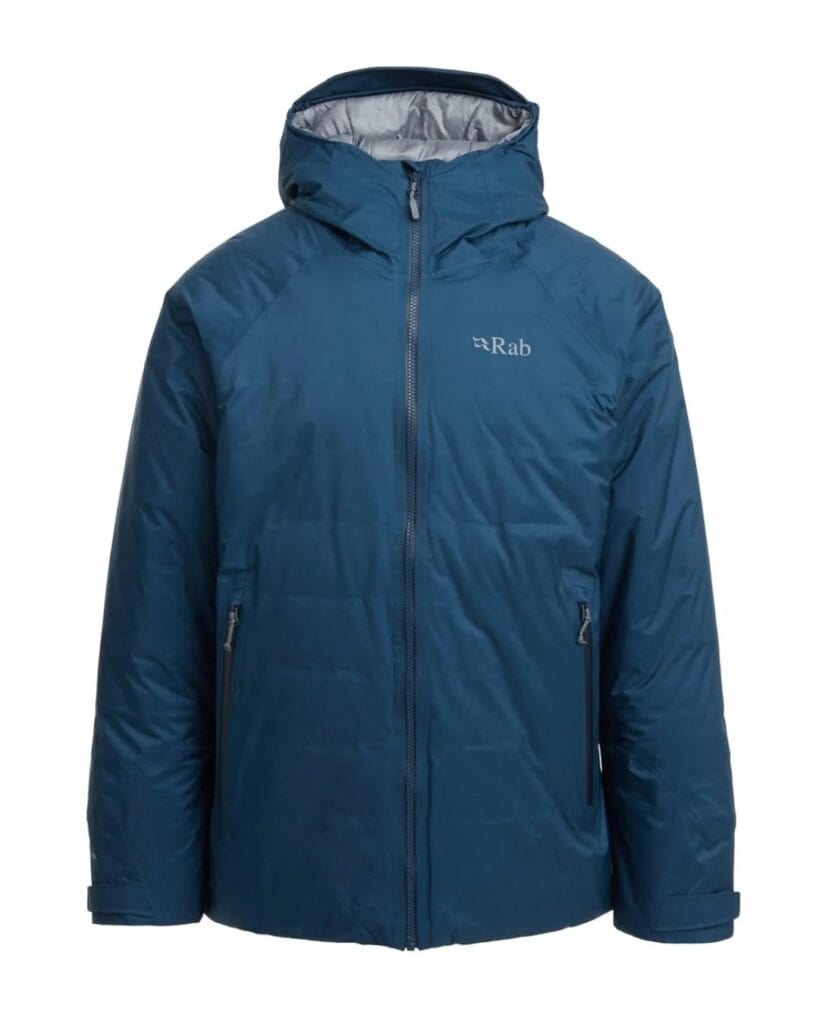
The Valiance tackles the main weakness of down in the UK by putting it inside a waterproof shell. Rab use a two-layer Pertex Shield fabric with taped seams, rated to a 20,000mm hydrostatic head, so steady rain stays on the outside instead of soaking into the down. Inside is 700 fill power recycled down with a Grangers hydrophobic finish, which adds a second line of defence against damp from sweat or a wet cuff.
The trade-off is weight and bulk. At 832g in a medium, it’s close to double a lightweight down jacket, and the 81.5cm back length makes it more of a winter coat than a packable layer. It’s best for cold, wet days with plenty of standing around, such as winter dog walks and time in camp, rather than for carrying in a pack. If you want one jacket that handles a wet British winter on its own, this is the one to look at.
Price: £320
Weight: 832g (men’s M)
Insulation: 700 fill power recycled down, Grangers hydrophobic finish
Fill weight: 205g (M)
Shell: 40D Pertex Shield 2-layer, taped seams
Waterproofing: 20,000mm hydrostatic head, 20,000g/m²/24hr breathability
Length: 81.5cm centre back (M)
Also available: Women’s version
YKK AquaGuard front zip / Insulated zip baffle / Synthetic-insulated neck baffle / Two-point adjustable hood / Two zipped hand pockets and an internal zipped pocket / Stretch inner cuffs
Where to Buy
Rab Valiance
My Verdict: “A waterproof down jacket for cold, wet days when you’re standing around more than moving.”
Patagonia Nano Puff Hoody
Best Synthetic Insulated Jacket
Pros
Cons
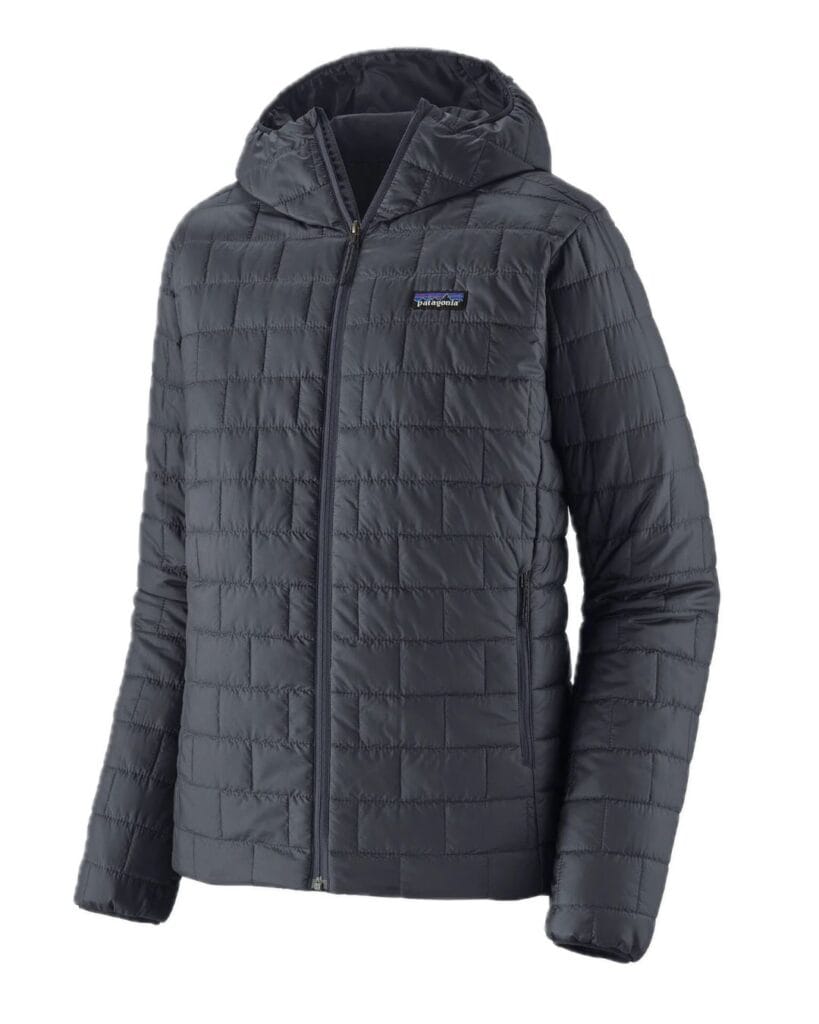
The Nano Puff has been around for years and is the synthetic jacket many others are measured against. It uses 60g PrimaLoft Gold Insulation Eco, which keeps most of its warmth when it gets damp, inside a light recycled polyester ripstop shell with a DWR finish. The brick-pattern quilting holds the insulation in place so it doesn’t shift and leave cold spots.
60g fill is on the thin side, so it’s best for cool, damp days and active use rather than standing around below freezing. That also suits UK conditions: you can keep it on while walking in drizzle without overheating as quickly as in a thick down jacket, then wear it under a waterproof when the rain gets heavier. It packs into its own chest pocket, which has a clip-in loop. At £210 it’s expensive for a synthetic jacket, but it’s often discounted.
Price: £210
Weight: 400g (men’s, as listed)
Insulation: 60g PrimaLoft Gold Insulation Eco, recycled polyester
Shell: 1.3oz recycled polyester ripstop, PFAS-free DWR
Hood: Fits under a helmet
Pockets: 2 zipped hand, 1 internal chest (doubles as stuff sack)
Also available: Women’s version, a hoodless jacket, and the warmer Hi-Loft Nano Puff Hoody
Horizontal brick quilting / Drop-tail drawcord hem / Zip garages on hand pockets / Carabiner clip-in loop / Fair Trade Certified sewing
Where to Buy
Patagonia Nano Puff Hoody
My Verdict: “A proven synthetic jacket for damp, active days that keeps working when the weather turns.”
Alpkit Heiko
Best Synthetic Jacket for Layering
Pros
Cons
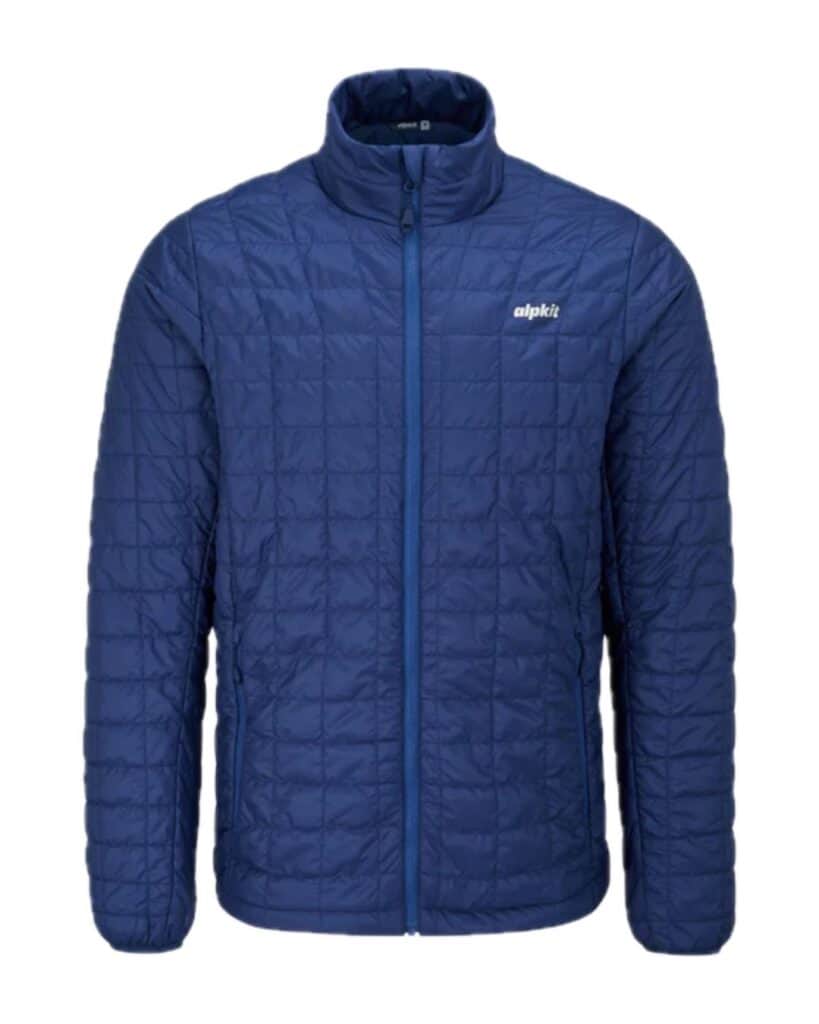
The Heiko is a hoodless synthetic jacket from Alpkit, a UK brand, designed to work as either a mid-layer or a light outer layer. It uses 60gsm PrimaLoft Silver Eco, made from recycled material, inside a recycled polyester shell with a PFAS-free water-resistant finish. Synthetic fill keeps insulating when it’s damp, and at 344g in a medium, it’s one of the lightest jackets in this guide.
The lack of a hood is the main trade-off. It keeps the jacket simple and stops it bunching under a waterproof’s hood, but on a cold, windy summit you’ll miss one unless you wear a hat or a hooded shell. It suits walkers who want an insulating layer to wear under a rain jacket through autumn and winter, or on its own on dry, cool days. At £134.99 it sits between budget and premium, and Alpkit’s three-year Alpine Bond warranty adds some reassurance.
Price: £134.99
Weight: 344g (men’s M)
Insulation: 60gsm PrimaLoft Silver Eco, recycled
Shell: 100% recycled polyester, PFAS-free DWR
Hood: None
Pockets: 2 zipped fleece-lined hand, 1 internal chest
Warranty: 3-year Alpine Bond
Also available: Women’s version
100% recycled materials / Packs into its own chest pocket with hang loop / Windproof shell / Works as a mid-layer or outer layer
Where to Buy
Alpkit Heiko
My Verdict: “A light, simple synthetic layer that sits neatly under a waterproof on wet UK walking days.”
OEX Kintra
Best Budget Down Jacket

Pros
Cons
If you want down without spending much, the Kintra is the one I’d point to. It uses 700 fill power duck down in a 90/10 ratio, the same fill power as some jackets costing twice as much. I wore it wild camping on Raven Crag in the Lake District when it dropped to 0°C, with a base layer and fleece underneath, and stayed comfortable. The adjustable hood with a wired peak stood out in driving hail on Cadair Idris.
The shell has a PFC-free DWR finish that handles light rain and snow, but the down itself isn’t treated, so it’s less forgiving of damp than the hydrophobic down in the Microlight Alpine. For dog walks, day hikes and evenings in camp on cold, dry days, it gets the main things right for a low price.
Read my full OEX Kintra review
Price: £95 RRP
Weight: About 480g (men’s M)
Insulation: 700 fill power duck down, 90/10
Shell: 20D ripstop polyamide, PFC-free DWR
Hood: Adjustable, wired peak
Pockets: 2 zipped hand, 1 chest
Also available: Women’s version
Synthetic fill in the front collar / Athletic cut / Elasticated cuffs / Adjustable hem / Chest pocket
Where to Buy

OEX Kintra Hooded Down Jacket
My Verdict: “A hooded down jacket that delivers reliable warmth without premium pricing. At around £100, it’s hard to find better value for everyday UK winter use.”
Women’s version also available at Blacks, Go Outdoors and Amazon.
Decathlon Forclaz MT100 Down
Best Lightweight Budget Down Jacket

Pros
Cons
The MT100 is Decathlon’s entry-level down jacket, and on paper it’s hard to beat for the money. It uses duck down with a fill power of at least 700, the same as jackets costing several times more, and the down is certified to the Responsible Down Standard. The shell is a thin 15-denier polyamide with a water-repellent finish, which keeps the weight to about 280g in a large.
Decathlon rate it for comfort at -3°C when you’re moving and 5°C when you’re standing still, worn over a base layer and light fleece. Those are the brand’s own figures, so treat them as a guide. There’s no hood, so it works best as a warm layer under a hooded waterproof, or on cold, dry days around town and in camp. It folds into its own hand pocket, which makes it easy to keep in a daypack. At £49.99, it’s a low-risk way to try down.
Price: £49.99
Weight: About 280g (men’s L)
Insulation: 86% duck down, 10% duck feather, 4% polyester, 700+ fill power, RDS-certified
Shell: 100% polyamide, 15D, water-repellent finish
Comfort rating (Decathlon): -3°C active, 5°C static
Hood: None
Pockets: 2 zipped hand
Warranty: 2 years
Windproof shell / Regular fit / Folds into left hand pocket / Double-puller zip / Machine washable at 30°C
Where to Buy
Decathlon Forclaz MT100 Down
My Verdict: “Light, cheap down for cold, dry days, best worn under a hooded waterproof when the weather turns.”
How I Chose
I’ve tested one jacket on this list, the OEX Kintra, which I’ve used over two winters on dog walks, hikes and wild camps, including Cadair Idris and the Lake District. The other five are researched rather than tested. I chose them from brand spec sheets, UK retailer listings and independent reviews, to cover down and synthetic, waterproof and water-resistant, and budget to premium. I’ve used the brands’ own figures for weights and fills, and treated their temperature ratings and performance claims as claims. As I review more jackets, I’ll replace researched picks with tested ones and update this guide.
What to Look For in an Insulated Jacket
Down or synthetic?
Down is lighter and warmer for its weight, but it costs more and stops insulating well when it gets wet. Synthetic is heavier and usually cheaper, and it keeps working when damp. In the UK, that usually makes synthetic the better everyday jacket to wear on its own, and down the better choice for hiking and camping with a waterproof on top. My down vs synthetic insulation guide covers the differences in more detail.
Are insulated jackets waterproof?
Most aren’t. Down and synthetic jackets usually have a water-resistant shell with a DWR finish, which beads off light rain and snow but soaks through in steady rain. Hydrophobic down, as used in the Rab Microlight Alpine, resists damp for longer but still isn’t waterproof.
If you want a waterproof down jacket, look for a waterproof membrane and taped seams, as on the Rab Valiance. The other option is to wear a rain jacket over an insulated jacket, which keeps the insulation dry and lets you take layers off as you warm up. My best waterproof jackets guide covers the best options available today.
Fill power and fill weight
Fill power measures how much space a set weight of down fills. Higher numbers mean more warmth for the weight, and 700 is a good mid-range figure. Fill weight is the total grams of down in the jacket, and it tells you more about how warm the jacket will be. Synthetic fills are measured in grams per square metre: around 60g/m² suits active use and mild days, and higher figures are warmer but bulkier.
How warm does it need to be?
For most UK walking, you’ll wear an insulated jacket when you stop, not on the move. A light down jacket or a 60g synthetic jacket is enough for most autumn and winter walks below the snow line, with a base layer and fleece underneath on colder days. Heavier down or a waterproof down jacket is worth it for winter camping, long stops and standing around in the cold. Treat brand temperature ratings as a rough guide, as they depend on what you wear underneath and how active you are.
Hood, pockets and fit
A hood adds a lot of warmth for little weight, and a stiffened or wired peak helps in wind and hail. Check the jacket fits over a base layer and fleece, and under your waterproof without compressing the insulation. Zipped hand pockets set high enough to use with a rucksack hip belt are useful on the hill.
Looking after it
Wash an insulated jacket about once a season, or when it smells or looks flat. Down needs a down-specific wash and a long, low-heat tumble dry with dryer balls. My guide on how to wash a puffer jacket covers the steps for down and synthetic.
Care for your gear
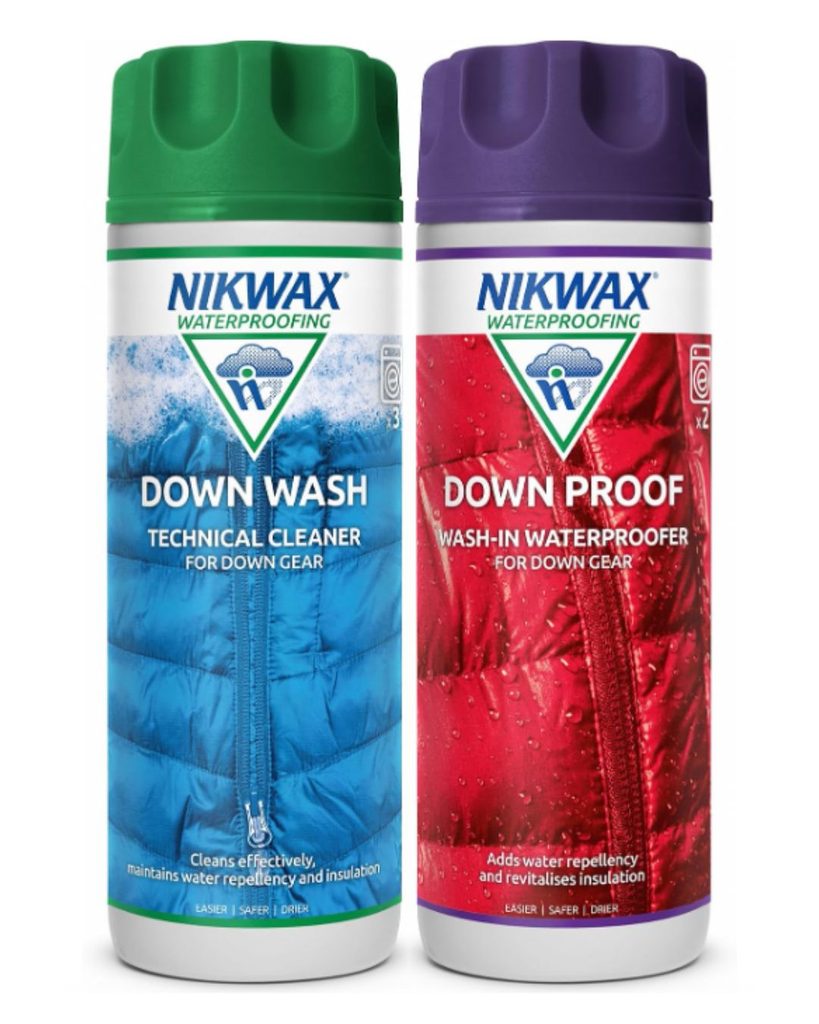
Nikwax Down Wash + Down Proof Twin Pack
From £15 • 2 x 300ml
A two-step wash and wash-in proofer that cleans down, keeps its loft, and adds water repellency, so your jacket stays warm in damp weather.
My Verdict
For most people walking and camping in the UK, the Rab Microlight Alpine is the best insulated jacket to start with. It’s light, warm for its weight, and its hydrophobic down copes with showers better than untreated down. Wear a waterproof over it when the rain sets in.
If you want one jacket to wear on its own through a wet winter, choose synthetic. The Patagonia Nano Puff Hoody is the one many others are measured against, and the Alpkit Heiko is a lighter, cheaper layer for under a waterproof. If you’d rather have down that can handle steady rain, the Rab Valiance puts it inside a fully waterproof shell. On a budget, the OEX Kintra gives you 700 fill down for a low price, and the Decathlon MT100 is the cheapest way to a warm hooded layer.
Related Guides & Reviews
The resources below cover the basics, common questions, and related kit to help you get more out of your time outdoors.
- Mountain Warehouse Seasons Padded Jacket Review
- Best Gore-Tex Jackets for Hiking in the UK
- Rohan Aira Jacket Review 2026 (Is It Worth £300?)

Steve Cleverdon
Adventure-driven outdoor gear reviewer and paddleboarder, Steve has spent 20 years exploring rivers, coastlines, and trails across Britain and abroad, sharing what he’s learned along the way. Learn more about Steve or get in touch.