Warm and water-resistant, the Mountain Warehouse Seasons Padded Jacket is a no-frills synthetic puffer built for everyday cold-weather use. Its microfibre fill is lab-tested to -30°C and, unlike down, keeps insulating when it gets damp.
Thanks for your support – I may earn a small commission from affiliate links in this article Learn more
I purchased the Mountain Warehouse Seasons Padded Jacket for review. All opinions are my own.
- Warmth
- Durability
- Weight & Packability
- Weather Resistance
My Verdict
A simple, cosy everyday puffer at a budget price. The synthetic fill stays warm when damp, the DWR shrugs off light rain better than I expected, and it fits true to size. However, it’s a fairly basic jacket: no zipped pockets, no internal pocket, and no way to adjust the hood or hem. At £40 on sale I think it’s a steal, but I’d think twice about paying the full £80.
Pros
Cons
Where to Buy
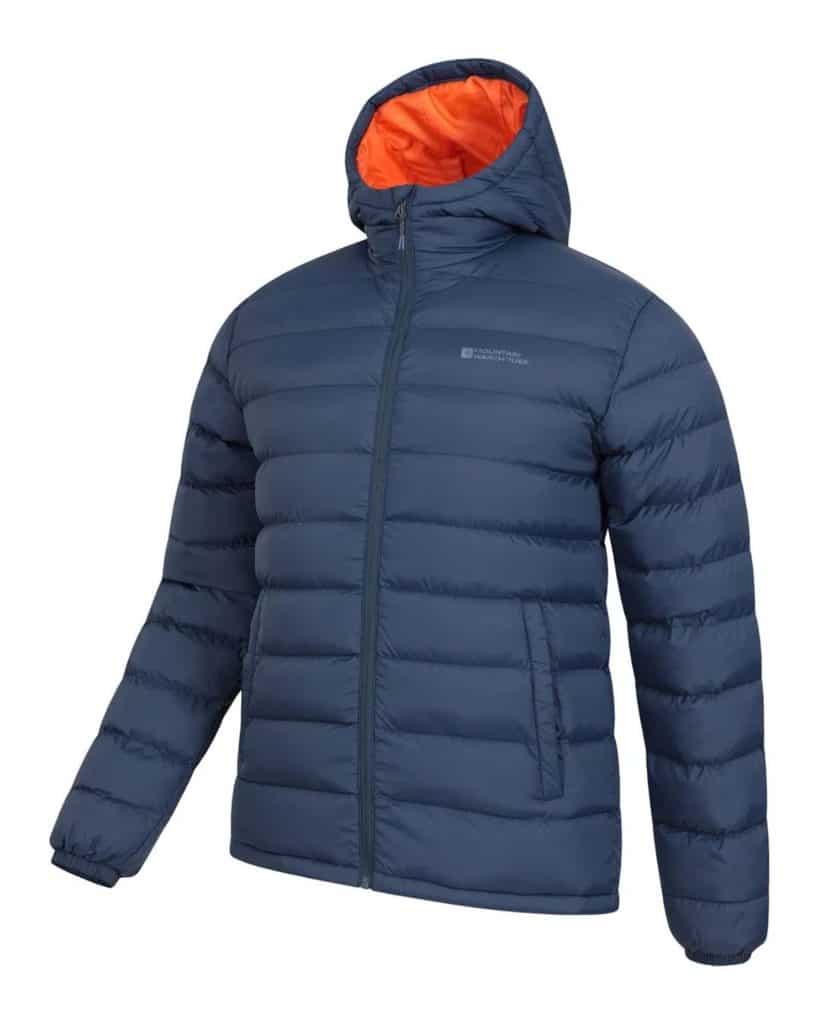
Mountain Warehouse Seasons Padded Jacket
My Verdict: “A cosy, water-resistant everyday puffer with synthetic fill that stays warm when damp and shrugs off light showers.”
Women’s version also available at Mountain Warehouse & Amazon
The Seasons is Mountain Warehouse’s entry-level padded jacket, available in both men’s and women’s versions. It uses a 100% polyamide shell with a DWR finish over recycled polyester microfibre insulation, designed as a synthetic alternative to down.
Mountain Warehouse pitches it as an all-rounder for cold days rather than a technical mountain layer. I tested the blue version in a size small, but there are 13 other colours to choose from across the men’s and women’s versions, and sizes run from XXS to 4XL for men or 4 to 30 for women.
Full Specifications
Price: £79.99 RRP (£39.99 on sale at the time of writing)
Weight: 590g (size S, my own measurement)
Packed size: About the size of a loaf of bread (rolled into the hood)
Insulation: Recycled polyester microfibre
Thermal rating: Lab-tested to -30°C
Water resistance: Water-resistant with DWR treatment
Sizes: XXS–4XL
Warranty: 2 years (see warranty details here)
Shell: 100% polyamide / Lining: 100% polyester / Fill: 100% recycled polyester / Two side pockets / Fixed hood
How I Tested It
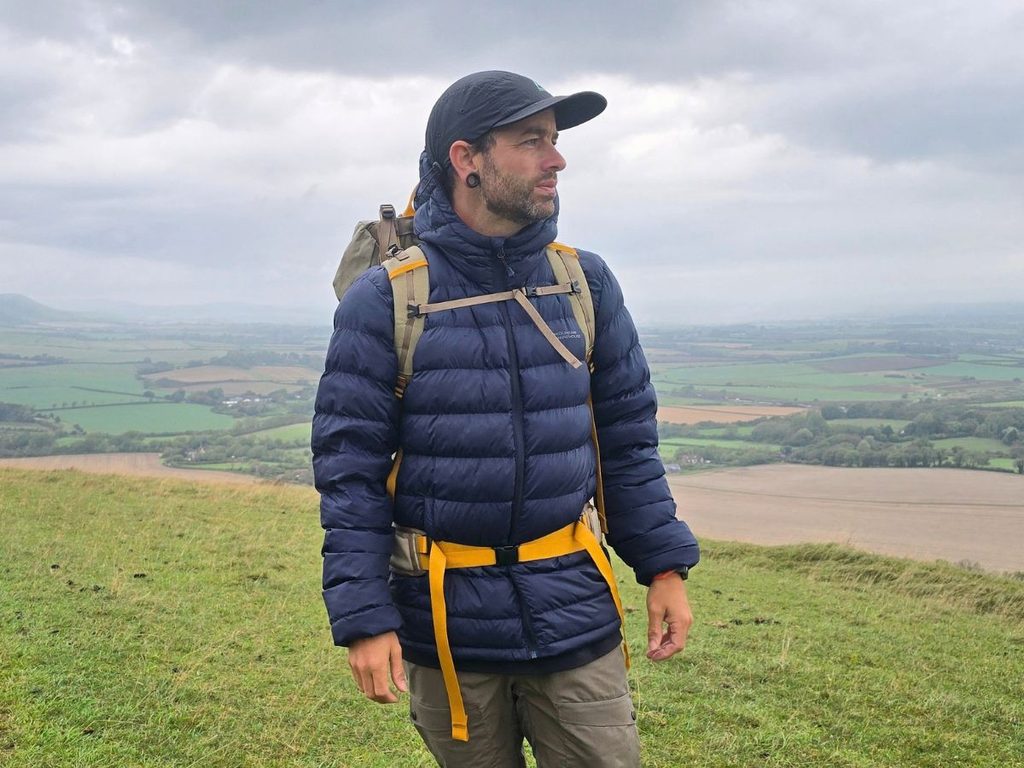
The forecast at home looked as though it was going to improve later in the morning, so I headed up onto the South Downs for a leisurely hike expecting a dry one. By the time I got there, I was met with horizontal rain and strong winds coming in off the sea from the south.
I’d packed the Seasons on the off chance I might get a chance to test it. In reality, I wore it the entire time, because I hadn’t packed a rain jacket. So what was meant to be a gentle first outing turned into a much more thorough test than I’d planned.
My route took me up and around the back of the Long Man of Wilmington, with about an hour of heavy, horizontal rain and a wind that was blowing a gale for most of the walk. Despite all that, it was still around 20°C according to the forecast. It was during the start of October, so the colder weather hadn’t arrived yet, so I’ll revisit this review and update it once we get into winter, with more on how the Mountain Warehouse Seasons performs in colder conditions.
Will the Mountain Warehouse Seasons Keep You Warm?
From what I’ve seen so far, yes. Whilst wearing just a T-shirt underneath during an October outing, I felt pretty comfortable for most of the walk, up on the South Downs in the heavy rain and wind. I only really started to feel like I was overheating as I neared the top of the climb.
Mountain Warehouse says the jacket is “laboratory tested to keep you warm in temperatures as low as -30°C”. I can’t comment on that rating, and I’d treat it as a lab figure rather than a comfort rating for standing around in. Mountain Warehouse itself notes that performance depends on activity and perspiration. What I can say is that the Seasons feels like a snug duvet, particularly around the arms, and it held on to that warmth even once the outer fabric was damp.
That’s the main advantage of synthetic insulation over down. Down gets its warmth from lofty clusters that trap air, and when they get wet they clump and flatten, so the warmth disappears with them. Microfibre fill keeps much more of its structure when damp, so it keeps insulating. It’s in wet, windy British conditions that synthetic really earns its keep, especially if you’re wearing it as your main outer layer.
The downside is weight and bulk. Synthetic fill needs more material to match the warmth of good down, which I’ll come back to below.
Is the Seasons Padded Jacket Water Resistant?
Yes, within limits, and it did better than I expected. Mountain Warehouse describes it as suitable for “light rain, or limited exposure to rain”, so I wasn’t expecting much from half an hour of heavy, horizontal rain.
For most of that time, the water pooled and dripped off the surface. Over time, some water seeped into the outer fabric, but never all the way through. I stayed completely dry on the inside, apart from the condensation I built up from sweating on the climb. I didn’t notice rain getting through the seams across most of the jacket, either.

Eventually, though, it reached its limit in two places, both where my backpack sat. The first was my shoulders, under the shoulder straps. The second was around the base of the jacket, where my waist strap sat over the fabric. Pressure points are always where a water-resistant fabric gives in first, and that’s typical of what you should expect from a jacket sold as water-resistant rather than waterproof.
The DWR is more than enough for light showers, but it’s something you’d want to maintain over time with a wash-in or spray-on reproofer. For heavy downpours, the Seasons really needs to be paired with a waterproof outer shell.
After the rain stopped, the wind was still blowing a gale, and that helped the jacket dry out reasonably quickly.
Care for your gear

Nikwax TX.DIRECT Spray-On Waterproofer
From £15 • 500ml
A quick spray-on reproofer that restores the DWR on water-resistant jackets. PFAS-free, water-based, and no tumble dryer needed.
Weight and Packability
My size small weighs 590g on the kitchen scales. That’s over 100g more than my OEX Kintra down jacket, which comes in at around 480g in a medium. It’s also noticeably bulkier when packed. Folded up at the front and rolled into its own hood, it packs down to about the size of a loaf of bread. It’s dense, though, and unlikely to squeeze down any further in your pack.
What Is the Fit Like?
The Seasons fits true to size, though I do find it a little tight in places, particularly across the back of the shoulders and under the arms. I’m 163cm, and I tried both a small and a medium. The medium was too large, so I went with the small.
For everyday use, that snug fit is part of what makes it feel so cosy. When scrambling up a steep hillside, though, I think it might start to feel a little restrictive when reaching up. If you plan to wear a thick fleece underneath, it’s worth trying it on over one before you buy.
The hood is where the fit falls down. Zipped all the way up, it was tight enough not to fly off my head entirely, but it sat back away from my face whenever I was walking into the wind. There’s no way to adjust it, and there’s no drawcord at the hem to seal out draughts either.

Features
This is where the Seasons is let down. It has two side pockets, but they don’t zip, so there’s nowhere secure to store valuables like your phone or car keys. There are no internal pockets either. There’s also no way to adjust the hood or tighten the jacket around the waist.
All in all, it’s a fairly basic jacket. That’s partly how Mountain Warehouse keeps the price so low, but a couple of these would cost very little to add.

How Durable Is the Seasons Padded Jacket?
I haven’t dragged it through brambles or scraped it across branches yet, so this is based on the materials and build rather than long-term use.
The shell is 100% polyamide (nylon), which generally holds up better against abrasion than the polyester shells found on a lot of budget jackets. That said, you won’t find any ripstop fabric here. Ripstop has a grid of thicker threads woven in, which stops a small nick from spreading, so without it, a snag on a bramble or barbed wire fence is more likely to turn into a tear. For everyday walks that’s unlikely to be an issue, but I’d think twice before taking it off the beaten track.
The other likely wear point is the DWR, which will fade with use and washing. Mountain Warehouse includes a two-year warranty, which gives some peace of mind at this price.

Alternatives to the Seasons Padded Jacket
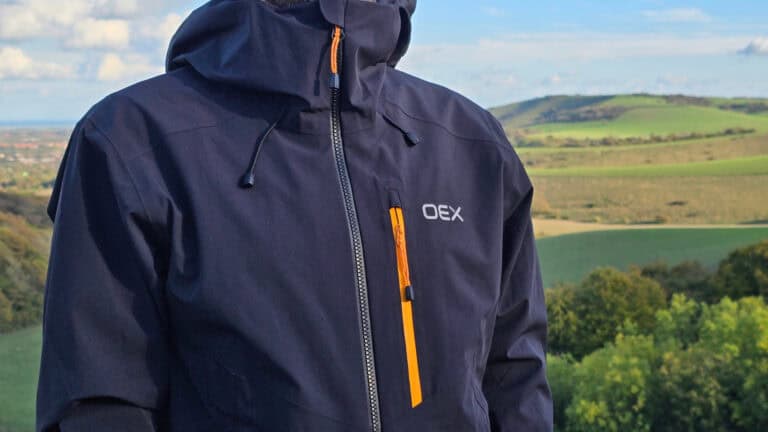
If you want something a little more technical, the OEX Kintra Hooded Down Jacket is my own go-to insulated jacket. At around £100, it’s lighter and packs smaller thanks to its 700 fill power down, and it has an adjustable hood, but it’s less forgiving in the wet.
If budget is the priority, Decathlon’s Forclaz MT100 synthetic hooded padded jacket costs even less, at £19.99 on sale (£29.99 RRP). It adds a zipped pocket and an adjustable hood, though it’s rated for milder conditions.
If you’d like a synthetic jacket that packs away more neatly, the Mac in a Sac Synergy (£64.99) uses Thermolite insulation, packs into its own carry bag and adds zipped hand pockets. It doesn’t have a hood, though. For heavier rain, whichever you choose, you’ll want a shell over the top. See my guide to the best waterproof jackets for hiking. For more down and synthetic options, see my pick of the best insulated jackets for UK weather.
Should You Buy the Mountain Warehouse Seasons Padded Jacket?
If you can get it on sale, I’d say yes. This isn’t a jacket for technical use. It’s an everyday jacket for daily commutes, dog walks, cold mornings, and gentle hikes. That said, if you’re just getting into the outdoors, it’s a good place to start.
If you want a jacket with a few more features, such as secure pockets, an adjustable hood, or something that packs a little smaller, I’d look elsewhere. Spending a bit more on a down jacket like the OEX Kintra, or a better-featured synthetic, will get you those.
Overall, it kept me warm and comfortable even when damp, and at £40, down from £80, I personally think the Seasons is a steal. I’d avoid paying full price, though, especially when there are more technical down jackets available for under £100.
Where to Buy
Mountain Warehouse Seasons Padded Jacket
My Verdict: “A cosy, water-resistant everyday puffer with synthetic fill that stays warm when damp and shrugs off light showers.”
Women’s version also available at Mountain Warehouse & Amazon
Related Guides & Reviews
The resources below cover the basics, common questions, and related kit to help you get more out of your time outdoors.
- The Ultimate Hiking Equipment List: Hiking Gear Checklist
- Berghaus Maitland GORE-TEX Overtrousers Review
- Fjällräven Abisko Hybrid Trail Trousers Review

Steve Cleverdon
Adventure-driven outdoor gear reviewer and paddleboarder, Steve has spent 20 years exploring rivers, coastlines, and trails across Britain and abroad, sharing what he’s learned along the way. Learn more about Steve or get in touch.