The wrong pair of hiking socks can ruin a good day on the trail: a seam rubs, blisters form around the heel, and soon you’re counting the miles back to the car. The best hiking socks wick moisture, cushion the impact points, and stay put, so your feet stay drier, warmer and blister-free for longer.
This guide covers eight pairs across budget, mid-range and premium, from £12.50 a pair to a waterproof Sealskinz. I’ve researched each one against spec sheets, UK retailer listings and independent tests. Here are the quick picks.
Thanks for your support – I may earn a small commission from affiliate links in this article Learn more
Quick Picks
- Darn Tough Light Hiker Micro Crew – Best Overall Hiking Socks
- Bridgedale Hike Midweight Merino Performance – Best Midweight Hiking Socks for Boots
- Quechua Hike 900 – Best Budget Hiking Socks
- Danish Endurance Classic Hiking Crew – Best Value Merino Wool Hiking Socks
- Icebreaker Merino Hike+ Light Crew – Best Lightweight Hiking Socks for Summer
- 1000 Mile Approach Repreve Double Layer – Best Anti-Blister Hiking Socks
- Bridgedale Explorer Heavyweight Merino – Best Thick Hiking Socks for Winter
- Sealskinz Raynham – Best Waterproof Hiking Socks
Darn Tough Light Hiker Micro Crew
Best Overall Hiking Socks
Pros
Cons
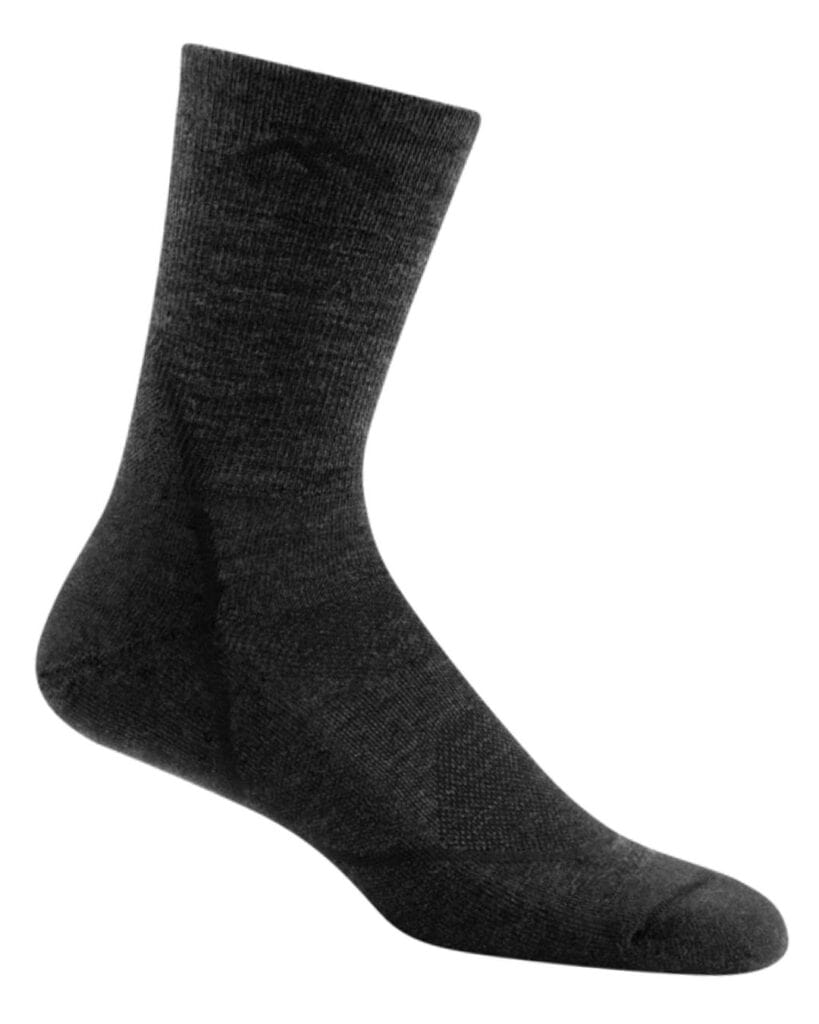
Darn Tough hiking socks have a strong reputation, and the Light Hiker Micro Crew is the pair I’d recommend for most UK walking. The fine-gauge knit has a thin layer of cushioning under the foot, extra padding over the Achilles, a ribbed upper that stays in place and mesh panels over the top of the foot for airflow. Fused seams keep the inside smooth, which matters because friction is what starts a blister.
The trade-off is price and warmth. At around £27 they cost more than most pairs here, though it is guaranteed for life, and it is thinner than a heavyweight boot sock. It’s a micro crew, 21cm from heel to cuff, and with 43% merino, it is soft and warm enough for three seasons. It suits hiking shoes, trail runners, and low to mid boots better than tall ones. Men’s and women’s versions are both sold.
Price: £27.00
Cushion: Light
Height: Micro crew (21cm heel to cuff)
Guarantee: Lifetime
Sizes: Men’s and women’s versions
54% nylon / 43% merino wool / 3% Lycra / Mesh ventilation panels / Ribbed upper / Extra Achilles padding / Fused seams / Naturally antimicrobial
Where to Buy
Darn Tough Light Hiker Micro Crew
My Verdict: “Light, durable and guaranteed for life: the pair to buy first if you want one sock for most UK walks.”
Bridgedale Hike Midweight Merino Performance
Best Midweight Hiking Socks for Boots
Pros
Cons
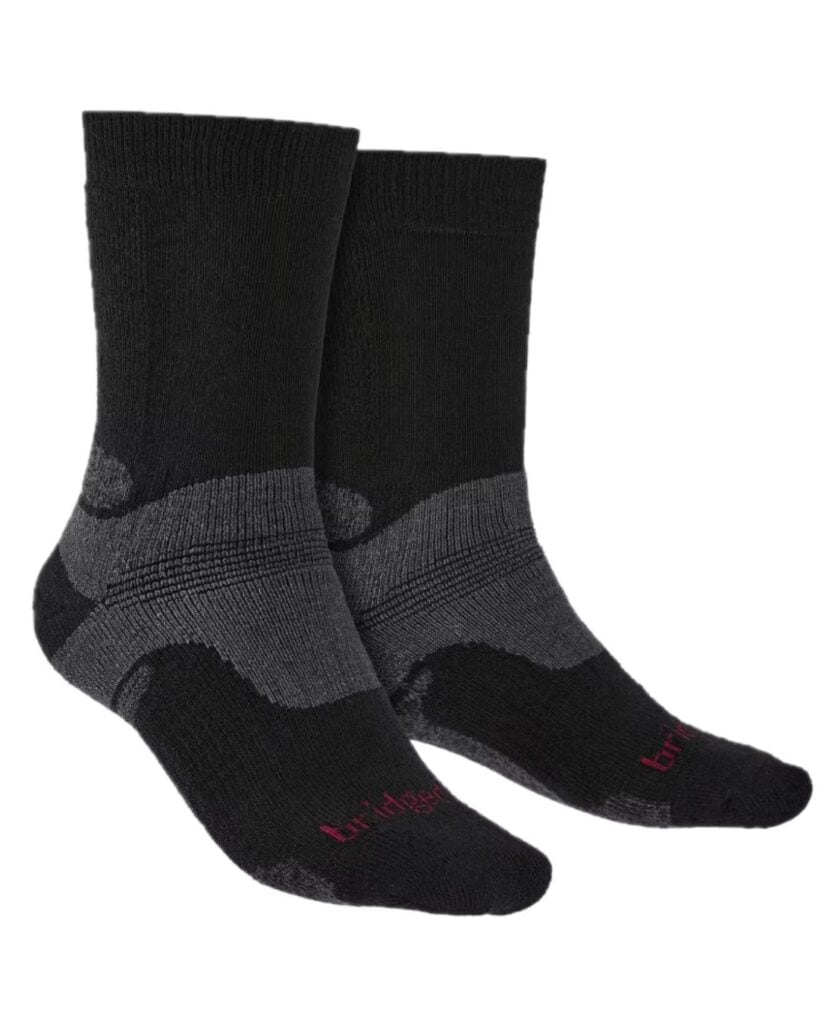
Bridgedale’s midweight boot sock is its general-purpose hiking option. It has an advanced zonal padding system, flat toe seams and an elasticated arch. The blend is nylon-led: 38% nylon, 26% wool, 18% merino and 17% Endurofil polypropylene, with 1% elastane. That is less merino than the Darn Tough or Icebreaker, but the synthetic content helps the sock dry and keep its shape, which suits a boot that gets wet from outside as well as in.
At £25, it sits in the middle of this list on price and comes with a lifetime guarantee. It comes in medium (UK 6 to 8.5), large (9 to 11.5), and extra large (12+); a women’s version is also available, and it is machine washable. It suits walkers who wear boots most of the year and want solid cushioning without stepping up to a heavyweight sock.
Price: £24.99
Cushion: Midweight with zoned padding
Height: Boot sock
Sizes: M (UK 6 to 8.5), L (9 to 11.5), XL (12+)
38% nylon / 26% wool / 18% merino wool / 17% Endurofil polypropylene / 1% elastane / Flat toe seams / Elasticated arch / Zonal padding
Where to Buy
Bridgedale Hike Midweight Merino
My Verdict: “A dependable midweight boot sock with a mixed wool-and-synthetic blend, priced fairly for what it does.”
Quechua Hike 900
Best Budget Hiking Socks
Pros
Cons
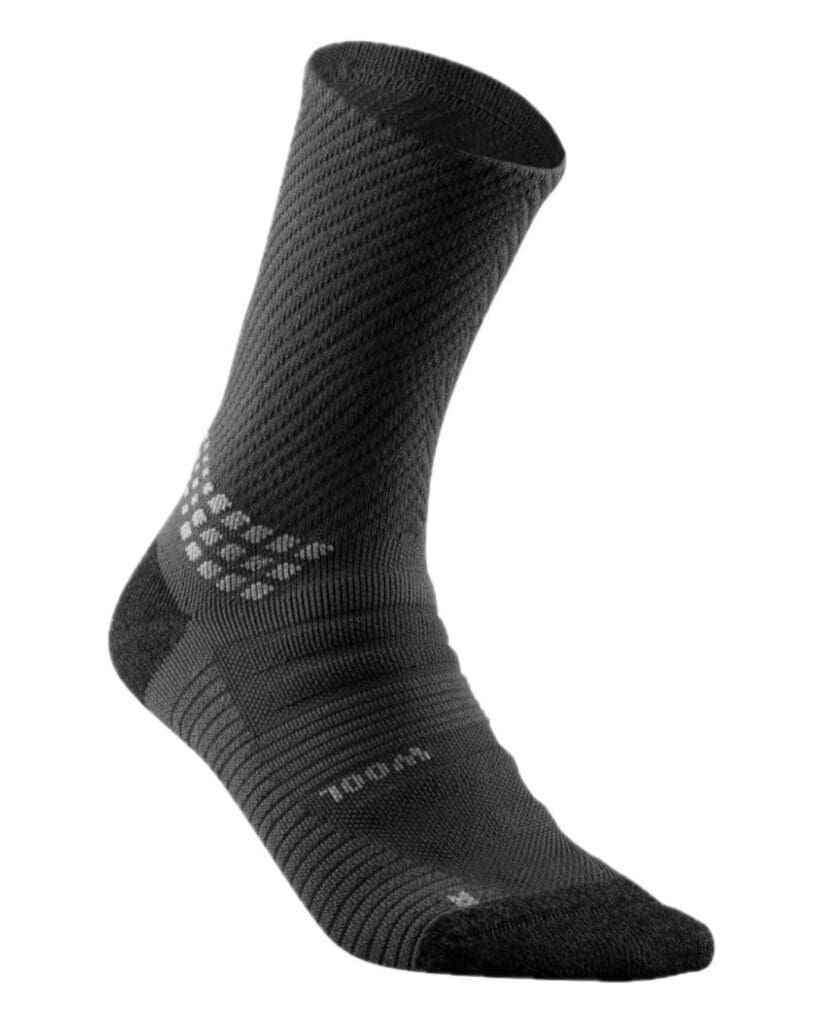
At £24.99 for two pairs, the Quechua Hike 900 is the cheapest wool-blend pair here at roughly £12.50 a pair. The blend is 66% polyamide and 18% wool, with a two-year warranty, and it fits true to size.
Expect a hard-wearing, nylon-led sock rather than a merino-rich one, so it will not be as soft or as naturally odour-resistant as the others on this list. Quechua also sells a mid-length Hike 900, plus cheaper Hike 500 and Hike 100 packs if you walk shorter distances and want to spend even less. It’s the pair to stock up on for a long trip, or to try before paying £25 or more for a single pair of socks.
Price: £24.99 for two pairs
Height: High-rise (mid-length version also sold)
Warranty: Two years
Also available: Mid-length Hike 900 (£19.99 for two pairs)
66% polyamide / 18% wool / Sold as a two-pair pack
Where to Buy
Quechua Hike 900
My Verdict: “Cheap and good enough to buy in multiples when you want several pairs without spending much.”
Danish Endurance Classic Hiking Crew
Best Value Merino Wool Hiking Socks
Pros
Cons
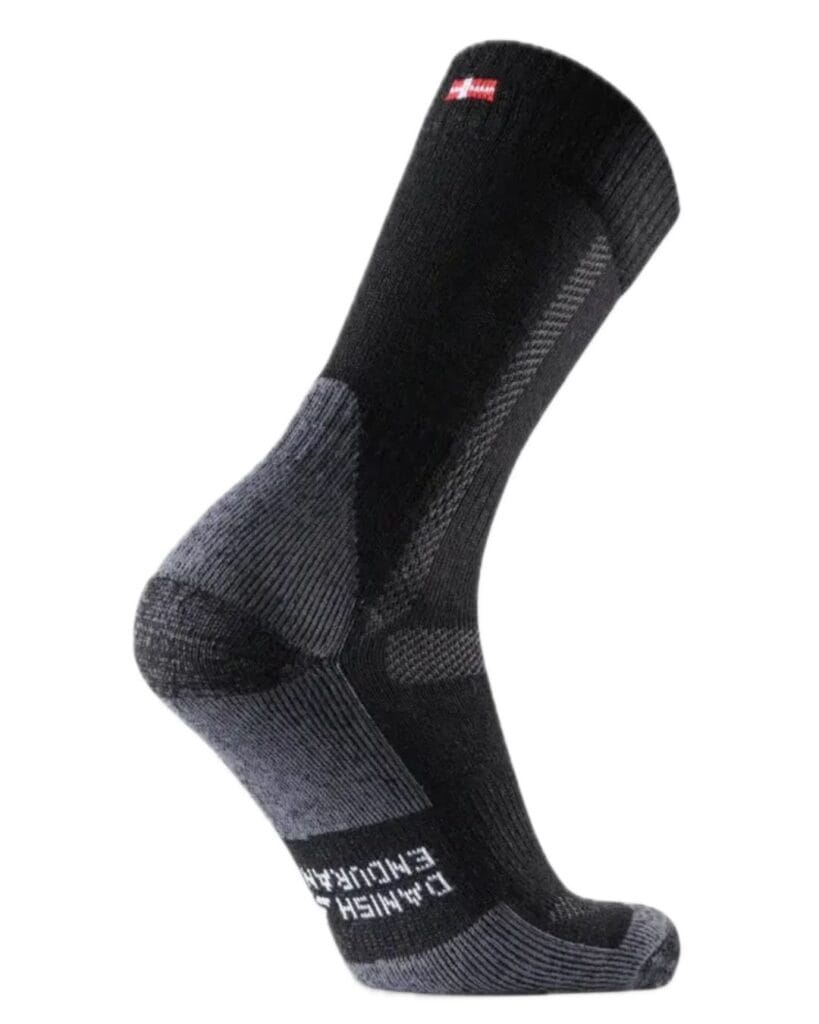
Danish Endurance hiking socks are the budget merino option in this guide. The Classic Hiking Crew is made in Portugal from 38% merino wool, 30% acrylic, 30% polyamide and 2% elastane, with ventilation zones, padding from heel to toe and an antibacterial label. It is an excellent boot-length sock for anyone on a budget, with good value, cushioning, soft feel and thermoregulation.
The cons are the ones you would expect from a 38% merino blend. The downsides are the lower wool content, which means less natural odour resistance and softness than a merino-rich sock, a tendency to lose its shape when wet, which can leave it loose and prone to rubbing, and not enough warmth on its own for cold days. It suits walkers who want merino comfort for three-season hikes without paying Darn Tough prices.
Price: £22 for 1-pack or £39 for 3-pack
Cushion: Padding from heel to toe
Height: Crew
Sizes: EU 35 to 38, 39 to 42, 43 to 47 (unisex)
Also available: 5-pack
38% merino wool / 30% acrylic / 30% polyamide / 2% elastane / Ventilation zones / Heel-to-toe padding / Antibacterial label
Where to Buy
Danish Endurance Classic Hiking Crew
My Verdict: “A soft, cushioned merino blend that keeps the price down, best kept for three-season walking.”
Icebreaker Merino Hike+ Light Crew
Best Lightweight Hiking Socks for Summer
Pros
Cons
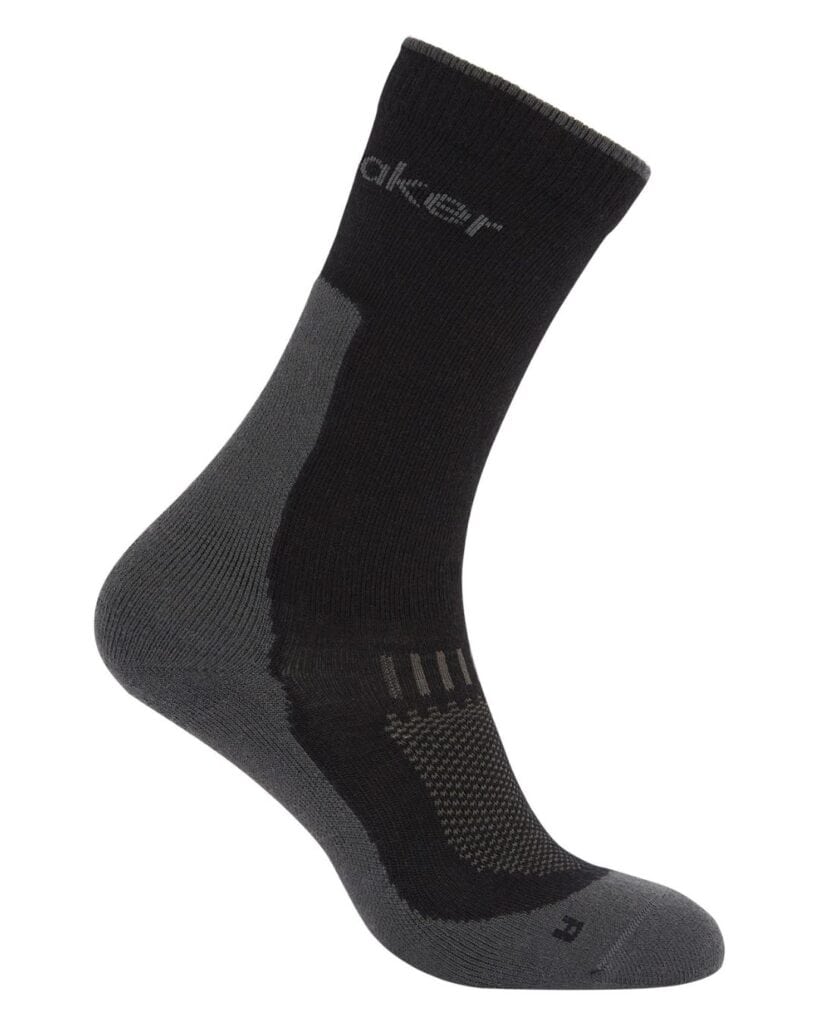
The Icebreaker Hike+ Light Crew is the brand’s lighter hiking sock. It is 61% wool, 37% polyamide and 2% elastane, with a padded heel and padded toes and fabric that is breathable, odour-resistant, stretchy and temperature regulating. Padding only where the foot takes the most impact keeps the bulk down, which is what you want from hiking socks for summer in trail shoes or low boots. That 61% is the highest merino content of any pair here.
The lighter build also limits the sock somewhat. This is not the sock for a cold January ridge. UK sizes run 6/7.5, 8/9.5, 10/11.5 and 12/13.5, and a women’s version is sold as well.
Icebreaker is a brand I know well. They were one of my sponsors when I walked the length of New Zealand, supporting me with clothing, and their socks held up over the 3,000km.
Price: £25.95
Cushion: Light, padded heel and toes
Height: Crew
Sizes: UK 6/7.5, 8/9.5, 10/11.5, 12/13.5
Also available: Women’s version
61% wool / 37% polyamide / 2% elastane / Padded heel and toes / Breathable / Odour-resistant / Temperature regulating
Where to Buy
Icebreaker Merino Hike+ Light Crew
My Verdict: “A light, merino-rich sock for warm-weather hikes, though not the one for cold days.”
1000 Mile Approach Repreve Double Layer
Best Anti-Blister Hiking Socks

Pros
Cons
A double-layer sock is the simplest way to build the liner into the sock itself. The 1000 Mile Approach has a moisture-wicking inner layer and an outer layer that moves with the shoe, so the friction happens between the two layers rather than against your skin. The arch bracing and heel-gripping design help it stay put, which makes it good value. The blend is 42% nylon, 20% wool, 18% acrylic, 18% polyamide, and 2% elastane, with 71% recycled materials, crew length, and medium thickness.
It fits the brief for hiking socks that are anti-blister rather than simply cushioned, and it saves wearing separate liner hiking socks under a regular pair. It reduces the likelihood of blisters but offers no guarantee, and it suits warmer-weather walking best. At £22, it is a sensible choice if you are prone to hot spots on long days, though a good fit and well broken-in boots do more than any sock, and my guide to breaking in hiking boots covers the other half.
Price: £21.99
Cushion: Medium thickness
Height: Crew
Sizes: UK 6 to 8.5, 9 to 11, 12 to 14
Construction: Double layer
Also available: Women’s version
42% nylon / 20% wool / 18% acrylic / 18% polyamide / 2% elastane / Double-layer construction / Moisture-wicking inner layer / 71% recycled materials
Where to Buy
1000 Mile Approach Repreve Double Layer
My Verdict: “A double-layer design that reduces rubbing, and a sensible buy for blister-prone walkers on warmer days.”
Bridgedale Explorer Heavyweight Merino
Best Thick Hiking Socks for Winter
Pros
Cons
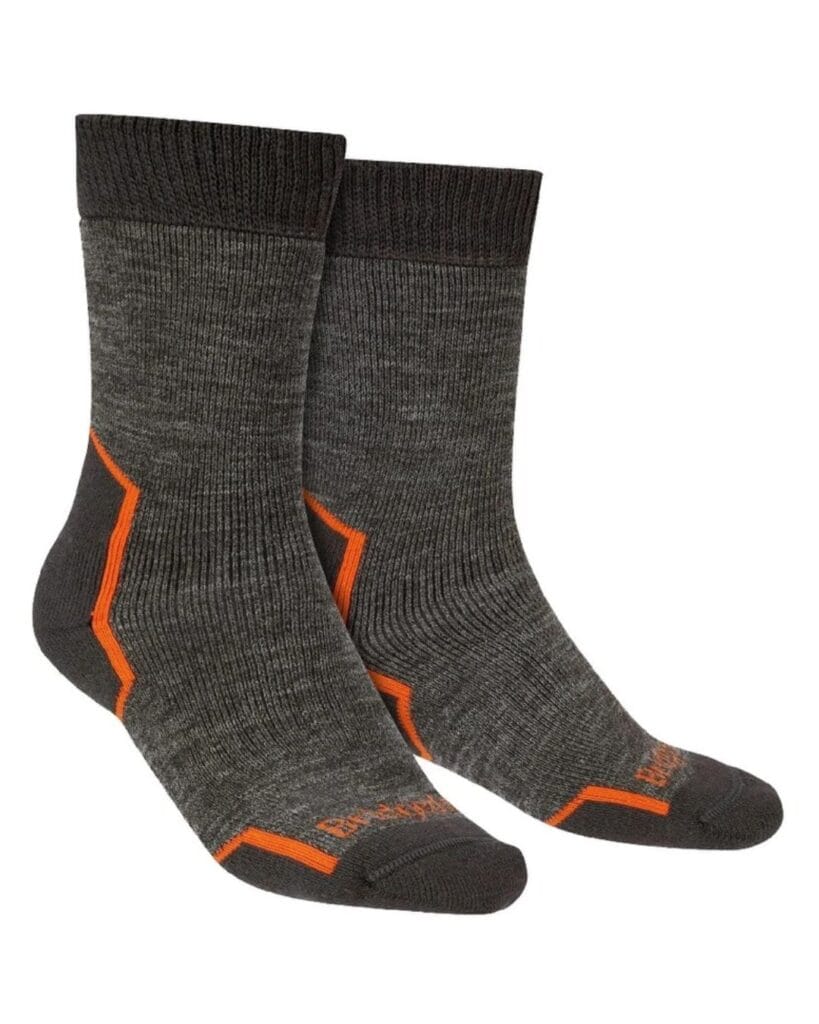
The Bridgedale Explorer Heavyweight is the sock for winter and long treks, with excellent warmth and cushioning, but the one caveat is that it is too warm for hot days. It has thick cushioning with double-density pads under the foot for impact resistance, a flat toe seam, an elasticated arch, a 3D-shaped heel cup, and a comfort-fit cuff that can be worn up or down. The ThermoFit process is meant to help it keep its size and shape after washing.
It is a synthetic-led blend: 45% Coolmax polyester, 30% merino, 24% nylon and 1% elastane, so the merino content is lower. That is the price to pay for the extra cushioning and quick drying. For thick hiking socks in winter, with stiffer boots and long days, this is the one to look at.
Price: £28.99
Cushion: Heavyweight, thick cushioning with double-density pads
Height: Crew boot length
Sizes: M (UK 6 to 8.5), L (9 to 11.5), XL (12+)
Also available: Women’s Explorer Heavyweight
45% Coolmax polyester / 30% merino wool / 24% nylon / 1% elastane / Flat toe seam / Elasticated arch / 3D heel cup / ThermoFit process
Where to Buy
Bridgedale Explorer Heavyweight Merino
My Verdict: “The thick, cushioned choice for winter boots and long days, but wrong for summer.”
Sealskinz Raynham
Best Waterproof Hiking Socks
Pros
Cons
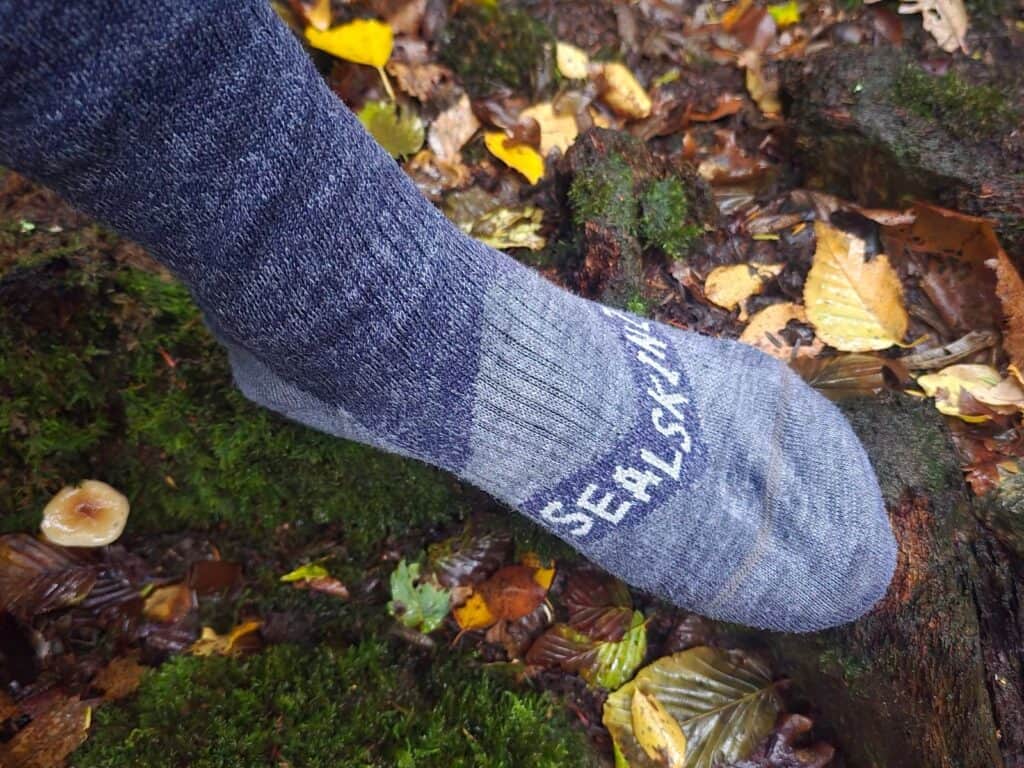
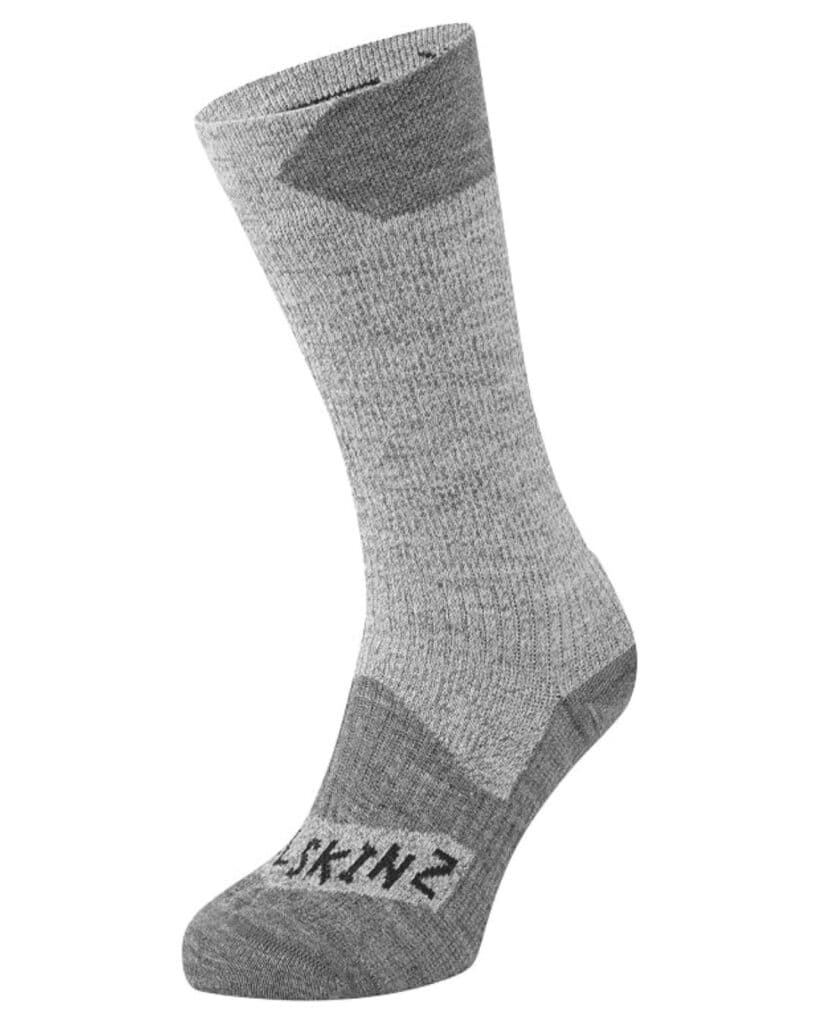
Waterproof hiking socks are a niche, but the Sealskinz Raynham is the mid-length option I’d look at. It has three layers: a stretch outer of polycolon, nylon and elastane, an Aquasealz membrane in the middle, and a lining of 36% merino, 36% acrylic, 18% polyester, 5% nylon and 5% elastane. The merino lining regulates temperature across a wide range of conditions, and the outer has four-way stretch for a close fit. The membrane is 100% waterproof, and the sock is windproof as well.
It suits wet crossings, boggy ground and cold, wet days. Be aware that a waterproof sock doesn’t stop water getting in over the cuff, so if a downpour runs down your leg, the membrane will hold that water in. This is a pair I own and use for both winter paddles and wet hikes, and my best waterproof socks guide covers more waterproof options.
Price: £42.00 RRP
Height: Mid-length
Sizes: S (UK 3 to 5), M (6 to 8), L (9 to 11), XL (12 to 14)
Fit note: Runs large
Outer: 62% polycolon / 29% nylon / 9% elastane / Aquasealz waterproof membrane / Lining: 36% merino / 36% acrylic / 18% polyester / 5% nylon / 5% elastane
Where to Buy
Sealskinz Raynham
My Verdict: “A windproof, fully waterproof sock for wet UK walks, with a merino-blend lining and good coverage above the boot.”
How I Tested
I started with the pairs that kept turning up in independent tests, then checked them against customer ratings and UK retailer listings. I narrowed them to eight that cover budget, mid-range and premium prices, summer and winter use, and waterproof and anti-blister designs. I own and wear the Sealskinz Raynham, but the other seven haven’t been through my own boots yet, so they are researched, not tested.
What to Look For in Hiking Socks
The best hiking socks are the ones that suit your footwear, the season, and your feet, so it pays to know what the label is telling you. Sort your boots first with my guide to choosing the right hiking boots, then match the sock to them.
Sock height
Match the height to your footwear. Calf-height socks suit walking boots because they stop the boot cuff from rubbing your ankle, while ankle-height socks suit hiking shoes and trail runners. Knee-high socks add warmth to the lower leg, and some are compression hiking socks that support calf circulation. That is why the Darn Tough micro crew suits shoes and low boots, and the Bridgedale boot socks suit taller boots.
Weight and cushioning: thin or thick hiking socks
Sock weight tracks the season. Lightweight socks, like the Icebreaker, suit summer and trail shoes, while heavyweight socks, like the Bridgedale Explorer, suit winter and long days in stiff boots, but are too warm in hot weather. Look for cushioning at the ball of the foot, the heel and the Achilles, because that is where pressure and friction build up. More cushioning is not always better: a thick sock in a snug boot can squeeze your foot and make it colder.
Materials: merino wool or synthetic
Merino wool is soft, lightweight, insulating, good at wicking moisture and naturally resistant to odour. Polyester and nylon move moisture away from the skin and are durable. All three keep your feet warm when damp, which is why most wool hiking socks are blends of merino and synthetics, like every pair in this guide. Avoid cotton, which holds on to moisture, including sweat.
Blister prevention: seams, liners and double layers
Blisters come from friction and hot spots, so look for seamless or flat-seam construction, snug but not tight fit, and cushioning where your boot rubs. Liner hiking socks are thin, highly wicking and as seam-free as possible, worn under the main sock so that the friction happens between the two layers rather than against your skin. Some socks build the liner in, like the 1000 Mile double layer, so you do not need a separate pair. Light compression and arch bracing can also help keep the sock from slipping.
Fit and sizing for men and women
If you fall between sizes or at the edge of a range, round down. A sock that is too big rucks and wrinkles, which can cause blisters, and one that is too small can restrict circulation and leave your feet cold. If you wear liners, count them when you pick a size. Some brands size by shoe size and others as S, M or L, so check the size guide. Many socks are unisex, like the Danish Endurance, while others have separate men’s and women’s versions, so check which you are buying.
Waterproof hiking socks
Waterproof hiking socks add a membrane between a lining and an outer layer. They are worth considering for wet crossings and cold, wet days, but they only work while water stays out of the top, and they are usually warmer and dearer than a normal sock. My best waterproof socks guide covers this in more detail.
Pairs, spares and care
Always take a spare pair: changing into fresh socks after a long day is much more pleasant than putting the damp ones back on. For multi-day trips, check my hiking equipment list for how I think about the rest of the kit. Check the care label on each pair: for example, the Bridgedale socks here are listed as machine washable, but not every pair is.
My Verdict
If you want one pair for most UK walking, start with the Darn Tough Light Hiker Micro Crew: it is guaranteed for life and the light cushioning works across three seasons. After that, match the sock to how you walk: a midweight boot sock for longer days, a budget multipack if you want to rotate pairs, a double layer if blisters are your main worry, and a lightweight merino pair for summer. Heavyweight winter socks and waterproof socks are specialist extras rather than everyday pairs.
Related Guides & Reviews
The resources below cover the basics, common questions, and related kit to help you get more out of your time outdoors.
- How to Break in Hiking Boots Without Blisters
- The Ultimate Hiking Equipment List
- Best Waterproof Socks for Walking in the UK
- Best Waterproof Hiking Boots UK

Steve Cleverdon
Adventure-driven outdoor gear reviewer and paddleboarder, Steve has spent 20 years exploring rivers, coastlines, and trails across Britain and abroad, sharing what he’s learned along the way. Learn more about Steve or get in touch.