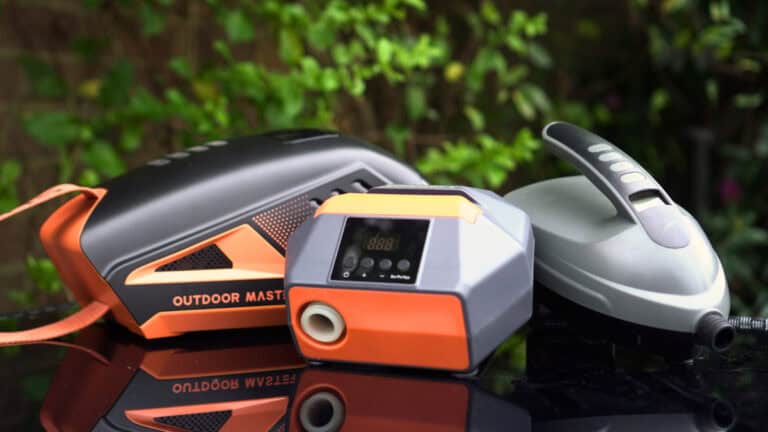
Getting on the water is straightforward enough — board, paddle, leash, life jacket. But the paddleboarding accessories and equipment you build around that core kit are what make the difference between a session that feels rushed and one that feels effortless.
I’ve been paddleboarding regularly for several years now, and I’ve picked up most of these through experience — some came recommended, some came with boards I’ve reviewed, and a few I bought myself after getting caught out without them. This guide covers the must-have SUP accessories I’d genuinely recommend, not a catalogue of everything that exists.
Some are safety essentials. Some are comfort upgrades. A few are just good quality-of-life additions that I wouldn’t paddle without.
Thanks for your support – I may earn a small commission from affiliate links in this article Learn more
What Paddleboarding Accessories Do You Actually Need?
The short answer: a PFD, a leash, and something to keep your valuables dry. Everything else is either a comfort upgrade or a nice-to-have depending on how you paddle.
When choosing stand-up paddle board accessories, the most useful way to think about it is by category: safety first (PFD, leash, quick release belt for rivers), session practicality (electric pump, dry bag, carry strap), and comfort and enjoyment (changing robe, waterproof speaker, action camera). Build from the first category outwards and you won’t spend money on things you don’t actually need yet.
The paddleboarding gear that makes the most difference day-to-day tends to be the unglamorous stuff — a pump that saves your arms before you’ve even launched, a changing robe that means you’re warm and dry within 30 seconds of getting off of the water, a dry bag you trust with your car keys. The exciting accessories come later.
Electric SUP Pump
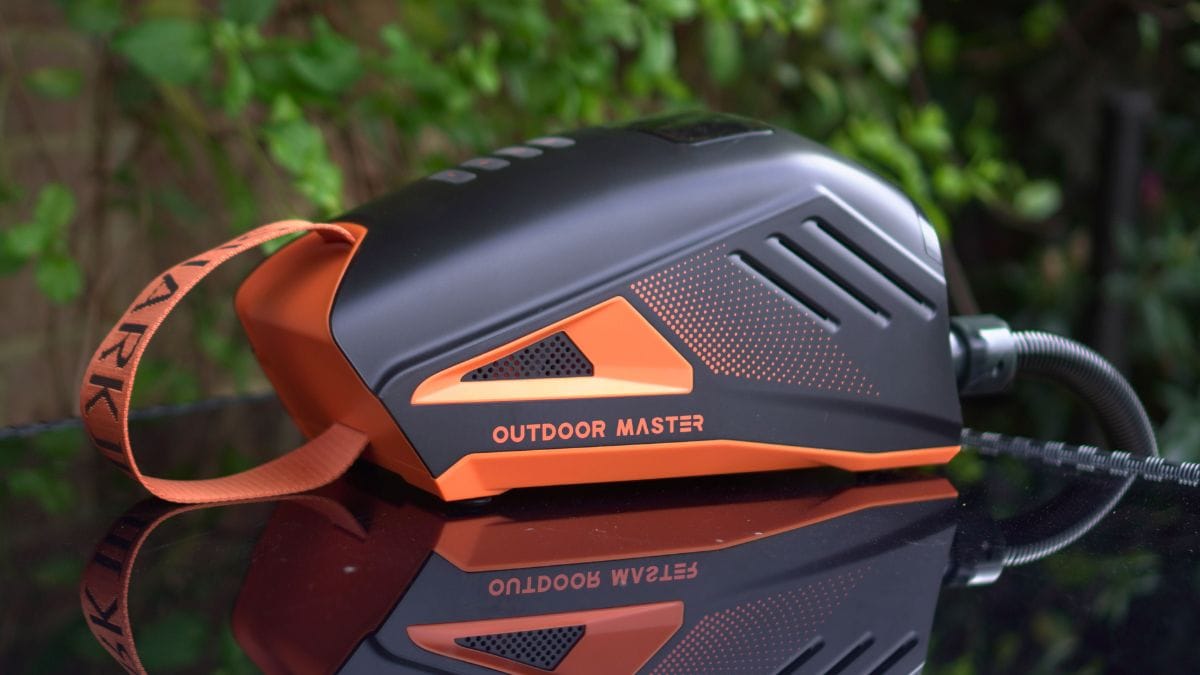
Inflating your board by hand before every session gets old fast — especially if you’re heading out regularly or inflating for more than one person. An electric pump is, in my opinion, the single best upgrade you can make to your paddleboard setup. You set your target PSI, press a button, and get on with sorting the rest of your kit while it does the work.
The pump I use the most is the Outdoor Master Shark 3 (full review here) — it’s battery powered, inflates a standard board in under five minutes, and handles back-to-back boards without overheating. For a more compact 12V option, the Bluefin E-Swift Lite (read my full review) is another great option I use for solo sessions. Both are worth serious consideration depending on how much you paddle and whether you want wireless freedom or a simpler plug-in option.
If you’re not sure which is right for you, I’ve tested and reviewed six of the best options across the full price range in my guide to the best electric pump for paddle boards.
Changing Robe
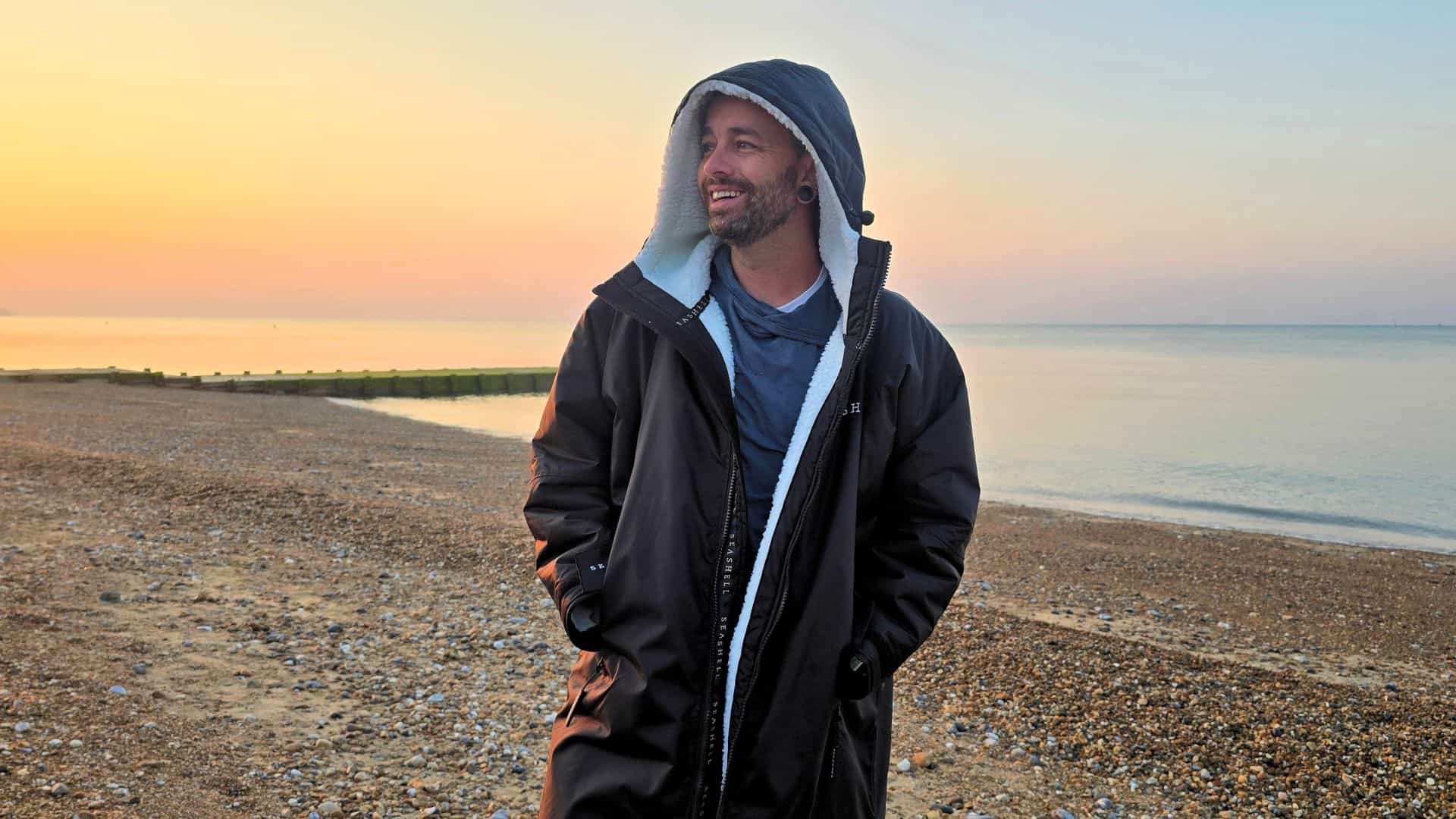
Getting changed after a session in a car park or on a busy beach without one of these is an exercise in awkward towel gymnastics. A changing robe solves this completely — you pull it on, get changed underneath with full privacy, and you’re warm while you do it. Once you’ve used one, going back feels genuinely inconvenient.
The Seashell 3.0 is the one I reach for most. It’s well insulated, the fit is generous enough to change comfortably underneath, and it doesn’t feel flimsy the way some cheaper robes do.
I’ve also reviewed the Passenger Waves Sherpa Lined Changing Robe, which is a solid option if you prefer a sherpa-lined finish for extra warmth in colder months.
For a full comparison of the options available, see my guide to the best dryrobe alternatives.
Personal Flotation Device (PFD)

A PFD isn’t optional — it’s the one piece of kit that matters most if something goes wrong on the water. The good news is that modern PFDs are a long way from the bulky foam vests most people picture. There are now genuinely comfortable, low-profile options that you’ll barely notice wearing.
The PFD I use for myself and the kids is the Osprey 50N Buoyancy Aid — I have a full review of it on the site and it’s become my go-to for paddleboarding. It’s lightweight, moves with you rather than against you, and the fit is secure without being restrictive. For a slim, belt-style option, the Red Original Airbelt is worth considering — it’s as unobtrusive as a PFD gets and works well for confident swimmers in calmer conditions.
If you’re on a budget, the Decathlon Itiwit 50N Buoyancy Aid is a reliable entry-level option that covers the essentials without the premium price.
For a full breakdown of the options, see my guide to the best life jackets for paddleboarding.
PaddleBoard Seat

A paddleboard seat converts your SUP into a sit-on-top kayak — which sounds like a gimmick until you’ve spent three hours on the water and your legs are done. For longer distance sessions, fishing, wildlife watching, or just having the option to sit and drift, it’s a surprisingly useful addition.
I’ve used the Wave Kayak Conversion Seat a lot over the years. It attaches to the D-rings on your board, provides decent back support, and gives you a completely different way to use the same bit of kit. It’s not for every session, but on longer paddles, it’s great to have.
A kayak seat is also a brilliant option if you paddle with kids. Sitting down on the board feels much less intimidating than standing for a young child who’s still finding their confidence on the water, and it means they can come out with you far earlier than they might otherwise manage. We picked up the Wave Surf Kids Board earlier this year, which comes with a kayak seat included, and my little one took to it immediately. If you’re looking to get children involved in paddleboarding, a kayak seat is well worth considering.
Dry Bag
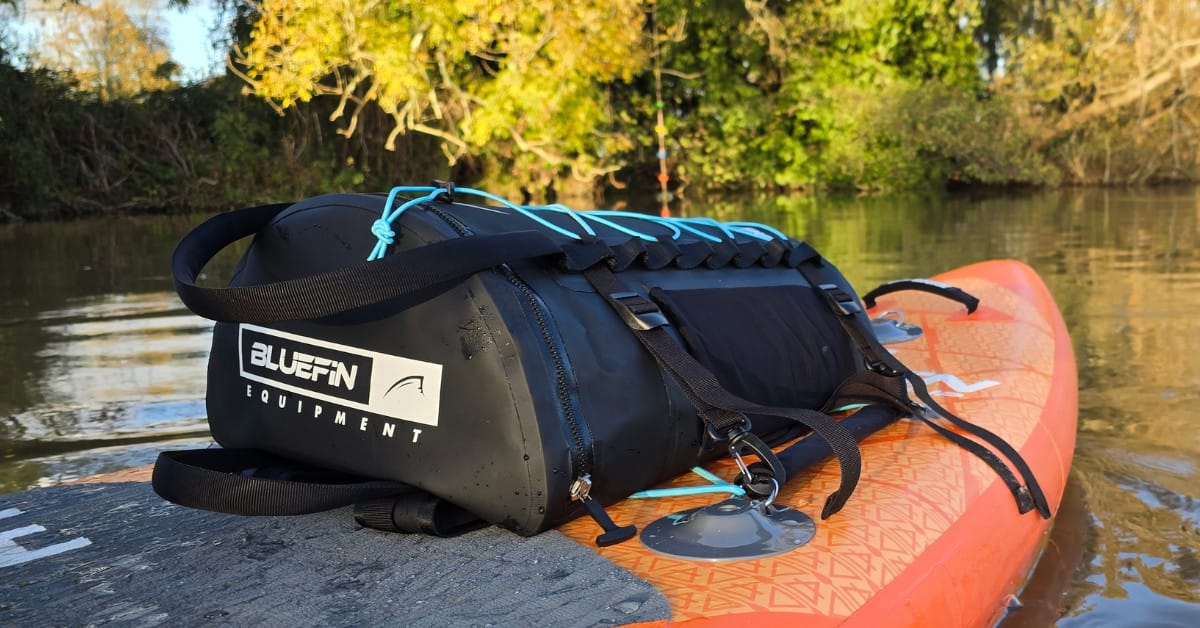
Your car keys, phone, wallet, and dry change of clothes need protecting every single session. A dry bag is non-negotiable — it’s not a matter of if you’ll get wet, it’s a matter of when.
I use the Bluefin Dri-Tide Deck Bag for longer paddles when i have lots of gear. It sits on the front of the board, clips securely to the D-rings, and keeps everything inside dry even when the deck gets washed. It’s a deck bag rather than a traditional roll-top dry bag, which means you can access it mid-session without stopping to unroll anything. The Wave Waterproof PVC Dry Bag is a more traditional roll-top option if you prefer that style — solid build and well priced.
For anything valuable — camera, car keys, wallet — don’t cut corners on the dry bag. A cheap one that leaks will ruin your day and potentially cost you more in the long run.
Waterproof Speaker

I don’t always paddle with music, but when I do — particularly on longer flat-water sessions — a waterproof speaker makes a real difference to the experience. The key things to look for are the clip or mount mechanism (you want it properly secured to the board, not just sat on the deck) and whether the sound quality holds up outdoors against wind and water noise.
The JBL Clip 5 is the one I’d point most people towards. The clip design means it attaches securely to your board or bag, the sound is genuinely good for the size, and it’s waterproof enough to handle splashes and the odd dunking without issue.
Waterproof Phone Case

Most paddleboarders carry their phone with them on the water — for navigation, photos, or just in case of emergencies. Keeping it in a pocket or on the deck without protection is a risk not worth taking.
I’ve used both the Decathlon Itiwit waterproof phone pouch and the Bluefin waterproof phone case that came with my board. Both do the job well — they’re fully transparent so the camera and touch screen work through them, and the sealing mechanism is straightforward to use. The Bluefin case in particular is well made for something that comes included in a board package rather than as a standalone purchase.
If you’re buying separately, the Itiwit waterproof phone pouch from Decathlon is the most reliable budget option I’ve used — no fussy clasps and the transparency means your camera shots aren’t compromised by a coloured edge.
Action Camera

If you’re paddleboarding in interesting places and not filming any of it, you’re missing footage you might wish you had later on. An action camera is the practical way to capture sessions — they’re waterproof, mountable on your board or body, and the image quality on the current generation is great.
I use a GoPro Hero, and it’s become a regular part of my kit. I’ve been shooting footage with it mounted on the board nose, and it handles the combination of bright sky, dark water, and motion well. The stabilisation is the standout feature — footage that would have been shaky and unusable on older cameras comes out smooth.
For a more compact and innovative option, the Insta 360 GO 3 is worth looking at — it’s tiny, the AI editing features are genuinely useful, and the flexibility of mounting options is excellent. If you’re on a tighter budget, the AKASO Brave 7 is a capable alternative — read my full AKASO Brave 7 review for the details.
Whatever camera you choose, pick up a board mount at the same time — shooting from the nose of the board gives you a perspective you can’t get any other way.
Cup Holder
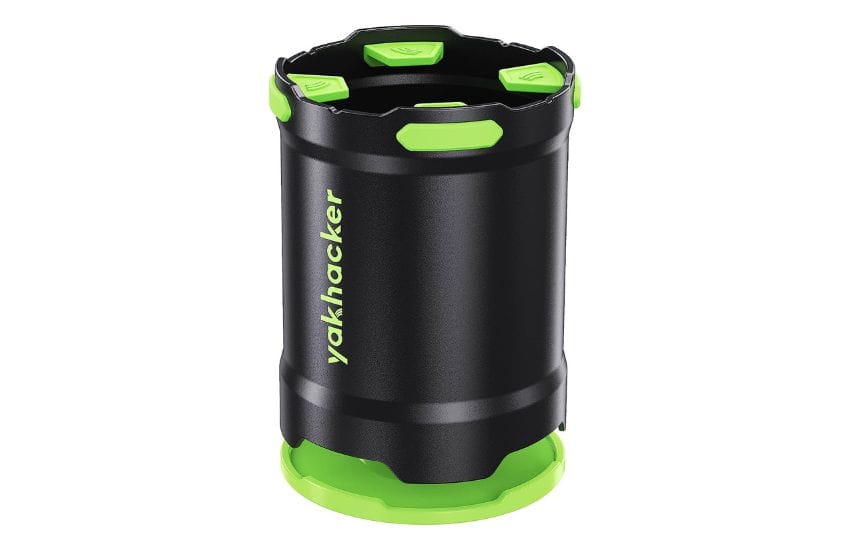
Staying hydrated on the water matters more than most paddlers factor in, particularly on longer or warmer sessions. A cup holder clips to the D-rings on your board or under the bungee cord and keeps your water bottle within reach without you having to stop and dig through a bag.
My dad and I actually 3D printed our own cup holders — I’ll get a photo up of it here soon. If you’d rather buy one off the shelf, most universal SUP cup holders work across standard D-ring setups and cost very little. Look for one with a proper grip collar rather than a loose sleeve — insulated bottles in particular can be heavier than they look and will work themselves loose on choppy water.
Dog PFD

If you paddle with a dog, a buoyancy aid for them is the same call as a PFD for yourself — straightforward safety kit that removes a risk you don’t need to carry. Even confident swimming dogs can get into difficulty in cold water or strong currents, and a PFD also gives you a reliable grab handle if you need to haul them back onto the board quickly.
The Red Original Dog Buoyancy Aid is the most well-regarded option I’ve come across in this category. Red Original make quality kit and the dog buoyancy aid is no exception — adjustable fit, reflective strips for visibility, and a solid top handle. I haven’t personally used this one as I don’t paddle with a dog, but it’s the recommendation I’d give to anyone who does.
Paddle Board Motor Kit

A motor kit adds propulsion to your SUP — useful for covering distance with less effort, managing headwinds, or exploring further than your arms would comfortably take you in a session. They slot into the fin box in place of your standard fin and connect to a handheld controller or throttle.
I haven’t personally used a motor kit, but the Aqua Marina BlueDrive S Power Fin is the most commonly recommended option at this price point. It’s a battery-powered fin replacement rather than a clamped-on motor, which keeps the installation clean and doesn’t affect your board’s handling when the motor isn’t running. Worth considering if you’re covering long distances, dealing with consistent tidal current, or simply want the option of some assistance when you need it.
Paddle Board Carry Strap

Getting your board from the car to the water sounds simple until the car park is 200 metres away, the path is uneven, and you’re already carrying a bag and a paddle. A carry strap makes this considerably less painful — it loops around the board and over your shoulder, distributing the weight evenly and leaving your hands free.
Nowadays, I use the carry strap that came with my Bluefin Carbon board package, and it’s a solid bit of kit — well padded on the shoulder section and the attachment points are secure. If you’re buying separately, the Thurso Surf SUP Carry Strap is a reliable option with good shoulder padding and adjustable length to suit different board sizes and carry heights.
Paddle Board Anchor

A paddleboard anchor is for situations where you want to stay in one place — SUP yoga, fishing, watching wildlife, or just stopping to eat lunch in a cove without drifting away. SUP-specific anchors are compact and lightweight, designed to fold down small enough to fit in a dry bag without taking over.
I haven’t personally used one, but if your sessions involve any stationary activity on the water it’s a practical piece of kit to have. Look for a folding grapnel style rather than a deadweight — they hold better across different seabed types and pack down much smaller. A 1.5–2kg anchor is adequate for most flat-water SUP use.
Mountable LED Light

A mountable LED light extends your sessions into the evening and makes you visible to other water users when natural light drops. Most SUP-specific lights are compact, waterproof, and rechargeable — they clip or mount to the board and offer multiple modes including steady and flashing.
I haven’t had the need for one personally yet, but if you paddle at dawn, dusk, or in reduced visibility conditions, this moves from a nice-to-have into the safety essentials category. Check your local waterway rules before paddling in the dark — some locations require specific lighting setups.
Cooler Box

A paddleboard cooler bag sits on your deck and keeps drinks and food cold during longer sessions. For full-day paddles, fishing trips, or family outings on the water, it’s a genuinely practical addition — particularly in warm weather when a cold drink mid-session makes the difference between turning back early and paddling on.
Again, I haven’t personally used one on my board, but compact SUP cooler bags with D-ring attachment straps are available from most paddleboarding accessory brands. Look for one with a secure mounting system rather than just a carry handle — you don’t want it sliding around on the deck.
Quick Release Belt

A quick-release belt is a waist-worn leash attachment designed for river paddling and moving water. Unlike a standard ankle leash, a waist belt allows you to detach your leash with a single firm pull if you get into difficulty — which in fast-moving water or around submerged obstacles can be the difference between a manageable situation and a dangerous one.
I use quick release ankle straps rather than a waist belt for the sessions I do, but for anyone paddling rivers, tidal estuaries, or conditions with any meaningful current, a waist belt is the correct setup. The Wave Quick Release Belt is a solid, straightforward option — secure attachment, simple one-pull release, and compatible with most standard SUP leashes.
Water Shoes

For most paddleboard sessions, barefoot is the natural choice — you get better board feel and it’s one less thing to think about. But water shoes earn their place when conditions call for them: rocky launches, cold water, unfamiliar riverbeds, or anywhere you’re wading in before you can step straight onto the board.
The footwear I use are the Osprey Adult Aqua Boots — neoprene wetsuit boots with a hardwearing TPR sole that provides solid grip both in the water and on the board deck. They’re warm enough for year-round use in UK conditions, drain quickly, and the adjustable ankle strap keeps them secure without feeling restrictive. My go-to for anything beyond a warm summer session where I’d launch straight from a clean sandy beach.
For a full comparison of water shoe and boot options for SUP, see my guide to the best water shoes for paddle boarding.
Carbon Fibre Paddle

Most inflatable paddle boards come with an aluminium or fibreglass paddle as standard. They work fine, but a carbon fibre paddle is a meaningful step up — lighter in the hand over a long session, stiffer through the stroke, which means more efficient power transfer, and generally more enjoyable to paddle with once you’ve made the switch.
The carbon paddle I use is the Bluefin Carbon Drive which came with my Bluefin Carbon board. It’s well balanced, the adjustable length mechanism is solid, and it converts to a double-bladed kayak paddle which is a genuinely useful bonus if you also use a kayak seat. If you’re buying a carbon paddle separately, look for one in the 3-piece adjustable format — easier to transport and store than a fixed-length option.
Racing Fin

The standard fin that comes with most inflatable SUPs is designed for general stability and all-round performance — which is the right call for most paddlers. A racing fin is a longer, narrower alternative that reduces drag and improves straight-line tracking, making a noticeable difference for distance paddling, touring, and fitness sessions where you’re putting in consistent effort.
I haven’t personally upgraded to a racing fin, but the Aqua Marina Slide-in Racing Fin is the most widely recommended option at this price point. Worth considering if you’re covering regular longer distances and finding that your board wanders more than you’d like between strokes.
SUP Repair Kit
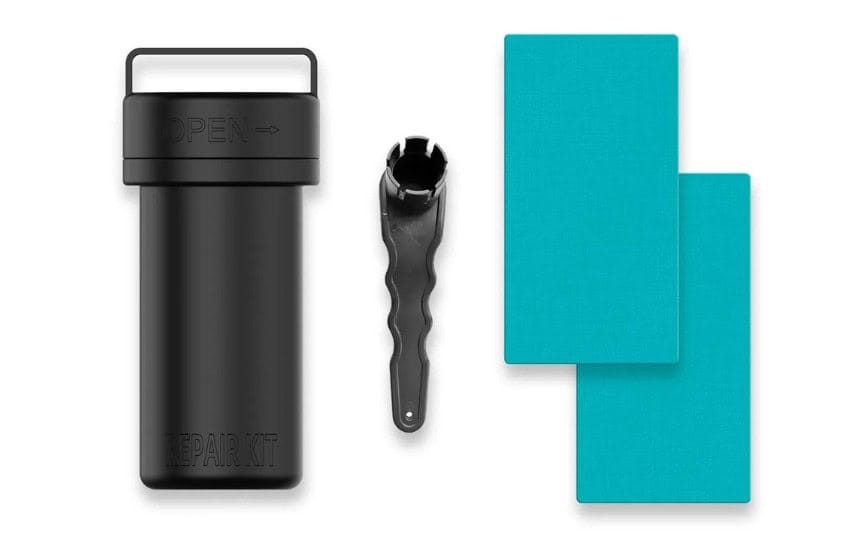
Every inflatable paddle board comes with a repair kit — usually a small tube of PVC glue and a patch or two. Most paddlers never need it, but when you do need it, you really need it. Keep it in your dry bag rather than at home in a drawer.
The standard kits that ship with most boards cover minor punctures and seam repairs adequately. For more comprehensive coverage — particularly if you paddle in rocky or adventurous conditions — it’s worth picking up a slightly more substantial kit with multiple patch sizes and a valve repair tool. Most major SUP brands sell these as accessories.
Other Paddle Board Accessories to Consider
A few things that didn’t make the main list but are worth knowing about:
SUP leash — most boards come with one, but if yours doesn’t, a coiled leash for flat water or a straight leash for surf conditions is essential safety kit. Never paddle without one.
Board lock — a wire lock for securing your board to a fixed point at a launch site. Useful if you regularly paddle alone and need to leave the board unattended briefly.
Waterproof sunscreen — obvious but genuinely easy to forget. UV exposure on the water is higher than on land due to reflection off the surface. SPF50 minimum, reapplied regularly.
Wetsuit or rash vest — for cold water or extended sessions, a wetsuit extends your comfortable paddling season considerably. A rash vest provides sun protection in warmer conditions without the thermal bulk.
Fin key — if your board uses screw-in fins, keep a spare fin key in your kit bag. They’re tiny and easy to lose, and without one you’re not paddling.
My Take
The best paddleboard accessories are the ones that earn their place in your kit and stay there — not the ones that felt exciting to buy and never leave the garage. The paddleboarding gear I’d call genuinely essential is a short list: electric pump, changing robe, a PFD you’ll actually wear, and a dry bag you trust. Those four cover the basics of a practical, safe session. Everything else builds from there depending on how you paddle.
The carry strap and water shoes make the logistics of getting to and from the water easier. The action camera captures what’s worth remembering. The carbon paddle makes longer sessions more enjoyable. None of these are essential paddleboarding equipment, but all of them have earned their space in my boot.
For the accessories I haven’t personally used — the motor kit, the anchor, the racing fin — I’ve included options that are well regarded in the paddleboarding community, but I’d encourage you to do your own research before committing. The SUP accessories market is full of products that look similar at different price points; the gap in quality is often more significant than the gap in price suggests.
If you’re just getting started and wondering where to spend first: electric pump, then a decent changing robe, then a PFD you’ll actually wear. The rest can wait.
Related Guides & Reviews
The resources below cover the basics, common questions, and related kit to help you get more out of your time on the water.
- How To Paddle Board: Complete SUP Guide for Beginners
- Best Budget Paddle Boards in the UK
- Best Paddle Board for Beginners UK: 8 Top SUPs Compared
- Electric vs Hand Pump: Paddleboard Pump Guide

Steve Cleverdon
Adventure-driven outdoor gear reviewer and paddleboarder, Steve has spent 20 years exploring rivers, coastlines, and trails across Britain and abroad, sharing what he’s learned along the way. Learn more about Steve or get in touch.