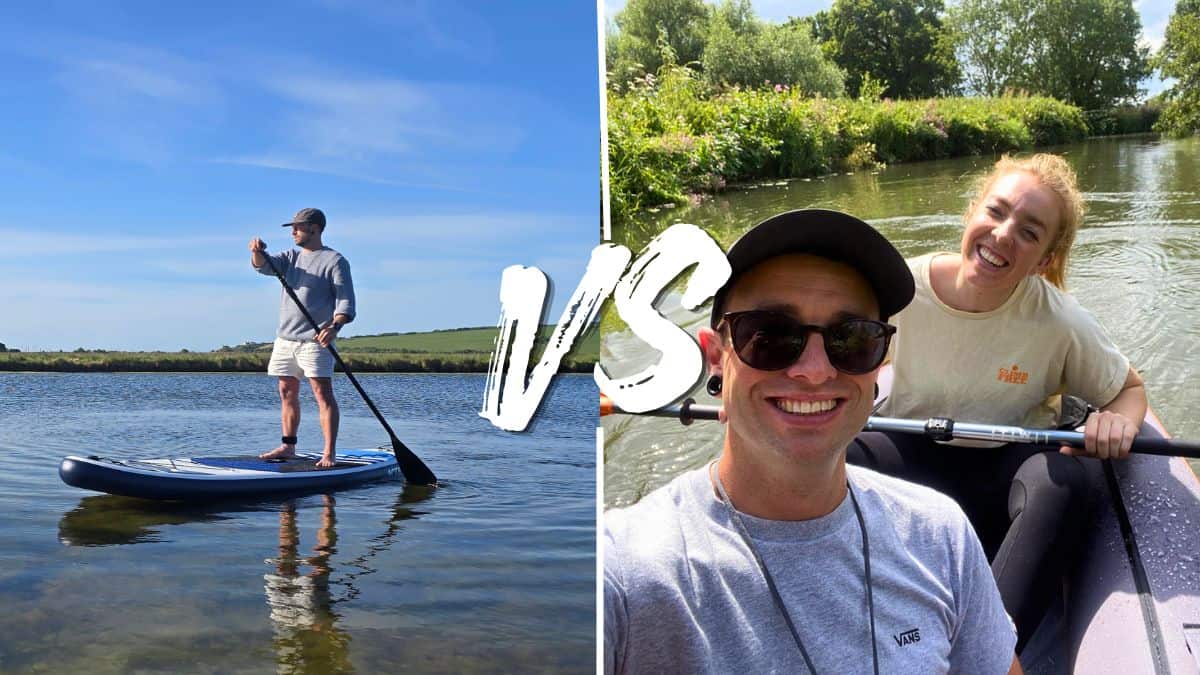
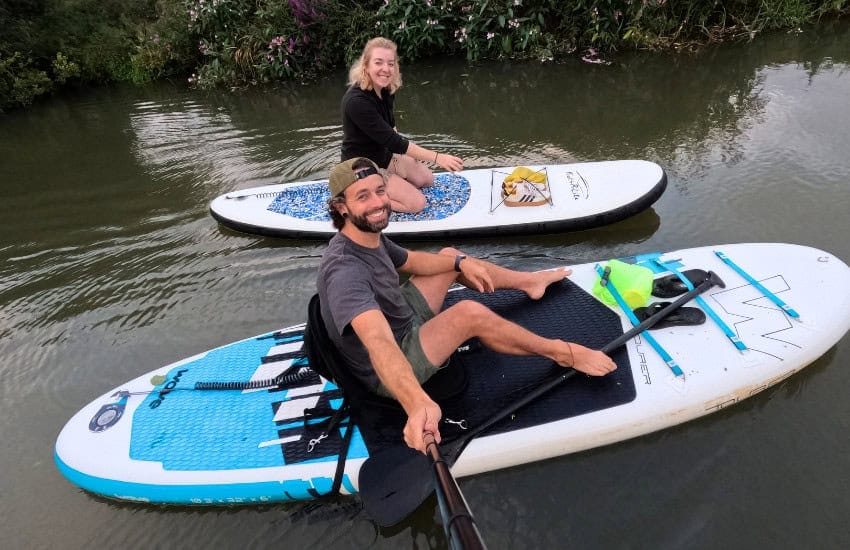
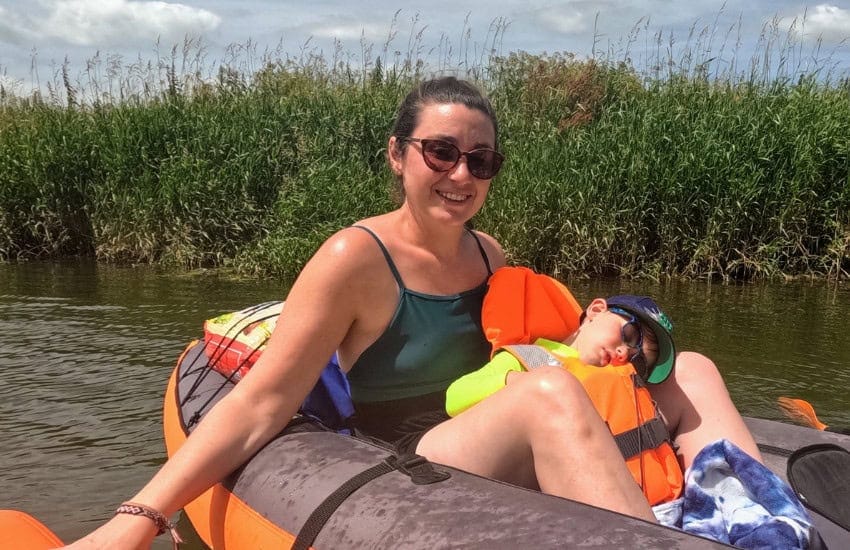
When it comes to paddleboard vs kayak, I don’t have a clean universal answer — and that’s because for a few years, this was our standard setup on the water: Becci in the kayak with both kids tucked in around her, and me on the paddleboard next to them.
We’d head out on the rivers around East Sussex — the Ouse, the Cuckmere — and that combination worked perfectly. The kayak was stable, forgiving, and brilliant for keeping young children safe and happy on the water. The paddleboard gave me the freedom to explore a bit further, keep pace alongside them, and honestly just have more fun.
That setup has evolved over time. My eldest is eight now, and he’s been riding his own Wave Kids SUP for a while. My youngest, at five, sits on the front of my board. The kayak still comes out for days with friends, but paddleboarding has become the main event for our family.
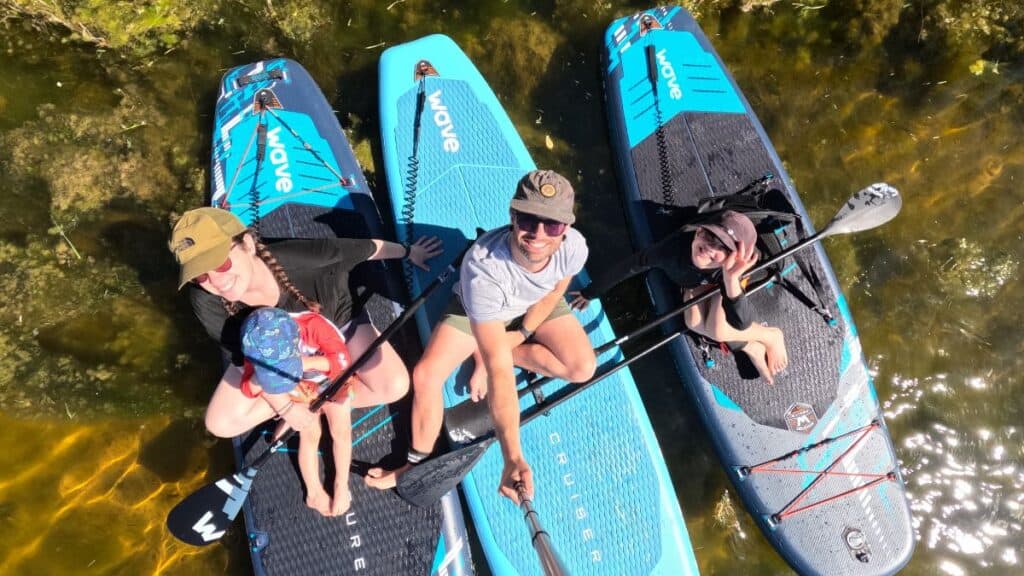
So when people ask me whether they should get a paddleboard or a kayak, I don’t have a clean universal answer — because I’ve used both extensively and they serve genuinely different purposes. What I can give you is a straight comparison based on real experience, so you can make the right call for how you actually want to spend your time on the water.
PaddleBoard vs Kayak: At a Glance
| Paddleboard (SUP) | Kayak | |
|---|---|---|
| Paddle type | Double-bladed, both sides | Single-bladed, one side |
| Position | Standing (kneeling optional) | Seated |
| Stability | Requires balance — learning curve | Very stable from the start |
| Best for | Exploring, fitness, coastal touring | Families, relaxed days, gear-heavy trips |
| Risk of falling in | Higher, especially for beginners | Low — enclosed or open cockpit |
| Gear capacity | Limited — deck bungees and dry bags | Generous — hull storage, lap space |
| Solo use | Easy | Easy to solo, better with two |
| Kids on board | Younger kids sit at the front | Kids fit comfortably in the cockpit |
| Portability | Inflatable SUPs pack to a backpack | Inflatable kayaks pack to a bag |
| Fitness benefit | Full body — core, arms, balance | Arms and shoulders focused |
| Cost (entry level) | From £180 (inflatable) | From £250 (inflatable) |
| UK licence needed? | Yes, on most inland waterways | Yes, on most inland waterways |
Licence requirements apply on most UK inland waterways. The coast and tidal waters are generally licence-free.
Thanks for your support – I may earn a small commission from affiliate links in this article Learn more
The Key Differences
Stability and the Learning Curve
This is where kayaks win clearly, especially for beginners or anyone with younger children. You sit down, you’re enclosed or low in the boat, and falling in is unlikely unless you’re doing something actively wrong. The first time Becci and the kids got in the kayak, they were comfortable and paddling within minutes.
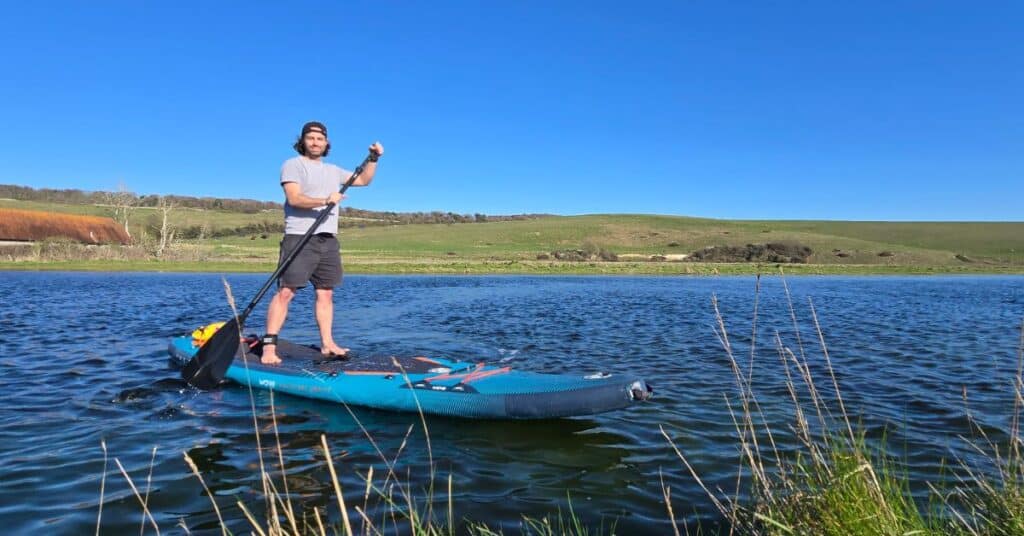
A paddleboard is a different introduction to the water. Standing on a moving surface takes adjustment, and most people will fall in at some point during their first few sessions — which is part of the experience, but it matters when you’re deciding which craft to hand a nervous beginner. If getting someone confident on the water is the goal, start with a kayak.
Freedom and the SUP Advantage
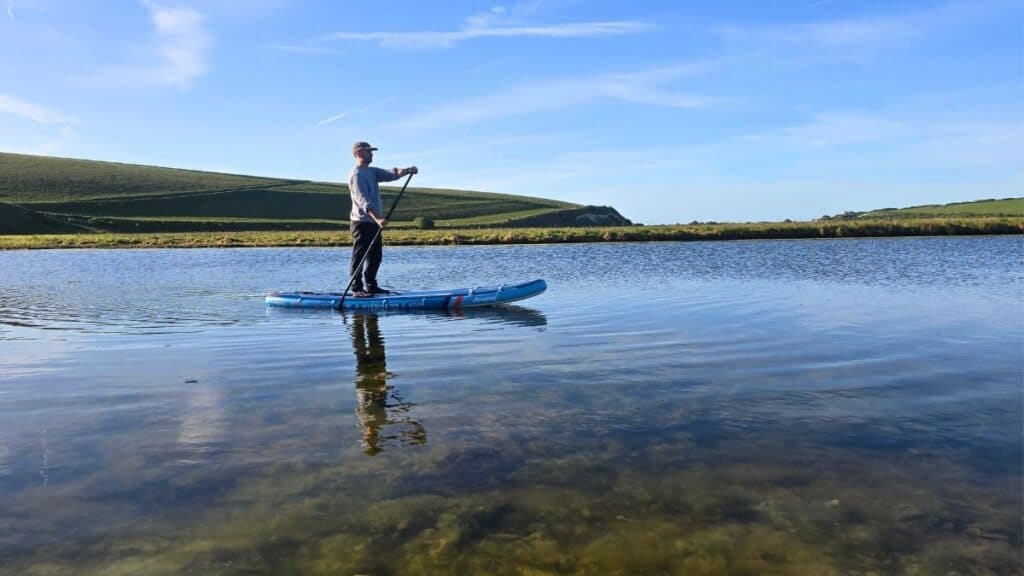
Once you’ve got your balance sorted, a paddleboard opens up the water in a way a kayak doesn’t quite match. You’re standing, which means you can see further, react faster, and cover different terrain. There’s a fitness element too — paddleboarding works your core, your arms, and your balance simultaneously in a way that kayaking doesn’t.
For longer flat-water exploration, coastal paddling, or just getting out on the water regularly, a SUP is hard to beat. If you’re looking for a starting point, my best beginner paddle boards guide covers the options worth considering at every budget.
Carrying Gear and Kicking Back
The kayak wins on comfort and practicality for longer days. The hull gives you genuine storage, you can wedge a cool box between your legs, stack kit on the deck, and sit back without constantly managing your balance. If you’re spending a full day on the water — fishing, a picnic, a river trip with a lot of stuff — a kayak is a more relaxed choice.
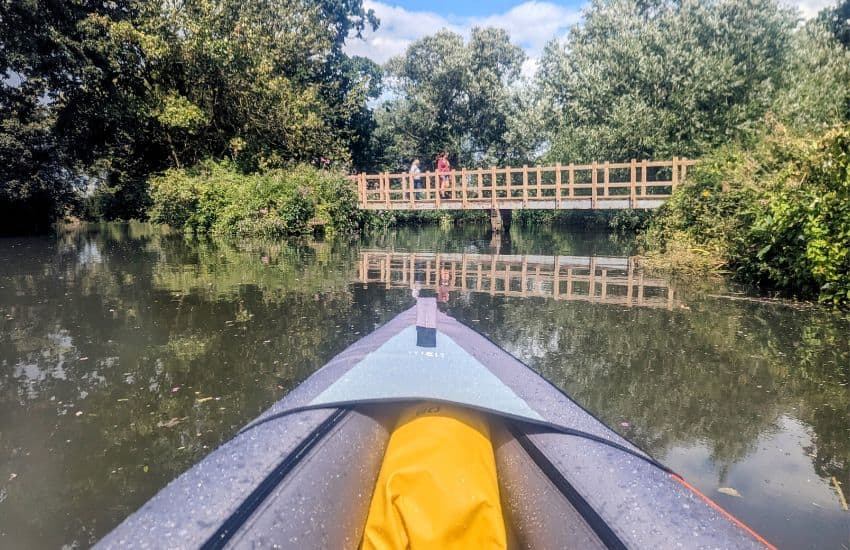
On a paddleboard, everything goes in a dry bag or on a deck bungee. It’s manageable for day trips, but it’s not the same as having a hull to throw things into.
Kids on the Water
We ran both for years, and the progression made sense. When the kids were very young — three, four, five — the kayak was right. They could sit safely inside it, protected from the water, with minimal risk of going in. Becci could manage both of them in the kayak comfortably while I paddled alongside on the SUP.
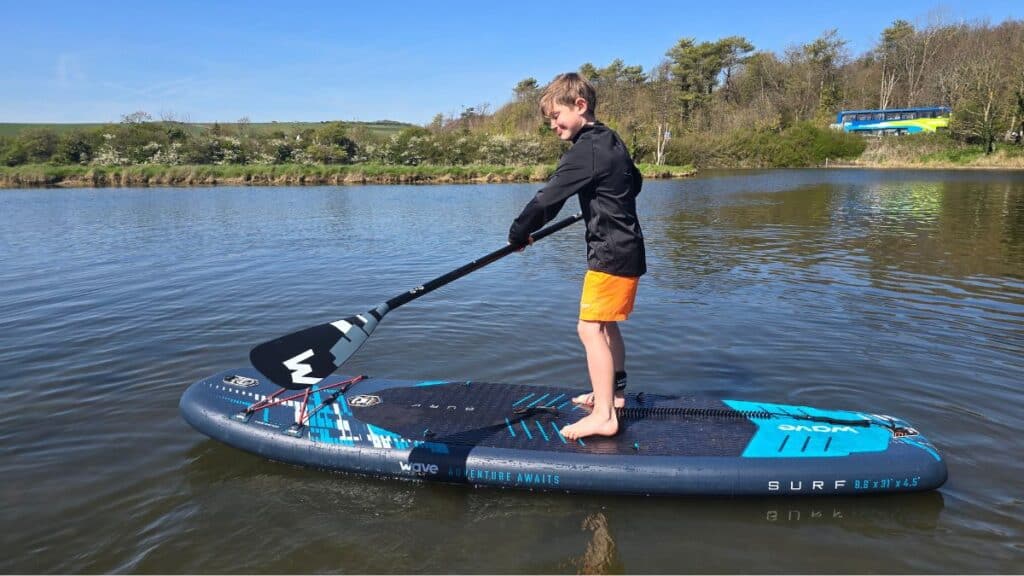
As confidence grew, the shift to paddleboards happened naturally. My eldest took to it quickly and now has his own board. My youngest sits at the front of mine and loves it. The kayak hasn’t gone anywhere — it comes out for days when friends join us and want a more relaxed option — but the SUPs are what we reach for first now.
If you’ve got young children and you’re deciding between the two, I’d start with a kayak and keep the SUP in mind for when they’re ready to push themselves a bit more.
When to Choose a Paddle Board
- You’re a confident swimmer and happy to get wet occasionally
- You want a decent workout alongside the paddling experience
- You’re exploring coastal waters, rivers, or flatwater solo or with a partner
- You want something that packs down into a bag and fits in a car boot
- Your kids are old enough and confident enough to try it themselves
Worth looking at: my best budget paddle boards roundup covers the strongest options at the more accessible price points, and the Aquaplanet Allround 10 or the Wave Tourer are two solid all-rounders if you want a quick recommendation for getting started.
When to Choose a Kayak
- You want to get someone on the water who has little or no experience
- You’re heading out with young children and stability is the priority
- You’re planning a longer day on the water with food, gear, and kit to carry
- You want a relaxed, low-effort way to spend time on the water
- You’re doing a multi-day river trip and need hull storage for camping gear
If a kayak is the right call, the Wave kayak range covers everything from entry-level family options to touring builds, or check out my best inflatable kayak guide for more options.
Can You Have Both?
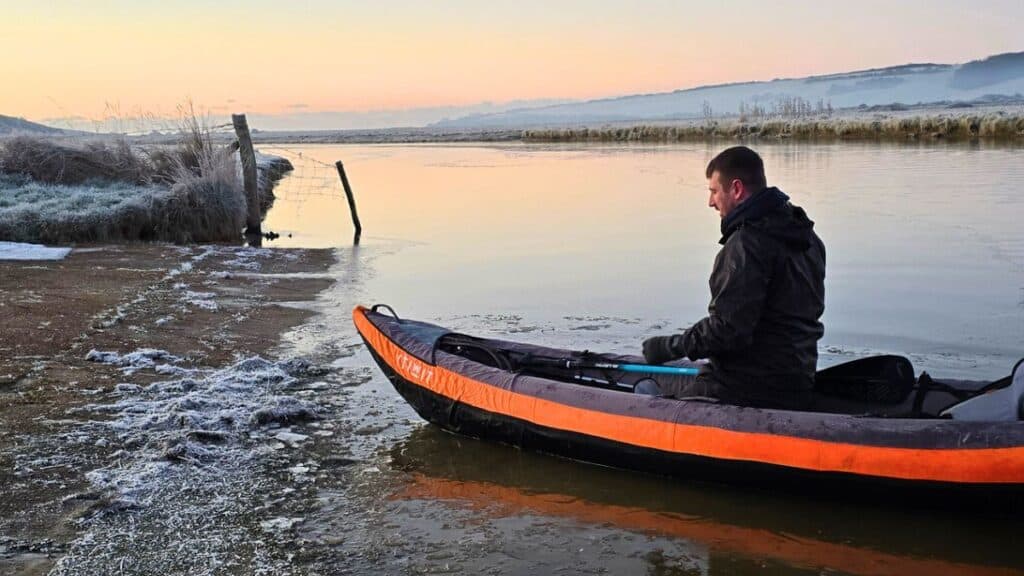
Honestly, yes — and for a lot of families, this is the answer. A paddleboard and an inflatable kayak cover very different use cases, and they complement each other well. The setup we ran for years — kayak for the kids, SUP for me — worked precisely because they served different needs on the same trip.
If budget is a factor and you can only start with one, I’d ask yourself who’s doing the paddling and what the conditions are likely to be. Nervous beginners, young kids, mixed-ability groups — go kayak first. Confident paddler, solo or with an equally keen partner, wanting to push further — start with a SUP.
The two crafts aren’t competing with each other. Most people I know who paddle regularly end up with both eventually.
My Personal Take
I use my paddleboard far more than my kayak these days. The SUP is what I reach for at Barcombe Mills, on the Cuckmere, and along the Sussex coast. It’s more engaging, more of a workout, and just more fun for me personally now that I’m paddling regularly rather than occasionally.
But the kayak was the right gateway. Without it, our family wouldn’t have spent those years building confidence on the water. My kids wouldn’t be on their own boards now if they hadn’t started in the cockpit of the Itiwit. If you’re making this decision for a family with young children, start there. You’ll end up on a SUP soon enough — and you’ll be glad you came at it from a foundation of confidence rather than trying to rush it.
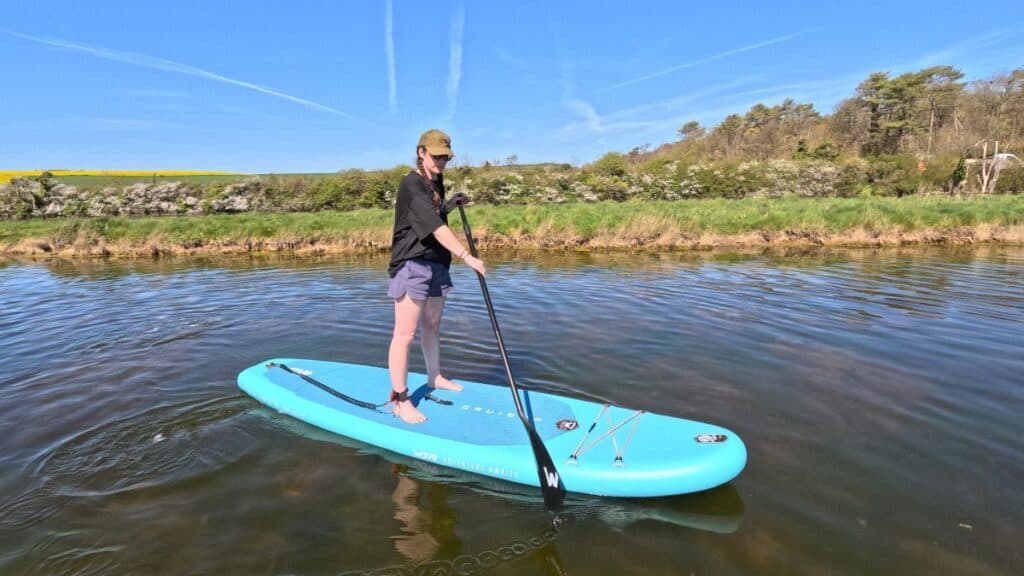
If you’re looking for a specific SUP recommendation, the Bluefin Cruise and Wave Cruiser are both boards I’ve tested and rated highly.
Paddleboard vs Kayak FAQ
Is a paddleboard harder than a kayak?
Yes, initially. A kayak is easier to get into straight away — you sit down, you’re stable, and the learning curve is gentle. A paddle board takes more balance and most beginners will fall in at least once during their first session. That said, most people find their feet on a SUP within an hour or two, and the payoff in terms of freedom and enjoyment is worth it.
Is a paddleboard or a kayak better for young children?
A kayak is the better starting point for young children. The enclosed position keeps them safe, the risk of falling in is low, and they can join a confident adult without needing any real skill of their own. Paddle boards work well for children once they’ve built some water confidence — younger kids can sit at the front of an adult’s board, while older children can progress to their own board when they’re ready.
Which is faster — a SUP or a kayak?
A kayak is generally faster, particularly over longer distances. The seated position and double-bladed paddle allow for more efficient strokes, and touring kayaks are built for speed. A paddleboard can move quickly but the standing position uses more energy and is less aerodynamically efficient. For casual paddling, the difference is marginal, but on a long flat-water route a kayak will cover more ground.
Can you use a paddleboard and a kayak on the same UK waterways?
Yes — both require a licence on most inland waterways in England and Wales, including rivers managed by the Canal & River Trust and the Environment Agency. The coast and tidal waters are generally licence-free for both. The rules are the same regardless of which craft you’re on, so if you paddle both, one licence covers you.
Do I need to choose between a paddleboard and a kayak?
Not necessarily. The two crafts complement each other well and serve different purposes — a kayak is better for relaxed days, gear-heavy trips, and getting nervous beginners on the water, while a paddleboard wins on fitness, exploration, and longer sessions. Many paddlers end up with both over time, and inflatable versions of each mean storage and transport don’t have to be a barrier.
Related Guides & Reviews
The resources below cover the basics, common questions, and related kit to help you get more out of your time on the water.
- How To Paddle Board: Complete SUP Guide for Beginners
- Best Paddle Board Accessories: Best SUP Gear
- 19 Things I Wish I Knew When I Started Paddleboarding
- Wave Paddle Boards Compared: Complete Guide to Every Wave 3.0 SUP
- Bluefin Paddle Boards Compared: Complete Guide to Every Bluefin SUP

Steve Cleverdon
Adventure-driven outdoor gear reviewer and paddleboarder, Steve has spent 20 years exploring rivers, coastlines, and trails across Britain and abroad, sharing what he’s learned along the way. Learn more about Steve or get in touch.