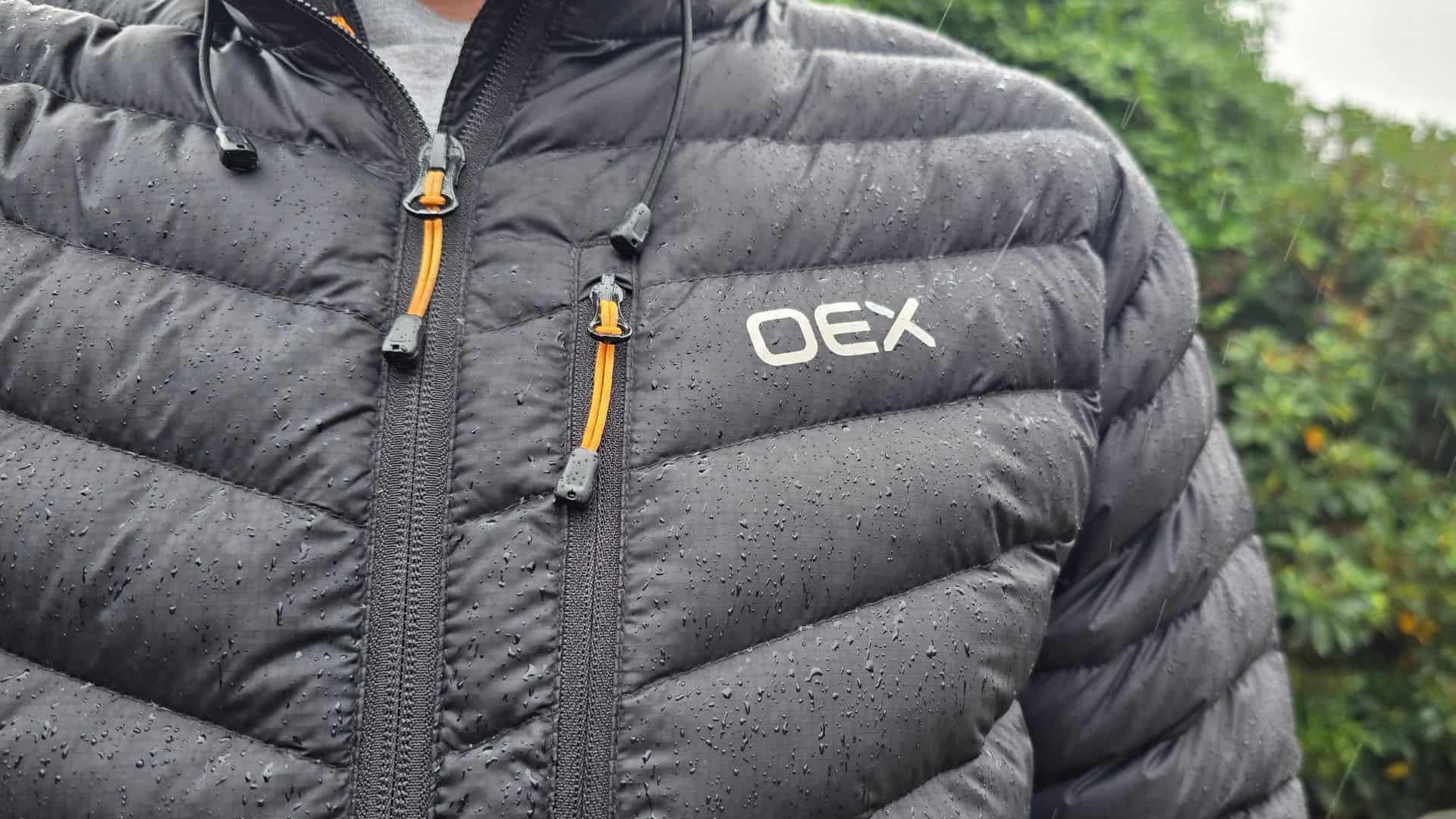
Are puffer jackets waterproof? Usually not. Most puffer and down jackets are water resistant. The shell has a DWR (durable water repellent) coating that makes light rain bead up and roll off, but steady or heavy rain will eventually get through the stitching, the fabric and the zips.
What happens next depends on the insulation inside. Wet down clumps together and stops keeping you warm. Synthetic insulation keeps most of its warmth when damp and dries faster. This guide explains why puffers leak, what rain does to down and synthetic fill, how to reproof a jacket, and when to wear a waterproof shell over the top.
I wear a down jacket for most of my winter dog walks, hikes, and camping trips, and I pair it with a light waterproof rather than trusting the shell in the rain.
Thanks for your support – I may earn a small commission from affiliate links in this article Learn more
The Short Answer
- Waterproof: Only puffers with a waterproof membrane and taped seams. Most are water resistant and handle showers, not sustained rain
- Down in the rain: Once it soaks through, down clumps and loses most of its warmth. Hydrophobic down helps in damp conditions, not downpours
- Synthetic in the rain: Keeps much of its warmth when wet and dries faster, but the jacket still leaks
- In steady rain: Wear a waterproof shell over your puffer, sized so it doesn’t squash the insulation
Are Puffer Jackets Waterproof? Why Most Leak in the Rain
Most puffer jackets aren’t waterproof because the stitching that holds the insulation in place puts rows of needle holes through the shell, and those seams aren’t sealed.
- Water resistant (or water repellent): A tightly woven nylon or polyester shell with a DWR coating. It sheds drizzle and short showers, but water gets through in sustained rain
- Waterproof: A fabric with a waterproof membrane or coating, such as GORE-TEX or Pertex Shield, with every seam taped on the inside. My guide to the best GORE-TEX jackets explains how waterproof ratings work
Water gets into a standard puffer at four main points.
- Stitching: Most puffers use stitch-through baffles, where the outer fabric is sewn straight to the lining to make the puffy sections. Every stitch line is a row of holes. Mountain Equipment describes narrow baffles as making “loads of stitch lines where rain gets in, heat pours out, and wind howls through”
- Fabric: Shell fabrics are thin and light to keep the jacket packable and breathable. Once the DWR wears off or is overwhelmed, the fabric soaks up water, which is known as wetting out
- Zips: Front and pocket zips are rarely water-resistant, and a single fabric flap only slows water down
- Pressure points: Rucksack straps press water through the fabric at the shoulders and hips
That last point caught out the Mountain Warehouse Seasons padded jacket in about half an hour of heavy, horizontal rain on the South Downs. Most of the water beaded off, but it got through under my rucksack’s shoulder and waist straps.

Can You Get a Waterproof Puffer Jacket?
Yes. A small number of insulated jackets have a waterproof shell with fully taped seams. Look for “waterproof” rather than “water resistant” on the label, plus a hydrostatic head rating or a named membrane. A few examples, which I’ve researched rather than tested:
- Rab Valiance: A Pertex Shield outer with fully taped seams, filled with 800 fill power hydrophobic goose down, at 660g. It’s one of the jackets in my best insulated jackets roundup
- Outdoor Research Floodlight Down: A two-layer Pertex Shield+ shell, fully seam-taped, with 800+ fill power goose down
- Mountain Warehouse Concord Extreme: A long down parka with taped seams, tested to 3,000mm, which Mountain Warehouse describe as suitable for light rain
The trade-off is that a waterproof puffer is heavier, bulkier and less breathable, and you can’t take the waterproof layer off when the rain stops. For walking, a standard puffer with a separate shell is more flexible, while a waterproof puffer suits cold, wet days when you’re not moving much.
What Happens When Down Gets Wet
Down jackets aren’t waterproof, and down is the insulation that suffers most when water gets in. Wet down clumps together, loses its loft and stops keeping you warm.
Down keeps you warm by lofting: each cluster puffs up and traps still air. When the clusters get wet, they collapse into flat clumps that trap very little air, and water conducts heat away from your body much faster than air, so a soaked down jacket loses most of its warmth.
Rain isn’t the only cause. Sweat and condensation build up from the inside, especially under a waterproof, and on a multi-day camping trip a down jacket can slowly pick up moisture without ever being rained on.
Wet down is also slow to dry. A tumble dryer on low heat sorts it out at home, but on a hike or camping trip there’s usually no way to dry it, and down left damp can smell and go mouldy.

Does Hydrophobic Down Help?
Hydrophobic down helps in damp conditions, but it doesn’t make a jacket waterproof. Each down cluster is treated with a water-repellent finish, so it absorbs less water and recovers its loft faster after it gets damp. You’ll see it sold under names such as Nikwax Hydrophobic Down.
That makes it useful against drizzle, damp air and condensation on long trips. It doesn’t stop water coming through the stitching and zips, and soaked treated down still loses warmth.
My OEX Kintra, which I’ve worn on dog walks, hikes and camping trips for the past few winters, uses standard 700 fill power duck down with a PFC-free DWR on the shell. It copes with occasional showers, but I don’t rely on it in steady rain. I wear a light waterproof over it instead.
How Does Synthetic Insulation Cope With Rain?
Synthetic insulation copes with rain much better than down. The polyester fibres absorb very little water and keep most of their structure when damp, so they keep trapping air and keep you warm.
PrimaLoft, the best-known synthetic fill, claims its Gold Insulation Eco keeps up to 98% of its warmth even when soaked. That’s a manufacturer’s figure, but the point holds: a damp synthetic jacket still insulates, and a damp down jacket mostly doesn’t.
Synthetic fill also dries faster. The Seasons jacket I mentioned earlier has a recycled polyester microfibre fill, and it dried reasonably quickly once the rain stopped.
The jacket still isn’t waterproof, so you’ll still get wet. The difference is that you stay warmer while you do.
The trade-off is weight and bulk. A synthetic jacket is usually heavier and packs down larger than a down jacket of similar warmth. My guide to down vs synthetic jackets goes into the differences in more detail.
Which Is Better for UK Weather?
UK winters are more often wet and mild than dry and freezing, so for everyday wear a synthetic jacket usually makes more sense. Down suits hiking and camping, as long as you carry a waterproof to wear over it.
How to Reproof a Puffer Jacket
You can restore a puffer’s water resistance by washing it, then treating it with a wash-in or spray-on proofer. Reproofing brings back the DWR, so rain beads and rolls off again. It won’t seal the stitching or make the jacket waterproof.
To check whether your jacket needs it, splash some water on the shoulders. If it beads up, the DWR is still working. If the fabric darkens and soaks it up, it’s time to reproof.
- Wash it first. Dirt and body oils stop DWR from working, and sometimes a wash alone brings the beading back. My guide on how to wash a puffer jacket covers the full method.
- Choose a proofer. A wash-in proofer such as Nikwax Down Proof treats both the shell and the down fill. A spray-on proofer treats only the outer fabric, so you can focus on the shoulders, cuffs, and hood. A two-in-one cleans and proofs in a single cycle. I use Grangers Wash + Repel Down 2-in-1.
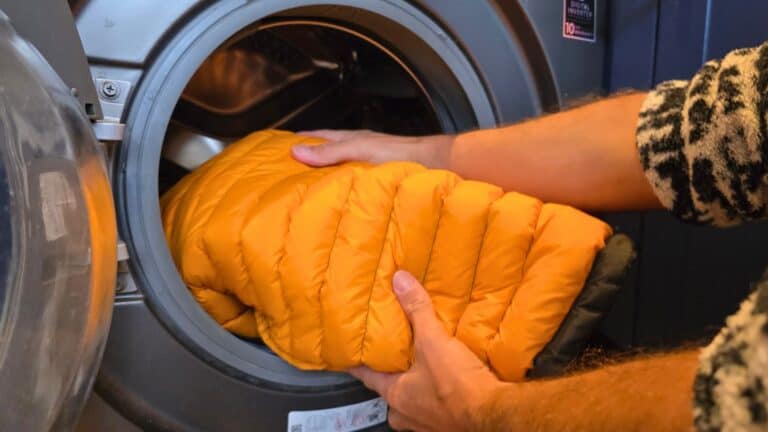
- Dry it thoroughly. Tumble dry on low heat with dryer balls until there are no clumps left. Some treatments need heat to activate, so check the bottle.
Care for your gear
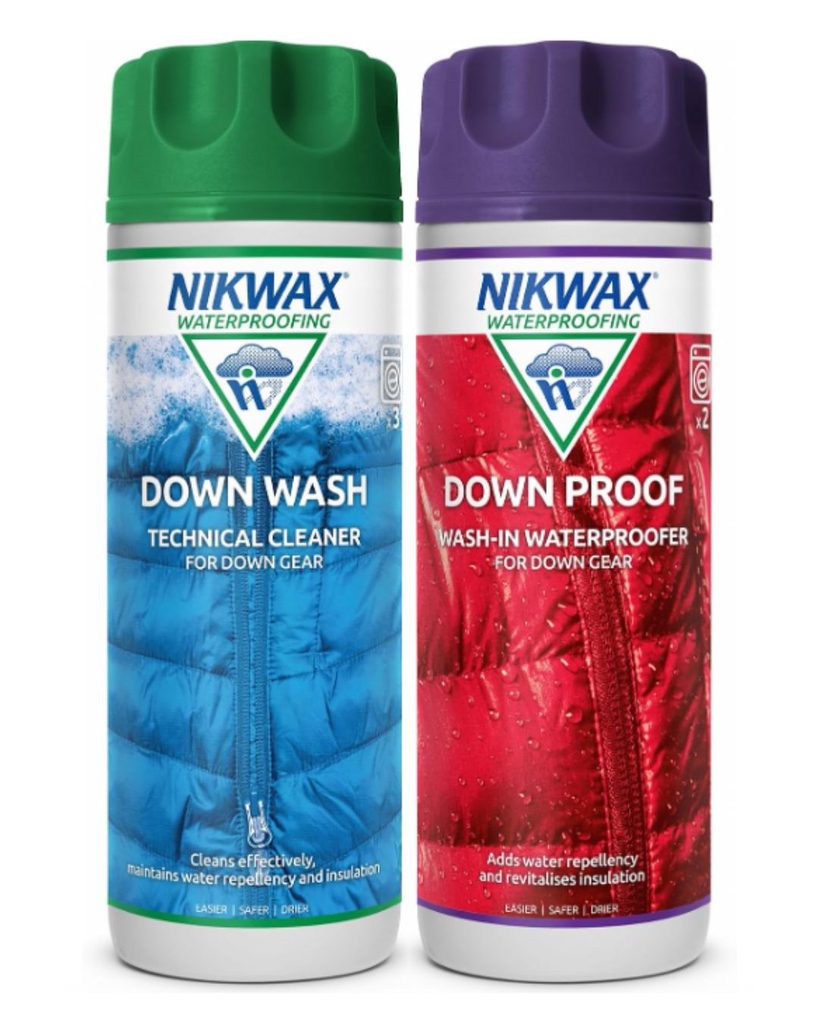
Nikwax Down Wash + Down Proof Twin Pack
From £15 • 2 x 300ml
A two-step wash and wash-in proofer that cleans down, keeps its loft, and adds water repellency, so your jacket stays warm in damp weather.
When Should You Wear a Waterproof Over a Puffer Jacket?
Since the answer to “are puffer jackets waterproof?” is usually no, wear a waterproof shell over yours whenever the rain is more than a passing shower. It’s the only reliable way to keep the insulation dry.
It’s worth adding a shell in these situations:
- Steady or heavy rain: The DWR is overwhelmed, and water comes through the stitching and zips
- Any real rain in a down jacket: Wet down loses most of its warmth, so it’s not worth the risk
- Wearing a rucksack: The straps press water through the shell at the shoulders and hips
- Multi-day trips: There’s no way to dry a wet down jacket on the trail
- Wet snow and sleet: It melts on contact and soaks in like rain
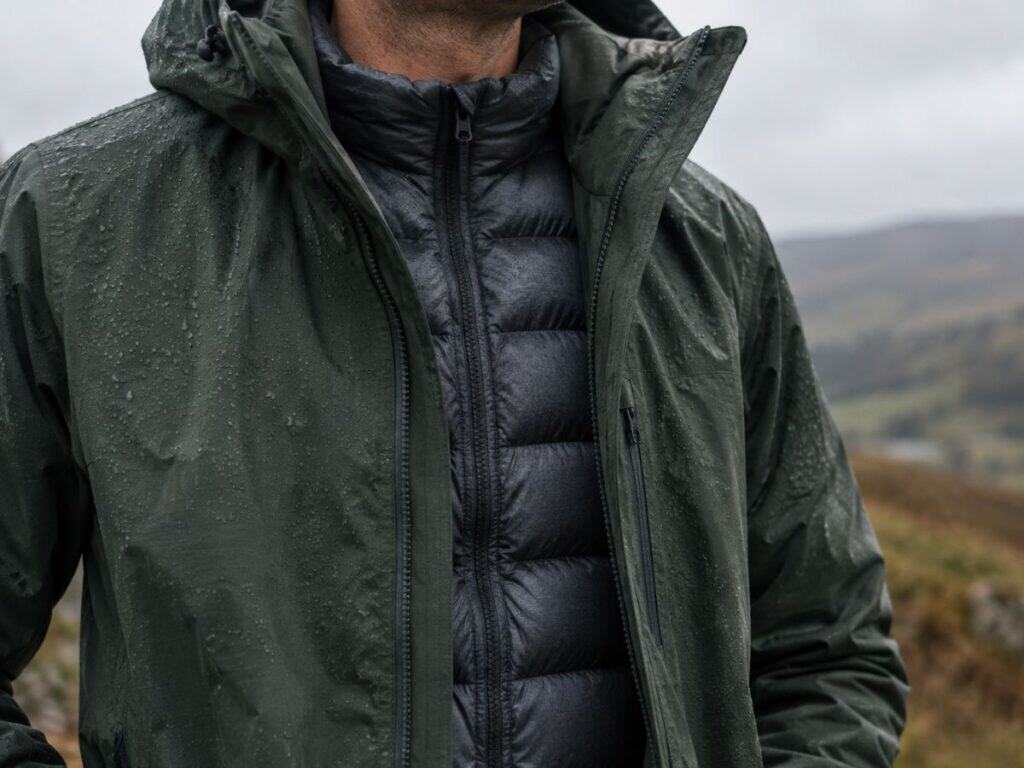
How to Layer a Shell Over a Puffer
The shell needs enough room to fit over your puffer without squashing it, as compressed insulation isn’t as warm. Most outdoor waterproofs are cut with room for a mid layer, especially those with a mountain fit, such as the OEX Aonach 2. Try the two on together and check you can lift your arms and close the front zip.
The waterproof I reach for on hikes is the Rohan Aira. It’s a three-layer shell that weighs 260g and packs to 650ml, so it goes in the rucksack whatever the forecast. It fits over my Kintra without squashing it.
On a typical winter hike, I wear a merino base layer and a light fleece, add the Kintra when it gets cold, and put the Aira over the top when it rains.
A puffer under a waterproof can get warm walking uphill, so open the pit zips or front zip to let out heat and moisture before sweat dampens the insulation.
Final Thoughts
A standard puffer jacket is built to keep you warm, not dry. If yours is down, wear a waterproof over it when the rain sets in. For wet everyday wear, synthetic is the more forgiving choice, and if you need a waterproof puffer, choose one with a waterproof membrane and taped seams.
Related Guides & Reviews
These guides and reviews cover choosing insulated and waterproof jackets and keeping them working.

Steve Cleverdon
Adventure-driven outdoor gear reviewer and paddleboarder, Steve has spent 20 years exploring rivers, coastlines, and trails across Britain and abroad, sharing what he’s learned along the way. Learn more about Steve or get in touch.