Gore-Tex is a waterproof, windproof, and breathable membrane that outdoor brands build into jackets, trousers, boots, gloves, and hats. It is not a fabric you can buy on its own, and it is not a single product: Gore-Tex, Gore-Tex Pro, Gore-Tex Active, Paclite and Infinium all behave differently.
This guide is here to answer: What is Gore-Tex, what is it made of, how it keeps rain out while letting sweat escape, what each version is for, and what the labels mean on a jacket or pair of boots. It also covers whether it is worth paying for in the UK and how to look after it.
Thanks for your support – I may earn a small commission from affiliate links in this article Learn more
The Short Answer
- What it is: a thin plastic membrane with billions of tiny pores per square inch, bonded between an outer fabric and an inner lining.
- What it does: blocks liquid water and wind, but lets water vapour from sweat pass through.
- Which type: Gore-Tex Pro suits the harshest conditions, standard Gore-Tex suits most hiking, Gore-Tex Active suits high-output activity, and Infinium is not waterproof.
- Is it worth it: usually, if you walk in the UK in wet weather often enough to need a jacket you can rely on.
What Is Gore-Tex Made Of?
Gore-Tex is made by W. L. Gore & Associates, usually just called Gore. The classic Gore-Tex membrane is expanded PTFE (ePTFE), made by stretching PTFE, a synthetic polymer, until it forms a thin, microporous film. Robert (Bob) Gore developed the stretching process in 1969, working with his father Wilbert, who founded the company, and the first commercial uses came in the 1970s. Gore describes the membrane as about 0.01mm thick.
The membrane is too delicate to wear by itself, so it is bonded between layers to make a laminate. A 3-layer garment has the membrane sandwiched between an outer fabric and an inner backer. A 2-layer garment has the membrane bonded to the outer and uses a separate loose lining. The outer fabric usually carries a durable water repellent (DWR) finish, which is a surface treatment and not part of the membrane.
There is a newer membrane too. Gore announced in 2024 that it was moving its consumer products from ePTFE to expanded polyethylene (ePE). ePE is described by Gore as free of intentionally added PFAS, and the redesigned Gore-Tex Pro for autumn/winter 2025 uses it. I cover what that means for you in the PFAS section below.

How Does Gore-Tex Keep You Dry?
The answer is pore size. Each square inch of membrane has nine billion pores, each about 20,000 times smaller than a water droplet but around 700 times bigger than a water vapour molecule. Rain and snow are too big to pass through. Sweat, which leaves your body as vapour, is small enough to get out.
Because the pores are so small, wind cannot blow through the membrane either, which is why Gore-Tex jackets feel warmer than a plain shell of the same weight.
Two things can stop this from working perfectly, though. Breathability depends on a gap between the warm, humid air inside the jacket and the cooler, drier air outside, so it works best when you are cold and sweating a little, and worst in warm, muggy weather. And the outer fabric has to stay clear of water: once the DWR wears off, the face fabric soaks up water (called wetting out), the vapour can no longer escape and the jacket feels clammy even though it is not leaking. Dirt and body oils can cause the same problem.
I’ll be honest, I’m not particularly good at washing my waterproof garments regularly, and my Gore-Tex trousers in particular tend to stay caked in mud for longer than they should between washes. Even so, with irregular washing, I have never had a Gore-Tex garment feel clammy or wet out on me. Mine have always stayed comfortable and dry, which is ultimately what you want from a waterproof.
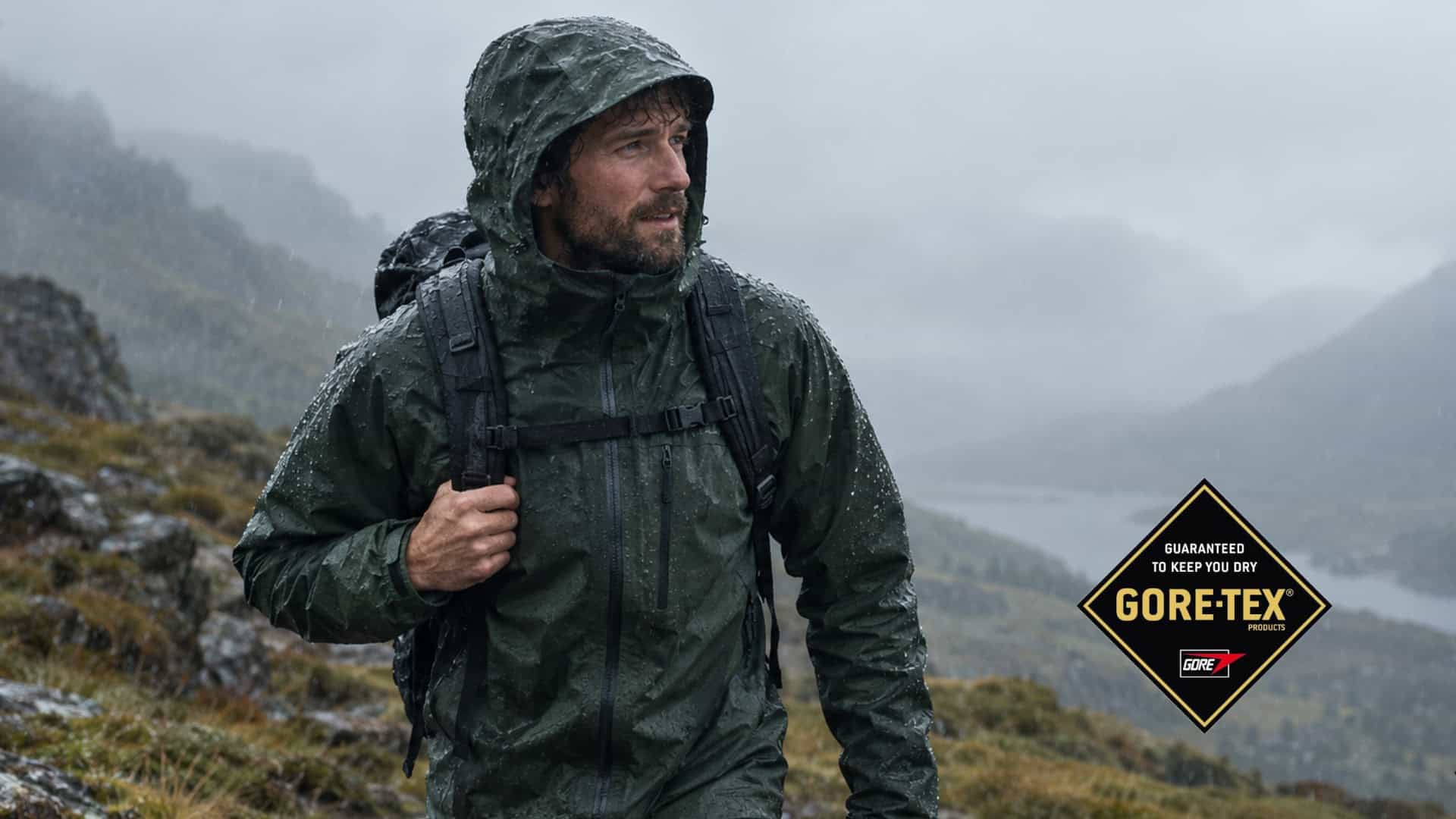
Gore backs its products with a Guaranteed to Keep You Dry promise.

What Do Gore-Tex, Gore-Tex Pro, Active, Paclite and Infinium Mean?
The name on the label tells you what the garment is designed for. These are the ones you will meet most often in UK shops.
Gore-Tex (standard). The all-round version for hiking, walking and general outdoor use. Gore describes its Gore-Tex garments as everyday outerwear with dependable protection and comfort. This is what most walkers need.
Gore-Tex Pro. Introduced in 2012 and aimed at professionals and mountaineers working in the harshest conditions. It is the most rugged version and is usually a stiffer, heavier and more expensive jacket. The redesigned Pro for autumn/winter 2025 uses the ePE membrane and is a three-layer construction.
Gore-Tex Active. Thinner and lighter, built for high-output activity such as trail running. It is more breathable and packable than standard Gore-Tex but less durable, so I would not choose it for scrambling or carrying a heavy rucksack all day.
Gore-Tex Paclite and Paclite Plus. Lightweight, packable shells. Gore-Tex Active has largely taken over from Paclite in Gore’s range, but Paclite Plus still appears in the UK, for example, the Rab Latok jacket, so you may well see it in shops and on sale rails.
Gore-Tex Infinium (and Windstopper). Not waterproof. Infinium is water resistant and windproof and is much more breathable, so it suits cold, dry days and mid-layers. Gore now sells these under the Windstopper by Gore-Tex Labs name. Do not buy it as a rain jacket.
Gore-Tex Shakedry. A premium ultralight jacket option with no DWR finish, so it needs different care (more below).
What Is Gore-Tex on Shoes and Boots?
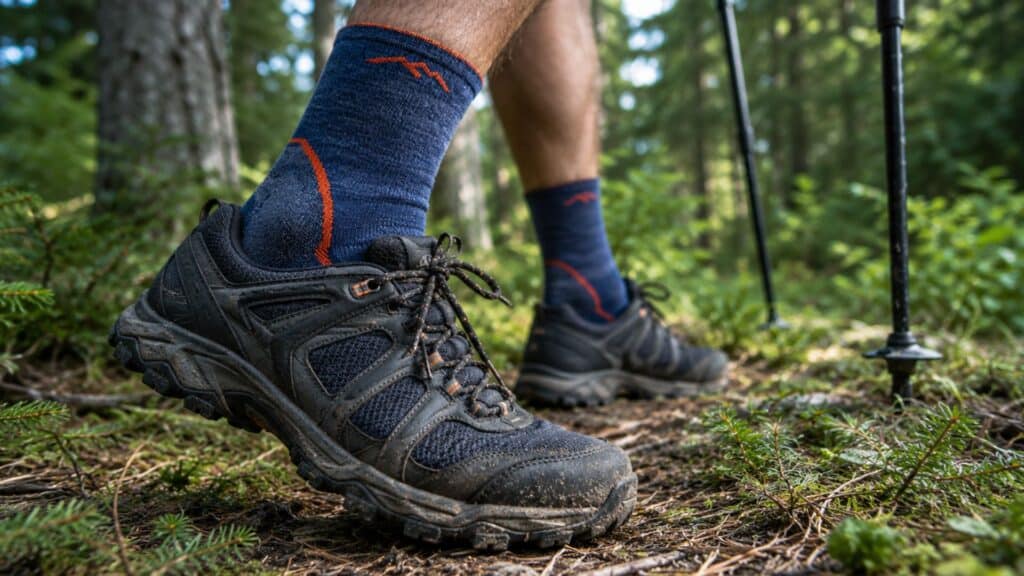
Gore-Tex footwear has a waterproof bootie or membrane bonded to the lining, so water cannot get in through the upper, and sweat vapour can get out. Gore groups its footwear into three families: Gore-Tex Footwear, Invisible Fit (a closer, more natural fit, still with the waterproof guarantee) and Surround (breathability across the whole foot, including the sole).
Two practical points apply to every Gore-Tex boot or shoe. A membrane cannot stop water coming over the top, so deep puddles and wet grass still fill a low-cut shoe. And once your feet are wet from sweat or water inside, the lining holds it, because the boot is waterproof in both directions.
What Is Gore-Tex Used For?
Gore-Tex is used wherever you need to stay dry and still shed sweat: waterproof jackets and overtrousers, walking boots and trail shoes, gloves, hats, gaiters and bivvy bags. In the UK, that mostly means hillwalking, winter walking, camping and commuting in wet weather.
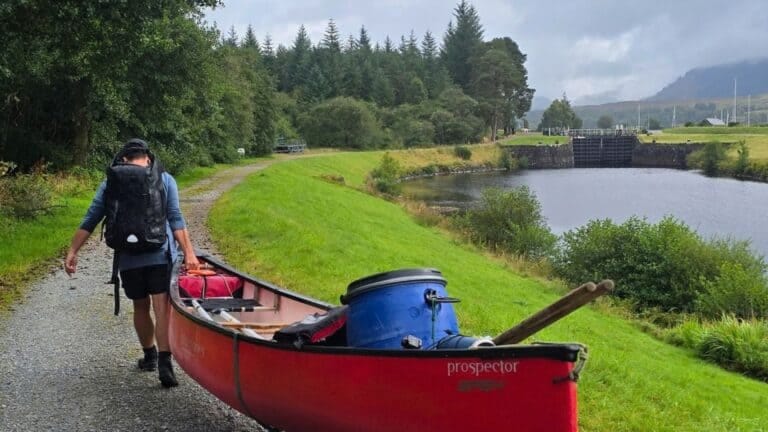
My most used piece of Gore-Tex is my Berghaus Maitland overtrousers. They have done me well year after year, on plenty of muddy woodland walks near home, on wet mountain days and, more recently, on my canoe trip across Scotland.

Is Gore-Tex Worth It?
It is worth it if you will use the jacket or boots often in wet, windy conditions and want something with a long track record. You are paying for the brand’s testing, its consistent quality and the guarantee as much as for the membrane. Competing membranes such as Pertex Shield, Event and brands’ own in-house fabrics (Berghaus Hydroshell is one) can perform well at a lower price, and I would not rule them out if the specification and reviews are good.
It is less worth it if you only walk in dry weather, if you want an ultralight shell for emergencies, or if weight and packed size matter more than durability. A cheaper shell you replace sooner may suit you better.
I have always had a good experience with Gore-Tex. That said, there are plenty of alternatives out there today that offer the same level of protection, often at a lower price, so compare a few before you buy.
Does Gore-Tex Need Washing and Reproofing?
Yes. Dirt, sweat, and body oils clog the face fabric and stop it from breathing. Gore’s own care guidance is to wash as often as needed to remove dirt and smells, and that washing and drying helps restore the DWR. The steps are:
- Zip up the front, pockets, and pit zips, and fasten loose flaps.
- Wash at 40°C on a gentle cycle with low spin (400rpm or less), using a small amount of liquid detergent, around 30ml. Rinse twice.
- Avoid powder detergent, fabric softener, stain remover, and bleach.
- Tumble dry on a warm, gentle cycle or line dry, then tumble dry for a further 20 minutes to reactivate the DWR. If you do not have a dryer, iron on a low, no-steam setting with a cloth between the iron and the garment.
- If water no longer beads after that, reapply a DWR spray or wash-in treatment, then reactivate with heat again.
Gore-Tex Shakedry is the exception: it has no DWR, so do not tumble dry, iron, or reproof it. Always check the garment’s care label first.
Is Gore-Tex PFAS Free?
Not entirely, and it is changing. The classic ePTFE membrane is a fluoropolymer, which puts it in the PFAS group of chemicals. Gore says it eliminated PFOA from its supply chain in 2013 and announced the move to PFAS-free ePE membranes in 2024. Gore describes the new Pro fabric as made without intentionally added PFAS in the membrane and finishes, with a footnote that trace amounts may be present.
As of October 2026 I could not confirm how much of the standard Gore-Tex range has moved to ePE, so the type of membrane in a specific jacket depends on the product and season. Check the product page, or ask the brand, if this matters to you.
Related Guides & Reviews
The resources below cover the basics, common questions, and related kit to help you get more out of your time outdoors.
- Best Gore-Tex Jackets for Hiking in the UK (2026)
- Berghaus Maitland GORE-TEX Overtrousers Review (2026)
- What Is PrimaLoft? Synthetic Insulation Explained
All images courtesy of their respective brands • All Rights Reserved

Steve Cleverdon
Adventure-driven outdoor gear reviewer and paddleboarder, Steve has spent 20 years exploring rivers, coastlines, and trails across Britain and abroad, sharing what he’s learned along the way. Learn more about Steve or get in touch.