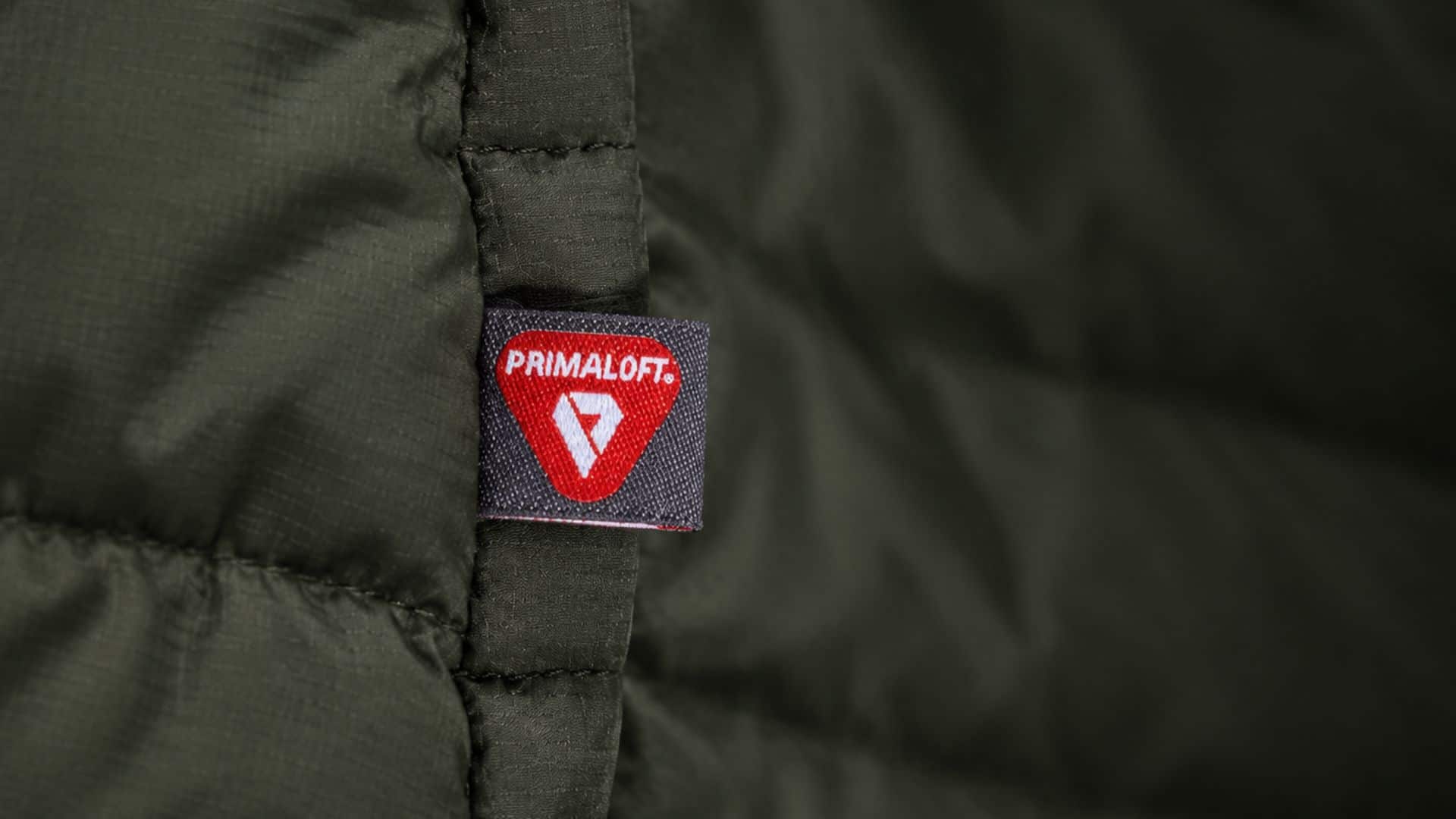
If you have been shopping for an insulated jacket, you may have seen the name on a label and wondered: what is PrimaLoft? It is a brand of synthetic insulation made from fine polyester fibres, used in jackets, sleeping bags, gloves and boots as an alternative to down. It was first developed for the US Army in the 1980s to keep people warm when it gets wet.
If you see PrimaLoft on a jacket label, it means the jacket is filled with synthetic insulation rather than feathers. It will usually be a little heavier and bulkier than a down jacket of the same warmth, but it copes better with damp, and it is usually cheaper. For the wet, mild days that make up most of a UK winter, that trade is often worth making.
This guide explains what PrimaLoft is, how it works, what the different types on the label mean, and how it compares with down, so you can tell whether a PrimaLoft jacket suits the way you use it.
Thanks for your support – I may earn a small commission from affiliate links in this article Learn more
The Short Answer
- What it is: A polyester insulation that traps warm air in the same way down does, sold to outdoor brands under the PrimaLoft name.
- Main strength: It keeps more of its warmth when damp and dries faster than down.
- Main drawback: It is heavier and packs down less small than good-quality down for the same warmth.
- Best for: Everyday winter wear, drizzly hill days and anyone who wants a jacket they can wear on its own in mixed UK weather.
What is PrimaLoft insulation and how does it work?
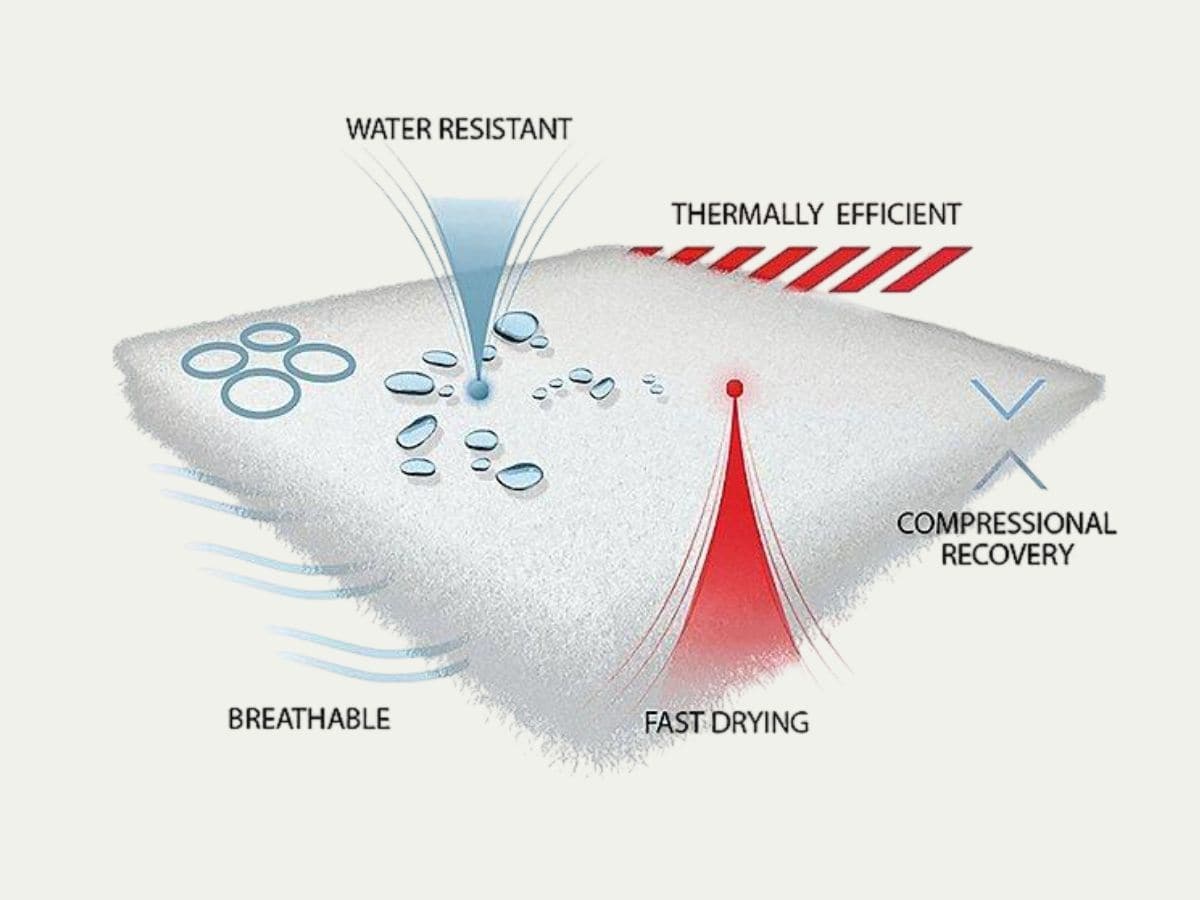
PrimaLoft traps air between thousands of very fine polyester fibres. Still air holds heat well, so the more air the insulation traps, the warmer the jacket. Down does the same job with clusters of feathers.
The fibres are treated to repel water and absorb very little moisture, so they keep their shape when damp.
Is PrimaLoft warm when wet?
Yes, PrimaLoft keeps much of its warmth when damp, and it dries faster than down. Wet down clumps together and loses its loft, while synthetic fibres keep trapping air.
It is not waterproof, though. Most PrimaLoft jackets have a water-resistant outer fabric that handles drizzle and short showers, but steady rain will soak through, usually starting under rucksack straps. In heavy or prolonged rain, wear a waterproof over the top. I cover the ones I rate in my guide to the best waterproof jackets.
Who makes PrimaLoft?
PrimaLoft is made by PrimaLoft, Inc., a US company based in Latham, New York. It does not make jackets itself. It supplies its insulation to outdoor brands such as Patagonia, Rab, Montane and Alpkit, which is why you see the name on another brand’s label.
It started with the US Army. In 1983 the Army asked Albany International to develop a water-resistant synthetic alternative to down for military sleeping bags and clothing. PrimaLoft was set up in 1988 to sell it commercially, and L.L.Bean made the first PrimaLoft garment a year later.
What do PrimaLoft Gold, Silver and Active mean?
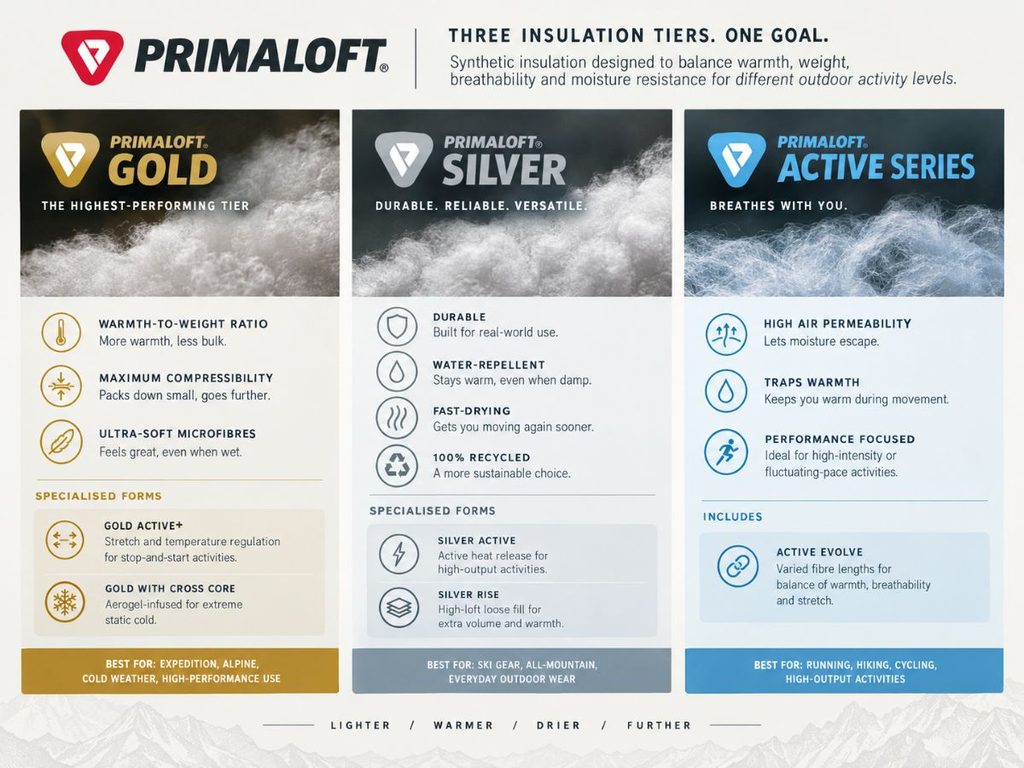
The names tell you where the insulation sits in PrimaLoft’s range:
- Gold: The warmest for its weight. PrimaLoft says Gold is comparable to 550 fill power down. The Patagonia Nano Puff uses it.
- Silver: A step down in warmth for weight, usually found in cheaper jackets such as the Alpkit Heiko.
- Active: Built to let heat and moisture escape, for jackets you wear while moving rather than standing still.
- Down Blend: A mix of down and PrimaLoft fibres.
- Eco, P.U.R.E. and Bio: These describe how the insulation is made, not how warm it is. Eco uses recycled content, P.U.R.E. is a lower-emission process, and Bio is designed to break down more readily at the end of its life.
The weight on the label, such as 60g or 100g, is grams of insulation per square metre, not the weight of the jacket. A higher number means more warmth.
Is PrimaLoft better than down?
Neither is better overall. PrimaLoft wins in damp weather and on price, and down wins on warmth for weight and packed size. PrimaLoft is also easier to wash at home, but it slowly loses loft each time it is compressed, so it tends to wear out sooner than good down.
Not all synthetic insulation is PrimaLoft. Many brands use their own polyester fills or other suppliers, such as Climashield. The principle is the same, but PrimaLoft’s fine fibres generally give more warmth for their weight and recover their loft better after being packed, which is part of why PrimaLoft jackets cost more than budget synthetic ones.
For a jacket worn on its own through a wet UK winter, I would usually choose synthetic. For hiking and camping, where I want the most warmth in the smallest space under a waterproof, I would choose down, such as the 700 fill power OEX Kintra I reviewed. My Down vs synthetic insulation: which jacket should you buy? guide compares the two in more detail, and my roundup of the best insulated jackets for UK weather covers both types.

How do you wash a PrimaLoft jacket?
Most PrimaLoft jackets can be machine washed on a cool, gentle cycle with a technical wash, then tumble dried on low, but check the care label first. Avoid fabric softener, and store the jacket loose rather than in its stuff sack. My How to wash a puffer jacket (down and synthetic) guide covers the full process.
Final Thoughts
So, what is PrimaLoft? It is synthetic insulation that does the job of down while coping better with damp. It is heavier and less packable than good down, but it is more forgiving of UK weather and usually cheaper. If you want one insulated jacket to wear on its own through autumn and winter, it is usually the safer choice.
Related Guides & Reviews
If you are choosing an insulated jacket, these will help:
- Down vs synthetic insulation: which jacket should you buy?
- Best insulated jackets for UK weather
- How to wash a puffer jacket (down and synthetic), step by step
- OEX Kintra hooded down jacket review
- Mountain Warehouse Seasons padded jacket review

Steve Cleverdon
Adventure-driven outdoor gear reviewer and paddleboarder, Steve has spent 20 years exploring rivers, coastlines, and trails across Britain and abroad, sharing what he’s learned along the way. Learn more about Steve or get in touch.