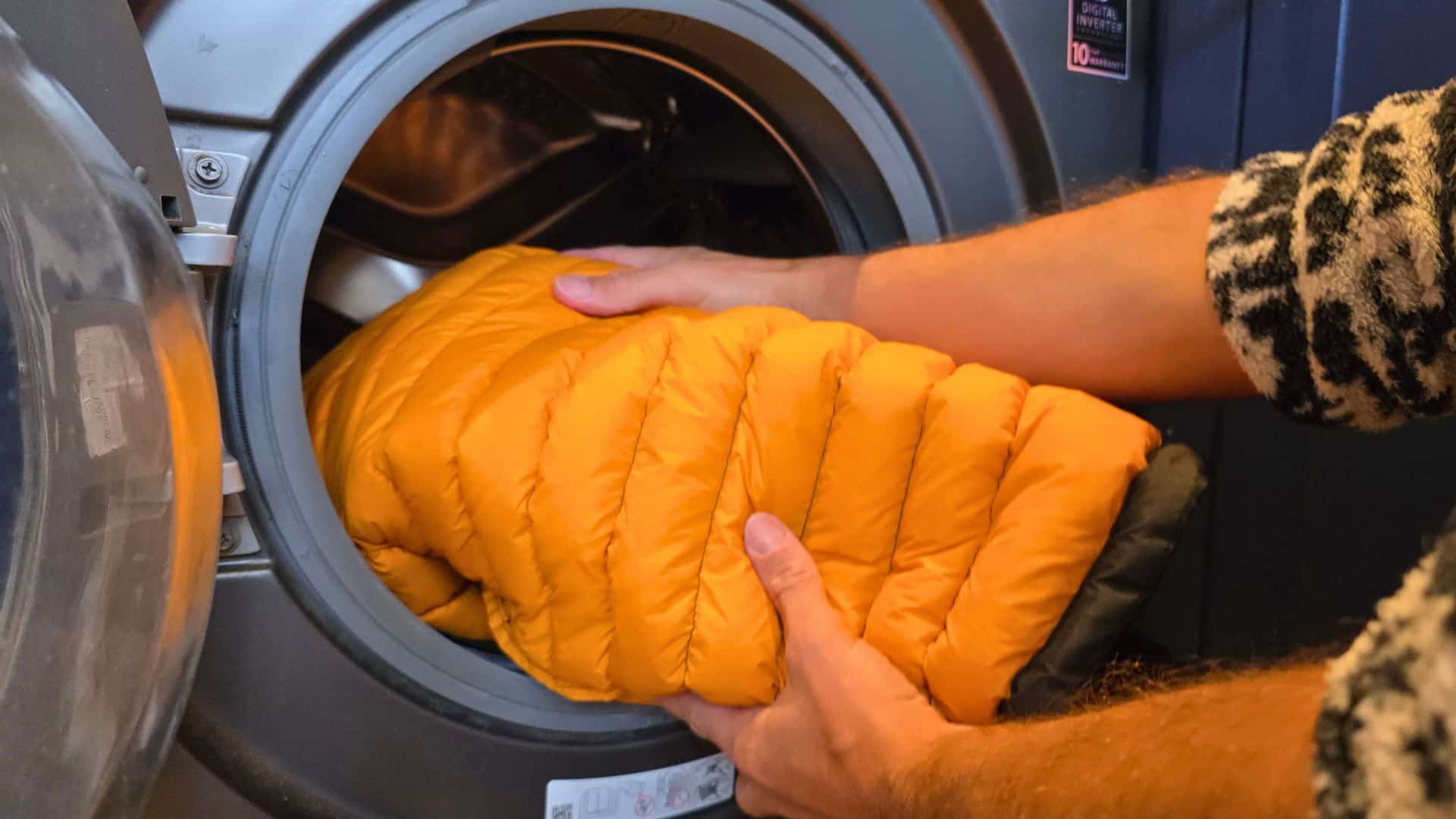
Most puffer jackets, down or synthetic, can be washed at home in a normal washing machine and dried in a tumble dryer. It’s a simple job once you know the right products and settings. The drying takes the longest, and it’s the stage where you need to pay the most attention.
This guide covers how to wash a puffer jacket step by step: which products to use, the machine settings, how to dry a down jacket with and without a tumble dryer, and the mistakes that leave you with flat, lumpy insulation. If you’re still choosing a jacket, my best down jackets roundup covers my top picks.
I’ve used my OEX Kintra down jacket as the example. After a winter of dog walks, hikes, and wild camps, then months in storage, it smelled musty, and the collar and cuffs were grubby. I hadn’t washed it for about a year, which is longer than I should have left it.
Thanks for your support – I may earn a small commission from affiliate links in this article Learn more
The Short Answer
- Wash: One jacket at a time, on a gentle 30°C cycle, with a down-specific wash (or non-bio liquid for synthetic)
- Avoid: Fabric softener, bleach, and biological detergent
- Dry: Tumble dry on low with dryer balls or tennis balls until there are no clumps left, usually 3 to 5 hours
- How often: Once a year for most people, ideally at the end of winter before it goes into storage
Can You Wash a Puffer Jacket in the Washing Machine?
Yes. Most down and synthetic puffer jackets can go in a home washing machine, as long as you use a gentle cycle at 30°C and the right detergent.
A front-loading machine is best. Top loaders with a central agitator can twist and tear the baffles. If you only have a top loader, Rab suggests putting the jacket in a mesh laundry bag to protect it. Some down washes, including Grangers, also ask for a double dose in a top loader.
Always check the care label before you start. Some jackets with leather trim, fur ruffs, or certain coatings are dry clean only, and the label overrides anything in this guide.
Down or Synthetic: What Changes?
The method is almost the same for both. The main differences are the detergent and how careful you need to be with drying.
- Down: Down clusters are coated in natural oils that help them loft. Normal detergent strips those oils, so use a down-specific wash. Wet down collapses into clumps and takes hours to dry, and it must be completely dry before you put the jacket away.
- Synthetic: Synthetic fill, such as PrimaLoft, copes with normal non-bio liquid detergent or a technical wash. It dries much faster than down and is less likely to clump, so it’s more forgiving if you don’t have a tumble dryer.
For both types, avoid fabric softener. It coats the fibres and flattens the insulation.
If you’re not sure which type your jacket has, the label will say. I explain the differences in more detail in my down vs synthetic insulation guide.
What You Need
- A down-specific wash: Grangers Wash + Repel Down 2 in 1, and Nikwax Down Wash Direct are the two most common options. For synthetic jackets, a non-bio liquid or a technical wash works
- A front-loading washing machine
- A tumble dryer with a low heat setting, or a drying rack and a lot of patience
- Dryer balls or tennis balls: two or three, to break up clumps as the jacket dries
I use the Grangers Down Care Kit, which includes a bottle of Wash + Repel Down 2 in 1 and three felted wool dryer balls. Wash + Repel cleans the down and adds a water-repellent treatment to the shell in the same wash, and Grangers say it suits down and synthetic down fills.
Care for your gear
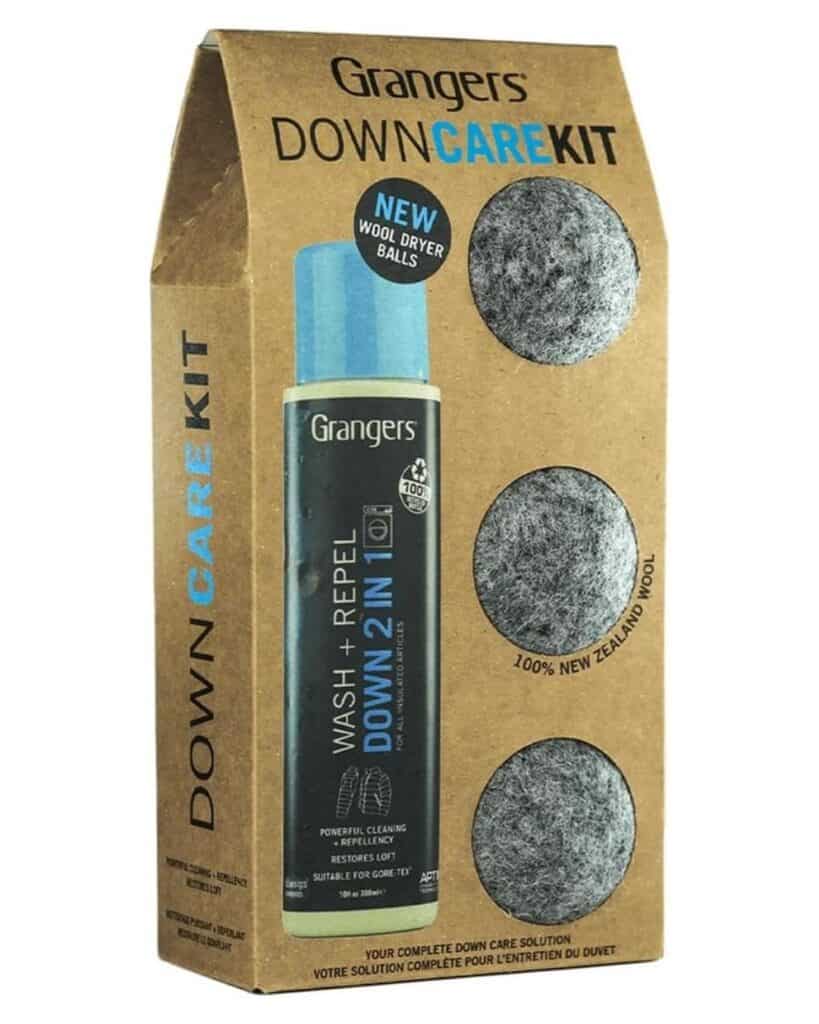
Grangers Down Care Kit
From £13 • 300ml + 3 dryer balls
Grangers’ Wash + Repel Down 2-in-1 cleans down and adds water repellency in a single wash, and the kit includes three wool dryer balls to break up clumps as it dries.
Before You Wash
A few minutes of prep protects the jacket and the machine.
- Read the care label. Note the temperature and whether tumble drying is allowed.
- Empty the pockets.
- Close every zip and fastener, including the pocket zips. Open zips can snag the shell fabric. Open any Velcro tabs or close them onto themselves.
- Turn the jacket inside out. This protects the outer fabric and zips.
- Spot-clean heavy marks. Rub a little of your wash into grubby cuffs and the collar.
- Clean the detergent drawer. Old detergent and fabric softener residue can wash into the jacket and undo the point of using a down wash. If your drawer is grubby, run an empty rinse cycle as well.

How to Wash a Puffer Jacket Step by Step
- Put the jacket in the drum on its own. One jacket per wash gives it room to move and rinse fully.
- Add the down wash to the detergent drawer. Follow the dose on the bottle, which is usually 100ml (two capfuls) per jacket.
- Choose a gentle cycle at 30°C. A delicates, wool or synthetics programme works.
- Add an extra rinse if your machine has one. Leftover detergent can leave the down clumped and greasy.
- Use a slow or medium spin. Spinning removes water and cuts the drying time, but a fast spin can stress the baffles. Check your care label.
- Lift the jacket out carefully. Wet down is heavy and fragile, so support the whole jacket rather than pulling it out by the sleeve.
Don’t panic when you see it. A washed down jacket comes out flat, heavy, and lumpy, with the down in hard clumps. That’s normal, and the drying stage fixes it.

How to Wash a Puffer Jacket by Hand
You can hand wash a puffer jacket if you don’t have a suitable machine. Mix about 100ml of down wash with 12 to 15 litres of warm water in a bath or large basin, soak the jacket and work the water through it, then rinse until the water runs clear. Press the water out gently. Never wring a down jacket, as it can tear the internal stitching.
It’s more work, and it’s harder to rinse and spin the jacket thoroughly, so use a machine if you can.
How to Dry a Down Jacket
Drying is the most important part. A down jacket needs to be completely dry right through, or the down can clump, smell, and go mouldy.
Tumble Drying (Recommended)
- Set the dryer to low heat. High heat can damage the shell fabric and the down.
- Add two or three dryer balls or clean tennis balls. They bounce around the drum and break up the clumps as the down dries.
- Check the jacket every 20 to 30 minutes. Take it out, shake it, and pat the baffles to spread the down evenly.
- Keep going until there are no clumps left. It usually takes 3 to 5 hours. It can take more than one cycle, so don’t stop early because the shell feels dry. The down inside can still be damp.
- Air it before you wear it or store it. Hang it somewhere warm and dry for a day or two to make sure every last bit of moisture has gone.
If you don’t have dryer balls, clean tennis balls do the same job.

How to Dry a Down Jacket Without a Dryer
You can air dry a down jacket, but it takes much longer, and you need to work at it. It can take 24 to 48 hours, and the down is more likely to dry in clumps.
- Press out as much water as you can. Roll the jacket in a large towel and press. Don’t wring it.
- Lay it flat on a drying rack in a warm, well-ventilated room. Hanging a wet down jacket lets the down sink to the bottom of each baffle.
- Keep it away from direct heat. Don’t put it on a radiator or in front of a heater, as this can damage the shell.
- Shake it and break up clumps by hand every few hours. Work the clumps apart with your fingers and turn the jacket over.
- Check it’s completely dry before you store it. If it smells damp, it isn’t dry.
If you have no dryer, a launderette dryer on low heat for a couple of hours is the next best option. Synthetic jackets are much easier to air dry, as they dry faster and don’t clump in the same way.
How to Restore Water Repellency
Most puffer jackets have a DWR (durable water repellent) coating on the shell that makes light rain bead and roll off. Washing removes dirt that stops it working, but the coating wears off over time.
To check, splash some water on the jacket. If it beads, the coating is fine. If the fabric darkens and soaks it up, it needs re-proofing.
You have two options:
- A 2-in-1 product: Like Grangers Wash + Repel Down 2-in-1 cleans and proofs in a single wash, which saves time and a second cycle.
- A separate proofer: wash first, then use a wash-in or spray-on proofer. Spray-on proofers let you treat only the shell. Use one that suits insulated jackets, and follow the instructions on the bottle.
Tumble drying on low heat after proofing can help reactivate some DWR treatments, so check the product instructions.
How Often Should You Wash a Puffer Jacket?
For most people, once a year is enough. Wash it sooner if it smells, looks dirty, or the insulation looks flat and clumpy. Rab recommends washing a down jacket once a season, and Cotswold Outdoor suggests roughly every 20 to 30 wears. If you only wear yours through autumn and winter, that works out at about once a year. Synthetic jackets can be washed more often.
Don’t overwash a down jacket, but don’t leave it as long as I did either. Sweat and body oils build up in the down and flatten it, which makes the jacket less warm. Washing it before you put it away for summer also stops it from going musty in storage.
Storage: Once it’s clean and fully dry, store it uncompressed in a cool, dry place. Hang it up or keep it loose in a large bag, not squashed in its stuff sack.
Mistakes That Ruin a Puffer Jacket
- Using normal detergent on down. It strips the natural oils from the down and leaves it flat.
- Adding fabric softener. It coats the fill and stops it from lofting, for both down and synthetic.
- Not cleaning the detergent drawer. Old softener residue ends up in your jacket.
- Washing on a hot or fast cycle. Heat and a fast spin can damage the shell and the baffles.
- Using high heat in the dryer. It can melt or damage lightweight shell fabrics.
- Stopping the dryer too soon. A dry shell doesn’t mean dry down. Damp down clumps and can go mouldy.
- Hanging it wet. The down sinks and dries in lumps at the bottom of each baffle.
- Storing it compressed. Months in a stuff sack flattens the insulation.
- Leaving it too long between washes. A year of sweat and storage turned my jacket musty.
Final Thoughts
Washing a puffer jacket at home is cheap and simple, and it brings back a lot of the warmth that dirt and body oils take away. The washing takes very little effort. The drying takes longer, and that’s the part not to rush.
Check your own care label before you start, use a down-specific wash, and keep drying until every clump has gone. I left my jacket far too long between washes. Washing it at the end of each winter, before it goes into storage, would have saved it from going musty.
Related Guides & Reviews
The resources below cover the basics, common questions, and related kit to help you get more out of your time outdoors.
- Mountain Warehouse Seasons Padded Jacket Review
- What is Primaloft?
- How to Repair a Down or Puffer Jacket

Steve Cleverdon
Adventure-driven outdoor gear reviewer and paddleboarder, Steve has spent 20 years exploring rivers, coastlines, and trails across Britain and abroad, sharing what he’s learned along the way. Learn more about Steve or get in touch.