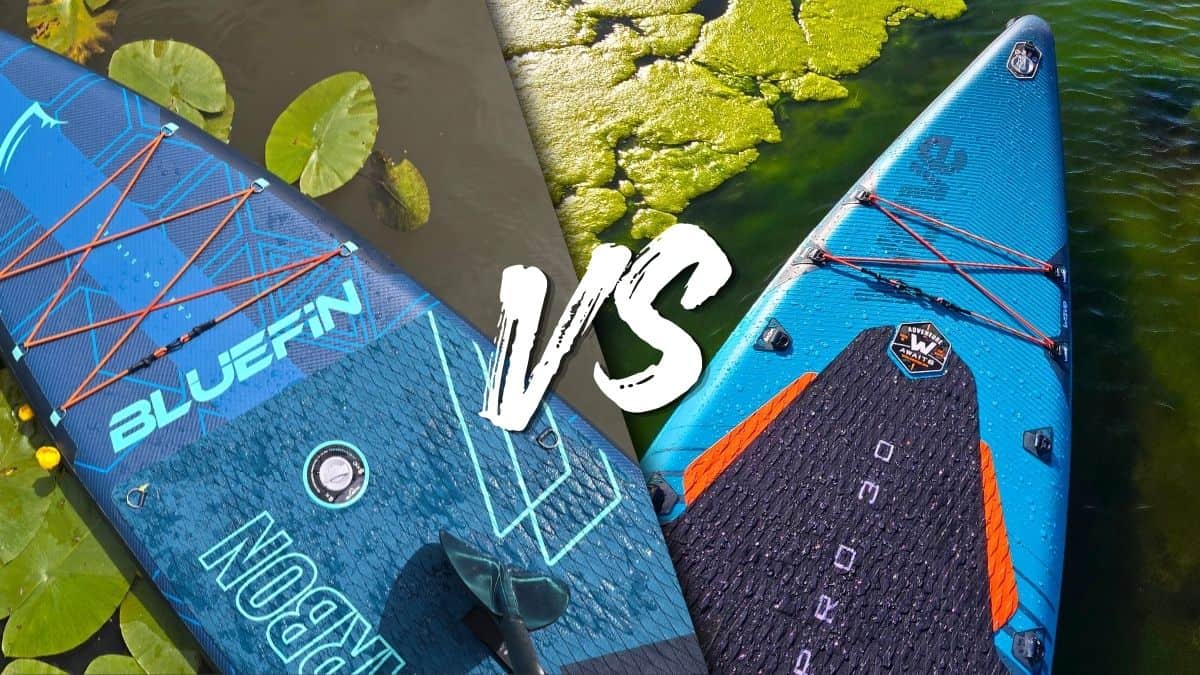
If you’ve been looking to upgrade your board and try your hand at touring, chances are these two have already crossed your radar. Both sit at the top of their respective brand’s range, both are built for distance paddling, and both have earned strong reputations among paddlers making the step up from an allround board.
Where they part ways is on price. The Wave Pro 3.0 comes in at around £270. The Bluefin Carbon 12 is £699. That’s a £430 gap between two boards competing for the same type of paddler — someone who wants a fast, capable touring SUP.
I’ve tested both, and here’s how the Wave Pro vs Bluefin Carbon compare.
Thanks for your support – I may earn a small commission from affiliate links in this article Learn more
Both paddleboards were kindly gifted by their respective brands. All opinions are my own.
At a Glance
| Wave Pro 3.0 | Bluefin Carbon 12 | |
|---|---|---|
| Price | £270 (save 10%) | £699 (£10 off with code STEVEBFIN) |
| Length | 12’6″ (381cm) | 12′ (365cm) |
| Width | 32″ (81cm) | 32″ (81cm) |
| Thickness | 6″ (15cm) | 6″ (15cm) |
| Max Rider Weight | 199kg | 175kg |
| Construction | WST Welded Seam Technology | ESL Fuse PVC + dual chamber + carbon FRS rails |
| Fins | Triple quick-release clip-in | 10″ US Box touring fin |
| D-rings | 15 Plastic | 17 metal |
| Pump | Triple-action manual | Dual-action manual |
| Paddle | 3-piece carbon-fibre | Carbon drive |
| Kayak Conversion | Compatible (seat sold separately) | Included (seat + kayak blade) |
| Warranty | 2 years | 5 years |
| My Rating | 4.8/5 | 4.8/5 |
10% discount applied via Wave links | Save £10 off Bluefin SUPs with code STEVEBFIN
Key Differences
Before we go into the details, here are the three things that most clearly separate these boards:
Construction is in a different league. The Wave Pro uses WST Welded Seam Technology — a solid, proven single-chamber construction that I have no real complaints about. The Bluefin Carbon 12 goes further: dual chamber, carbon FRS rails, and a denser PVC layup. These aren’t just marketing terms; they represent a meaningful step up in rigidity, durability, and confidence on the water.
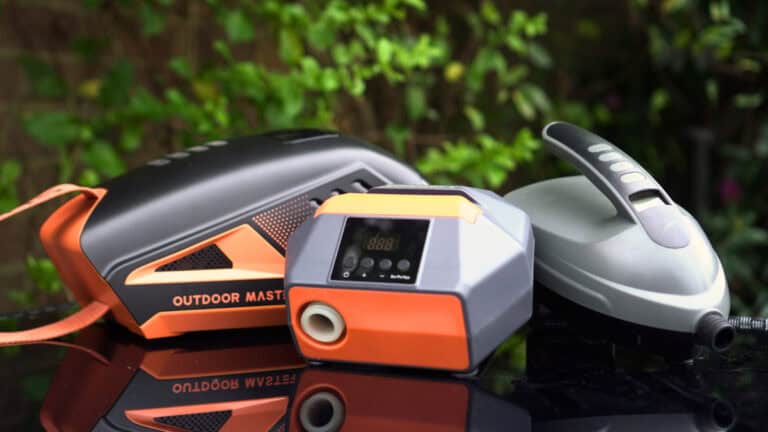
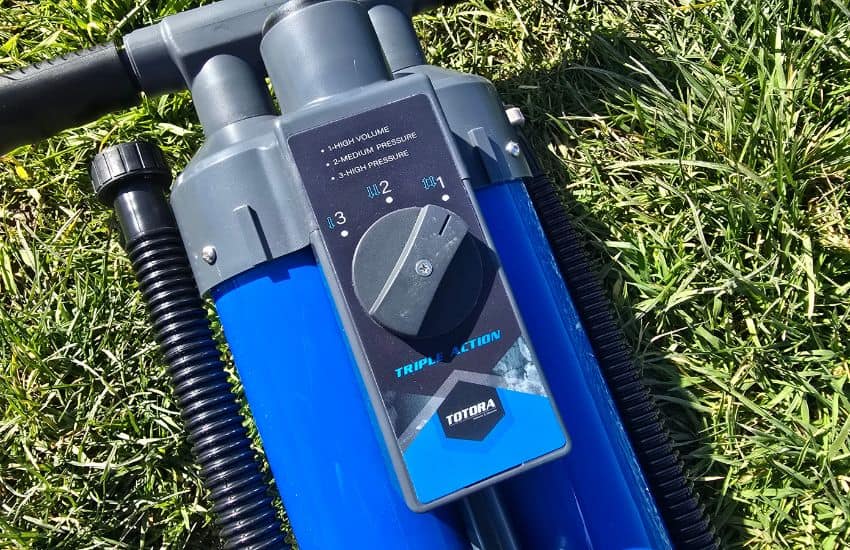
The Wave Pro has the better pump. For a board at a fraction of the price, the Wave Pro’s triple-action pump is outstanding — one of the best manual pumps I’ve ever used. The Bluefin includes a standard dual-action pump. On the water, it makes no difference, but during setup, the Wave Pro wins.
Five years vs two years of warranty cover. The Bluefin’s five-year warranty is exceptional in this category. The Wave Pro’s two-year warranty is standard and perfectly reasonable. But if you’re spending £700 on a board, that longer cover matters.
Design and Build Quality
Pick up the Bluefin Carbon 12, and you feel the difference before you even get it to the water. The ESL Fuse PVC is denser than standard PVC, the carbon FRS rails give the board a stiffness across its length that you notice when you lift it, and the dual-chamber system means that even in the unlikely event of a leak in the main chamber, you have a backup keeping you afloat. That last point isn’t something you’ll likely ever need — but it’ll provide peace of mind for those more adventurous journeys.
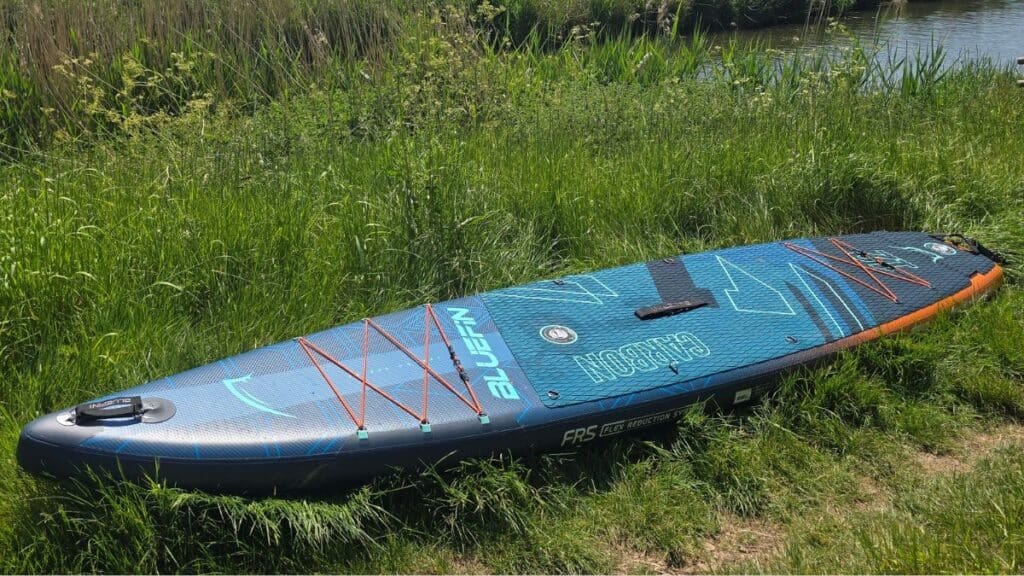
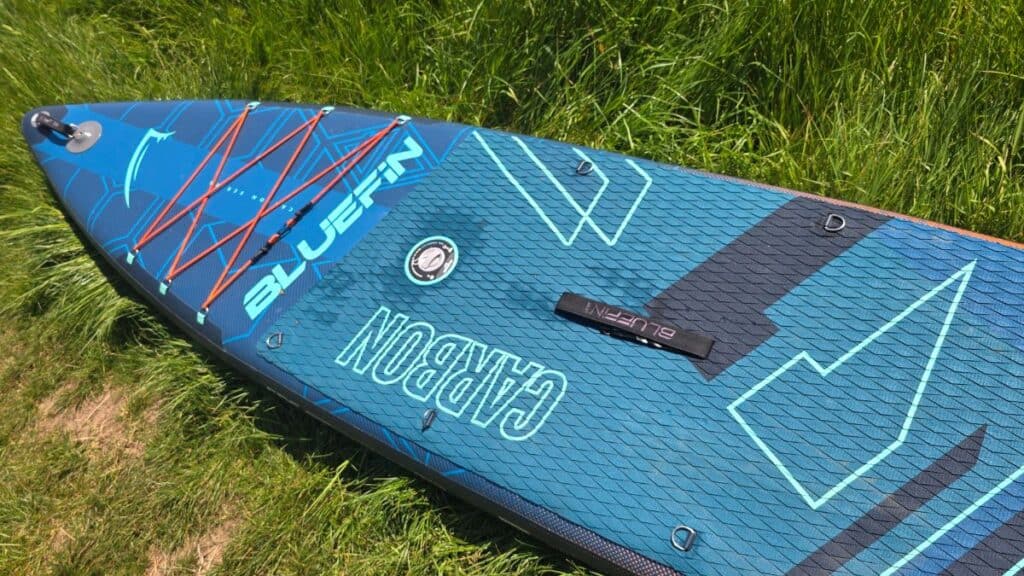
The deck pad is full-length and well-textured. There are three carry handles — nose, tail, and centre — along with 17 metal D-rings arranged for touring use. The build quality throughout feels like a board made to last a decade with the right care.

The Wave Pro 3.0 is not a poorly built board. The WST welded seams hold firm, the deck pad is solid underfoot, and it inflates hard and stays rigid at 20 PSI. But the single-chamber construction, the plastic D-rings, and the slightly less dense PVC all reflect where the cost savings have been made. None of this makes it a bad board — it makes it a board that costs £270.
Both boards are 32 inches wide and 6 inches thick, with similar lengths (the Wave Pro is actually slightly longer at 12’6″ vs the Carbon’s 12 feet). The silhouette is similar; the engineering inside is not.
Performance on the Water
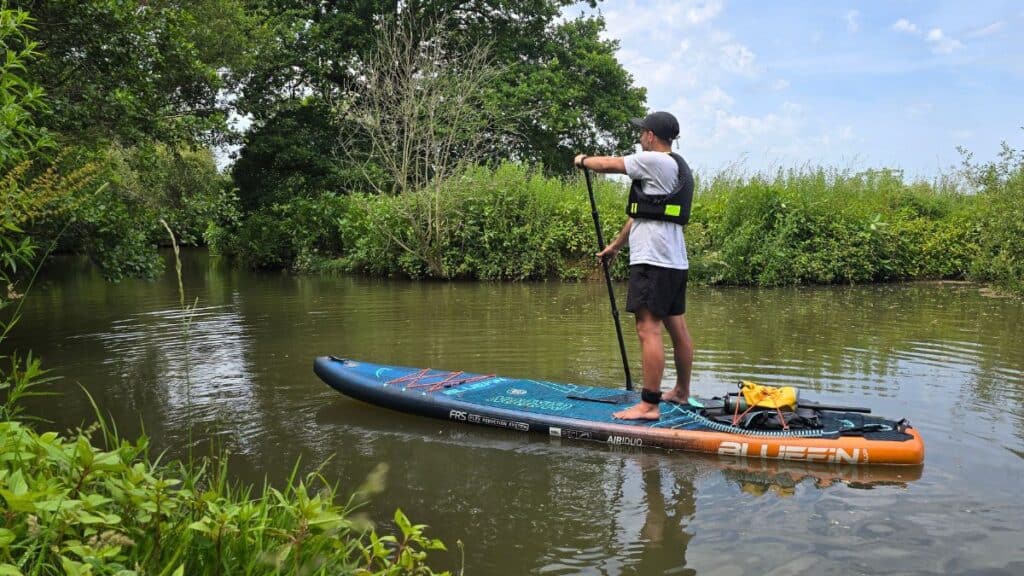
I first tested the Wave Pro 3.0 at Cuckmere Haven in East Sussex — calm water on a March morning. Whereas the Bluefin Carbon 12 was tested on the River Rother in Kent, covering 12km on a flat-water touring session that gave me a thorough read of how the board handles sustained distance paddling.

On the water, both boards are good. That’s an important thing to say. The Wave Pro tracks well, handles a light chop without drama, and gives you the effortless glide that makes a longer board worth choosing over an allround. It’s a capable touring board at an extraordinary price.
The Bluefin Carbon 12 is a step beyond. The stiffness from the carbon rails means more of your paddle stroke converts directly into forward momentum. There’s less flex in the board underfoot, which means less energy is absorbed with each stroke over a longer session. The single US Box fin — a 10-inch touring fin — cuts cleanly through the water and gives the board excellent directional stability without sacrificing too much manoeuvrability.
The Wave Pro’s triple clip-in fins are good for versatility and easy to swap out, but a single large touring fin is the better setup for the kind of paddling both these boards are designed for. The Bluefin’s fin system, while slower to attach (it screws in rather than clips), locks in solidly and stays there.
Neither board is a fast board in the way a race board is fast. Both are touring boards built for distance and enjoyment, not competition. But if you put the two side-by-side on the same water on the same day, the Bluefin would pull away over anything longer than a kilometre.
10% discount applied via Wave links | Save £10 off Bluefin SUPs with code STEVEBFIN
Stability and Who Each Board Suits
Both boards are 32 inches wide, which puts them in a similar stability bracket. Neither is an allround beginner board — the narrow shape and longer length mean they reward some paddle experience — but neither is unstable. Most adults with a season or two of paddling under their belt will feel at ease on both within a few minutes.
The Wave Pro 3.0 is the better choice for an intermediate paddler who’s ready to step up from an allround board and wants to try touring without spending serious money. It’s also worth considering for a paddler who already owns a board and wants a dedicated touring setup at a sensible second-board price.
The Bluefin Carbon 12 is aimed at paddlers who know what they want. If you’ve been paddling for a few years, you tour regularly, and you want a board that will keep up with — or outlast — your enthusiasm for the sport, the Carbon 12 is built for you. It’s a premium board in the truest sense: everything on it has been chosen for the serious paddler.
Kit and Accessories
This is where the comparison gets interesting, because on paper the Bluefin Carbon 12’s kit list is longer and more premium — but the Wave Pro punches above its weight in a couple of areas.
Paddles: Both include carbon paddles. The Wave Pro’s 3-piece carbon-fibre paddle adjusts between 160–210cm and is a standout for the price — you’d expect a fibreglass paddle at £270. The Bluefin’s carbon drive paddle is quality kit and adjusts between 175–210cm.
Pumps: The Wave Pro’s triple-action pump inflates your board faster and with less effort than a standard dual-action pump. The Bluefin’s Swift Pro dual-action pump is fine, but it’s not the stand-out the Wave Pro’s pump is.
Kayak conversion: This one goes firmly to the Bluefin. Both boards support kayak conversion, but the Bluefin includes the inflatable kayak seat and kayak blade in the box. With the Wave Pro, you’d need to purchase a kayak coversion kit separately – budget an extra £50 for this upgrade. If kayak mode is on your list, the Carbon 12 removes a purchase you’d otherwise need to make.
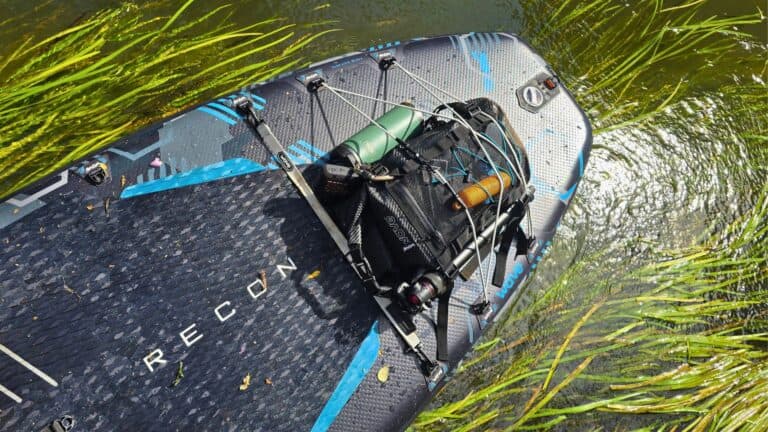
D-rings and rigging: 17 metal D-rings on the Bluefin vs plastic rings on the Wave Pro. If you plan to attach dry bags, leash loops, or camera mounts for touring, the Bluefin’s setup is superior and more durable over time.
Bags: Both boards include wheeled bags. The Wave Pro’s bag works well overall, though the wheel implementation could be better — the board sits awkwardly when rolled up inside. The Bluefin’s wheeled bag is more refined but ultimately both serve the same purpose: getting a 12-foot board from your car to the water without breaking your back.
Warranty: Two years from Wave (reasonable), five years from Bluefin (exceptional). The five-year cover is one of the strongest in the market, only matched by other premium brands such as Red Padlle Co.
Value for Money
This is the section that matters most for a comparison with a £430 gap in the middle of it.
The Wave Pro 3.0 is extraordinary value. At around £270, it delivers a carbon paddle, a triple-action pump, a 12’6″ touring board with solid welded construction, and a solid on-water touring experience. If you’re coming to paddleboarding on a budget and want something capable rather than a cheaply made allround, this is one of the best buys in the market.
The Bluefin Carbon 12 at £699 is harder to justify on specs alone — but if you look at what you’re actually getting, the case is there. Dual chambers, carbon FRS rails, 17 metal D-rings, a five-year warranty, kayak seat included, and a build quality that should see you through a decade of regular use. These aren’t minor upgrades. They’re engineering choices that make a real difference to durability, on-water performance, and long-term reliability.
The question is whether those differences are worth £430 to you specifically.
If you’re a newer paddler or someone who isn’t sure how much they’ll use a touring board: buy the Wave Pro. You’ll have an outstanding board for a fraction of the price, and if the sport grips you the way it has a habit of doing, you’ll have a clearer sense of what you want in a future upgrade.
If you paddle regularly, you know you’ll use a touring board hard, and you want something that will grow with you over years rather than seasons: the Carbon 12 is worth the investment.
My Take
The Wave Pro 3.0 is the best budget touring board I’ve tested. The Bluefin Carbon 12 is one of the best touring boards I’ve tested at any price. That’s not a contradiction — it’s an accurate reflection of where both boards sit.
If money is no object and you’re serious about touring, buy the Bluefin. The dual-chamber construction, carbon rails, metal D-rings, kayak kit, and five-year warranty make it a board you’ll still be paddling in ten years.
If you want the experience of a dedicated touring board without a £700 outlay, the Wave Pro 3.0 is a remarkable piece of kit for the price. The triple-action pump alone is better than what you’ll find on boards costing twice as much.
Choose the Wave Pro 3.0 if: you’re stepping up to touring from an allround board, you’re working with a budget, or you want a fantastic second board without a serious spend.
Choose the Bluefin Carbon 12 if: you paddle regularly, you want the best-built board your money can buy, or you want a touring board that will still be performing at its peak in five to ten years.
10% discount applied via Wave links | Save £10 off Bluefin SUPs with code STEVEBFIN
Wave Pro vs Bluefin Carbon FAQs
Is the Bluefin Carbon 12 worth the extra money over the Wave Pro 3.0?
It depends on how seriously you take your paddling. The Bluefin’s dual-chamber construction, carbon FRS rails, metal D-rings, and five-year warranty represent a real engineering step up. But the Wave Pro 3.0 delivers outstanding on-water performance at less than 40% of the price. For a newer paddler or someone on a budget, the Wave Pro is the smarter buy. For a regular paddler who wants a board to last a decade, the Carbon 12 justifies itself.
Are both boards suitable for beginners?
Both are touring boards, so they reward some experience. At 32 inches wide, they’re more stable than they look, and most adults settle into them quickly. That said, a wider 10-foot allround board is a better starting point if you’ve never paddled before. If you’ve had a season or two and want to move to touring, either board works — the Wave Pro is the lower-risk financial commitment for that step.
Which board is better for long-distance touring?
The Bluefin Carbon 12. The stiffer construction from the carbon rails converts more paddle effort into forward movement, and the single large US Box fin gives better directional stability over distance. Both boards are capable tourers, but over anything longer than a few kilometres the Bluefin’s engineering advantage shows.
Does the Bluefin Carbon 12 include a kayak seat?
Yes — the Bluefin Carbon 12 comes with an inflatable kayak seat and a kayak blade in the box, making the kayak conversion fully self-contained. The Wave Pro 3.0 supports kayak conversion but does not include the seat, which would need to be purchased separately.
Related Guides & Reviews
The resources below cover the basics, common questions, and related kit to help you get more out of your time on the water.
- How To Paddle Board: Complete SUP Guide for Beginners
- Best Budget Paddle Boards in the UK
- Best Paddle Board Accessories: Best SUP Gear
- Bluefin Paddle Boards Compared: Complete Guide to Every Bluefin SUP
- Wave Paddle Boards Compared: Complete Guide to Every Wave 3.0 SUP

Steve Cleverdon
Adventure-driven outdoor gear reviewer and paddleboarder, Steve has spent 20 years exploring rivers, coastlines, and trails across Britain and abroad, sharing what he’s learned along the way. Learn more about Steve or get in touch.