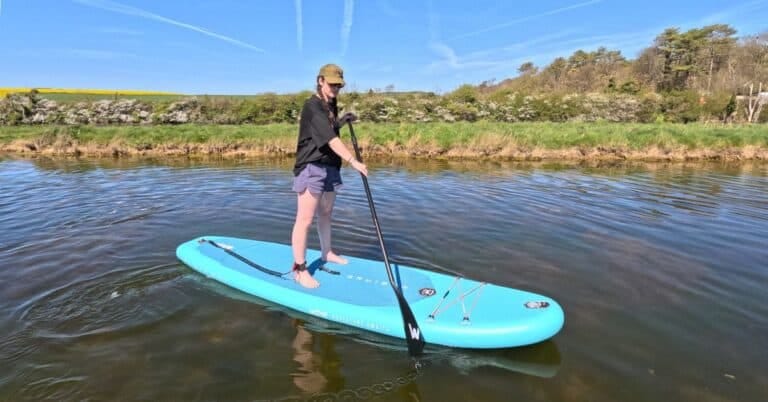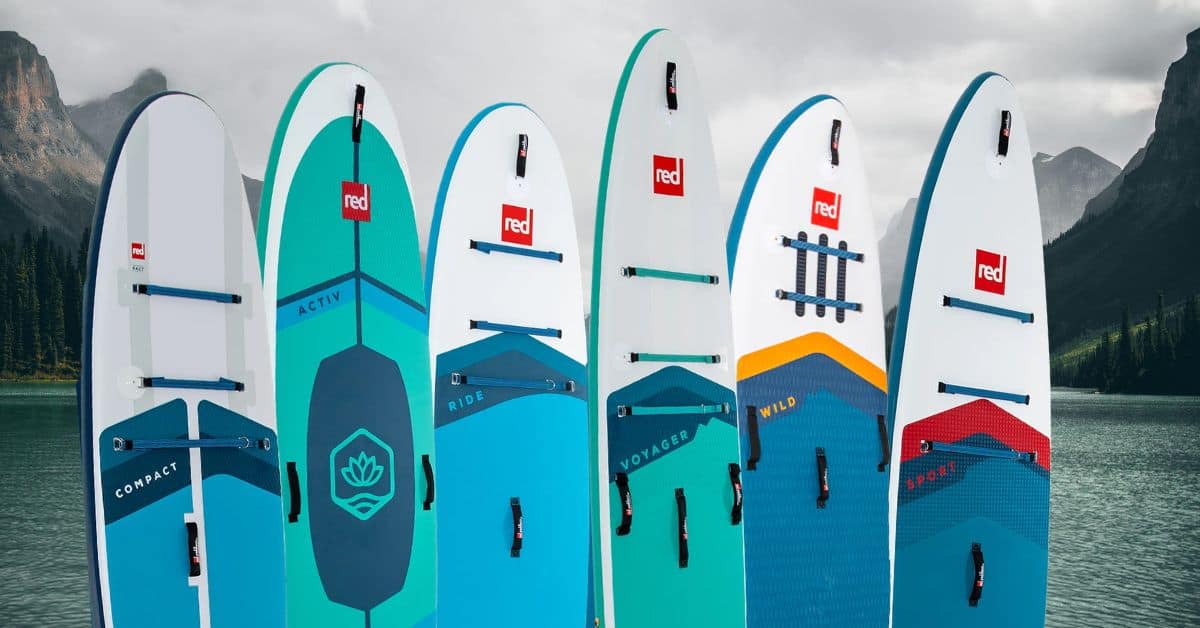
Red Paddle Co paddle boards have built one of the strongest reputations in the iSUP market over the past decade, and for good reason. Their boards are consistently well-built, their proprietary MSL construction is genuinely ahead of most competitors, and the range is wide enough that there is a Red board for almost any kind of paddling you want to do.
What makes the range slightly harder to navigate than most is the sheer size of it. When you factor in size variants and construction tiers, you are looking at over twenty individual boards. This guide cuts through all of that. I have mapped the full range into nine distinct board families — grouped by shape and purpose — so you can identify quickly which type suits you, then work out which size and spec level makes sense.
Where boards appear in multiple sizes, I cover the variants within each section. Where there are two genuinely different construction levels within the same shape family (as there are with the Sport range), I treat those as separate boards, because the price, materials, and performance are different enough to warrant it.
Thanks for your support – I may earn a small commission from affiliate links in this article Learn more
What Sets Red Paddle Co Apart
Before getting into the boards, it is worth understanding what Red does differently — because their technology affects which board in the range makes sense at which price point.
MSL — Monocoque Structural Laminate MSL is Red’s proprietary drop-stitch material, made to their own specifications. The key distinction is that the coating is integral to the structure rather than applied on top of it. The result is a board that is stiffer at lower pressures and more durable at the seams than conventionally laminated inflatables. Nearly every board in the range is built on MSL in some form.
MSL 800 — the next step up The MSL 800 designation marks a further improvement: a double-drop-stitch construction using a super-fine inner weave that increases stiffness and reduces weight compared to standard MSL. Boards in the MSL 800 tier typically feel notably more planted and responsive, particularly at longer lengths where standard inflatables tend to flex under load.
PACT — the folding system PACT stands for the system that allows Red’s Compact boards to fold in half before rolling, reducing the packed size by around 50% compared to a standard inflatable. The MSL PACT and MSL 1000 PACT materials are variations of this system at different quality and price tiers.
Titan II pump Red’s included Titan II pump is one of the better hand pumps in the iSUP market. It inflates in both directions and reaches pressure more efficiently than most bundled pumps. For anyone who inflates regularly without an electric pump, it makes a practical difference.
B-Corp certification Red Paddle Co is a certified B Corp — meaning they have met verified standards across environmental and social performance. It is not just marketing — the certification is independently assessed and renewed. For paddlers who factor sustainability into purchasing decisions, it is worth noting.
Red Paddle Co: Quick Comparison
| Board | Sizes | Width | Best For | From |
|---|---|---|---|---|
| Ride MSL | 10’2″, 10’6″, 10’8″ | 32″ | All-round, beginner–intermediate | £579.95 |
| Compact PACT | 9’6″, 11’0″ | 30–32″ | Travel, portability | £999.95 |
| Compact 1000 | 9’2″, 11’0″ | 29–32″ | Premium travel, freeride | £1,199.95 |
| Wild | 9’6″, 11’0″ | 34″ | Whitewater, rivers | £949 |
| Sport MSL | 11’3″ | 32″ | Progressive all-round, crossover | £799.95 |
| Sport MSL 800 | 11’3″, 12’6″, 14’0″ | 28–32″ | Touring, performance | £999.95 |
| Activ | 10’8″ | 34″ | SUP yoga, Pilates | £899.95 |
| All Ride | 12’0″ | 34″ | Heavy paddlers, tandem, inclusive | £999.95 |
| Voyager | 12’0″, 12’6″, 14’0″ | 28–32″ | Expedition touring | £899.95 |
All prices shown are for the board-and-bag-and-pump package without a paddle. Paddle upgrades add from around £150 to £350, depending on the model chosen.
Red Paddle Co Paddle Boards Range
Right, now let’s dive deeper into the RED range. Here’s my full breakdown of every Red Paddle Co. paddleboard currently available — what they offer and who they’re for.
Ride
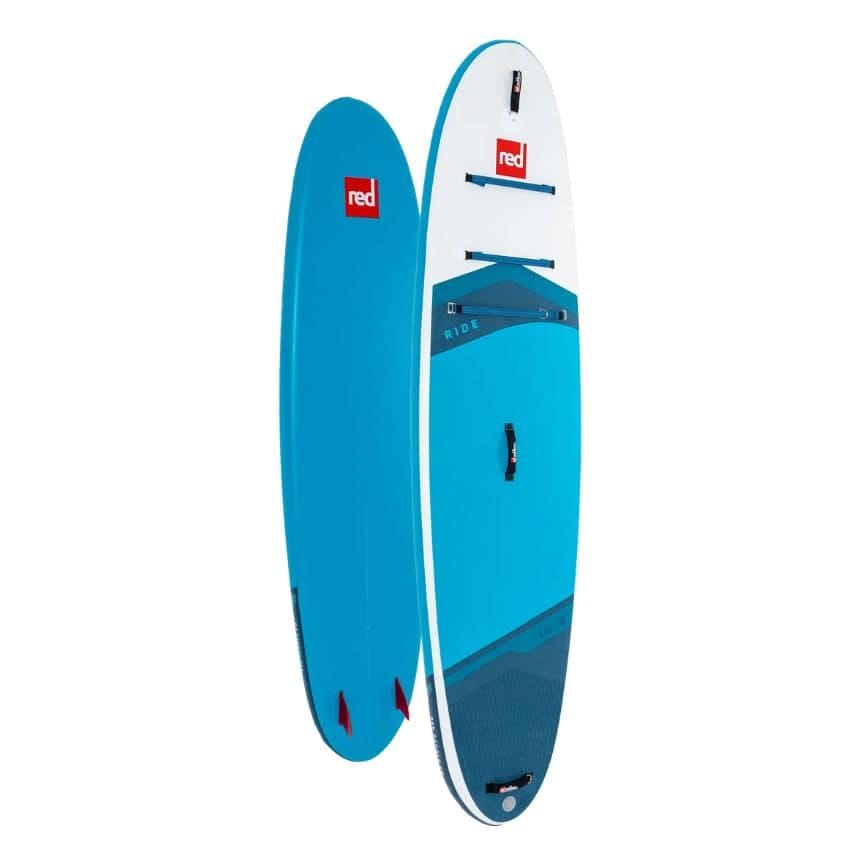
Best For: Beginners and all-round paddlers who want one board that does everything well.
Sizes: 10’2″ (£579.95) | 10’6″ (£599.95) | 10’8″ (£599.95)
Key Benefits:
- 32″ width gives confident stability for new paddlers without feeling sluggish as skills improve
- Multi-award-winning shape — the 10’6″ has been Red’s bestselling board for years and the design has earned its reputation
- Low 4.7″ profile makes it easy to get back on from the water, which matters more than it sounds
- Handles flat water, chop, and small surf capably from a single board
- Practically indestructible MSL construction with iFins that flex on impact rather than snap
The Ride is the board most people mean when they say they want a paddleboard. It is wide enough for complete beginners to stand up on confidently from the first session, capable enough to handle varying conditions as you improve, and versatile enough that you will not immediately feel the need to upgrade.
The 10’6″ is the shape that made Red’s reputation and it remains the most popular choice in the range. At 32″ wide and with a rounded nose and tail that absorbs chop predictably, it handles everything from calm lakes to light coastal swell without demanding anything particular from the paddler.
The 10’2″ is a slightly shorter, more manoeuvrable option at a marginally lower entry price — useful if you are on the smaller side or want something slightly easier to handle in tighter spots. The 10’8″ is the largest of the three, offering a bit more volume and weight capacity, which suits bigger paddlers or those who want a slightly more stable platform for carrying gear.
If you are buying your first board and are not sure which size, the 10’6″ is the safe choice. It is the shape that has been refined the longest and the one most paddlers end up being satisfied with long-term.
It is also worth knowing the Ride comes in both a standard and a Purple colourway at the same price. No performance difference — but the Purple is a popular option if aesthetics matter to you.
Pros:
- As stable and forgiving as any board in the range for beginners
- Multi-award-winning shape with a long track record
- Handles a wide range of conditions without demanding advanced technique
- Competitive entry price for Red’s quality level
Cons:
- Not the choice once you are focused on distance or speed
- 4.7″ thickness is lower than most boards — good for re-mounting, but some paddlers find thicker boards feel more planted
Compact PACT
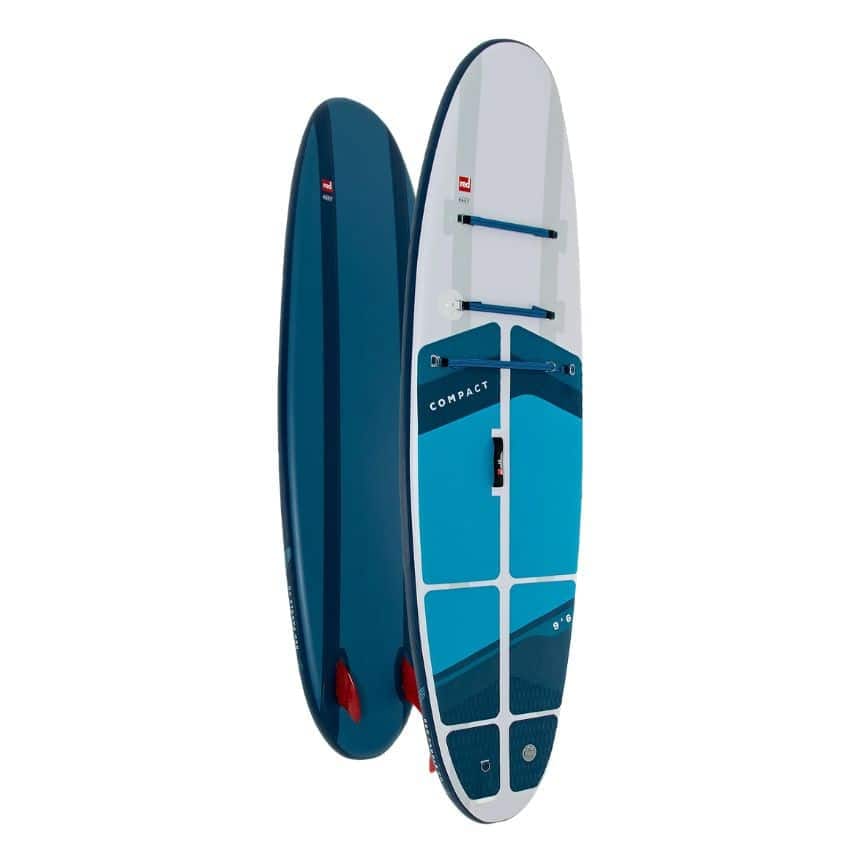
Best For: Paddlers who travel regularly and need a board that genuinely fits in a carry-on or small car.
Sizes: 9’6″ (£999.95) | 11’0″ (£999.95)
Key Benefits:
- PACT folding system halves the packed size compared to a standard rolled inflatable
- MSL PACT material retains the durability and rigidity of Red’s standard MSL construction
- Inspired by the Sport range in shape — not a stripped-back beginner board
- Both sizes come in at the same price, so the choice is purely about what suits your paddling
The Compact PACT is the answer to a specific problem: you want to paddle on trips, holidays, or city breaks where a full-size inflatable in a backpack simply is not practical. The PACT system folds the board in half before rolling, bringing the packed dimensions down to something that fits under a seat on a train, in the overhead bin on a flight, or in the boot of a small car.
The board itself is not a compromise. The shape draws on Red’s Sport range, meaning it has a touring-influenced planshape and more glide than a pure all-rounder. This is a board you can use as your main paddling board and also take travelling — not just a holiday novelty that you drag out once and retire.
The 9’6″ is the more agile, slightly more manoeuvrable option — better if you want something compact in size as well as in packed format, or if you are after a shorter board for coastal and river use. The 11’0″ gives you a longer waterline and more tracking ability, closer to a proper touring experience.
At £999.95 for either size, the Compact PACT sits at a meaningful price step above the Ride. You are paying for the folding system and the PACT material, both of which add genuine value for the right paddler. If you never travel with your board, it is harder to justify over the Ride or the Sport MSL.
Pros:
- Folds to half size — genuinely practical for travel
- Sport-inspired shape performs well on the water
- Same price across both sizes makes the choice straightforward
- MSL PACT construction holds up to regular use
Cons:
- Significant price jump over the Ride for a feature you only benefit from if you travel
- Not as fast or directionally stable as a full-length touring board at either size
- The folding mechanism adds complexity over a standard rolled inflatable
Compact 1000
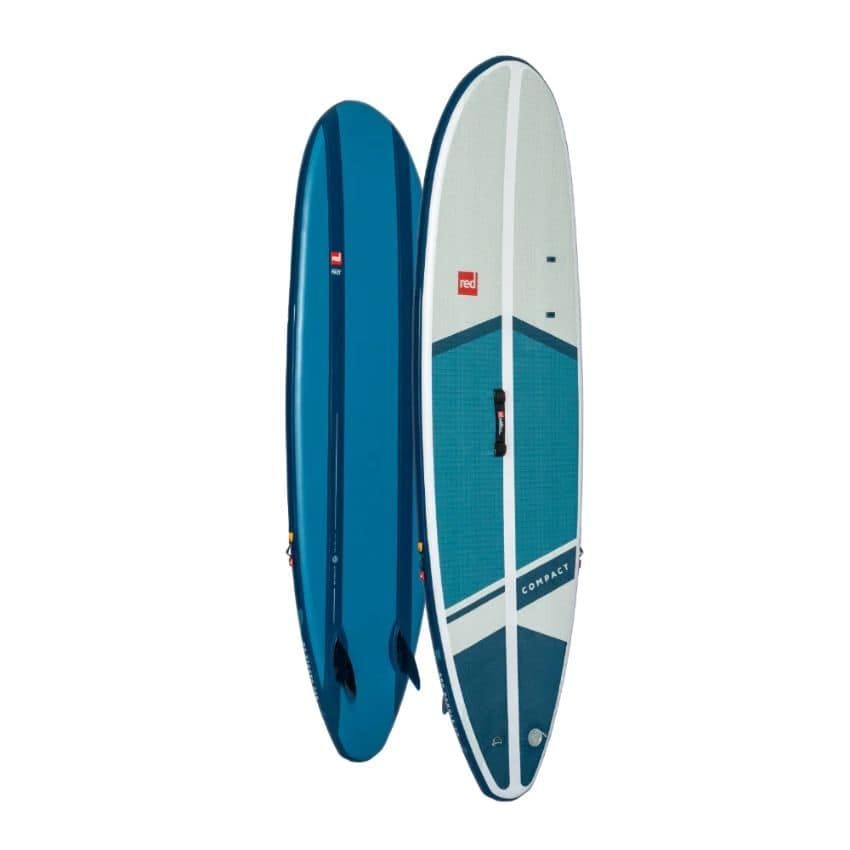
Best For: Paddlers who want the best packable board Red makes, and are willing to pay for it.
Sizes: 9’2″ (£1,199.95) | 11’0″ (£1,299.95)
Key Benefits:
- MSL 1000 PACT material — ultra-light, stiffer, and more durable than the standard PACT
- Quad Stringer System adds rigidity across the board’s length, reducing flex at pressure
- Twin FCS-compatible Click Fins — a significant upgrade over standard single-fin setups
- Packs to 50% of a standard inflatable’s rolled size
- The 11’0″ handles inland, coastal, and small surf credibly
The Compact 1000 is the premium tier of Red’s packable range. Where the PACT gives you a practical folding board at a reasonable step up from standard, the 1000 takes the construction further: the MSL 1000 material is lighter and stiffer, the Quad Stringer System reduces the slight flex that can creep into longer compact boards at pressure, and the twin FCS-compatible fins open up options that standard centre-fin boards do not have.
The 11’0″ Compact 1000 in particular is designed to function as a proper crossover freeride board — one that you could happily use as your main board in a range of conditions, that also happens to pack down smaller than anything else of comparable performance. Reviews consistently note that it paddles closer to a solid board than most inflatables at this price point.
The 9’2″ is a shorter, more agile variant — suited to smaller paddlers, those who want something genuinely small to travel with, or paddlers who spend time in conditions where manoeuvrability matters more than distance.
The step up from the PACT to the 1000 at this size is £200-£300 depending on the size. Whether it is worth it depends on how seriously you take your paddling and how often you travel with the board.
Pros:
- MSL 1000 construction is noticeably stiffer and lighter than standard PACT
- Quad Stringer System is a meaningful rigidity improvement on longer boards
- FCS-compatible fins give real options for different conditions
- Packs smaller than any comparable performance board
Cons:
- The most expensive boards in the range — hard to justify for occasional paddlers
- Complexity of a folding board with Quad Stringer — slightly more involved to set up than a standard inflatable
- At 9’2″, limited to smaller riders or specific conditions
Wild
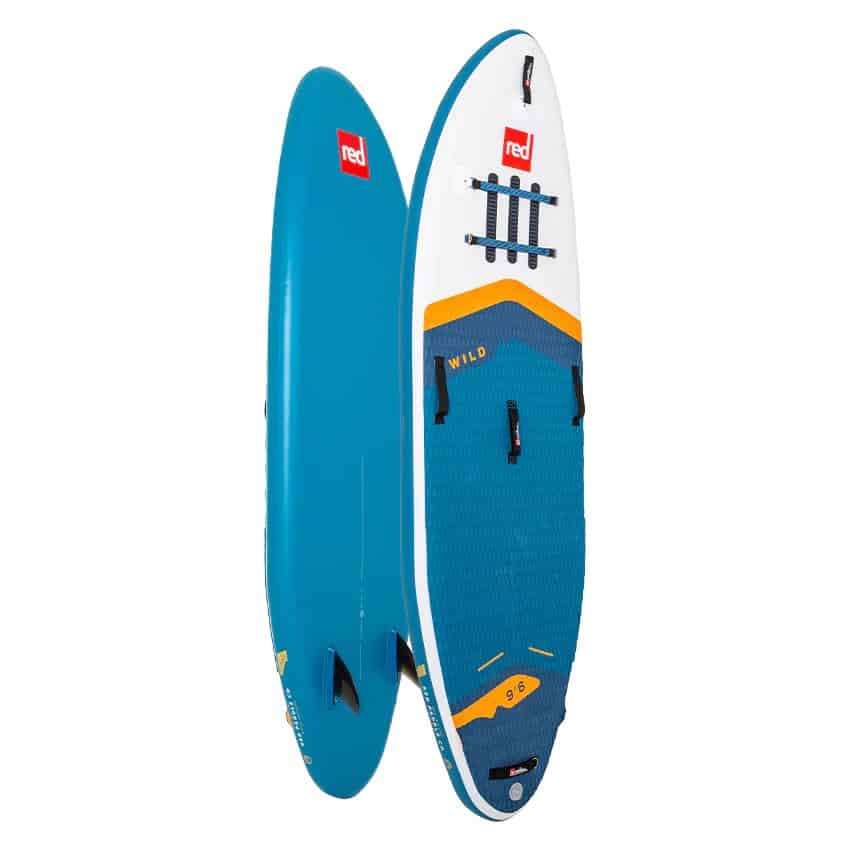
Best For: River paddlers and anyone who wants to handle fast-moving water confidently.
Sizes: 9’6″ | 11’0″ (£949)
Key Benefits:
- Pronounced nose rocker designed specifically to punch through stoppers and drops
- High sides keep water out in turbulent conditions
- 34″ width provides stability in chaotic water where conventional boards would be thrown around
- MSL construction built to withstand rock strikes and rough handling
- Agile enough for technical river features, stable enough to be forgiving in the learning stages
The Wild is the only board in Red’s range that is designed explicitly around moving water. Everything about the shape reflects that: the pronounced rocker lifts the nose to handle drops and hydraulics, the wider 34″ profile keeps you stable when the water beneath you is doing something unpredictable, and the high sides prevent water from washing over the deck.
This is not a flatwater touring board used occasionally on rivers. It is a purpose-built whitewater board — and that specificity means it is not particularly enjoyable on flat water, where the rocker and width make it noticeably slower and less efficient than a touring shape.
The 9’6″ is the more manoeuvrable option, suited to technical lines and quicker-turning requirements in tighter river sections. The 11’0″ (£949) is larger and provides more volume — useful for bigger paddlers, longer river sections, or those who want a board capable of coastal paddling as well as rivers.
If you are primarily a flatwater or coastal paddler, the Wild is not your board. If you are approaching rivers seriously, it is hard to argue against a shape that has been designed around the specific demands of that environment.
Pros:
- Only iSUP in the range purpose-built for whitewater
- Rocker and high sides are genuine functional features, not aesthetic choices
- 34″ width is forgiving in technical water
- MSL durability holds up to the rough treatment white water inflicts
Cons:
- Significantly slower and less efficient on flat water — not practical as an all-round board
- Niche application — hard to justify the spend unless rivers are your primary paddling environment
Sport MSL
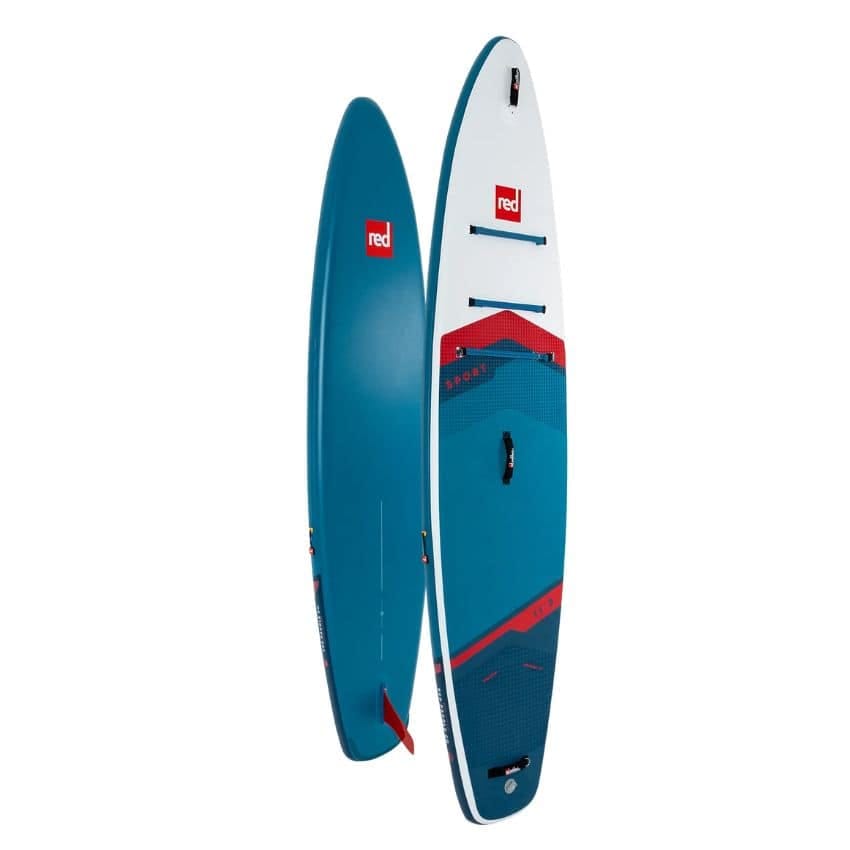
Best For: Paddlers who have outgrown an all-rounder and want more performance without a steep learning curve.
Sizes: 11’3″ (£799.95)
Key Benefits:
- Longer, more streamlined planshape than the Ride delivers noticeably better glide
- Maintains 32″ width — same as the 10’6″ Ride — so the stability is familiar
- 258L volume suits a wide range of rider weights
- Hard-release Speed Tail improves tracking and efficiency at speed
- Crossover shape works across flatwater, light touring, and choppy coastal conditions
The 11’3″ Sport MSL is the natural step up from the Ride for paddlers who want more from their board. The extra length delivers noticeably better glide and tracking — you cover more water with each stroke and hold a line more easily over distance — while the 32″ width keeps the stability in the range that most intermediate paddlers will still appreciate.
What makes the Sport MSL a good stepping-stone rather than a pure performance board is that it does not demand anything dramatic from you. You do not need to have perfect technique to feel the benefit of it. The shape rewards improving paddlers progressively — as your technique gets better, the board gives you more back.
The Speed Tail is a specific design feature worth noting: it releases water cleanly at the end of each stroke, which reduces drag and makes the paddle feel more efficient at pace. It is a small thing, but it adds up over a two-hour session.
At £799.95 it sits between the Ride and the Sport MSL 800. If your budget can stretch to the 800 tier, the extra stiffness and lighter weight are worth having. But as a board that genuinely performs well at a more accessible price, the Sport MSL earns its place in the range. For a deeper dive into how it compares, the paddleboard sizes guide on this site covers how length affects performance in detail.
Pros:
- Meaningful performance step up from the Ride without sacrificing approachability
- Same 32″ width as the Ride — familiar stability for paddlers making the transition
- Speed Tail is a functional upgrade that improves efficiency at pace
- Strong mid-range price
Cons:
- Only available in one size — no option to size up for touring or down for manoeuvrability
- MSL construction is stiffer than most inflatables but noticeably softer than the 800 tier above it
Sport MSL 800
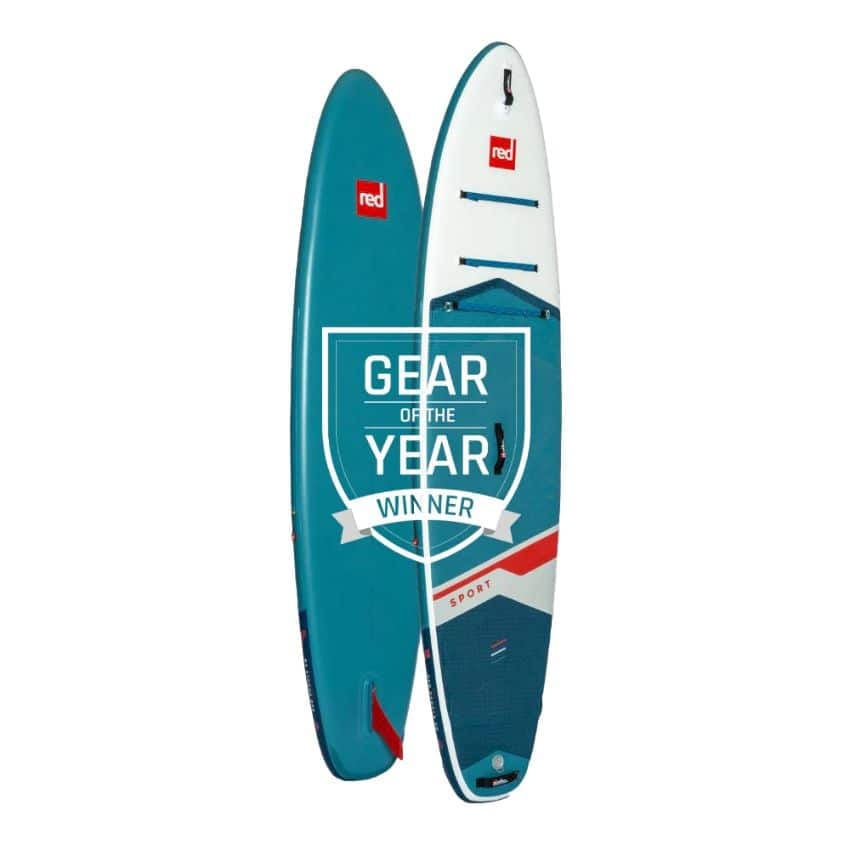
Best For: Serious paddlers who want the full touring and performance capability of Red’s top construction tier.
Sizes: 11’3″ (£999.95) | 12’6″ (£1,049.95) | 14’0″ (from £899.95 board only / £1,099.95 package)
Key Benefits:
- MSL 800 double-drop-stitch construction — lighter and stiffer than standard MSL
- Three size options give you genuine choices based on your goals and rider weight
- The 12’6″ and 14’0″ are serious touring lengths — built for covering real distance
- At 14’0″, the Sport+ configuration approaches race-board performance in an inflatable
- All sizes benefit from the stiffness advantage that MSL 800 delivers under load
The Sport MSL 800 is where Red’s range gets serious. The MSL 800 construction uses a finer inner weave than standard MSL, producing a board that is meaningfully lighter and stiffer — particularly noticeable on longer boards where a standard inflatable tends to flex at the centre under paddler weight and paddle load.
On the 11’3″ the difference between standard MSL and 800 is real but not dramatic — you are paying a £200 premium for a board that paddles more crisply and efficiently. As the board gets longer, the stiffness advantage of 800 becomes more significant: a 12’6″ or 14’0″ in standard MSL would carry noticeably more flex than the same board in 800 construction, and that flex translates directly to lost speed.
The 11’3″ at £999.95 is the entry point — a slightly more refined version of the Sport MSL with the construction upgrade. The 12’6″ is the touring sweet spot: long enough to cover ground efficiently, wide enough to handle mixed conditions, and available in both a standard and a Sport+ configuration at the same price point. The 14’0″ Sport+ is for paddlers who want to pursue distance or fitness paddling seriously — it is a quick board that rewards good technique and regular use.
The 14’0″ is also available as a board-only package at £899.95, making it surprisingly accessible if you already have a pump and paddle.
Pros:
- MSL 800 stiffness is a genuine performance advantage over standard MSL, especially at longer lengths
- Three size options cover most performance and touring goals
- 14’0″ board-only price is competitive for what you get
- The range of widths (28″–32″ across sizes) means you can tune for stability or speed
Cons:
- Significant price step over the Sport MSL, especially at 12’6″ and 14’0″
- The longer sizes demand good paddle technique — not forgiving for beginners
- At 14’0″, logistics (carrying, inflating, storage) are more involved than a shorter board
Activ
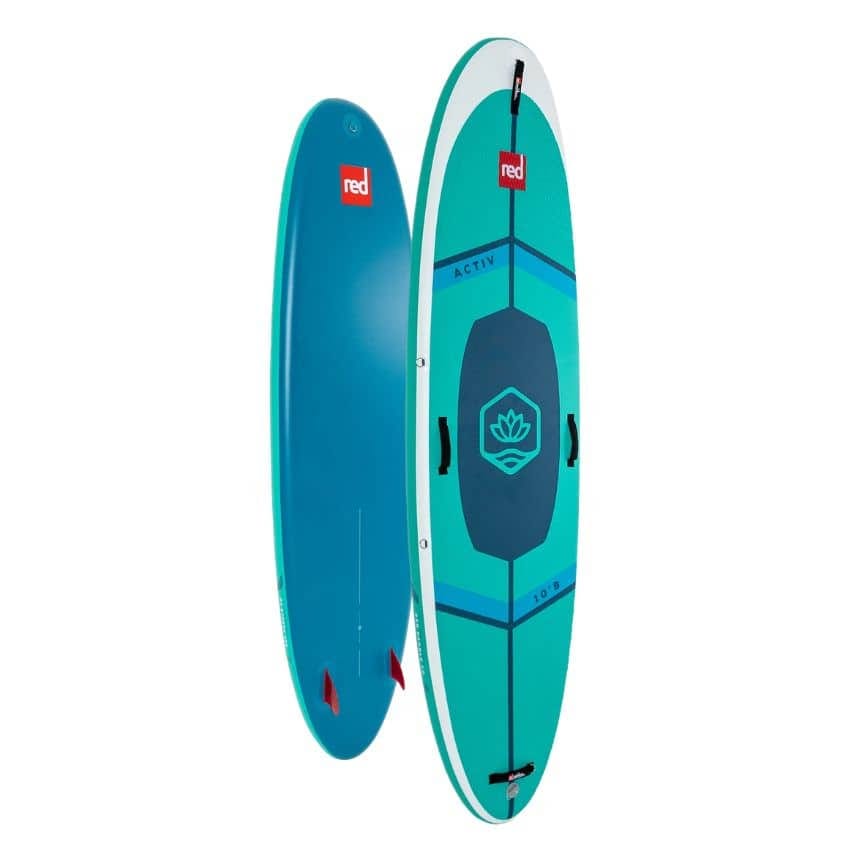
Best For: SUP yoga, Pilates, and on-water fitness sessions.
Sizes: 10’8″ (£899.95)
Key Benefits:
- 34″ width and 333L of volume make it one of the most stable platforms in the range
- Extra-thick 150mm construction increases the float and reduces movement when shifting body weight
- Full-length, embossed EVA deckpad features a bold centre-line for pose alignment
- Handles repositioned to the sides so they do not get in the way during floor-based positions
- Based on the proven 10’8″ Ride planshape — the stability is well-understood
The Activ is explicitly designed for SUP yoga and Pilates, and Red has thought through the specific requirements of that use case more carefully than most boards in this category. The centre-line on the deckpad is a small touch that matters — when you are moving through poses on water, spatial orientation helps. The side-mounted handles make a meaningful difference the moment you try to do anything involving lying down or kneeling, where a central handle on other boards becomes an obstacle.
The extra thickness — 150mm versus the standard 120mm on most inflatables — is the other key distinction. The additional depth increases buoyancy and reduces the board’s tendency to rock under shifting weight. Paddlers who use this board consistently for yoga sessions report that it feels noticeably more planted than using a standard all-round board for the same purpose.
Outside of yoga, the Activ works as a stable paddling platform for anyone who prioritises stability above all else — nervous beginners, paddlers with balance considerations, or anyone who wants to take a passenger or pet on the board regularly.
At £899.95 it is a premium investment for a specific purpose. If yoga or fitness paddling is genuinely what you want to do, it is worth it. If you want an all-round board that you occasionally use for yoga, the Ride is a more practical spend.
Pros:
- Purpose-built for yoga with centre-line, side handles, and extra-thick construction
- 34″ width and 333L volume — one of the most stable single-person boards in the range
- Based on the Ride planshape, which has a well-established stability track record
- Functions well as an all-round stable platform beyond yoga use
Cons:
- Significant premium over the Ride for a single-purpose board
- Only one size available
- Not a practical choice if speed or distance are part of your paddling goals
All Ride
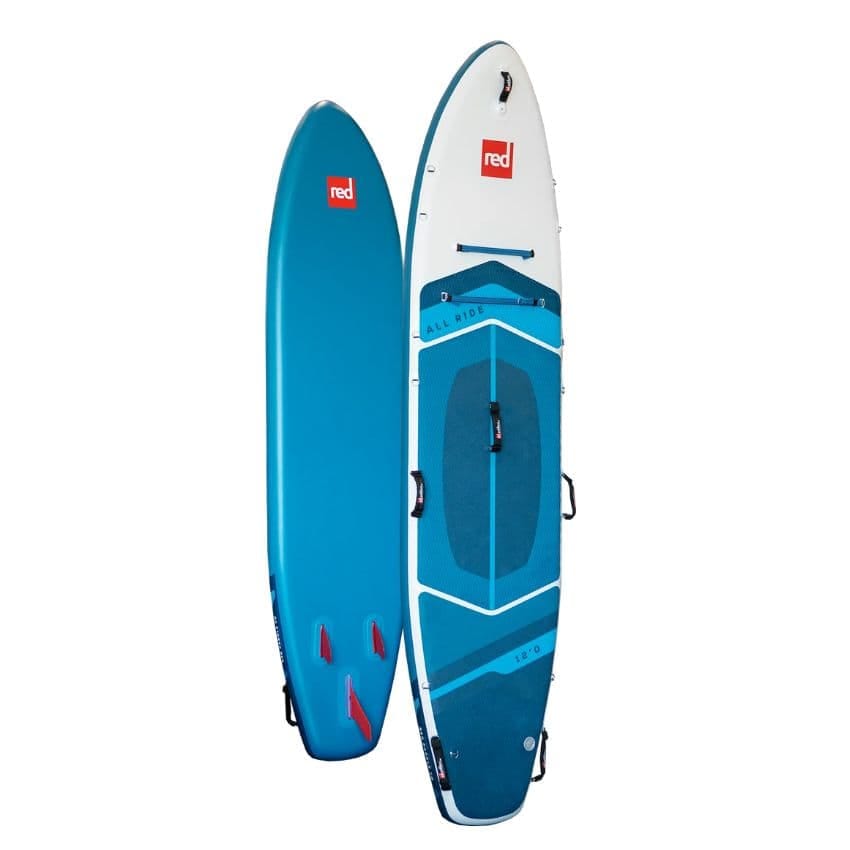
Best For: Heavier paddlers, tandem paddling, adaptive use, and anyone who needs maximum weight capacity.
Sizes: 12’0″ (£999.95)
Key Benefits:
- Designed for paddlers who have found standard boards limiting due to weight or stability needs
- 34″ width is the widest of any single-piece board in the range outside the Wild
- Tri-fin configuration provides tracking stability for a wide range of rider profiles
- Modular, customisable deck layout accommodates passengers, adaptive paddling setups, and gear
- Elongated shape handles the load of heavier riders without the sluggishness that affects shorter boards under the same weight
The All Ride fills a gap in Red’s range that most brands do not acknowledge exists. There are a meaningful number of paddlers for whom a standard 10’6″ or 10’8″ board is simply not appropriate — whether due to body weight, disability, wanting to paddle with a child or a dog consistently, or needing to carry significant gear. The All Ride is designed around those situations.
The modular deck design is the standout feature. Where most boards give you a fixed cargo bungee and a fixed deckpad, the All Ride allows you to reconfigure the layout — moving attachment points and accessories to suit your specific use. For paddlers with additional needs, this kind of adaptability is not a luxury.
At 12′ long and 34″ wide, the All Ride is also one of the more spacious single-person platforms Red makes. It is stable enough for nervous paddlers and large enough to share comfortably. For those buying their first board and concerned about the stability of standard shapes, it is also worth considering alongside the Ride — though it carries a £400 price premium.
Pros:
- Designed around the needs that standard boards do not meet — a rare and considered approach
- 34″ width with tri-fin stability is reassuring across a wide range of paddler profiles
- Modular deck is genuinely useful for adaptive paddling and heavy loads
- 12′ length handles heavier loads without slowing dramatically
Cons:
- Significant price over the Ride for paddlers who may not need the extra capacity
- At 34″ wide and 12′ long, it is one of the larger boards to transport and store
- Only one size — no lighter-duty version at a lower price
Voyager
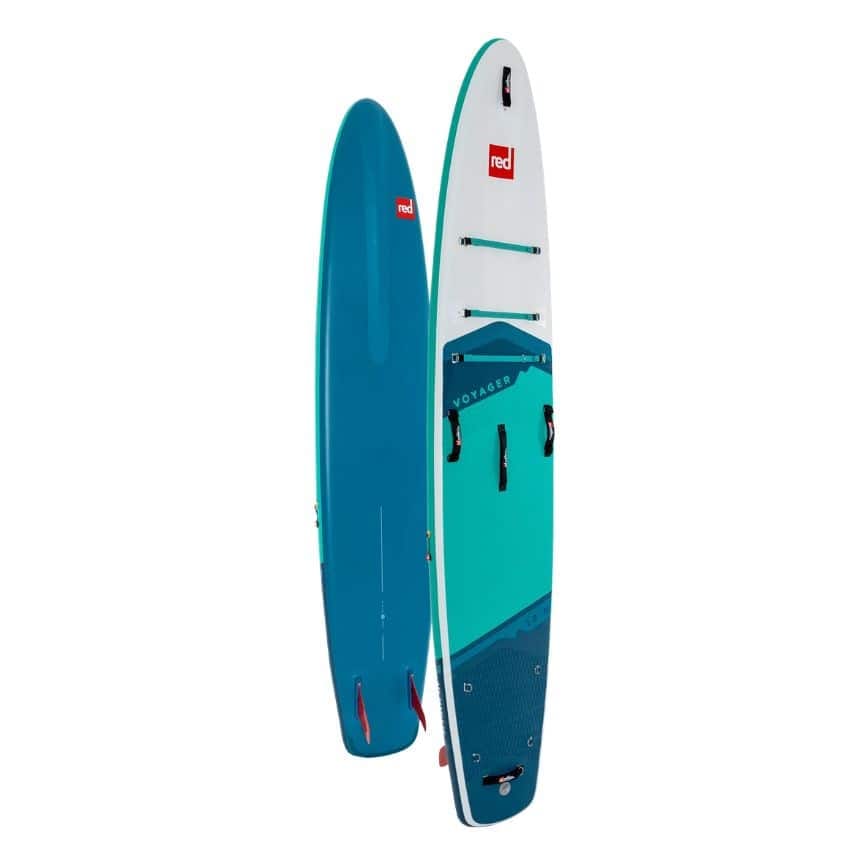
Best For: Distance paddlers, expedition touring, and paddlers who want to cover serious ground efficiently.
Sizes: 12’0″ (£899.95) | 12’6″ (£899.95) | 14’0″ MSL 800 (£1,199.95)
Key Benefits:
- Sleek, narrow expedition planshape designed specifically for speed over distance
- Narrower profile (28″) on the 12’0″ and 14’0″ reduces drag and rewards efficient paddle technique
- Front and rear cargo points accommodate gear for multi-day touring
- 285L volume on the 12’0″ carries weight without sacrificing the board’s responsiveness
- The 14’0″ MSL 800 variant brings the construction premium of the 800 tier to the touring range
The Voyager is Red’s dedicated touring board — shaped around the specific demands of covering distance efficiently rather than delivering versatility across all conditions. The narrower planshape means less drag and better glide per stroke, which adds up significantly over two hours on the water. The cargo provision front and rear is genuinely useful for multi-hour or multi-day trips where you need to carry food, kit, and dry bags without compromising the paddling experience.
The 12’0″ is positioned as a board for smaller or lighter paddlers who want expedition performance without the unwieldy length of a 14-footer, or for more advanced heavier paddlers who want something fast and responsive. At 28″ it is narrower than most all-rounders, and that width demands more balance than a Ride or Sport. This is not a board for someone still building confidence.
The 12’6″ is the mid-range option in the Voyager family, offering a bit more volume and a slightly more stable platform at the same price as the 12’0″. Most paddlers of average build considering the Voyager, will be better served by the 12’6″ over the 12’0″ unless they specifically want the shorter, more agile option.
The 14’0″ MSL 800 brings the range’s premium construction to the touring context. If you are paddling long distances regularly and want the stiffness advantage that 800 construction provides at full length, this is the board. The £300 premium over the shorter Voyagers is justified if distance paddling is a consistent part of your life on the water. For a practical overview of how to build mileage safely, the beginner’s SUP guide on this site is a good companion read.
Pros:
- Narrow expedition planshape is noticeably faster over distance than all-round boards
- Front and rear cargo points are well-positioned for loaded touring
- Same price across the 12’0″ and 12’6″ makes the choice between them simple
- 14’0″ MSL 800 is a serious option for committed distance paddlers
Cons:
- Narrower width demands confident balance — not suitable for beginners or those still building technique
- Not a versatile all-conditions board — wind and chop affect narrower boards more noticeably
- The 14’0″ MSL 800 is a significant investment
My Take on Red Paddle Co Paddle boards
Red Paddle Co makes genuinely good boards. The MSL construction is the standout element of the range — there is a real, tangible stiffness and durability advantage over standard drop-stitch inflatables, and it shows on the water.
The Ride is the board I would point most people towards first. The 10’6″ has been refined over many years; it handles a wide range of conditions and paddler profiles, and it has earned its multi-award status through actual performance rather than marketing. If you are buying your first board or looking for a solid all-rounder, start there.
The Sport MSL is the natural next step for paddlers who have had a season or two on the water and want more. The extra length delivers a noticeable improvement in glide and tracking, and the Sport MSL does it at a price that feels fair for what you get. If you can stretch to the Sport MSL 800, the construction upgrade is worth it — particularly if you are interested in the longer sizes where stiffness matters most.
The Compact range is the most interesting part of the lineup for paddlers who travel. The PACT folding system is genuinely useful rather than gimmicky, and the Compact 1000 in particular is an impressive piece of engineering. It is expensive, but it is expensive for a reason.
Where Red gets trickier is value relative to other brands. A 10’6″ Ride at £599.95 is not cheap compared to comparable all-round boards from Wave or Bluefin. You are paying partly for the MSL construction, partly for the Titan II pump and accessory quality, and partly for the brand’s track record. Whether that premium is worth it is a personal call — but it is a premium.
The range also goes beyond the nine families covered here. Red offers Elite boards (12’6″ and 14’0″) built around race performance, and an XL (17’0″) group board for those wanting a multi-person platform. Those are specialist purchases outside the scope of this guide, but worth knowing exist if your paddling takes you in those directions.
Red Paddle Co Paddle boards FAQ
Related Guides & Reviews
The resources below cover the basics, common questions, and related kit to help you get more out of your time on the water.
- Best Budget Paddle Boards in the UK
- Wave Paddle Boards Compared: Complete Guide to Every Wave 3.0 SUP
- Bluefin Paddle Boards Compared: Complete Guide to Every Bluefin SUP
- Aquaplanet Paddle Boards Compared: Full Range Guide
- Best Paddle Board Accessories: Best SUP Gear
All images courtesy of Red Paddle Co. • All Rights Reserved.

Steve Cleverdon
Adventure-driven outdoor gear reviewer and paddleboarder, Steve has spent 20 years exploring rivers, coastlines, and trails across Britain and abroad, sharing what he’s learned along the way. Learn more about Steve or get in touch.