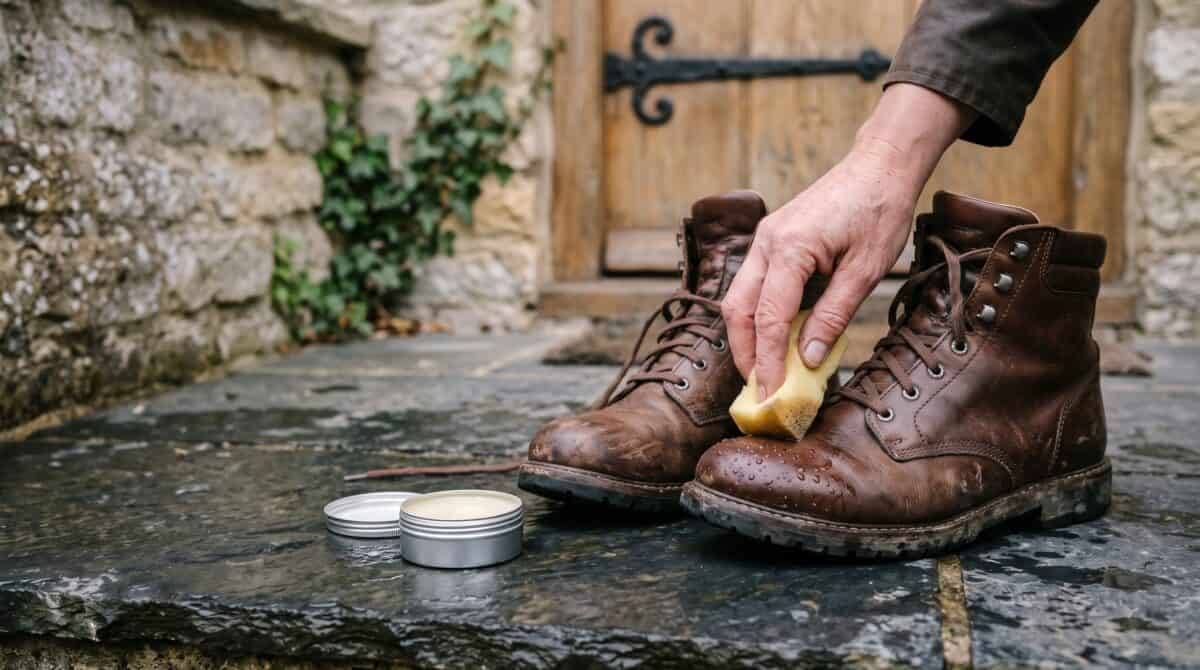
Here’s how to waterproof walking boots: clean the dirt off, put on the proofer that matches what the boots are made of, and let them dry slowly at room temperature. It’s a short job followed by a long dry, because the boots need 24 hours before you wear them again.
The part people get wrong is the match. Wax suits smooth leather, a different spray suits suede and nubuck, and a third suits fabric or mixed boots, and wax on nubuck turns it into a smooth, waxy finish.
Thanks for your support – I may earn a small commission from affiliate links in this article Learn more
The Short Answer
- Clean first: rinse off the mud, then use a brush and, for stubborn dirt, a cleaner like Nikwax Footwear Cleaning Gel. Proofer doesn’t work properly on dirty boots.
- Match the proofer to the upper: wax for smooth leather, Nubuck & Suede Proof for suede and nubuck, Fabric & Leather Proof for fabric or mixed boots.
- Apply to wet boots: spray from 15cm or sponge it on, work it into the seams, then wipe off the excess after two minutes.
- Dry slowly: laces and insoles out, paper towel in the toes, room temperature, no radiator, and 24 hours before you wear them.
Do waterproof walking boots need waterproofing?
Yes, eventually. A waterproof lining keeps water out of the boot, but the outer material still soaks up water once its factory coating wears off, and a soaked outer stops sweat from escaping, so your feet get damp from the inside instead.
The full reason is in Nikwax’s explanation, and it applies to Gore-Tex, BDry and eVent liners alike. Leather has a second reason: it stretches and weakens once it’s wet, then shrinks and turns brittle as it dries, so keeping water out of it helps the boots last.
New boots don’t need it straight away. Proof them once they’ve been worn outdoors a couple of times and the factory coating is starting to wear off, so get them broken in first and treat them after that.
How do you waterproof walking boots, step by step?
Clean them, put the proofer on while they’re wet, wipe off the excess, and dry them slowly.
- Strip them down. Take out the laces and insoles and shake out any grit from inside, so you can reach every part of the boot.
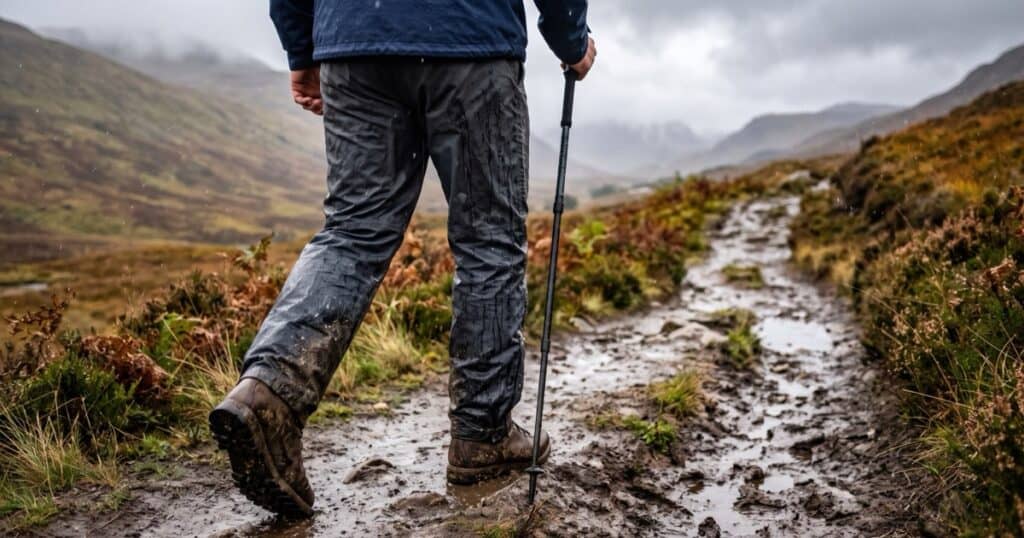
- Clean off the dirt. Rinse the mud off with tap water and a soft brush. For stubborn dirt, use the Nikwax Footwear Cleaning Gel and a nylon brush, because ordinary detergent can leave a thin film that masks the water repellency. Gore-Tex says lukewarm water with a small amount of liquid detergent is fine, so check the maker’s label if you’d rather use that. Wipe the linings with a warm, damp cloth too, because salt from sweat can dry out and crack leather from the inside.
- Leave them wet. Put the proofer on while the boots are still wet. Damp is enough. If they’ve dried, wipe them over with a wet cloth first.
- Apply the proofer for your boot type. The next section covers which one. Work it into the seams, stitching and around the eyelets, because that’s where water gets in, and test it on a hidden patch first, as light leather and fabric can darken.
- Wipe off the excess after two minutes with a damp cloth.
- Dry them slowly. Leave them at room temperature with a paper towel in the toes, and swap it when it gets wet. Keep them away from fires and radiators, because drying too fast can crack leather and make bonded soles peel. Give them 24 hours before you wear them.
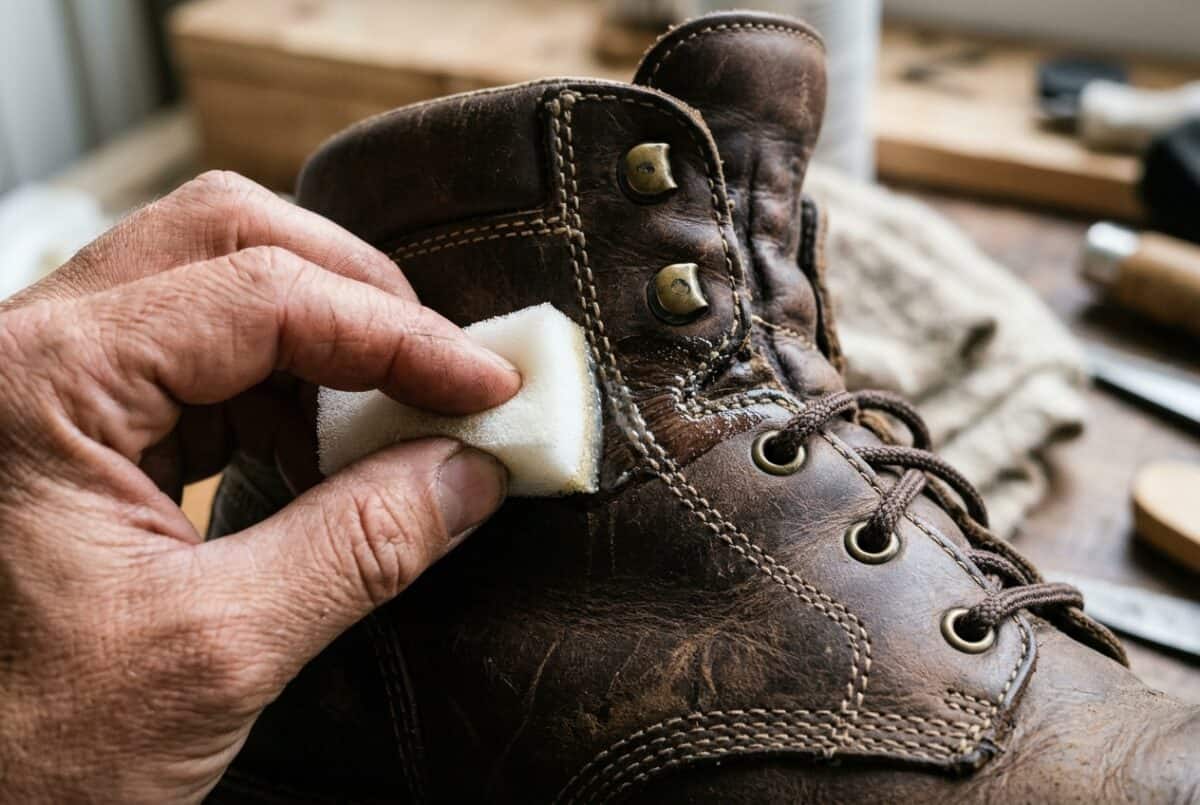
Illustration: working the proofer into the stitching and around the eyelets.
Which waterproofing product suits leather, suede or fabric boots?
If your boots mix two materials, go by the fussier one, so boots with suede panels get the suede product. Not sure what yours are made from? The maker’s product page will say, and my guide to choosing hiking boots covers leather against synthetic uppers.
Smooth leather boots
Nikwax Waterproofing Wax for Leather is made for smooth leather only. Rub it into the clean leather with your fingers or the sponge applicator, press it into the seams, then wipe off the excess after two minutes and buff. It can darken the leather. If the leather is also looking dry, use Nikwax Conditioner for Leather a few times a year or as needed.
Wax is where the manufacturers disagree. Nikwax recommends its wax for Gore-Tex and other waterproof leather boots, but Gore-Tex says not to use waxes or greases on its footwear because they can affect breathability, and suggests a water-based pump-spray instead. If your boots have a Gore-Tex lining, follow the care label that came with them, and if you can’t find one, a water-based spray is the cautious choice.
Suede and nubuck boots
Nikwax Nubuck & Suede Proof is a water-based spray or sponge-on product that keeps the texture of the leather. Use it on clean, wet boots from 15cm away, work it into the seams, wipe off the excess after two minutes and let them dry naturally. Don’t use wax on these: it turns nubuck into a smooth, waxy finish. Suede and nubuck also get smoother and darker with each treatment, and brushing the nap up afterwards helps a bit.
Fabric and mixed boots
Nikwax Fabric & Leather Proof is the one for fabric boots and boots that mix fabric and leather. Spray it from 15cm onto clean, wet boots or dab it on with the sponge, then wipe off the excess after two minutes and leave them to dry naturally. It adds water repellency without softening leather, and light or coloured material may darken, so test a hidden patch first.
How often should you re-waterproof walking boots?
When water stops beading on the outside, not on a fixed schedule. Reapply once water no longer beads and runs off, or after use in severe conditions.
Clean them before you reach for the proofer, though. Boots can soak up water just because they’re dirty, and a fairly new pair may get its water repellency back from a clean alone. So flick some water on the toe and the side: if it beads, leave them be; if it darkens and soaks in, clean them and test again, and if it still soaks in, proof them.
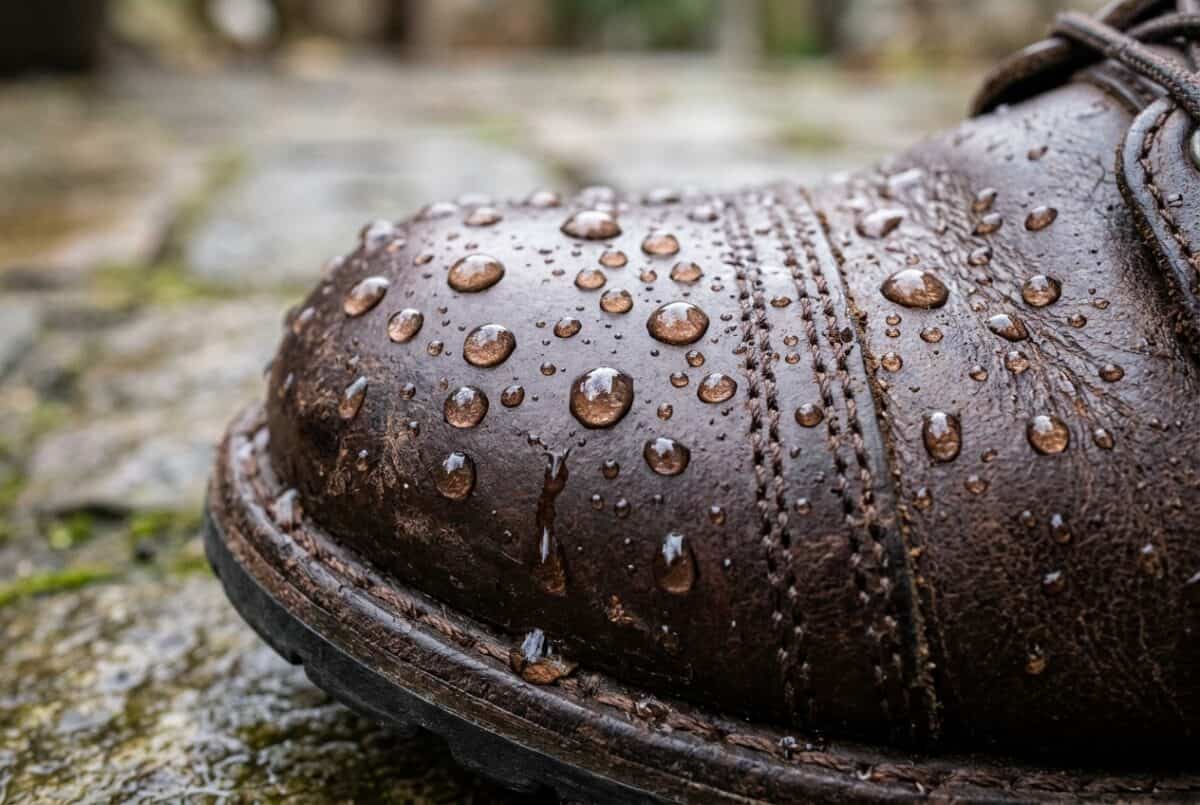
Illustration: water beading on the toe of a leather boot after proofing.
What mistakes ruin the job?
Most failed attempts come down to one of four things:
- Proofing dirty boots: dirt works against the water repellency, so the coating doesn’t take properly. Always clean them first.
- The wrong product for the upper: wax on nubuck changes the finish for good, and wax on a Gore-Tex-lined boot goes against Gore-Tex’s own advice.
- Heat: radiators and fires dry boots too fast, which can crack leather and make bonded soles peel away.
- Missing the seams: the stitching and the area around the eyelets are where water gets in, so they need the proofer most.
What if the boots still leak after proofing?
Then the proofer probably isn’t the problem. If water still gets in after a clean and a fresh coat, the lining, a seam, or a worn sole or upper is usually to blame, and it’s time to think about a repair or a new pair. My guide to the best waterproof hiking boots is the place to start if you’re replacing them.
Related Guides & Reviews
The resources below cover the basics, common questions, and related kit to help you get more out of your time outdoors.
- Best waterproof socks: for keeping your feet dry when the boots can’t.
- Best hiking socks: the layer that manages the damp your boots trap.
- Best tent waterproofing spray: the same job for your shelter.
- Hiking equipment list: the rest of the kit to check before a wet-weather walk.

Steve Cleverdon
Adventure-driven outdoor gear reviewer and paddleboarder, Steve has spent 20 years exploring rivers, coastlines, and trails across Britain and abroad, sharing what he’s learned along the way. Learn more about Steve or get in touch.