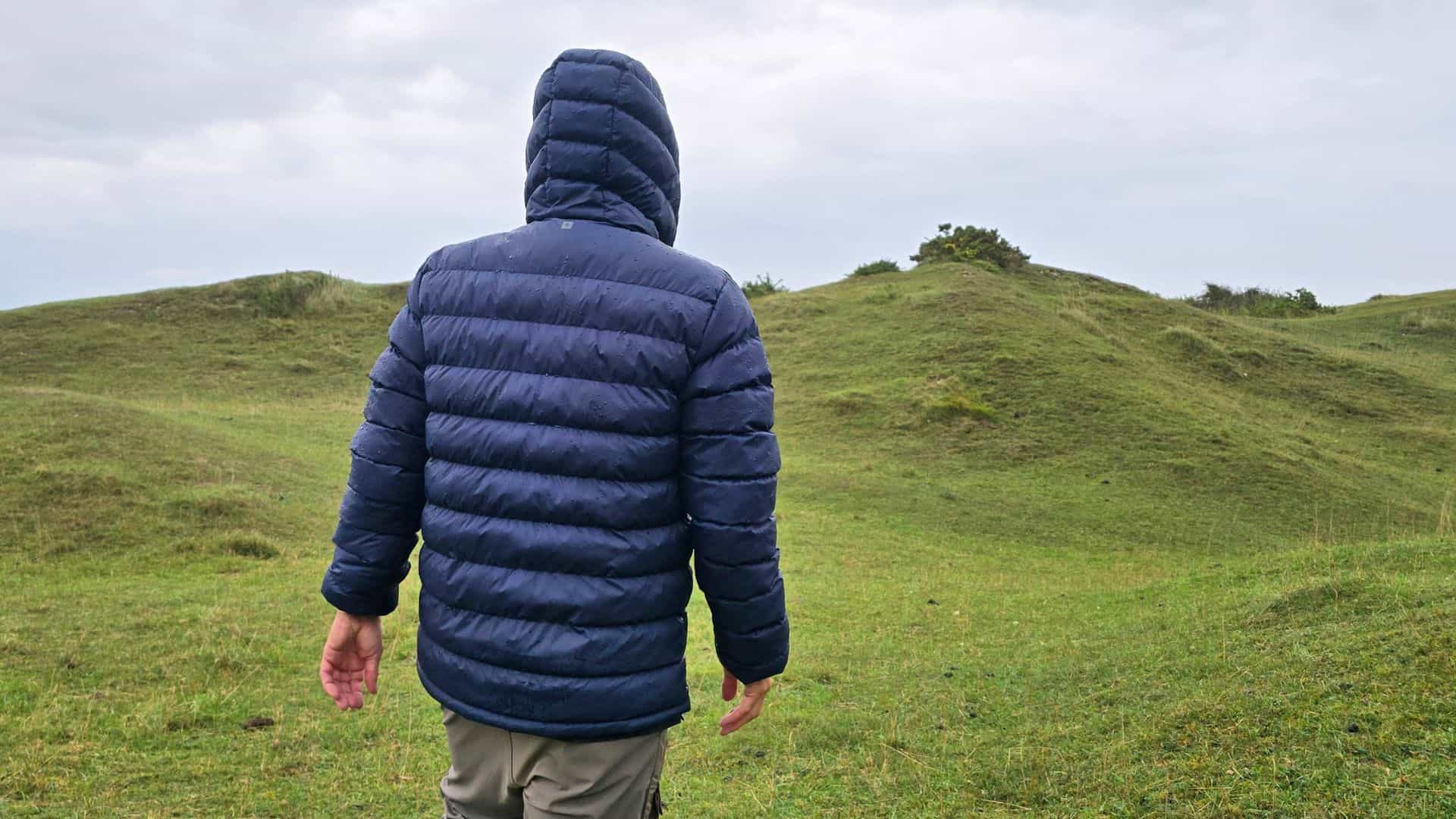
What is a down jacket? It’s an insulated jacket filled with down, the soft, fluffy layer that sits beneath the outer feathers of ducks and geese. Down traps warm air close to your body, which makes it the warmest insulation for its weight and lets the jacket pack down small.
It isn’t the right choice for everyone. Down usually makes sense when warmth, weight and packed size matter most, and synthetic insulation usually makes more sense when the jacket is likely to get wet.
This guide covers what down is, duck vs goose down, how down compares with synthetic insulation, what hydrophobic down does and how to tell if the down in a jacket is ethically sourced. Let’s get down to it.
Thanks for your support – I may earn a small commission from affiliate links in this article Learn more
The Short Answer
- What it is: A jacket insulated with down clusters from ducks or geese, held in place by stitched sections called baffles
- Why people buy one: More warmth for less weight and bulk than synthetic insulation
- The catch: Down loses most of its warmth when it gets soaked, so it needs a waterproof over it in steady rain
- What to look for: Fill power, the down-to-feather ratio and RDS certification tell you more than whether it’s duck or goose
What Is a Down Jacket and How Does Down Work?
Down is the fluffy under-layer beneath the tougher outer feathers of ducks and geese. It isn’t a feather. Each piece is a soft cluster of very fine filaments spreading out from a central point, with no hard quill.

How does down keep you warm?
Down doesn’t produce heat. It traps still air, which is a very good insulator. When a down cluster lofts, it fills a space many times its own size, so most of the volume inside a down jacket is air held in place by the down. Your body warms that air, and the down stops it escaping.
That’s why down is so light and packs so small. The clusters squash down in a stuff sack and spring back when you take the jacket out.
The weakness is moisture. When down gets soaked, the clusters collapse into clumps and stop trapping air, so the jacket loses most of its warmth and takes a long time to dry.
What does 90/10 mean on a down jacket?
It’s the down-to-feather ratio. No jacket is pure down, so labels show how much of the fill is down and how much is feather. A 90/10 fill is 90% down and 10% feather. Feathers are heavier and don’t trap air as well, so the higher the down percentage, the more warmth you get for the weight.

What is fill power?
Fill power measures how much space the down lofts to, in cubic inches per ounce. 800-fill down lofts to 800 cubic inches. Outdoor jackets usually sit between about 550 and 850. Higher fill power gives the same warmth from less down, so the jacket is lighter and packs smaller. Fill power tells you the quality of the down, not how warm the jacket is, as that also depends on how much down is in it.
Duck Down vs Goose Down: Which Is Better?
Goose down is usually better, but the gap is smaller than the price difference suggests. Geese are larger and older than ducks when they’re processed, so their down clusters tend to be bigger. Bigger clusters loft more, which means higher fill power and more warmth for the weight.
- Warmth for weight: Goose usually wins. At the same down-to-feather ratio, goose generally has a higher fill power
- Durability: Goose clusters are bigger and tend to hold their loft for longer
- Smell: Duck down has more of a reputation for smelling, especially when damp, though well-cleaned down shouldn’t smell much either way
- Price: Duck down is more common and cheaper, so it’s used in most budget and mid-range jackets
The quality of the down matters more than the bird. The International Down and Feather Laboratory, which tests down for the industry, says a superb duck down can be much better than a mediocre goose down. Some brands use 800-fill duck down, which is warmer for its weight than plenty of goose down jackets.
When you’re comparing jackets, check the fill power, the down-to-feather ratio and how much down is in the jacket first. If those match, goose is the better buy for durability. If the duck down jacket is noticeably cheaper with similar numbers, it’s usually the better value.
How Does Down Compare With Synthetic Insulation?
Synthetic insulation is made from fine polyester fibres designed to trap air the way down does. PrimaLoft is the best-known brand. Down is warmer for its weight and packs smaller. Synthetic keeps more of its warmth when wet, dries faster and usually costs less.
- Down: Best for warmth, weight and packed size, as long as it stays reasonably dry
- Synthetic: Best for wet weather and high-sweat activities, and easier to look after
Most UK winters are more often mild and damp than dry and freezing, so a synthetic jacket usually suits everyday wear as an outer layer. Down suits hiking and camping, where you can carry it in your pack and wear a waterproof over it when it rains. My down vs synthetic insulation guide goes through the choice in detail, including fill power.

What is a puffer jacket?
A puffer jacket is any insulated jacket with a quilted, puffy look. The name describes the style, not the filling, so a puffer can be filled with down, synthetic insulation or a mix. Every down jacket is a puffer, but not every puffer is a down jacket.
Most puffers are made of a lightweight nylon or polyester shell, a thin inner lining and the insulation in between, held in stitched or bonded baffles that stop it slipping to the bottom. The care label or product page will tell you whether the fill is down or synthetic.

What Is Hydrophobic Down?
Hydrophobic down is down treated with a water-repellent finish so it soaks up less water. The finish coats each cluster during cleaning, much like the DWR coating on a jacket’s shell, but on the insulation itself.
Treated down resists water for longer, keeps more of its loft when damp and dries faster than untreated down. That helps with drizzle and wet snow, and with less obvious moisture such as sweat on a long climb or condensation in a tent. You’ll see it under names such as Nikwax Hydrophobic Down, DownTek and Allied HyperDRY, and brands back them with lab tests against untreated down.
Does hydrophobic down make a jacket waterproof?
No. It’s water-resistant, not waterproof. It buys you time in damp weather, but it won’t keep you warm through hours of steady rain, as water still gets through the shell and seams. I’d still wear a waterproof over any down jacket in the rain, and my best Gore-Tex jackets roundup covers the ones I’d use.
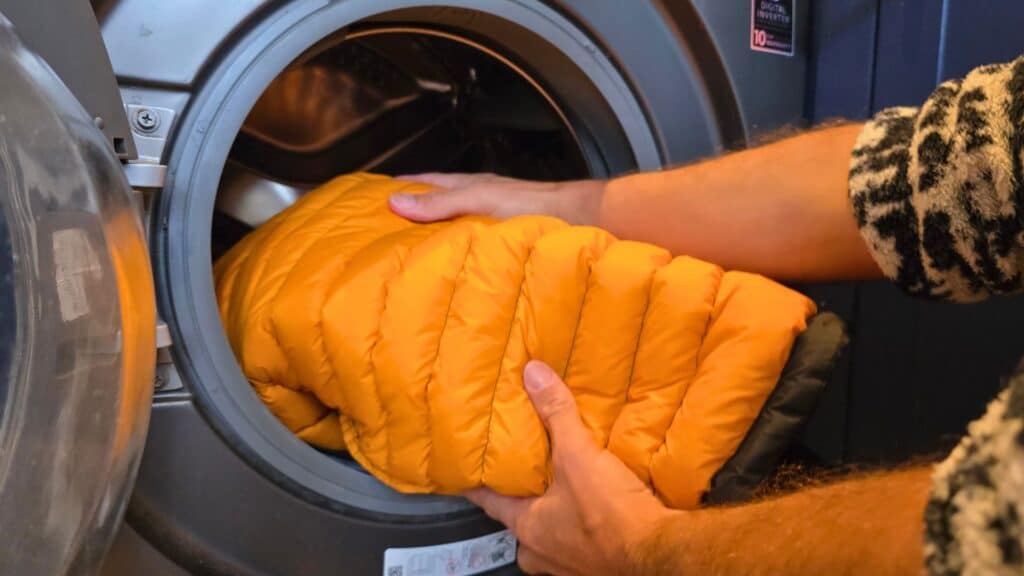
The treatment also wears off with washing over time, so use a down-specific wash. My how to wash a puffer jacket guide explains how.
Is Down Ethically Sourced?
It can be, and the labels on a jacket tell you whether it is. Most down is a by-product of the meat industry, collected from ducks and geese after slaughter. The welfare concerns are live-plucking, where down is pulled from living birds so it can be harvested more than once, and force-feeding, which is linked to foie gras.
Three labels come up most often on outdoor jackets.
What is RDS-certified down?
The Responsible Down Standard (RDS) is the most widely used down certification. It was developed by the non-profit Textile Exchange with animal welfare groups, brands and the down industry. It bans live-plucking and force-feeding, and certified down is tracked from the farm to the finished product. Only products filled entirely with certified down can carry the RDS logo.
Most big outdoor brands now use RDS down, and it’s usually listed on the product page or swing tag. A few use their own equivalent, such as Patagonia’s Advanced Global Traceable Down Standard. If a jacket doesn’t say where its down comes from, it’s worth asking before you buy.
What is Allied Feather & Down?
Allied Feather & Down is a down supplier used by several outdoor brands, including Montane. Its main selling point is traceability. Each batch of down has a lot number printed on the jacket’s hang tag, and you can enter it on Allied’s TrackMyDown website to see where the down came from, its tested fill power, how clean it is and its certificates.
Allied also supplies recycled down, recovered from old down products that would otherwise go to landfill, and its own HyperDRY hydrophobic treatment.
What does bluesign approved mean?
bluesign is an independent system that checks how textiles and chemicals are made, not where the down comes from. It assesses production for chemical use, water and energy, waste and worker safety. A bluesign label on a jacket or treatment means the materials or process meet those standards. It says nothing about animal welfare, so look for RDS or an equivalent as well.
The bluesign APPROVED and bluesign PRODUCT labels are being replaced by a new bluepass mark through 2026, so you may see either name on jackets for a while.
Is a Down Jacket Right for You?
A down jacket is usually the right choice if you want the most warmth for the least weight and bulk, and you can keep it reasonably dry.
- Hiking and camping: It packs small enough for a daypack, and you can pull it on at lunch stops, on summits and around camp
- Cold, dry days: Frosty winter walks and cold snaps
- Layering under a waterproof: A thin down jacket under a waterproof shell is a warm combination for winter hiking
If you mostly need a jacket for commuting and everyday wear through a damp UK winter, and don’t want to carry a waterproof, a synthetic jacket is usually the safer choice. My best insulated jackets roundup covers both down and synthetic options.
I use a down jacket for everything, from dog walks and general hikes to hiking and camping trips. I went with down because I wanted one jacket that works for all of it, and pairing it with a light waterproof such as my Rohan Aira covers me when it rains.
Final Thoughts
So, what is a down jacket? It’s a jacket filled with duck or goose down, and nothing else gives you as much warmth for the weight. Its weakness is water, which is why it pairs best with a waterproof shell in the UK.
When you’re choosing one, the fill power, the down-to-feather ratio and RDS or equivalent certification tell you more than whether the down came from a duck or a goose.
Related Guides & Reviews
These guides and reviews cover choosing, using, and looking after an insulated jacket.
- OEX Kintra Hooded Down Jacket Review
- Mountain Warehouse Seasons Padded Jacket Review
- Down vs Synthetic Insulation: Which Jacket Should You Buy?
- How to Wash a Puffer Jacket

Steve Cleverdon
Adventure-driven outdoor gear reviewer and paddleboarder, Steve has spent 20 years exploring rivers, coastlines, and trails across Britain and abroad, sharing what he’s learned along the way. Learn more about Steve or get in touch.