Have you ever spent 15 minutes pumping up your paddle board by hand, arms burning, sweat dripping, only to feel completely knackered before you’ve even touched the water?
After inflating boards manually for years, I finally invested in an electric pump, and honestly, I should have done it ages ago. What used to take a quarter of an hour of hard graft now takes 8-10 minutes whilst I sort my gear and check the weather.
Most inflatable paddle boards come with a manual pump, and whilst they work fine, they’re exhausting—especially if you’re inflating multiple boards for the family or mates. You end up using energy that should be saved for actually paddling.
Electric SUP pumps solve this problem completely. They automate the inflation process, letting you press a button and walk away. With powerful airflow and adjustable pressure settings up to 20 PSI, modern electric pumps get your board ready in minutes whilst you focus on organising your paddle board accessories or checking your life jacket is properly fitted.
In this guide, I’ll walk you through the best electric pumps for paddle boards available in 2025, covering everything from budget options around £40 to premium models that can inflate multiple boards back-to-back. I’ve tested most of these myself and included genuine pros and cons from real-world use.
This article contains affiliate links. If you buy through them, I may earn a commission at no extra cost to you. Learn more here
What Makes a Great Electric SUP Pump?
Before diving into specific models, here’s what separates decent electric pumps from great ones:
PSI Capability: Most paddle boards require 12-15 PSI, but having a pump that reaches 20 PSI means it won’t struggle at higher pressures. Lower-rated pumps (like 15 PSI models) often slow down significantly in the final stages of inflation.
Inflation Speed: A good pump should inflate a standard 10’6″ board to 15 PSI in 8-12 minutes. Anything longer and you might as well use a manual pump for the last few PSI.
Cooling System: Cheaper pumps overheat after one board. If you’re inflating multiple boards (family outings, teaching sessions), active cooling systems are essential. Without them, you’ll be waiting 30 minutes between boards.
Auto Shut-Off: This feature lets you set your desired PSI and walk away. The pump stops automatically when it reaches the target pressure, preventing over-inflation and potential board damage.
Power Options: Most pumps run off 12V car sockets, but some offer battery clamp cables for direct battery connection. Battery-powered pumps offer true wireless freedom but cost significantly more.
Build Quality: Electric pumps get thrown in boots, dropped on beaches, and exposed to sand and moisture. Durable housing and quality components matter for longevity.
Now with that in mind, here are my top picks of the best electric pumps available for inflatable paddle boards:
Best Overall
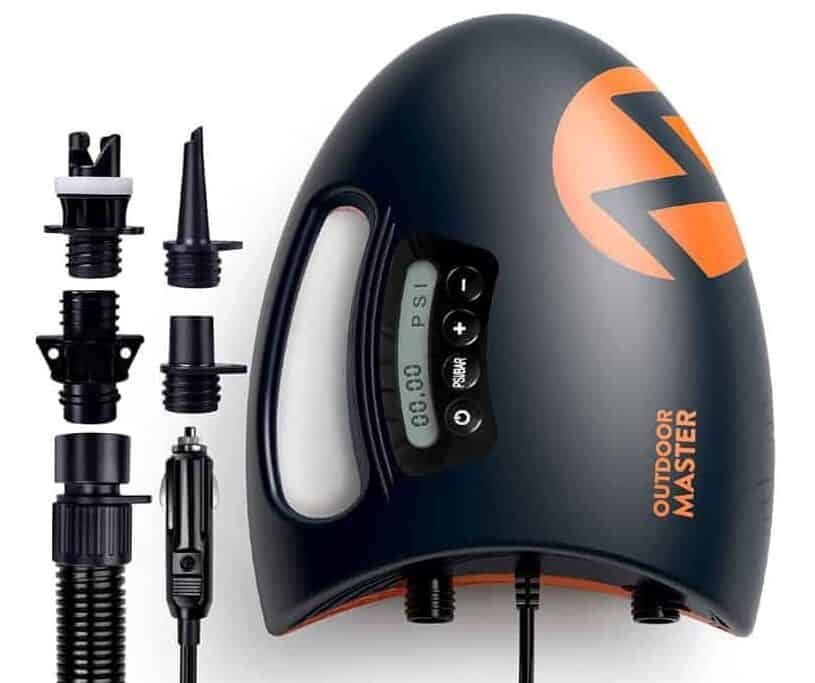
Outdoor Master The Shark II
- Inflate multiple boards with its active cooling system
- Full set of nozzle and valve attachments
- Digital display with real-time pressure monitoring
Best Compact Electric Pump: Bluefin E-Swift Lite Electric Pump
Fastest Inflation: Wave Electric Pump | 20PSI (Save 10%)
Most Attachments: NIXY Ventus
Best Budget Electric SUP Pump: Decathlon 15PSI Electric SUP Pump
Best Value Electric SUP Pump: HIKS 12V 20PSI Electric SUP Pump
Fast Inflation: Jobe SUP 12V Pump
Best Battery Powered: Aquaplanet Nomad Battery Pump 20 PSI
Outdoor Master The Shark II
Best Overall
Power Source: 12v
PSI: 20
Inflation Time: 5-10 minutes
What I Like:
- Active cooling system for multiple boards
- Long power cord and hose
- Digital display with real-time pressure monitoring
What I Dislike:
- Honestly, none. There’s a reason it got my vote for best electric SUP pump
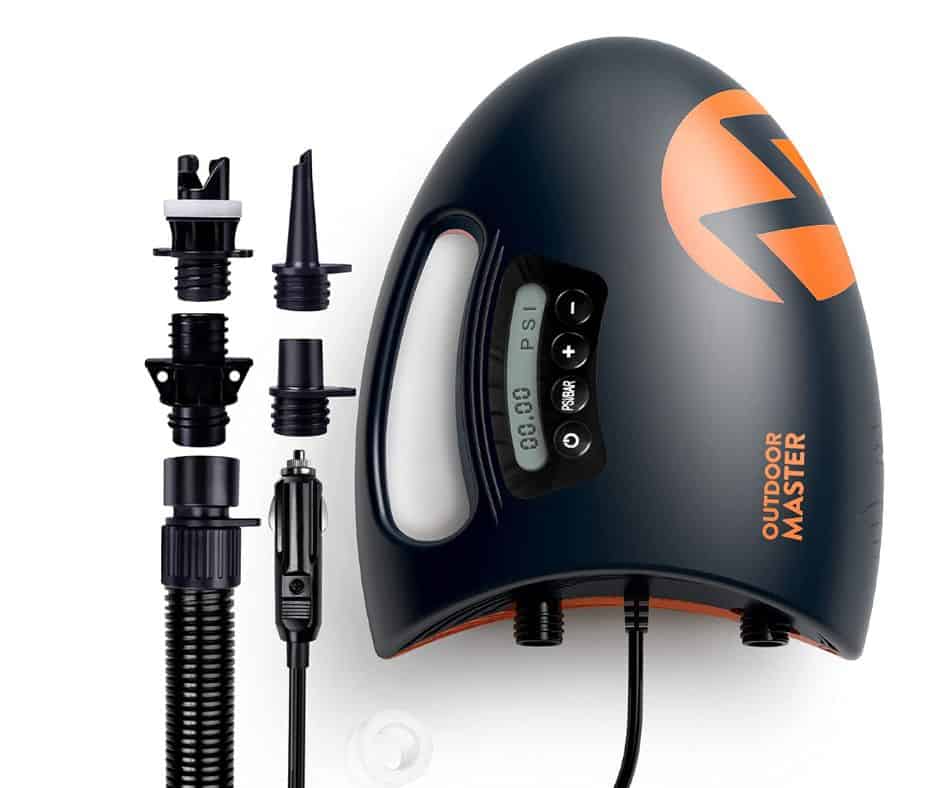
The Outdoor Master Shark II is the pump I reach for when I need reliable performance, especially for group paddles or family outings.
The standout feature is the active cooling system. Unlike cheaper pumps that overheat after one board, the Shark II can handle up to three boards back-to-back without breaking a sweat. This makes it invaluable for teaching sessions or family days on the water.
The automatic shut-off is spot-on. Set your target PSI, walk away, and it stops precisely when done. No over-inflation risks, no constant monitoring—just sorted.
The dual-stage inflation process is noticeably fast. It rapidly fills boards with high volume initially, then switches to high pressure for the final PSI. This means you’re typically on the water in 5-10 minutes, not the 15+ minutes some pumps take.
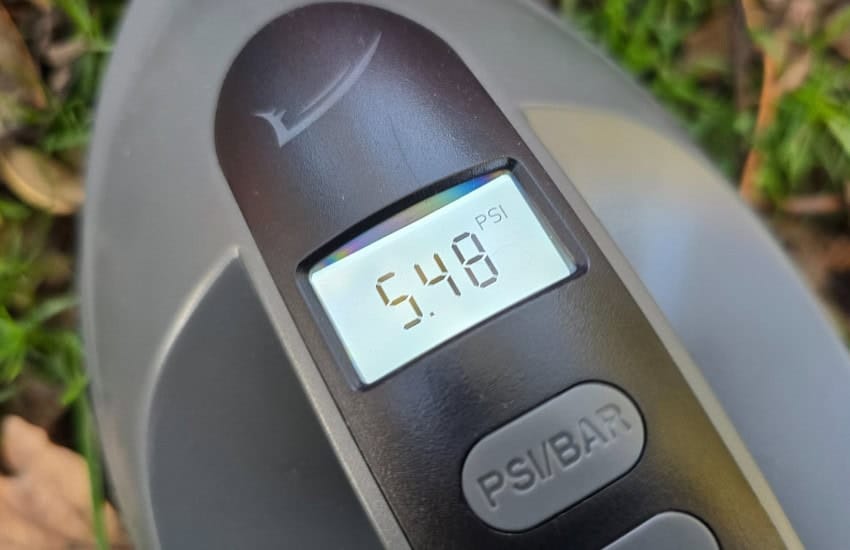
The digital display provides accurate real-time pressure readings, so you always know exactly where you are. Combined with the 12V car connector and full set of valve attachments, it’s versatile enough for any inflatable you own.
The long power cord and hose are genuinely useful—you’re not fighting cable length when your car’s parked a bit away from the water.
For reliability, speed, and the ability to handle multiple boards, the Outdoor Master Shark II is hard to beat. It’s my top recommendation for anyone serious about paddle boarding.

Bluefin E-Swift Lite Electric Pump
Power Source: 12V
PSI: 20
Inflation Time: 8-12 minutes
What I Like:
- Compact and lightweight at just 1.55kg
- Clear LED digital display
- Six valve adapters included
- Deflate function for quick pack-down
What I Dislike:
- No active cooling system
- Limited to 1-2 boards per session
The Bluefin E-Swift Lite is a solid mid-range option that balances portability with performance. After testing it over several months, it’s become my regular choice for solo paddles.
What stands out immediately is the compact size. It doesn’t dominate your kit bag like some larger models, and the textured ABS housing provides a secure grip even with wet hands—useful when launching from rocky beaches.
The LED display is clear and responsive, showing real-time pressure readings as you inflate. Set your target PSI, press the button, and let it work. The auto shut-off stops precisely at your chosen pressure without any fuss.
Inflation speed is genuinely impressive—my Bluefin Cruise board goes from flat to 15 PSI in about 12 minutes. The pump maintains consistent power throughout, not struggling as pressure increases like cheaper models tend to.
The six included valve adapters add versatility beyond paddle boards. I’ve used it for air mattresses, inflatable kayaks, even the kids’ pool.
However, without an active cooling system, it’s designed for 1-2 boards maximum per session. The manual recommends not running it continuously for more than 20 minutes, which suits most weekend paddlers but limits group use.
The deflate function is genuinely handy. Move the hose to the deflate port and it rapidly sucks the air out, speeding up pack-down when you’re cold and ready to get changed.
For £90-£150 (depending on sales), the E-Swift Lite offers excellent value for weekend paddlers and small groups. It’s a reliable workhorse that just gets the job done.
Want the full story? Check out my Bluefin E-Swift Lite review for more in-depth insights.

Wave Electric Pump | 20PSI
Power Source: 12v
PSI: 20
Inflation Time: 8-12 minutes
What I Like:
- Solid build quality
- Reaches full 20 PSI pressure
What I Dislike:
- Limited product information available
- Basic feature set
The Wave Electric Pump offers reliable 20 PSI inflation for paddle boards and kayaks through its dual-stage system. This 12V pump connects directly to your car’s cigarette lighter socket, providing consistent power for board inflation.
The pump features a straightforward design with a digital pressure display and automatic shut-off functionality to prevent over-inflation. Its compact black and orange housing makes it easy to transport and store in your SUP kit.
While the Wave pump delivers on the fundamentals of electric inflation, it lacks some of the advanced features found in premium models like active cooling systems or multiple board capability. However, for paddlers seeking a no-nonsense electric pump that gets the job done reliably, the Wave Electric Pump provides solid performance at its price point.
The inclusion of multiple valve attachments ensures compatibility with most paddle boards and inflatable watercraft on the market. The pump’s 20 PSI maximum pressure capability means it can properly inflate even high-pressure racing boards to their recommended specifications.
Overall, the Wave Electric Pump is a dependable choice for paddlers who want electric inflation without paying for advanced features they may not need.
Unlock a 10% discount at checkout when you click through my link.

NIXY Ventus
Most Attachments
Power Source: 12v
PSI: 20
Inflation Time: 8-10 minutes
What I Like:
- Neat carry bag
- Lots of attachments
- Active cooling tech
What I Dislike:
- High price point compared to similar SUP pumps
The NIXY Ventus Paddle Board Electric Pump will revolutionize the way you inflate your paddle boards. This portable and powerful electric pump offers an array of impressive features that make the inflation process a breeze.
Similar to the Shark pump reviewed above, the NIXY Ventus Pump has its own Active Cooling Tech. This innovative technology allows for the inflation of multiple paddle boards simultaneously without the risk of overheating. This means that even during those hot summer days, you’ll be able to effortlessly inflate multiple SUPs without worrying about the pump’s performance being affected.
Portability and power go hand in hand with this pump. With its high-pressure capability, it can easily inflate stand-up paddle boards to a maximum pressure of 20 psi, ensuring rigidity and optimal performance. Whether inflating a rigid SUP board or any other inflatable product, the NIXY Ventus Pump delivers consistent and efficient inflation.
The inclusion of essential accessories makes the NIXY Ventus Pump a comprehensive package. It comes with a carrying bag for convenient storage and transportation. The 12-V cigarette lighter plug-in enables effortless power connectivity, while the optional 12-V battery cables provide flexibility for inflating on the go. The flexible, non-kinking hose and the seven included nozzles ensure compatibility with a wide range of paddle boards, inflatable kayaks, dinghies, and other inflatable products.
Ease of use is a key aspect of the NIXY Ventus Pump. The electric pump features a digital display that provides clear and accurate pressure readings. With the adjustable auto-shutoff function, you can set the desired pressure, and the pump will automatically stop once that set pressure is reached. This allows you time to sit back and relax whilst you plan your adventure.
Overall, the NIXY Ventus Paddle Board Electric Pump is the ultimate companion for inflating paddle boards. With its exclusive Active Cooling Tech, portability, high-pressure capability, comprehensive accessories, user-friendly design, and universal compatibility, it’s one of the best electric pumps available. Sit back, relax, and let the NIXY Ventus Pump do the hard work for you.

Decathlon 15PSI Electric SUP Pump
Best Budget Electric SUP Pump
Power Source: 12v
PSI: 15
Inflation Time: 8-12 minutes
What I Like:
- Great price point for paddlers on a budget
What I Dislike:
- No deflate option
- Can only pump one board at a time
The Decathlon 15PSI Electric SUP Pump is an excellent choice for effortlessly and quickly inflating inflatable stand-up paddle boards. This electric pump offers a range of features that make the inflation process efficient and hassle-free.
One of the key highlights of Decathlon’s Electric SUP Pump is its ability to provide high pressures of up to 15 psi. Whilst this may be lower than other pumps, it’s still plenty enough to ensure that your paddle board is inflated to the desired rigidity and optimal performance at the highest pressure level. Whether you have a low-pressure kayak or a high-pressure SUP board, this pump is capable of meeting your inflation needs.
The convenience of this electric SUP pump lies in its compatibility with a 12V-15A outlet. Simply connect it to a power source, and it will deliver up to 15 PSI (1 bar) of pressure on demand. So put your manual pump away as this budget-friendly electric sup pump makes inflating your paddle board a quick and effortless process.
In terms of power, the Decathlon electric SUP pump boasts impressive performance and can inflate a 300 L SUP board to 15 PSI in approximately 12 minutes, allowing you to get on the water in no time.
The compact and portable design of the Decathlon electric SUP pump adds to its convenience. It is easy to transport and store, making it a great companion for both home use and travel.
Overall, the Decathlon 15PSI electric SUP pump is an efficient and reliable solution for inflating your inflatable stand-up paddle boards and is a fraction of the cost compared to other pumps out there. Ultimately, it provides a convenient and hassle-free inflation experience for those wanting to save time and some pounds too.

HIKS 12V 20PSI Electric SUP Pump
Best Value Electric SUP Pump
Power Source: 12v
PSI: 20
Inflation Time: 10-12 minutes
What I Like:
- Great specs at a very reasonable price
What I Dislike:
- Lacks some features compared to previous pumps on this list
The HIKs 12V 20PSI Electric SUP Pump is a reliable companion for hassle-free paddleboard inflation. With its dual-stage inflation mechanism, adjustable digital pressure gauge, and versatile attachments, this pump offers convenience and efficiency for your outdoor adventures.
Inflation is quick and efficient, with the pump inflating the average 10’6 paddleboard to 15PSI in approximately 12 minutes. The adjustable digital pressure gauge allows precise pressure setting, and the pump automatically stops when the desired pressure is reached.
This portable pump comes with four different attachments, making it suitable for paddleboards, inflatable pools, tents, boats, and more. With the 12V DC car connector and extra-long 3m cable, connecting to your vehicle’s power source is easy.
The pump’s portability is enhanced by the 1.1m pump hose with interchangeable connectors and the included carry bag, making it easy to store and transport.
Overall, the HIKs 12V 20PSI Electric SUP Pump offers a convenient and efficient solution for inflating your paddleboard. It ensures safety, provides precise pressure control, and includes versatile attachments for various inflatables.

Jobe SUP 12V Pump
Power Source: 12v
PSI: 20
Inflation Time: 10-15 minutes
What I Like: Fast two-stage low-to-high pressure inflation
- Fast two-stage low-to-high pressure inflation
What I Dislike:
- Analogue pressure gauge and PSI dial
When it comes to hassle-free inflation for your stand-up paddle board, the Jobe SUP 12V Pump is a game-changer.
What sets the Jobe SUP Pump apart is its powerful two-stage inflation mechanism. With a seamless transition from low to high pressure, this pump effortlessly inflates your board up to an impressive 20 PSI.
Convenience is at the heart of the Jobe SUP pump’s design. It is equipped with a 12V power capability, making it compatible with various power sources. The inclusion of car battery alligator clips and a cigarette lighter power connector ensures easy connectivity to your leisure battery, making inflation simple, no matter where you are.
Portability is another great feature of the Jobe SUP pump. Its easy-to-carry design allows for convenient transportation and storage. You can take it with you wherever your paddleboarding adventures lead, ensuring that you’re always prepared for a day on the water. No more struggling with bulky or cumbersome pumps – this electric SUP pump is compact and lightweight, perfect for on-the-go use.
Pumping up your paddle board has never been easier, thanks to the Jobe SUP pump and its exceptional performance. With its reliable 12V inflation capability, efficient two-stage inflation mechanism, and convenient power connectors, you’ll be able to inflate your board quickly and effortlessly and spend more time enjoying the water and less time preparing.
Overall, the Jobe SUP 12V Pump is an excellent companion for hassle-free inflation of your SUP. So forget all about your manual pump and get ready to elevate your paddle-boarding experience with the Jobe SUP pump.

Aquaplanet Nomad Battery Pump 20 PSI
Power Source: Rechargeable battery + 12V + USB-C
PSI: 20
Inflation Time: Under 10 minutes
What I Like:
- True wireless freedom with built-in battery
- Ultra-compact and lightweight
- Multiple charging options, including USB-C
What I Dislike:
- Newer brand with less long-term reliability data
- Limited to three boards per charge
The Aquaplanet Nomad Battery Pump delivers genuine wireless freedom for paddle board inflation. At just 1.26kg and measuring 18cm x 15cm x 8cm, it’s one of the most compact electric pumps available, making it perfect for travel and remote paddling locations.
What sets the Nomad apart is its versatility in charging options – you can power it via USB-C, traditional 12V car socket, or rely entirely on its internal battery. The pump charges fully in just two hours and can inflate up to three SUPs on a single charge, making it ideal for family outings or group paddles.
The pump reaches 20 PSI and can inflate a board in under 10 minutes, matching the performance of larger, corded alternatives. Five different nozzles ensure compatibility with paddle boards, kayaks, air beds, tents, and pools. The deflate function speeds up pack-down, while the ability to use it as a phone charger adds practical value.
The pump’s compact size means it fits easily in any SUP bag without adding significant weight or bulk.
While Aquaplanet is a newer brand compared to established names like OutdoorMaster, early user feedback suggests solid build quality and reliable performance. For paddlers who prioritize portability and wireless convenience over brand heritage, the Nomad represents excellent value.
Electric Pumps Comparison Table
| Pump Model | Power Source | Max PSI | Inflation Time | Weight | Active Cooling | Multiple Boards | Deflate Function | Approximate Price |
|---|---|---|---|---|---|---|---|---|
| Outdoor Master Shark II | 12V | 20 | 5-10 min | 2.2kg | Yes | Yes (3+) | Yes | £130-£160 |
| Wave Electric Pump | 12V | 20 | 8-12 min | 1.8kg | No | 1-2 | Yes | £100-£130 |
| NIXY Ventus | 12V | 20 | 8-10 min | 2.0kg | Yes | Yes (3+) | Yes | £150-£180 |
| Bluefin E-Swift Lite | 12V | 20 | 8-10 min | 1.55kg | No | 1-2 | Yes | £90-£150 |
| Decathlon 15PSI | 12V | 15 | 8-12 min | 1.9kg | No | 1 | No | £40-£60 |
| HIKS 20PSI | 12V | 20 | 10-12 min | 2.1kg | No | 1-2 | Yes | £80-£110 |
| Jobe 12V | 12V | 20 | 10-15 min | 2.3kg | No | 1-2 | No | £90-£120 |
| Aquaplanet Nomad | Battery + 12V | 20 | Under 10 min | 1.26kg | No | 3 per charge | Yes | £150-£200 |
Why Choose an Electric Pump Over Manual Pumping?
Save Time and Energy
The most obvious benefit is time savings. Manually pumping a paddle board to 15 PSI takes 10-15 minutes of continuous effort and leaves you exhausted. Electric pumps handle the job in similar time but without any physical effort from you.
This means you arrive at the water fresh and ready to paddle, not already tired from inflation. The difference is particularly noticeable on hot days or when you’re inflating multiple boards for family outings.
Consistent Pressure Every Time
Manual pumping makes it difficult to gauge exact pressure without constantly checking. Electric pumps with digital displays show real-time PSI readings, and auto shut-off features ensure your board reaches the exact recommended pressure every single time.
This consistency matters for board performance. Under-inflated boards flex too much and track poorly. Over-inflated boards risk damage to seams and can feel unstable. Electric pumps eliminate guesswork.
Multiple Board Capability
If you’re inflating boards for partners, kids, or mates, manual pumping becomes genuinely exhausting. Quality electric pumps with active cooling systems can inflate 3-5 boards back-to-back without overheating, making group outings dramatically easier.
Even budget electric pumps save significant effort when doing multiple boards—you just need to give them cooling breaks between inflations.
Accessibility for All Ages
Electric pumps make paddle boarding accessible to people who might struggle with manual pumping. Older paddlers, those with back or shoulder issues, or anyone with limited upper body strength can still enjoy the sport without the physical barrier of inflation.
This opens up paddle boarding to a wider range of people and makes it more enjoyable for everyone.
How to Choose the Right Electric Pump
Consider Your Usage Pattern
Solo Paddler: Any quality 12V pump will work well. Focus on portability and price rather than cooling systems.
Couple or Small Group (2-3 boards): Look for pumps with decent build quality that can handle 2-3 inflations with short cooling breaks. The Bluefin E-Swift Lite or Wave pump work well here.
Family or Teaching (4+ boards regularly): Invest in pumps with active cooling systems like the Outdoor Master Shark II or NIXY Ventus. They’re more expensive but essential for multiple boards.
PSI Requirements Matter
Most recreational paddle boards need 12-15 PSI. However, if you own or plan to buy racing boards or high-performance SUPs, they often require 18-20 PSI.
Buying a 20 PSI pump future-proofs your purchase and ensures the pump won’t struggle at higher pressures. The price difference between 15 PSI and 20 PSI pumps is usually minimal anyway.
Power Source Options
12V Car Socket (Most Common): Plugs into your car’s cigarette lighter. Simple and reliable, but requires your vehicle to be nearby.
Battery Clamp Cables: Some pumps include alligator clips for connecting directly to car batteries. Useful if your cigarette lighter socket doesn’t provide enough power.
Rechargeable Battery (Premium): Wireless pumps like the Aquaplanet Nomad offer true portability but cost significantly more. Worth it if you regularly paddle in remote locations away from vehicles.
Build Quality vs Price
Cheaper pumps (£40-£70) work fine for occasional use but may not last more than a season or two. They’re worth it if you’re trying paddle boarding before committing.
Mid-range pumps (£80-£130) offer better durability and features. Most paddlers find this the sweet spot for regular use.
Premium pumps (£150-£200) provide active cooling, multiple board capability, and build quality for years of use. Worthwhile if you paddle frequently or with groups.

How to Use an Electric Pump for Paddle Boards
Using an electric pump for your paddle board is a straightforward process. Here’s a step-by-step guide on how to use an electric pump effectively:
Step 1: Attach the Pump Nozzle to the Valve
Begin by ensuring that the pump nozzle is compatible with the valve of your paddle board. Most electric pumps come with multiple nozzle attachments to fit different valve types. Attach the appropriate nozzle securely to the valve to create an airtight seal.
Step 2: Power on the Pump
Next, power on the electric pump using the designated power button or switch. If your pump is battery-powered, make sure the batteries are charged or replace them if needed. For electric pumps that require an electrical outlet, connect the power cord from the pump to a suitable power source.
Step 3: Set the Desired Pressure
Refer to your paddle board’s manufacturer guidelines or user manual to determine how much PSI is recommended for inflation. Set the desired pressure on the pump, either by using a manual pressure adjustment knob or selecting the desired pressure level on a digital display, depending on the pump model.
Step 4: Start Inflation
With the pump turned on and the desired pressure set, initiate the inflation process. Some pumps may start inflating automatically upon powering on, while others may require you to press a separate inflation button. The pump will begin delivering a continuous stream of air into the paddle board.
Step 5: Monitor and Adjust Pressure
As the paddle board inflates, monitor the pressure using the built-in pressure gauge or digital display on the pump. It’s important to avoid overinflating the board, as this can lead to damage or reduced performance. Once the pressure reaches the recommended level, either manually stop the pump or let the automatic shut-off feature halt the inflation process.
Find more tips on how to inflate or deflate your stand up paddle board here.
Maintenance and Care Tips for Electric Pumps
To ensure the longevity and optimal performance of your electric pump for inflatable paddle boards, follow these maintenance and care tips:
Cleaning and Storage
Regularly clean the pump and nozzle attachments to remove any dirt, sand, or debris that may accumulate during use. Use a damp cloth or mild cleaning solution to wipe the surfaces clean. Avoid submerging the pump in water unless it is specifically designed for waterproofing. After cleaning, store the pump in a dry and secure place, protecting it from extreme temperatures or humidity.
Regular Inspection and Maintenance
Periodically inspect the pump for any signs of damage, such as cracks in the housing or leaks in the hoses. Check the nozzle attachments for wear or damage as well. If you notice any issues, consult the manufacturer’s instructions for troubleshooting or contact customer support for assistance. Additionally, follow any recommended maintenance procedures outlined in the user manual, such as lubricating moving parts or replacing filters if applicable.
Avoiding Overheating and Overuse
While electric pumps are designed for continuous use, it’s important to avoid prolonged operation that can lead to overheating. If you’re inflating multiple boards or inflating a large board that requires extended inflation time, give the pump short breaks between sessions to prevent overheating. This will help prolong the life of the pump and prevent any potential damage.
Common Electric Pump Problems and Solutions
Pump Overheating
Symptoms: Pump stops mid-inflation, feels very hot to touch, or displays an error code.
Solutions:
- Let it cool for 20-30 minutes before using again
- Ensure air vents aren’t blocked during operation
- Don’t exceed recommended continuous run time (usually 20 minutes)
- In hot weather, position pump in shade whilst inflating
Inaccurate Pressure Readings
Symptoms: Digital display shows different PSI than your manual gauge, or pressure fluctuates wildly.
Solutions:
- Check hose connection is airtight—leaks cause inaccurate readings
- Ensure valve adapter is fully seated on board valve
- Some pumps read slightly high or low—calibrate expectations after first use
- Replace pump hose if cracked or damaged
Slow Inflation
Symptoms: Pump takes significantly longer than advertised, or slows dramatically at high PSI.
Solutions:
- Verify you’re using a 12V power source with adequate amperage
- Car engines should be running to provide consistent power
- Check for air leaks at connections
- Ensure pump air filter isn’t clogged with sand or debris
Pump Won’t Start
Symptoms: No response when power button pressed, or display lights up but pump doesn’t run.
Solutions:
- Check power source is working (try different socket)
- Ensure hose is properly attached—some pumps won’t start without hose connected
- Verify pump hasn’t overheated and triggered thermal protection
- Check fuse in car power cable hasn’t blown
Warning: Noise Volume of Electric SUP Pumps
It is important to be aware of the noise volume associated with electric SUP pumps, as they typically operate at around 70 decibels (dB). While these pumps offer convenience and efficiency in inflating your paddleboard, the noise they generate can impact your overall paddleboarding experience.
The noise level of 70dB can be considered moderate, and it may cause disturbances in quiet environments or disturb nearby wildlife, fellow water enthusiasts or even local residents. If you plan to paddle in tranquil or noise-sensitive areas, such as nature reserves, lakes, or residential areas, it is essential to take the noise factor into account.
To mitigate noise-related concerns, you can consider the following measures:
Time of Use: Opt for daytime inflation when noise is less likely to cause significant disruptions. Be mindful of any noise restrictions or regulations in the area where you plan to paddle.
Distance and Location: Position yourself and your pump away from others who may be enjoying the tranquillity of the surroundings. Choose a location that minimizes the impact of noise on wildlife and other water users.
Communication and Respect: Maintain open communication with fellow paddlers and nearby individuals, ensuring mutual respect and understanding regarding noise levels. Being considerate of others’ enjoyment of the surroundings can contribute to a positive paddling experience for everyone.
Recommended Reading
- How To Paddle Board: Complete SUP Guide for Beginners
- What To Wear Paddle Boarding: The Essential Guide for 2023
- Best Dryrobe Alternatives for Watersport Adventures in 2023
Final Thoughts…
Investing in the best electric pump for your paddle board can significantly enhance your paddleboarding experience. The convenience, time-saving, and ease of use provided by electric pumps make the process of inflating your paddle board quick and effortless. With adjustable pressure settings, you can achieve optimal inflation for better stability and performance on the water.
When choosing an electric pump, consider factors such as pump type, PSI range and accuracy, power source, portability, noise level, and durability. By carefully evaluating these factors, you can find a pump that suits your specific needs and preferences.
In this article, we’ve provided an overview of the benefits of using an electric pump for paddle boards and outlined key factors to consider when making a purchase. We’ve also presented a selection of top electric pumps available in the market.
Remember to follow the proper steps for using an electric pump, from attaching the nozzle to the valve to monitoring the pressure during inflation. By following maintenance and care tips, such as cleaning the pump, inspecting for damage, and avoiding overuse, you can ensure the longevity and optimal performance of your electric pump.
So, equip yourself with a reliable electric pump and enjoy hassle-free inflation of your paddle board, allowing you to spend more time enjoying the water and less time preparing.
Electric SUP Pumps FAQs

About the Author
Steve Cleverdon is an outdoor adventure specialist with 15+ years of hiking, camping, and paddle boarding experience. He has conquered Europe’s toughest trails including the GR20 in Corsica, walked 3,000km solo across New Zealand, and worked professionally in the outdoors industry. Steve’s gear reviews and recommendations are based on real-world testing across four continents, from coastal waters to mountain peaks. Learn more about Steve or get in touch.