Two of the most searched inflatable paddleboards in the UK right now — and on paper, they look remarkably similar. Both are around 10’8″, both are 32 inches wide, and both are aimed squarely at beginners and recreational paddlers. But the Wave Tourer vs Bluefin Cruise debate gets interesting when you look at the price tags: one costs roughly twice what the other does. So what does that extra money actually buy you — and is it worth it?
I’ve reviewed both boards in detail on this site, and this comparison pulls the key findings together so you can make the right call for your paddling. Whether you’re a first-time buyer or you’re upgrading from a starter board, here’s everything you need to know about the Wave Tourer vs Bluefin Cruise before you spend a penny.
This article contains affiliate links. If you buy through them, I may earn a commission at no extra cost to you. Learn more here
At a Glance: Side-by-Side Comparison
| Wave Tourer 3.0 | Bluefin Cruise 10’8″ | |
|---|---|---|
| Length | 10’3″ or 11’3″ | 10’8″ |
| Width | 32″ (81cm) | 32″ |
| Thickness | 6″ (15cm) | 6″ |
| Weight | 8kg | 9.1kg |
| Max Capacity | 130–140kg | 150kg |
| Max PSI | 20 PSI | 15–18 PSI |
| Construction | WST™ Military-Grade PVC (heat-fused seams) | ESL military-grade PVC + drop-stitch + carbon Flex Reduction rails |
| Fin System | Single quick-release | Tri-fin snap-lock (8.5″ centre + 2.5″ sides) |
| Paddle Included | Standard 3-piece | 4-piece fibreglass (dual kayak blades) |
| Pump | Double-action manual | Dual-action manual |
| Carry Bag | Padded backpack | Roller bag with stow-away backpack harness |
| Extras | Water bottle bungee, leash, repair kit | Kayak conversion kit, phone case, leash, repair kit |
| Warranty | 2 years | 5 years |
| Price | £179.99–£189.99 | £359.99 |
| Editors Rating | 4.8/5 | 4.6/5 |
Unlock 10% off Wave products automatically when you click through my links
Key Differences Between the Two Boards
On the face of it, these boards occupy the same category. Both are stable, all-round inflatables designed for beginners and casual paddlers on flat water. Where they diverge is in price, weight, accessories, and construction approach — and those differences matter depending on what you actually want from a paddleboard.
The most striking gap is price. At £359.99, the Bluefin Cruise costs roughly double the Wave Tourer’s £180–£190. That’s a significant outlay for a board that scores slightly lower in my review. The Bluefin earns some of that premium through accessories, build heritage, and its impressive 5-year warranty — but whether it justifies the gap is the real question.
The second notable difference is weight. The Wave Tourer 3.0 comes in at around 8kg — notably lighter than the Bluefin’s 9.1kg. That’s a meaningful difference when you’re carrying the board from the car to the water, or packing it into a compact space.
Design and Build Quality
Both boards are well-made, but they use different construction approaches to get there.
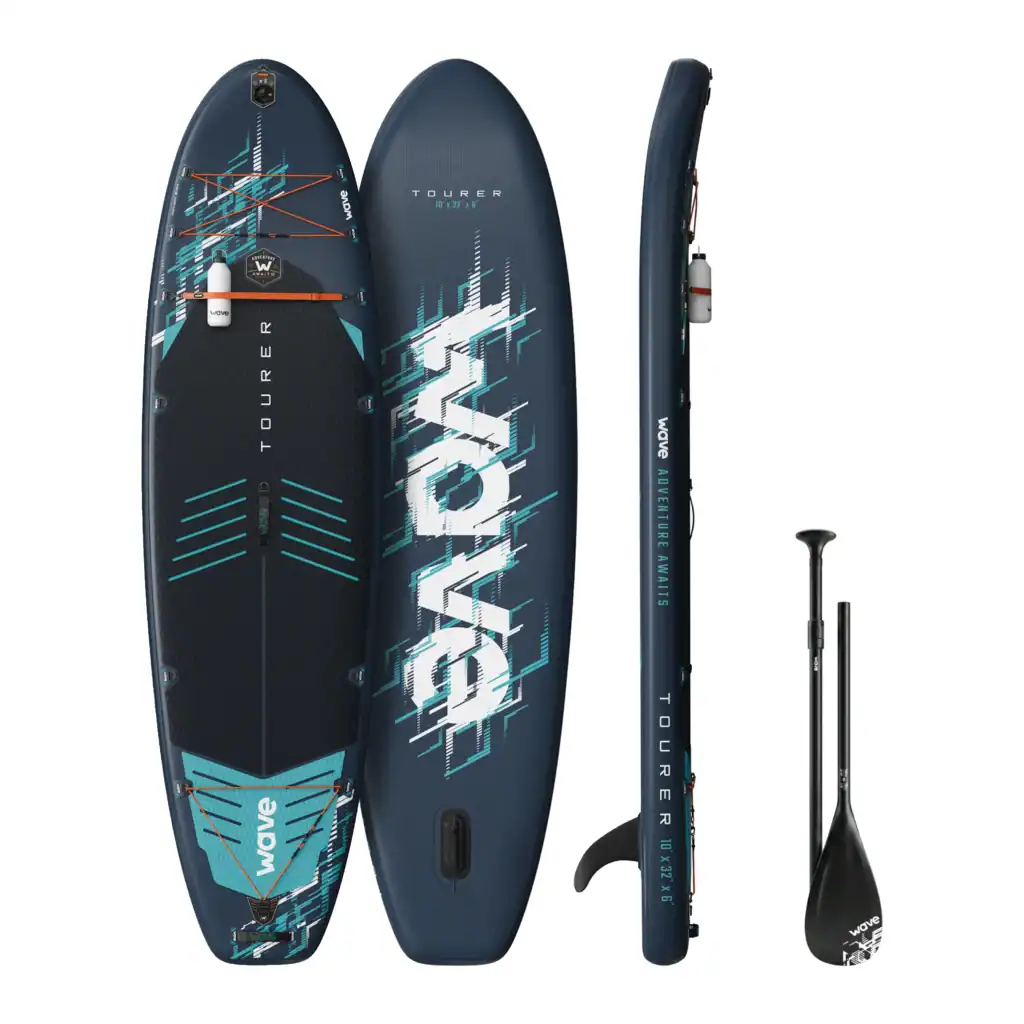
The Wave Tourer 3.0 uses Welded Seam Technology (WST) — a heat-fusion method that bonds the military-grade PVC layers without adhesive. It inflates to 20 PSI, producing a platform that feels genuinely rigid underfoot. The result is a lightweight board that punches above its price point in terms of stiffness.
The Bluefin Cruise uses ESL military-grade PVC over a composite drop-stitch core with 11,200 stitches per square metre, with carbon Flex Reduction rails that add abrasion and puncture resistance along the sides. It’s a proven, durable construction that produces a confidence-inspiring board underfoot. It’s worth noting the Bluefin tops out at 15–18 PSI versus the Wave’s 20 PSI — not a huge difference in practice, but the Wave will feel marginally stiffer at full inflation.
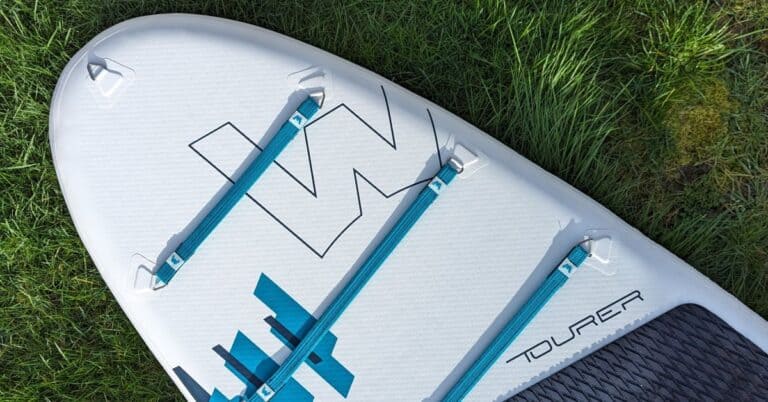
Both boards have non-slip EVA deck pads and D-ring attachments. The Bluefin runs 10 D-rings plus a nose action mount, and includes a raised heel pad for step-back turns — details that show Bluefin has thought about how the board actually gets used.
In terms of fin setup, the Tourer runs a single quick-release fin — clean and practical. The Cruise runs a tri-fin snap-lock configuration with an 8.5-inch centre fin and 2.5-inch side fins, which aids tracking and straight-line stability. Particularly useful for paddlers still building their stroke consistency.
Performance on the Water
In flat-water recreational use, both boards perform well, and neither will leave you disappointed. The differences are more about feel and character than outright capability.
The Wave Tourer has a lively, responsive feel — partly a product of its lighter construction. It tracks well for its size, inflates to a stiff platform, and covers distance without demanding too much from the paddler. It’s not a performance board in the strict sense, but it doesn’t pretend to be. What it does, it does cleanly.
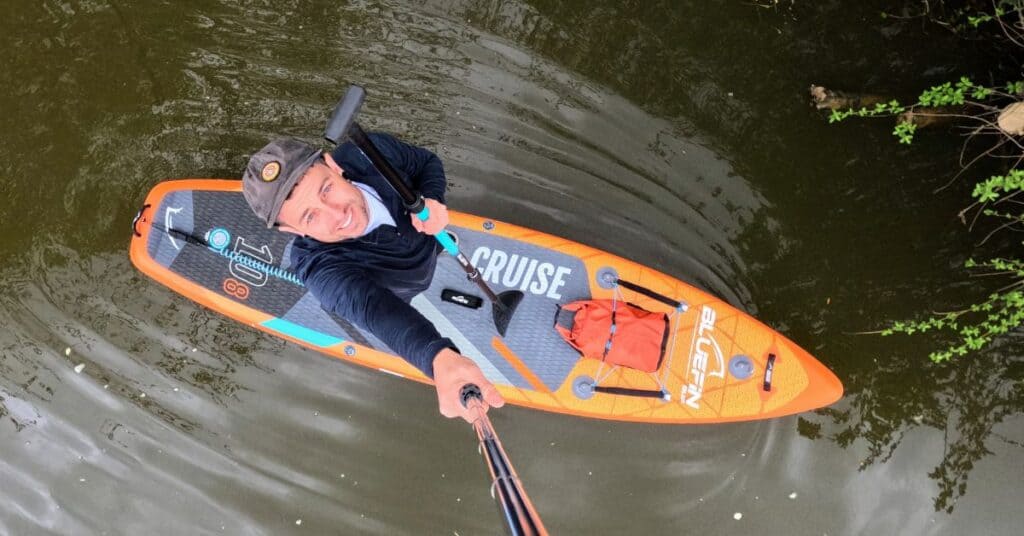
The Bluefin Cruise has a more planted, stable feel on the water — helped by its triple-fin setup and slightly greater volume. It’s confidence-inspiring in a way that suits nervous beginners particularly well. The trade-off is that it’s a heavier, slightly less nimble ride than the Tourer, and at 9.1kg you’ll feel that difference more on the carry than on the water.
Neither board is built for choppy open-sea conditions or performance paddling. Both are at their best on calm lakes, canals, sheltered bays, and slow-moving rivers.
Stability and Who Each Board Suits
Both boards share the same 32-inch width, so the stability comparison is closer than you might expect. Neither will feel tippy to a first-time paddler.
The Bluefin’s triple-fin setup gives it a slight edge in straight-line stability — it wants to go forward and is more forgiving of an inconsistent paddle stroke. The Cruise’s higher weight capacity (150kg vs 130–160kg for the Tourer) also makes it a more viable option for heavier paddlers or anyone wanting to carry a bit of kit.
The Wave Tourer, being lighter and available in two sizes, offers a bit more flexibility. The 10’3″ suits younger or lighter paddlers or those who want something easier to handle; the 11’3″ is the better all-rounder for adults. Both feel stable from the moment you stand up.
Wave Tourer 3.0 suits: Budget-conscious buyers, lighter paddlers, anyone who values portability, and paddlers who want a capable board without overspending.
Bluefin Cruise 10’8″ suits: Beginners who want maximum reassurance on the water, heavier paddlers, and anyone who wants a premium accessory pack and the security of a 5-year warranty behind them.
Kit and Accessories
This is where the two boards feel most different — and where the Bluefin’s higher price starts to make a bit more sense.
Wave Tourer 3.0 ships with:
- Double-action manual pump
- Standard 3-piece adjustable paddle
- Quick-release leash with padded ankle cuff
- Bungee storage with integrated water bottle holder
- Padded backpack
It’s a solid, practical kit. The water bottle holder on the bungee is a genuinely useful detail, and the double-action pump gets the board up to pressure without taking all day.
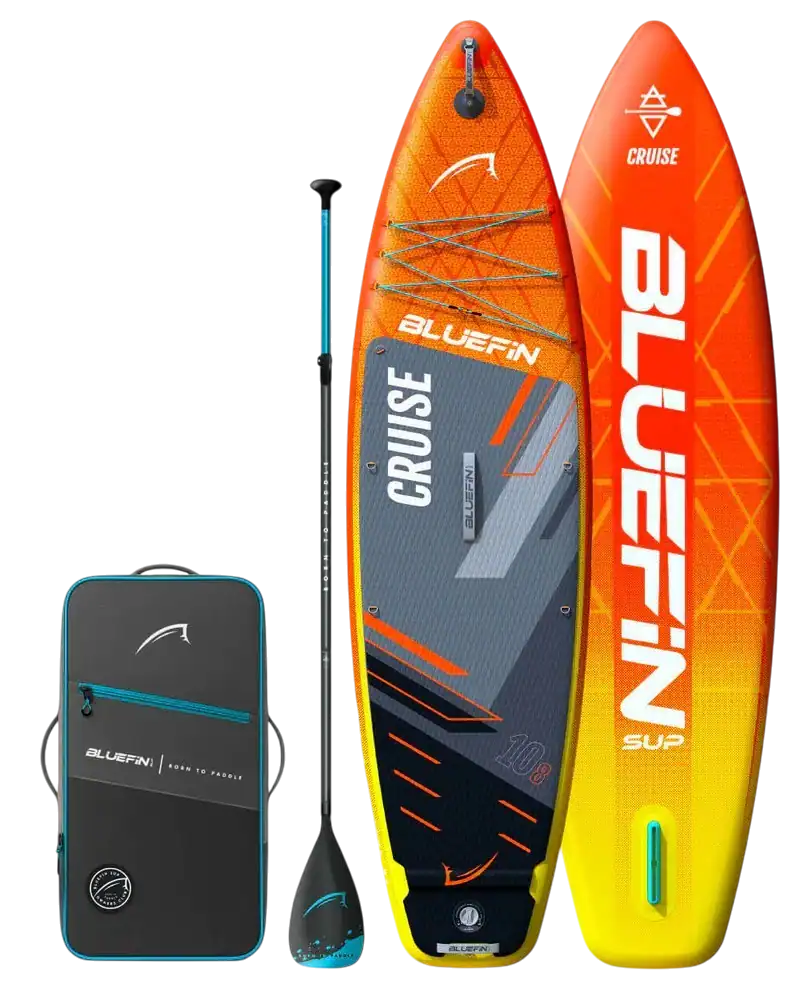
Bluefin Cruise 10’8″ ships with:
- Dual-action manual pump
- 4-piece fibreglass paddle with dual kayak blades
- Kayak conversion kit with seat
- Coiled leash
- Waterproof phone case
- Repair kit
- Tri-fin set
- Roller bag with stow-away backpack harness
The Bluefin’s package is genuinely impressive. The standout addition in the current version is the kayak conversion kit — previously sold separately, it’s now included in the box, which changes the value calculation considerably. The 4-piece fibreglass paddle with dual blades means you can switch between SUP and kayak modes without buying anything extra. If you’re already a Bluefin user, accessories like the Bluefin Dri-Tide Deck Bag also integrate neatly into the ecosystem.
One area worth flagging: neither board includes an electric pump. Once you’re paddling regularly, a decent electric pump saves a lot of effort regardless of which board you’re on. I’ve reviewed the Bluefin E-Swift Lite if you’re leaning toward the Cruise — it’s a solid match for the board and worth factoring into the overall cost. If you’d like a broader look at options, my guide to the best electric pumps for paddle boards covers several alternatives.
Value for Money
This is where the comparison gets pointed.
The Wave Tourer 3.0 at £179.99–£189.99 is one of the best-value inflatable paddleboards currently available in the UK. It’s lighter than the Bluefin, scores higher in my review, and comes with a practical, well-thought-out kit. For a first board, or for a paddler who wants to get on the water without spending a fortune, it’s very difficult to fault — and it features in my roundup of the best budget paddle boards in the UK for exactly that reason.
Bluefin Cruise at £359.99 is a genuine step up in price, and you get meaningful things for that money: a kayak conversion kit in the box, a 5-year warranty, a fibreglass paddle with dual blades, a roller bag, and a brand with a longer track record in the UK market. Bluefin also has a well-established ecosystem of accessories, should you want to build out your setup over time.
But here’s the honest truth: the performance gap on the water doesn’t justify the price gap. If your priority is getting a quality board at the lowest outlay, the Wave Tourer wins this comfortably. If long-term peace of mind, a better warranty, and a fuller out-of-the-box package matter more, the Bluefin has a reasonable case — but you’re paying a significant premium for it.
Unlock 10% off Wave products automatically when you click through my links
The Verdict: Which One Should You Buy?
If you’re buying your first paddleboard and budget is any kind of consideration at all, buy the Wave Tourer 3.0. It’s lighter, it scores higher, it costs less than half the price, and it gives you a solid platform to build your paddling from. It’s hard to make a stronger case for a board at this price point.
If you want the reassurance of a 5-year warranty, you’re a heavier paddler who benefits from the extra capacity, or you’re drawn to Bluefin’s accessories ecosystem — the Cruise is a quality board and you won’t be disappointed with it. Just go in clear-eyed that you’re paying a premium that the on-water performance doesn’t fully reflect.
Wave Tourer vs Bluefin Cruise FAQs
Related Guides & Reviews
The resources below cover the basics, common questions, and related kit to help you get more out of your time on the water.
- How To Paddle Board: Complete SUP Guide for Beginners
- Best Budget Paddle Boards in the UK
- Best Paddle Board Accessories: Best SUP Gear
- 19 Things I Wish I Knew When I Started Paddleboarding
- Wave Pro 3.0 Paddleboard (SUP) Review
All images courtesy of their Respective Brands • All Rights Reserved.

About the Author
Steve Cleverdon is an outdoor adventure specialist with 15+ years of hiking, camping, and paddle boarding experience. He has conquered Europe’s toughest trails including the GR20 in Corsica, walked 3,000km solo across New Zealand, and worked professionally in the outdoors industry. Steve’s gear reviews and recommendations are based on real-world testing across four continents, from coastal waters to mountain peaks. Learn more about Steve or get in touch.