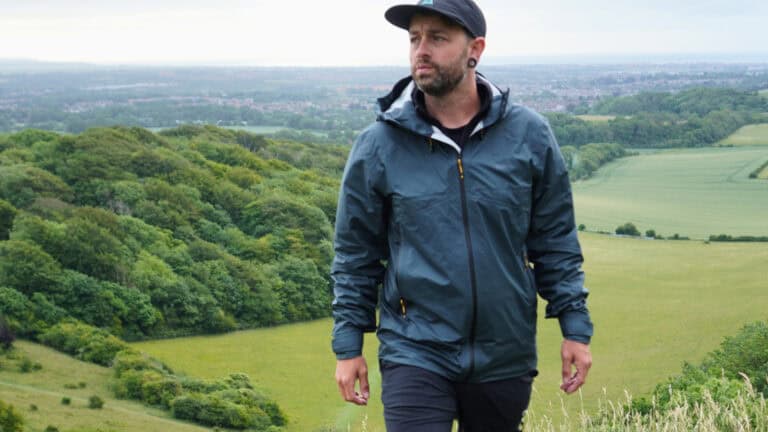
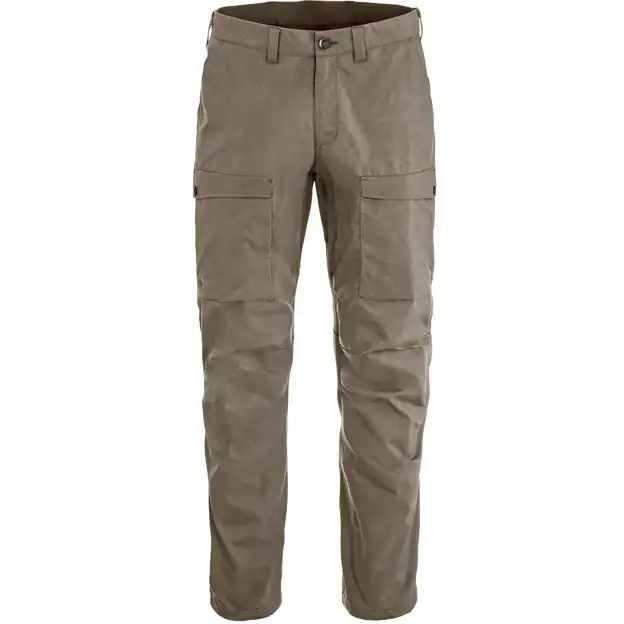
The Fjällräven Abisko Hybrid Trail Trousers combine the brand’s waxable G-1000 canvas on the front with stretch panels on the back, so you get tough, weather-resistant fronts and the freedom of movement of a softshell in one lightweight trekking trouser.
Thanks for your support – I may earn a small commission from affiliate links in this article Learn more
Fjällräven gifted the Abisko Hybrid Trail Trousers for review. All opinions are my own.
- Comfort/Mobility
- Weather Protection
- Breathability
- Durability
My Verdict
A lightweight trekking trouser with a tough front and a stretchy back. They move with you on high steps and scrambles, the thigh vents take the edge off on a hot climb, and the small details (the adjustable cuffs, the boot hook, the zipped leg pocket) are well thought out. The water resistance depends on you waxing the front panels, though, and that’s an ongoing job rather than a one-off. At £195 they’re far from cheap, but I’d say they justify it if you want one pair of hiking trousers to cover most of the year.
Pros
Cons
Where to Buy
Abisko Hybrid Trail Trousers
My Verdict: “A lightweight trekking trouser with a tough G-1000 front and a stretchy back. At just 310g, they’re comfortable all day and move freely with every step.”
The Abisko Hybrid Trail is the lighter, more flexible option in Fjällräven’s trekking trouser range, sitting below the heavier, more reinforced Keb. The idea is a split: G-1000 Lite Stretch on the front panels, where you want weather resistance and abrasion protection, and a stretch polyamide-elastane fabric across the rear and inner thighs, where you want movement. They come in four leg lengths from 76cm to 91cm and EU sizes 42 to 62. I tested the men’s version in a UK 30″ waist and 30″ leg.
Full Specifications
Price: £195
Weight: 310g (size 50)
Fit: Regular fit, mid waist with elastic waistband
Leg lengths: Short 76cm, Regular 81cm, Long 86cm, Raw 91cm
Sizes: EU 42–62 (UK 28″–46″)
Pockets: 4
Front: G-1000 Lite Stretch, 52% recycled polyester, 13% polyester (T400), 35% organic cotton / Back: 88% recycled polyamide, 12% elastane / Zipped side ventilation / Pre-shaped knees / Boot hook / Zipped fly with button closure / Belt loops / Compatible with Greenland Wax

How I Tested Them
I’ve been wearing these for about a month. They started out on a Great Glen canoe trip in late August, where I’d packed them mainly for protection from the midges whilst in camp during the evenings and mornings, but they soon ended up on my legs for hikes too: a trail near Dunkeld, then Aira Force near Ullswater in the Lake District on the drive home to break up the journey. (If you’re planning a similar trip, my multi-day canoe kit list covers what else came with me.)
Since then, with summer turning to autumn, they’ve replaced shorts on my early hikes near home and on a day hike across Ashdown Forest.
How Much Freedom of Movement Do the Abisko Hybrid Trail Trousers Give You?
A lot. For me, this is where they really come into their own. The stretch panels run across the rear and inner thighs, and they’re noticeably stretchier than the G-1000 on the front. I notice them most when climbing over rocks or taking a big step up with my knee lifted high. The fabric gives with the movement rather than fighting it.
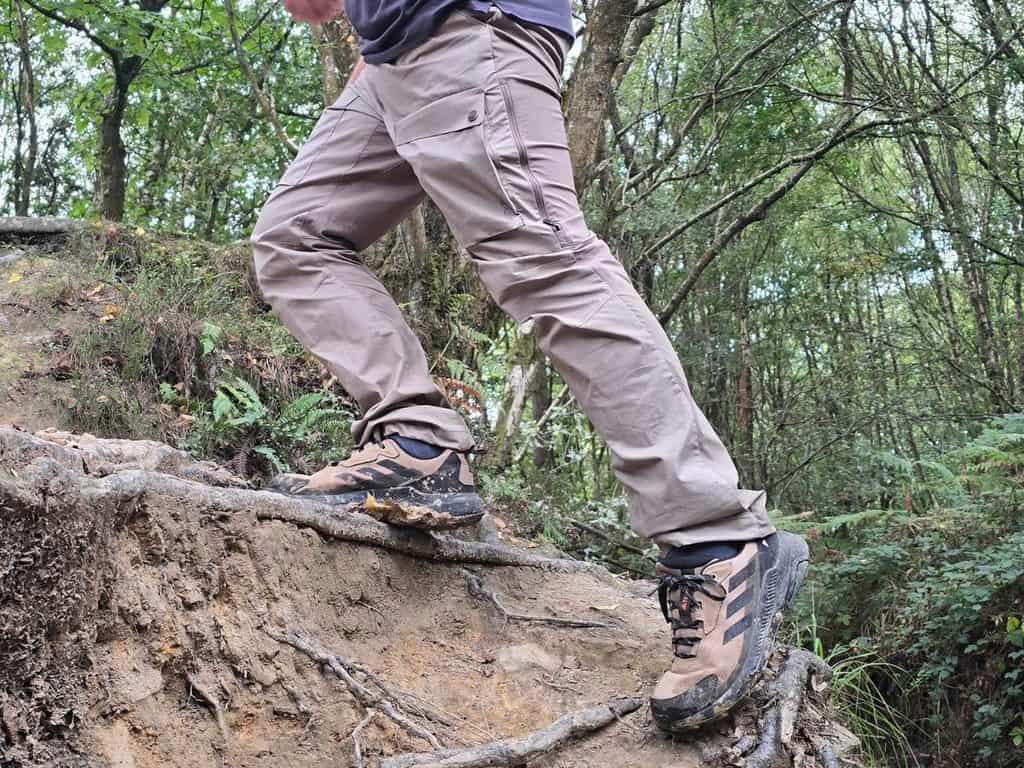
The reason is simple. G-1000 is a dense, woven canvas, and even the “Lite Stretch” version only gives a little. Putting the elastane-rich fabric at the seat and inner thighs puts the stretch exactly where a hiking trouser gets pulled tight on a high step, while the front stays tough. Fjällräven say the hybrid construction gives you “freedom of movement”, and from my experience that’s fair.
First impressions were a bit different. Out of the bag, they felt slightly stiff, which is typical of G-1000. That wore off quickly, though, and they’ve become a really comfortable pair of trousers.
How Do the Fjällräven Abisko Hybrid Trail Trousers Fit?
I’m 163cm, and trousers are almost always too long for me, so small details like adjustable cuffs are always appreciated. I ordered a 30″ waist and 30″ leg, and they came up true to size.
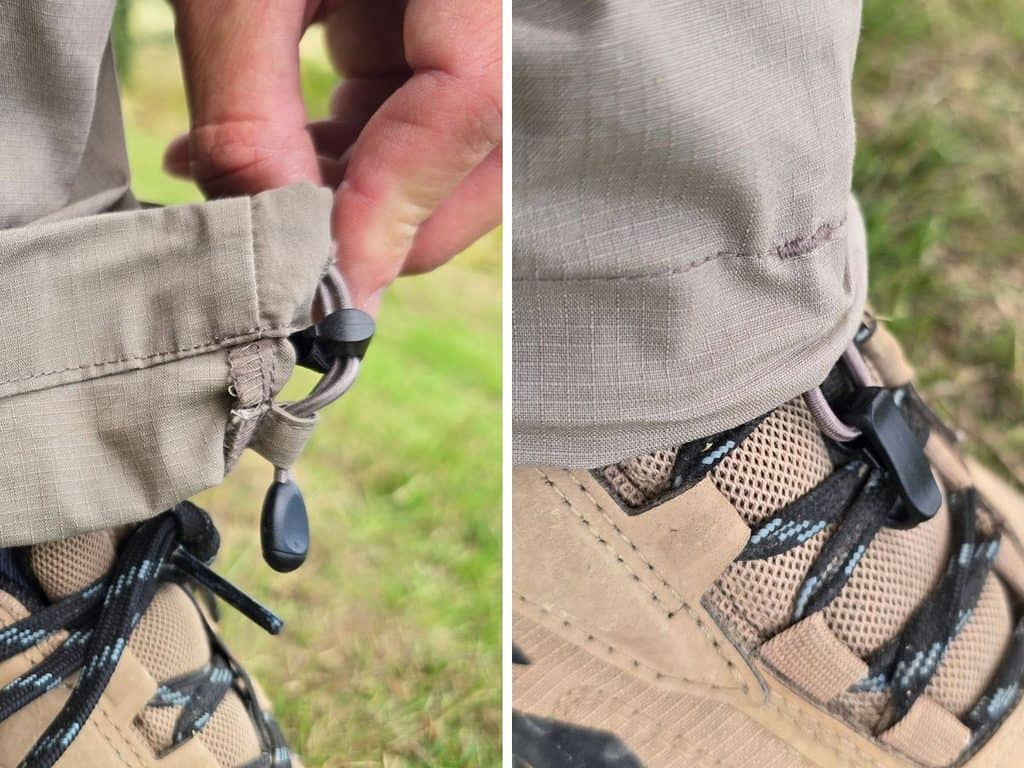
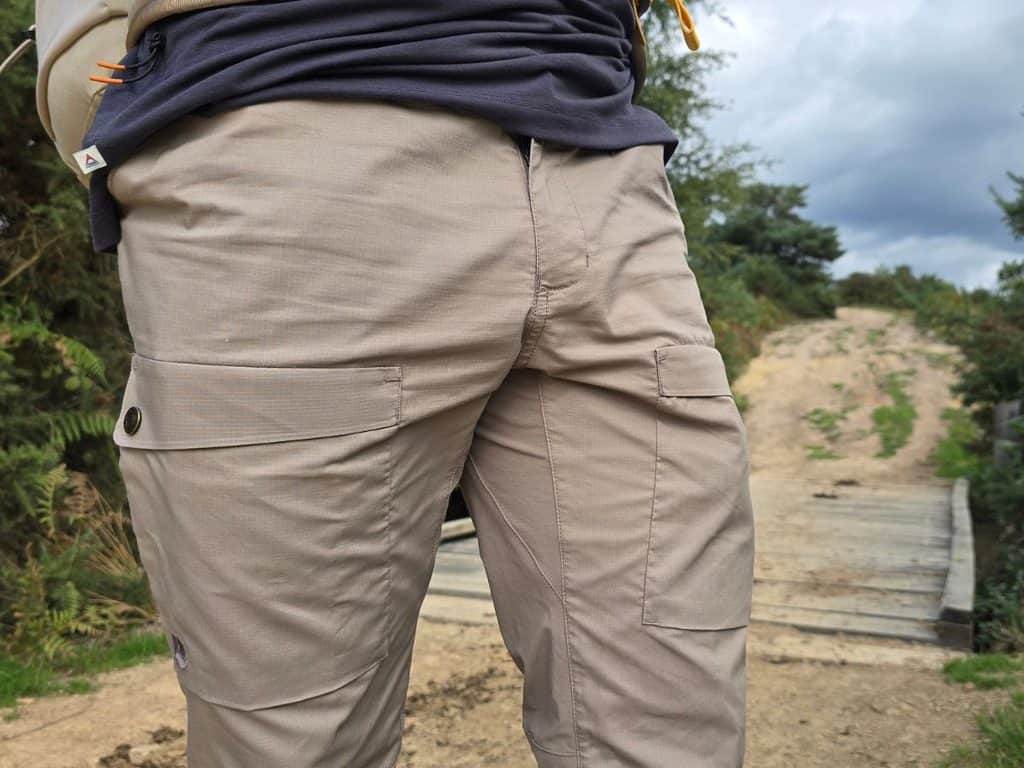
The toggled cuffs let me cinch each leg in slightly, enough to stop me from stepping on the hem while walking round camp in socks, and it stays put once set. There’s also a small hook on the hem that clips over your bootlaces, so the leg doesn’t ride up over the top of your boot on a steep climb.
The leg has a slight taper towards the ankle, which keeps the hem neat over boots. I didn’t find it restrictive at all, but I’m a regular build. Some buyers with more muscular legs report it feeling a bit snug, so it may be worth trying a size up if that’s you.
The elasticated waistband with a popper fastening holds its fit through a full day without digging in, and there are belt loops if you want a firmer hold. There are four pockets: two open hand pockets and two poppered leg pockets, one of which is also zipped – great for keys or loose change. Both leg pockets fit my Samsung Galaxy S24 Ultra, though I’ve found the hand pockets more comfortable for the phone day to day.
Are the Abisko Hybrid Trail Trousers Breathable?
Yes, within limits. The zipped side vents run about 20cm up each outer thigh, and when you unzip them you feel the airflow straight away.
The climb alongside the falls at Aira Force was where I put them to the test. It was warm, it’s a steady uphill, and I found myself overheating a little as I went. Opening the vents didn’t stop that entirely, but it took the edge off and made the rest of the climb noticeably more comfortable.

Now that it’s Autumn – that time of year when it’s hard to know what to wear, with the weather changing from one hour to the next. Being able to open up and cool down in seconds, then zip back up when the wind picks up, has been really useful.
Are the Fjällräven Abisko Hybrid Trail Trousers Waterproof?
No. They’re water resistant, not waterproof. Fjällräven describes the front as water resistant and “adaptable with Greenland Wax”. The fabric comes with a PFAS-free water-repellent finish from the factory, and the wax is how you boost it.
I haven’t worn them out on a rainy day yet, so I can’t comment on how they cope with a real downpour. I did run a quick test in my back garden, though, using a hose.
I’ll be honest, it was quite hard to find a setting that matched real rainfall. I went with the mist setting and stood in front of the spray, turning to wet both the front and the back. The fabric was overwhelmed fairly quickly, and water started seeping through. That being said, I think the water was far more intense than you’d get from light rain. It was more like a heavy downpour, so I wouldn’t read too much into it beyond this: out of the box, these aren’t trousers for heavy rain.

The upside is how quickly they dry. After the garden test, I hung them on the line in the sun, and they were pretty much dry again within 20 minutes. That’s the lightweight fabric at work, and it means a heavy shower mid-hike shouldn’t leave you in soggy trousers for the rest of the day.
If you want them to cope better with wet weather, I’d try waxing the front panels (more on that below).
For long days in steady rain, I’d plan on a pair of overtrousers in your pack. I’ve reviewed the Berghaus Maitland Gore-Tex overtrousers here, plus a good shell on top matters just as much. My guide to the best Gore-Tex jackets covers that side of things too.
What Is Greenland Wax and How Does It Help?
I haven’t waxed my pair yet, so this is how it works rather than how it performed for me. Greenland Wax is Fjällräven’s own block of paraffin and beeswax. You rub it onto the G-1000 front panels, then warm it with a hairdryer or an iron on a low setting so it melts into the weave. The wax fills the gaps between the fibres, so water beads and rolls off rather than soaking in, and the fabric also blocks the wind better.
The nice part is you control it. You can wax more heavily on the areas that take the most rain and wet grass, like the knees and the fronts of the thighs, and go lighter elsewhere. The trade-off is breathability: the more wax you add, the less air gets through. It only works on the G-1000 panels, not the stretch fabric on the back. It also wears off with use and washing, so you’ll need to reapply it every so often.
How Durable Are the Abisko Hybrid Trail Trousers?
So far, very. After a month of hiking, sitting on rocky beaches and walking through woodland, they’ve shrugged off scuffs and scratches without a visible mark.
That’s largely down to the G-1000. It’s a tightly woven polyester and cotton canvas, which is why it copes with rough rock and sharp vegetation better than the thin nylon of a lot of lightweight walking trousers.

A month is early days, though. If anything wears first, I’d expect it to be the stretch fabric on the back, since stretchy fabrics are generally less resistant to abrasion than canvas, and the seat takes a lot of it when you sit. I’ll update this after a winter of use.
Alternatives to the Fjällräven Abisko Hybrid Trail Trousers
If you go off the beaten track a lot, the Fjällräven Keb Trousers (£200) are the burlier option, with reinforcement at the knees, seat and pockets. That comes at a cost in weight, though: 697g against the Abisko’s 310g.
At the other end of the price scale, the Craghoppers Kiwi Pro Trousers are a popular budget choice at around £35, with stretch fabric and insect protection, though without the G-1000 front or the option to wax it. And if you mostly walk in wet weather, pairing a lightweight trouser like this with a set of waterproof overtrousers will keep you drier in sustained rain than any wax treatment.
Should You Buy the Fjällräven Abisko Hybrid Trail Trousers?
If you want one pair of trekking trousers for most of the year, I’d say yes. They suit hikers who move about a lot and want something light and comfortable that still copes with scuffs and changeable weather.
If you regularly hike in sustained rain and don’t want to wax anything, look at waterproof overtrousers instead, or pair these with a set. If you’re rough on your kit and often off-trail, the heavier Keb is the better bet. For more options, my hiking clothing and footwear section has the rest of my reviews.
At £195, they’re far from the cheapest walking trousers out there. That being said, you’re paying for a thought-out design that’s light, stretchy and tough, and that should last.
Where to Buy
Abisko Hybrid Trail Trousers
My Verdict: “A lightweight trekking trouser with a tough G-1000 front and a stretchy back. At just 310g, they’re comfortable all day and move freely with every step.”
Related Guides & Reviews
The resources below cover the basics, common questions, and related kit to help you get more out of your time outdoors.
- The Ultimate Hiking Equipment List: Hiking Gear Checklist
- Best Waterproof Hiking Boots UK Buying Guide
- How to Choose the Right Hiking Boots for UK Weather

Steve Cleverdon
Adventure-driven outdoor gear reviewer and paddleboarder, Steve has spent 20 years exploring rivers, coastlines, and trails across Britain and abroad, sharing what he’s learned along the way. Learn more about Steve or get in touch.