Falling off your paddleboard isn’t a sign you’re doing something wrong — it’s part of the sport, and every paddler, beginner or experienced, ends up in the water sooner or later.
Knowing how to fall safely and get back on with confidence makes a bigger difference to your enjoyment of SUP than almost anything else you’ll learn early on. This guide covers how to fall, how to remount using the technique that suits you, and what to do if you can’t get back on straight away.
As an affiliate, I may earn a small commission if you buy through links on this page — at no extra cost to you. Learn more here
How to Fall Off a Paddle Board Safely
When you feel yourself losing balance and a fall is coming, what you do in that second or two matters.
- Push away from the board. Don’t try to catch yourself on it — landing on a hard or even an inflatable board can bruise or injure you. Aim to fall to the side, front, or back, clear of the deck.
- Fall flat, not headfirst. Land on your side or back rather than diving in. This spreads the impact and protects your head and neck, and avoids any risk from water that’s shallower than it looks.
- Try to hold onto your paddle if you can. It’s one less thing to retrieve afterwards, though don’t force it if letting go is what keeps you safe — a sprained wrist from gripping a paddle awkwardly during a fall isn’t worth it.
- Watch for your board on the way down. If you’re using a leash, the board can spring back towards you, particularly with a coiled leash. Get your hands up in front of your face as you surface, just in case.
- Lower your centre of gravity first if you can. If you feel a wobble building rather than a full loss of balance, bending your knees and dropping into a squat will often recover your balance before you fall at all.
How to Get Back on a Paddle Board
There’s more than one way to remount, and the right one depends on your build, the board, and the conditions. Try these in calm, shallow water first so you know which works for you before you need it for real.
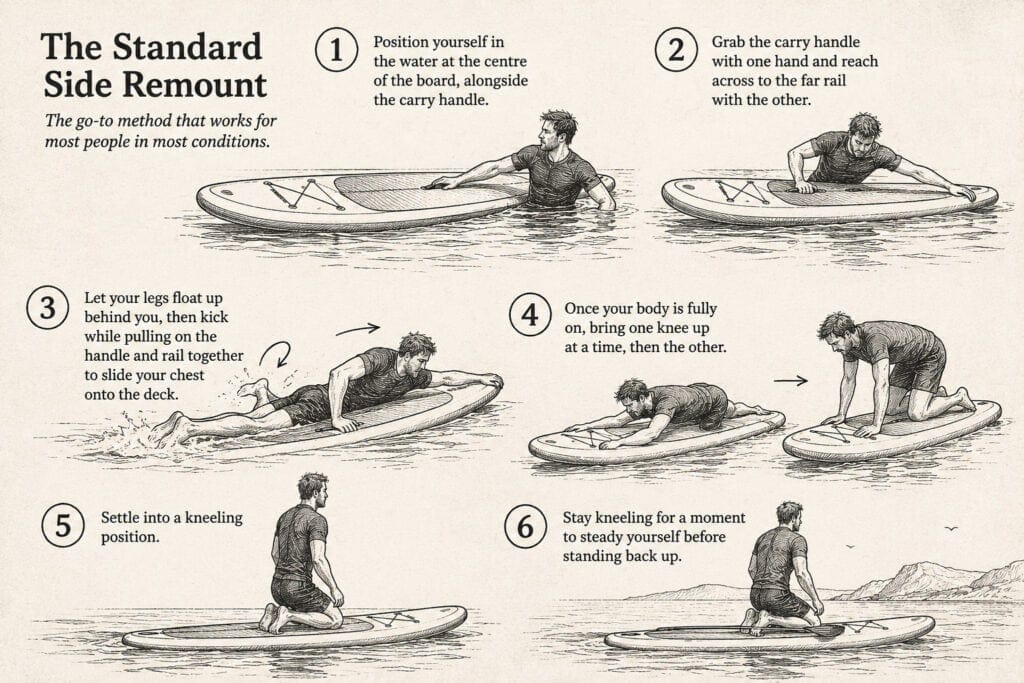
The standard side remount
This is the method that works for most people in most conditions.
- Position yourself in the water at the centre of the board, alongside the carry handle.
- Grab the carry handle with one hand and reach across to the far rail with the other.
- Let your legs float up behind you, then kick while pulling on the handle and rail together to slide your chest onto the deck.
- Once your body is fully on, bring one knee up at a time, then the other, before settling into a kneeling position.
- Stay kneeling for a moment to steady yourself before standing back up.
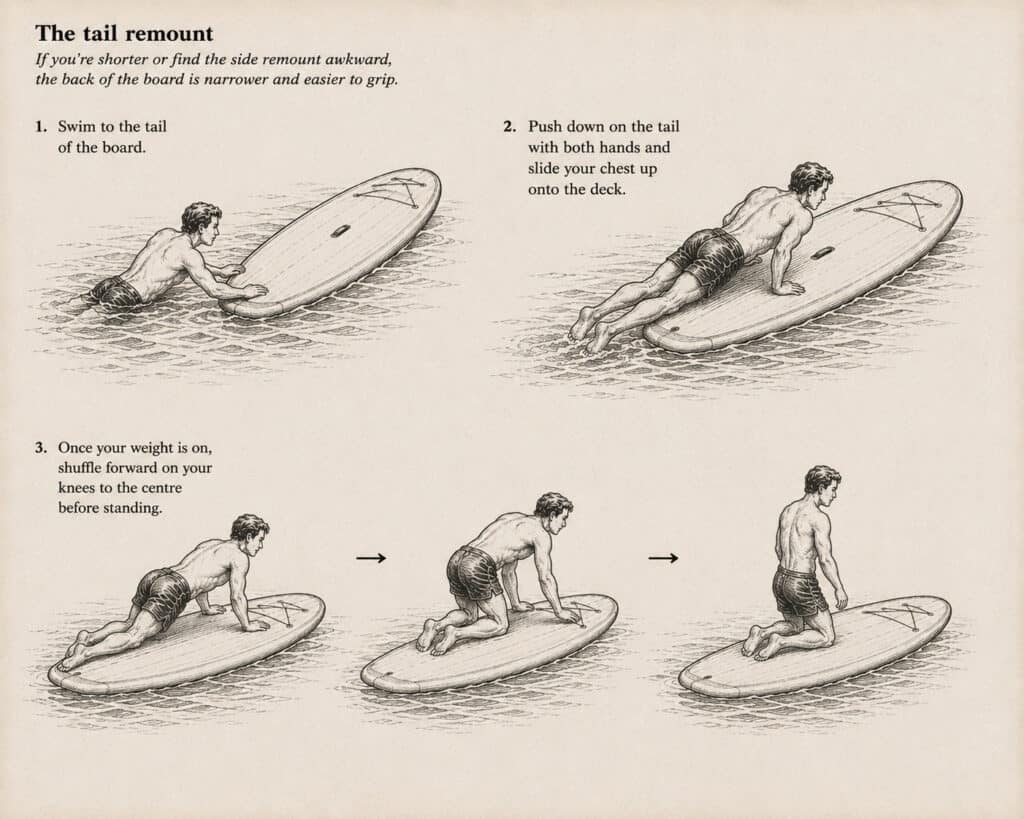
The tail remount
If you’re shorter or find the side remount awkward, the back of the board is narrower and easier to grip.
- Swim to the tail of the board.
- Push down on the tail with both hands and slide your chest up onto the deck.
- Once your weight is on, shuffle forward on your knees to the centre before standing.
The knee climb (for limited upper body strength)
A more accessible option if pulling your full bodyweight up isn’t comfortable.
- Position yourself alongside the board, near the centre.
- Rather than pulling your chest straight up, bring one knee onto the deck first, using the rail for support.
- Use that knee as leverage to bring the rest of your body up, rather than relying purely on arm strength.
Think of it as if you were climbing over a wall – swinging one leg up on the top of the wall to assist you in pulling the rest of your body weight up.
Common Mistakes When Falling and Remounting
- Diving in headfirst. Always avoid this, even in water you think is deep enough — you can’t always see what’s beneath the surface.
- Climbing on facing into the wind. In any breeze, try to remount facing downwind (wind at your back). Climbing on facing the wind can catch the board and flip you straight back in.
- Panicking and flailing. This burns energy fast and makes the climb back on harder, not easier. Pause, get your breath, and remount deliberately.
- Wearing a leash in moving water. A leash is essential on flat water, but in rivers or anywhere with current, a standard ankle leash can catch on obstacles. Use a quick-release waist leash designed for moving water instead, or skip the leash entirely in genuinely fast-moving conditions.
Cold Water Shock: What UK Paddlers Need to Know
This is the part most SUP guides skip, and it’s one of the most important safety points for paddling in the UK. Cold water shock can hit even strong swimmers and isn’t related to fitness — it’s an involuntary gasp reflex triggered by sudden cold immersion, and it’s a genuine risk outside the warmest summer months.
- Dress for the water temperature, not the air temperature. A warm, sunny day doesn’t mean the water is warm, especially in spring or early summer.
- A wetsuit or drysuit isn’t optional once you’re outside peak summer — water around the UK coast and in rivers stays cold for longer than most people expect.
- If you do fall into cold water, focus on controlling your breathing for the first 10-15 seconds rather than swimming hard or trying to remount immediately. The gasp reflex passes quickly if you stay calm.
If You Can’t Get Back On
Occasionally, a remount doesn’t go to plan, especially in choppy water or if you’re tired. If this happens:
- Stay with your board. It’s your biggest source of buoyancy and visibility to anyone who might be able to help. Don’t swim for shore and leave it behind unless the board itself is the hazard.
- Float on your back if you need to rest. This is the RNLI’s “float to live” advice — leaning back, keeping your airway clear, and letting your legs float up reduces the urge to thrash and conserves energy while you recover your breathing.
- Use a whistle or your phone (in a dry bag) to signal if you need help. This is one reason a dry bag with your phone in it earns its place on every paddle.
- Try a different remount technique. If the side remount isn’t working, switch to the tail or knee-climb method rather than repeating the same attempt and tiring yourself out further.
How to Fall Off a Paddle Board FAQs
Is it normal to fall off a paddle board a lot as a beginner?
Yes — it’s one of the most common parts of learning, and even experienced paddlers fall in regularly, particularly in rougher conditions.
Does a PFD help with getting back on the board?
Yes. Beyond the safety benefit, a buoyancy aid keeps you higher in the water, which makes the remount itself noticeably easier.
Should I wear a leash if I’m paddling on a river?
Use a quick-release waist leash designed for moving water, not a standard ankle leash, since ankle leashes can catch on obstacles in current.
How long does cold water shock last?
The initial gasp reflex typically passes within 10-15 seconds if you stay calm and focus on controlling your breathing rather than swimming hard immediately.
Internal link opportunities:
- How to Paddle Board (pillar — link both directions)
- Best Life Jackets for Paddle Boarding
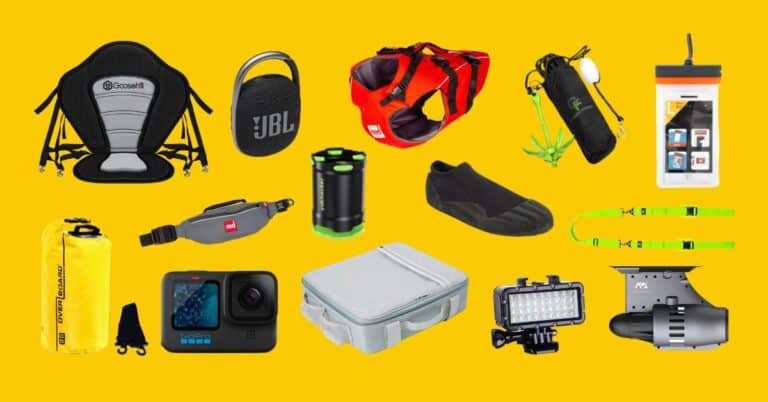
- Best Paddle Board Accessories (dry bags, leashes)
- Paddle boarding location guides (cold water seasonal context)
Related Guides & Reviews
The resources below cover the basics, common questions, and related kit to help you get more out of your time on the water.
- How To Paddle Board: Complete SUP Guide for Beginners
- Best Budget Paddle Boards in the UK
- Best Paddle Board Accessories: Best SUP Gear
- Best Paddle Board for Beginners UK: 8 Top SUPs Compared
- Bluefin Paddle Boards Compared: Complete Guide to Every Bluefin SUP

Steve Cleverdon
Adventure-driven outdoor gear reviewer and paddleboarder, Steve has spent 20 years exploring rivers, coastlines and trails across Britain and abroad, sharing what he’s learned along the way.
Learn more about Steve or get in touch.