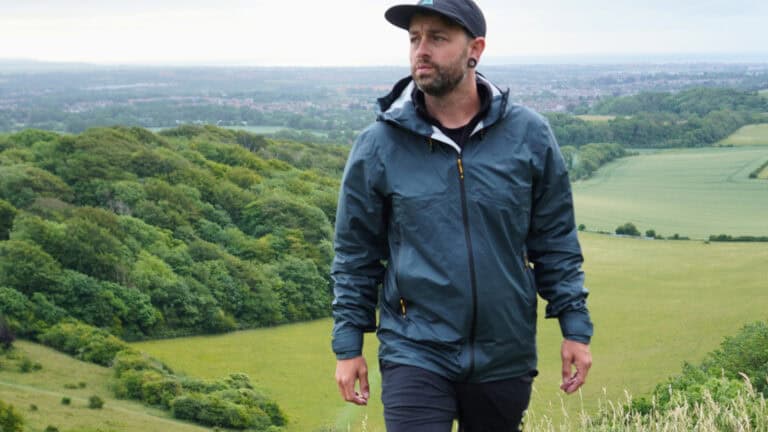
Raven Crag walk has been on my bucket list for a while now — ever since my first trip to the Lake District, a friend and I camped at a small campsite right at the end of Thirlmere reservoir. We spent the week camping at the base of Raven Crag with absolutely no idea that the infamous viewpoint sat directly behind us the entire time.
Ever since I found that out, I’ve been meaning to go back and fix it. So when the chance came for an impromptu overnight in the fells, I packed a bag and headed up Raven Crag early evening, aiming to catch the sunset from the top and camp out under the stars.
This article contains affiliate links. If you buy through them, I may earn a commission at no extra cost to you. Learn more here
Quick Facts
- Location: West side of Thirlmere, just south of Keswick (A591 corridor)
- Distance: Approximately 1.6 km each way (out-and-back)
- Ascent time: 30–45 minutes for most walkers; allow longer with a heavy pack
- Summit feature: Wooden steps, boardwalk, and a viewing platform above the crag
- Parking: Small lay-by near the trailhead, space for around 4–5 vehicles
- Difficulty: Short but steep; suitable for beginners with reasonable fitness
- Dog-friendly: Yes, but keep dogs on a lead near the exposed crag edges
- Best for: Sunset views and a quick high-reward hike
Route Map
The map below shows the direct route from the parking lay-by at the northern end of Thirlmere up to the viewing platform on Raven Crag. It’s a straightforward out-and-back with no navigation challenges — but it’s useful to get a feel for the terrain and elevation gain before you set off.
A Little Background on Raven Crag
Raven Crag is a fell in the English Lake District, sitting on the western shore of Thirlmere and forming part of the Central Fells ridge. It’s a relatively modest summit in terms of height, but what it lacks in altitude it makes up for in drama — the crag face drops away sharply, and the viewpoint at the top gives you a sweeping, uninterrupted look down the length of the reservoir with the Helvellyn range rising beyond.
The fell is largely forested — part of Thirlmere Forest — with the exposed rocky face near the top being the main feature. On the same ridge, you’ll find subsidiary tops including The Benn (also known as Benn Man or Sippling Crag) and Castle Crag, a hillfort summit in Shoulthwaite. These make useful extensions if you want a longer day out rather than a straight up-and-back.
Thirlmere itself has an interesting history worth knowing. The reservoir was created in the late 19th century as part of a Manchester Corporation water supply scheme, with the valley flooded and the original villages submerged. The long, narrow shape of the reservoir — and the dense plantation forestry along its banks — gives the area a slightly more dramatic, almost alpine feel compared to other parts of the Lakes.
Getting There & Parking
Raven Crag is easy to reach. From Keswick, head south on the A591 — the main road that runs alongside Thirlmere — and you’re looking for the northern end of the reservoir. The trailhead is on the western side, and you’ll find a small lay-by directly opposite the start of the path. It fits around four or five vehicles if people park sensibly, but it fills up quickly on busy days. Get there early if you’re visiting in peak season, and make sure you don’t block any forest tracks or gates.
The trail begins literally across the road from the parking. Nice and simple!
Raven Crag Walk – The Ascent
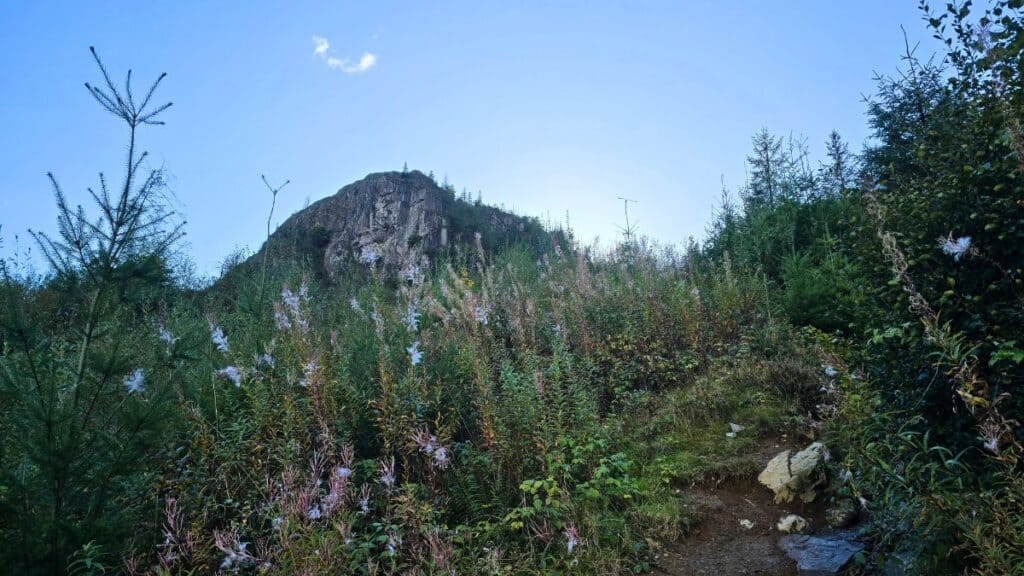
I walked this route within 24 hours of a yellow rain warning. The sky had cleared by the time I set off, but the path itself was still sodden. In places, it had turned into a narrow stream, and there were sections where you were stepping around rather than through the water. Good boots are non-negotiable here; trail shoes in wet conditions would not be an enjoyable experience.
The first stretch climbs steeply through woodland on a rocky path. It’s not technical, but it’s sustained, and the tree cover means you don’t get much of a view to motivate you until you’re higher up. Keep going until the path levels slightly and widens onto a broader forest track. From here, you’ll see steps directly opposite — take those, and you’re heading into the next section above the tree line.
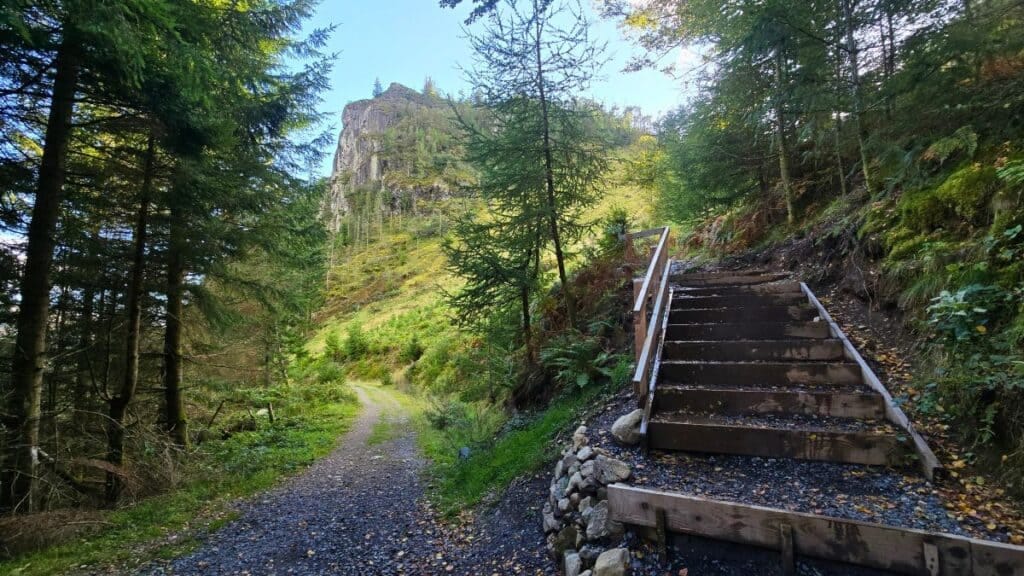
This open section is where things start to open up. You get the first glimpses of Thirlmere below, framed by the surrounding fells, and the gradient eases just enough to let you stop and take it in. Follow the path until you reach a gate. Pass through it, then take an immediate left through a second gate — this is a slightly confusing junction the first time, so pay attention. From here, the final push to the summit begins.
The path gets steeper again near the top and transitions into wooden steps and a boardwalk, which eventually delivers you to the viewing platform at the brink of Raven Crag.
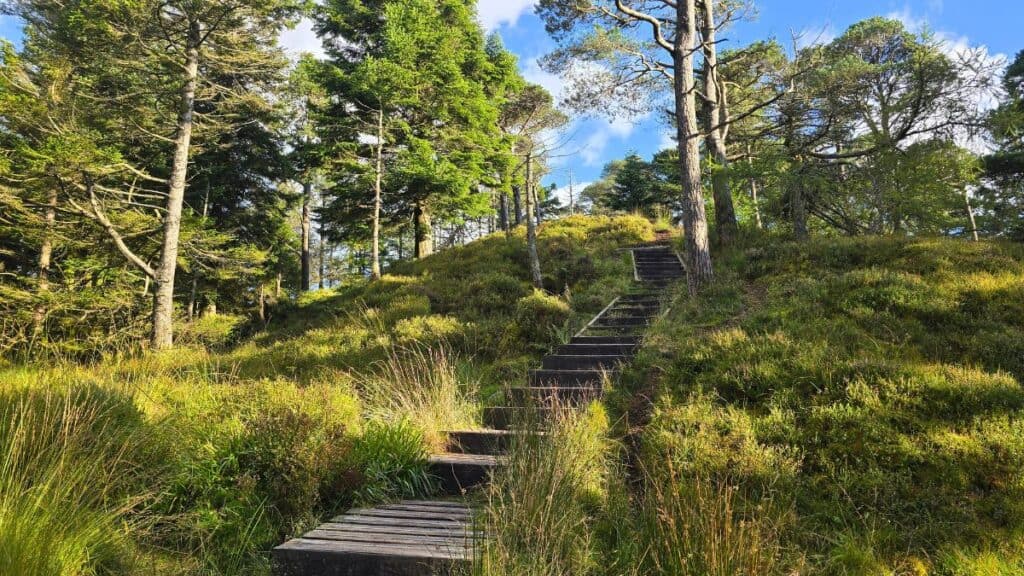
The route is only around 1 km, and most walkers are up in 30–45 minutes. I was carrying a heavier pack than necessary — last-minute packing decisions were made — so it took me closer to 45 minutes. If you’re heading up with overnight kit, factor in a bit of extra time and don’t underestimate how much a loaded pack changes the feel of even a short climb.
The Summit & Views
Standing on the viewing platform at the top of Raven Crag, you get the full payoff. Thirlmere stretches out below you in its entirety — long and narrow, dark and still — with the Helvellyn ridge rising behind it and the wider Central Fells fanning out in every direction. On a clear evening, when the light is doing what Lake District light sometimes does, it’s genuinely breathtaking.
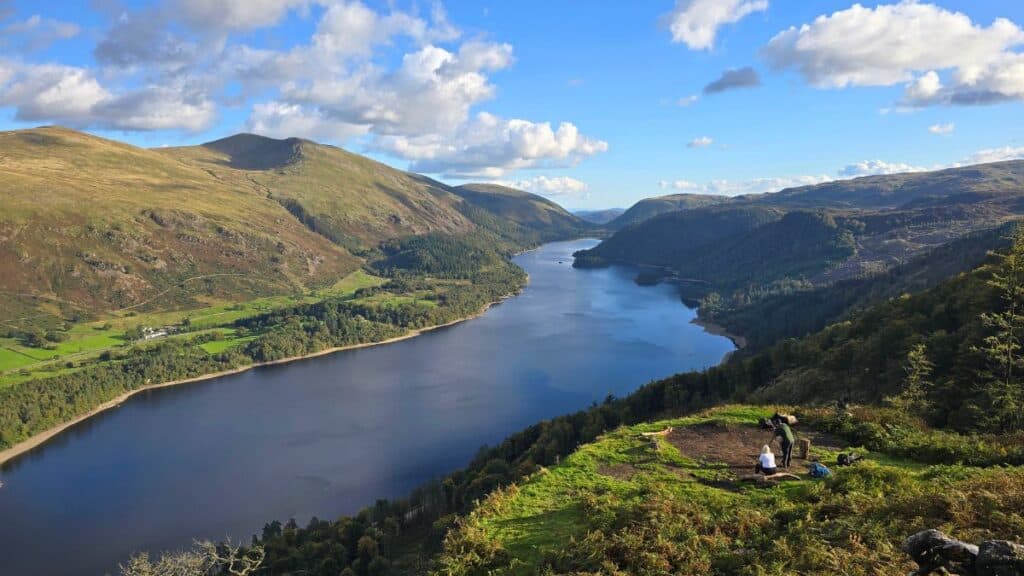
I arrived around 5pm and spent the next couple of hours watching the sun drop. The sunset colours were excellent — deep oranges and pinks reflecting off the water. Then, just before twilight, rain clouds started rolling in from the east, and as they arrived, they pulled a full rainbow across the fells opposite. It was one of those moments you don’t plan for and can’t quite believe you’re seeing.
Alternative Routes & Extensions
The standard out-and-back route is the most popular and the most direct, but there are options if you want a more substantial day. A circular loop incorporating The Benn (also known as Benn Man or Sippling Crag) and Castle Crag — a hillfort summit in the Shoulthwaite area — would make for a much longer and more interesting walk, with varied terrain and broader fell views.
I had planned to take this loop on my descent. I didn’t, because I had an eight-hour drive ahead of me and it was already 8am. But the intention was there, and it’s firmly on the list for next time. If you’re not under any time pressure, the circular option is worth doing.
For a longer day still, Raven Crag can be combined with other Thirlmere-side walks — Great How near the dam is a quick add-on, and the approach from Armboth via the ridge towards High Tove offers a more remote alternative to the standard ascent.
Wild Camping on Raven Crag
A word on legality first: wild camping in the Lake District is not technically permitted without landowner permission. In practice, it is widely tolerated — particularly on higher ground, and particularly if you follow Leave No Trace principles — but it’s not an official right, and if a landowner or ranger asks you to move on, you’re obliged to do so. Go in with that understanding.
Raven Crag is one of the more popular wild-camp spots in this part of the Lakes, which is both a recommendation and a warning. The views are genuinely excellent, and the location is accessible, which means it gets used a lot. Some hikers have noted that not everyone treats the site with the respect it deserves — litter is a recurring problem. If you camp here, set the standard: pack out absolutely everything, including any waste, and leave the site cleaner than you found it.
Pitches & Conditions
There are roughly five or six usable tent spaces spread across three or four areas near the summit. The largest area has the best views and is the most obvious choice — it was already taken when I arrived, which tells you something about how quickly it gets claimed.
The other pockets fit one tent, maybe two at a push. None of them are perfectly level, and in the wetter months, the flatter spots tend to be waterlogged and muddy. The drier ground is usually on a slope. I spent a decent amount of time deliberating before settling on a dry, sloping pitch over a flat, boggy one — dry and sloping won, and I spent part of the evening propping up my sleeping mat with random items from my pack until it was level enough to sleep on. It worked. Just about.
My Night on the Crag
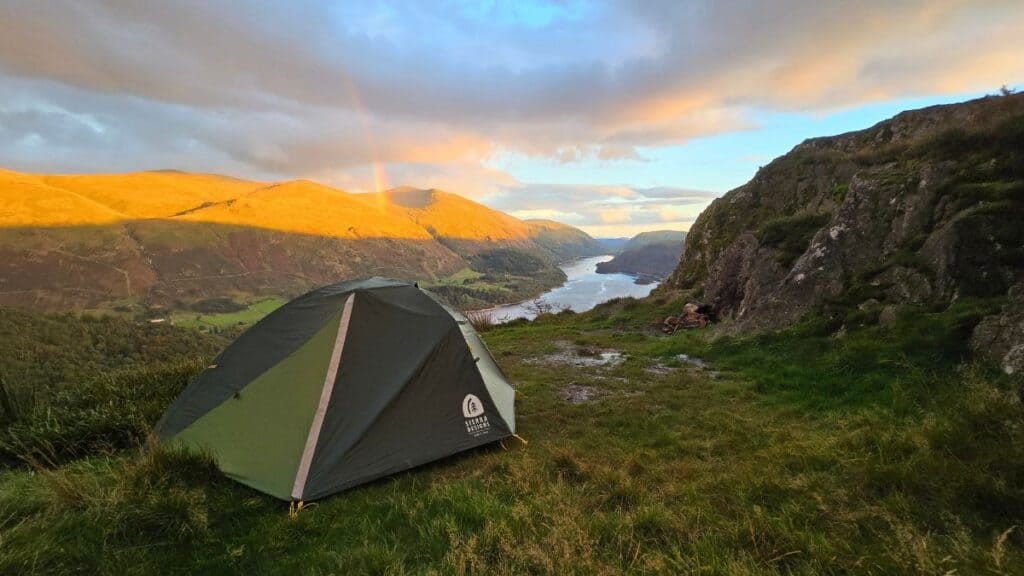
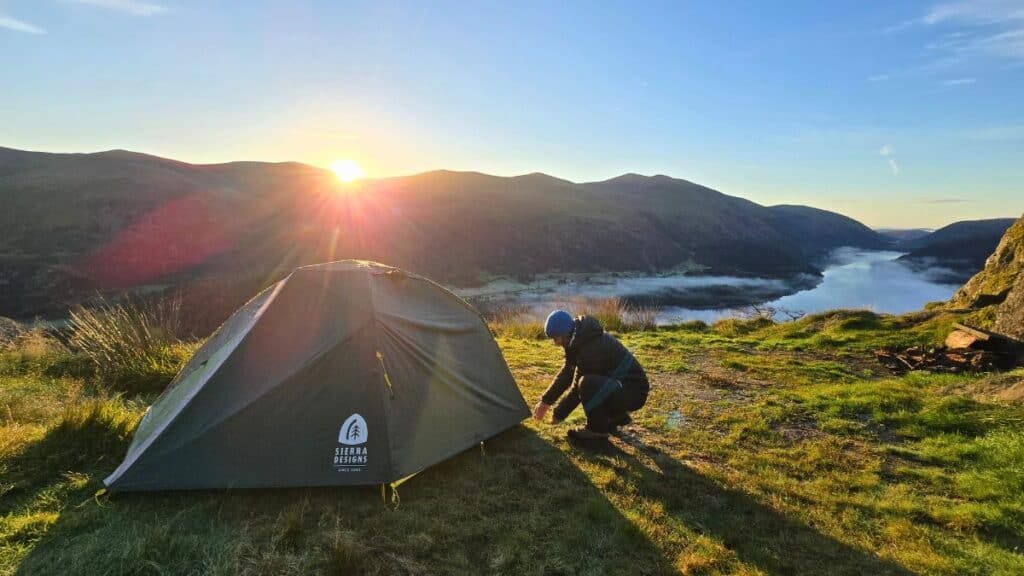
I arrived around 5pm and set up camp while watching the sunset unfold. Once the rain came in — properly, around 7pm — I retreated into the tent, cooked a pot of chicken tikka rice on the stove, made a coffee, and watched the last of the light drain from the sky through the tent door. It was exactly what you hope for from a night like this.
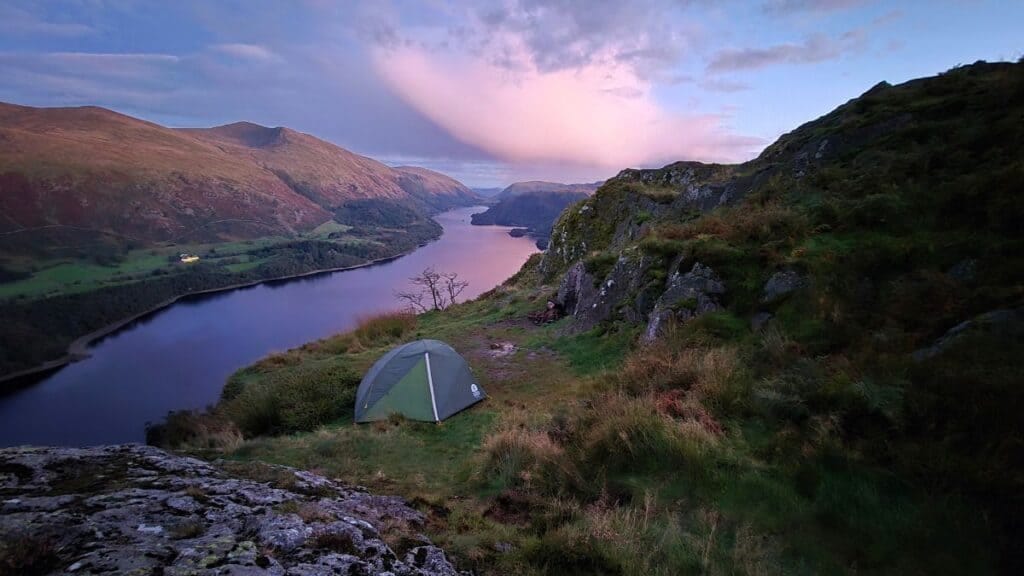
The overnight temperature dropped to around zero degrees. I was comfortable throughout, which I’ll credit directly to having just bought the Alpkit Pipedream 600 before the trip. It’s a sleeping bag I’d been meaning to get for a while, and the first night out in it — at 0°C on a sloping crag with a cold front rolling through — was a pretty solid test. It passed.
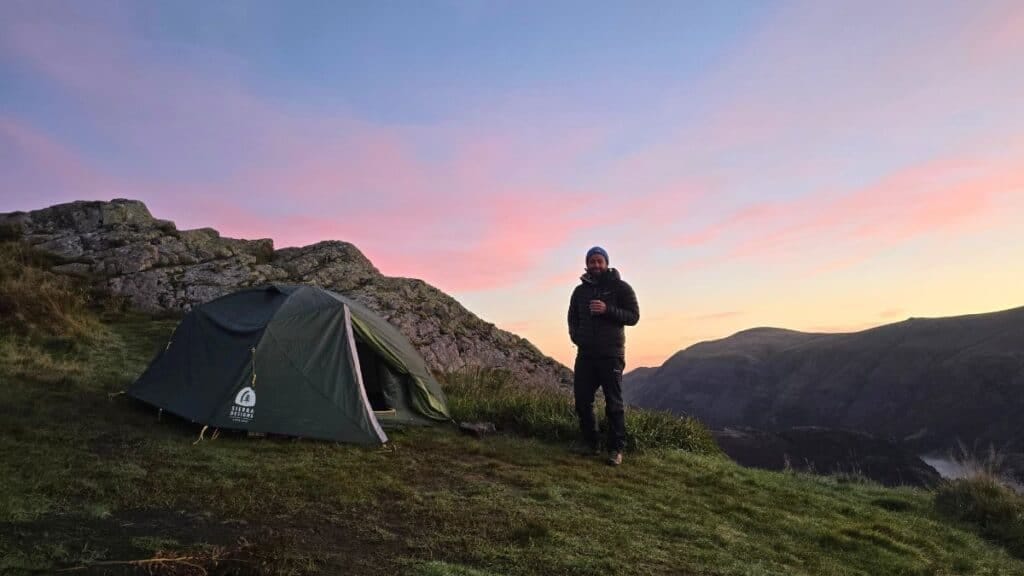
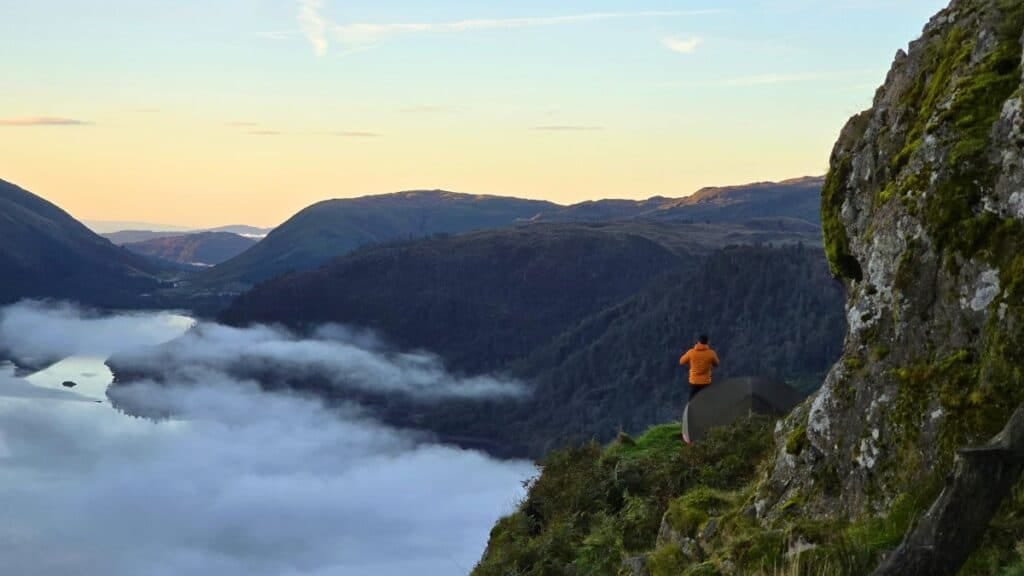
I woke around 6am as the first light started creeping up behind the fells. This is always the moment that makes wild camping worthwhile — that quiet early window where no one else is about and the whole landscape belongs to you.
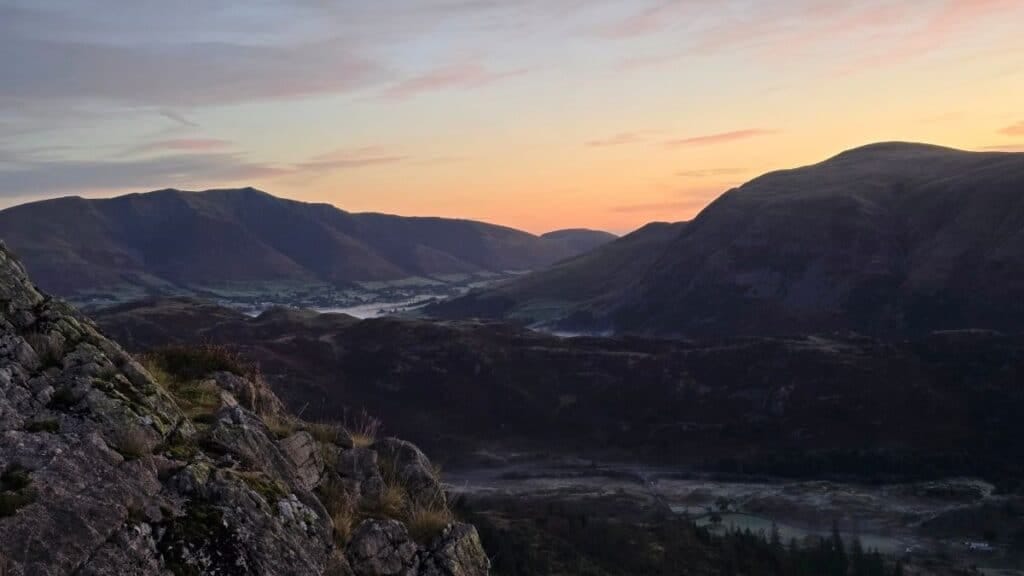
The morning sky was spectacular. I opened the tent door, put the stove on, and sat back with a coffee as the colours shifted across the reservoir below. Later came porridge, another coffee, and a slow pack-down that took longer than it should have because I kept stopping to look at the view.
I was away by 8am, back at the van shortly after, and on the road for the eight-hour drive home with a very good excuse for being tired.
Leave No Trace on Raven Crag
- Camp one night only; arrive late, leave early
- Use a small, muted-colour tent that blends in
- No fires or BBQs — ever
- Stay at least 70 metres from any water source
- Pack out all waste, including food scraps and sanitary items
- Keep group sizes small and noise low
- Move on immediately if asked to by a landowner or ranger
Nearby Walks & Local Amenities
Other Walks in the Area
- Great How — A short, easy fell near the Thirlmere dam with good reservoir views. A quick add-on if you’ve still got energy.
- High Rigg Ridge (St John’s in the Vale) — A brilliant low-fell ridge walk with big views towards Blencathra and the Helvellyn range. Various route options from 5–9 miles.
- Helvellyn from Swirls — The Thirlmere-side approach to Helvellyn is one of the quieter routes up the mountain. Swirls car park is a short drive south on the A591.
- Thirlmere Circular / Harrop Tarn — For something more gentle, a lakeside and woodland walk around Thirlmere or up to Harrop Tarn makes a good contrast to the steeper fell routes.
- The Benn & Castle Crag loop — The circular extension from Raven Crag described above; adds significant distance and interest for those with more time.
Keswick (North)
Keswick is around 10 minutes north on the A591 and is your main hub for everything: outdoor gear shops (including a large Alpkit, Cotswold Outdoor and a GO Outdoors), cafés, pubs, supermarkets, and fuel. If you’ve forgotten anything for your kit, Keswick will almost certainly have it. The town is also well worth an evening wander if you’re there before or after your hike.
Grasmere (South)
Head south on the A591 and Grasmere is around 20 minutes away. It’s a quieter, prettier village than Keswick — good for a post-hike coffee, the famous Sarah Nelson’s Grasmere Gingerbread, and a look around Dove Cottage if you’re that way inclined.
Swirls Car Park
A pay-and-display car park a short drive south on the A591, typically used as the Helvellyn trailhead. Seasonal toilets on site — useful to know if you’re spending a couple of days in the area.
What I Packed
This was last-minute, and my pack reflected it — heavier than necessary, but nothing was missing. Here’s roughly what I had:
- Sierra Designs Meteor 3000 – Lightweight tent (Read my review here)
- Alpkit Pipedream 600 sleeping bag
- Big Agnus Rapid SL sleeping mat
- Camping stove and gas canister
- Food ( I packed chicken tikka rice, instant porridge, and coffee)
- Black Diamond Spot 400 Headtorch
- Map and navigation app with offline Lakes maps downloaded
- Warm layers and a waterproof — always
- Rain cover for the pack
- Waste bags (everything leaves with you)
Practical Tips
- Arrive in the late afternoon and leave early morning — reduces your footprint and gives you the best light.
- Water sources near the summit are limited; carry what you need.
- The boardwalk and steps can be slippery in wet or icy conditions — poles are useful.
- In peak season, expect other campers on the crag. It’s a small, popular spot.
- Flat and waterlogged, or dry and sloping — those tend to be your pitch options in wetter months. Plan accordingly.
- The path runs like a stream after heavy rain. Waterproof boots, not just water-resistant ones.
Raven Crag Walk & Wildcamp FAQs
Related Guides & Reviews
The resources below cover the basics, common questions, and related kit to help you get more out of your time in the wild.
- Wild Camping: The Complete Beginner’s Guide
- Old Man of Coniston: Lake District Trail Guide
- Best Tents For Wild Camping
- Best Hammocks + Best Bivvy Bags
- Best Places for Wild Camping Wales, Scotland and The Lake District

About the Author
Steve Cleverdon is an outdoor adventure specialist with 15+ years of hiking, camping, and paddle boarding experience. He has conquered Europe’s toughest trails including the GR20 in Corsica, walked 3,000km solo across New Zealand, and worked professionally in the outdoors industry. Steve’s gear reviews and recommendations are based on real-world testing across four continents, from coastal waters to mountain peaks. Learn more about Steve or get in touch.