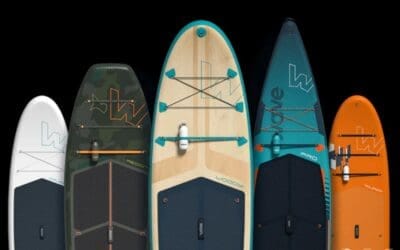
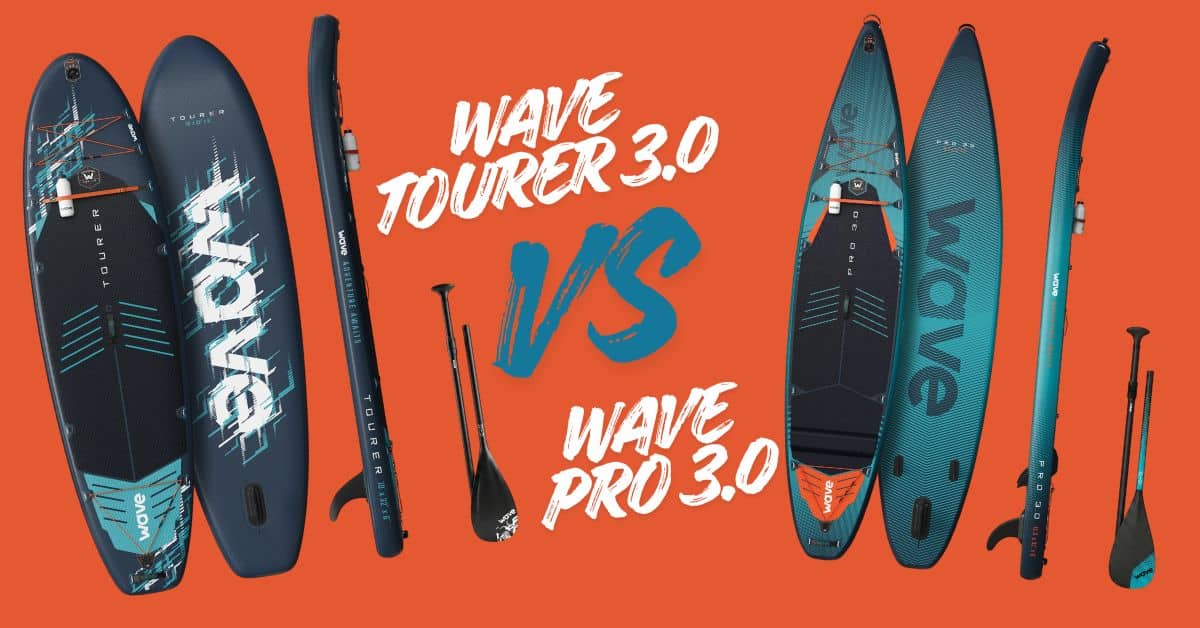
Wave makes some of the best-value inflatable paddleboards on the UK market right now. But if you’re trying to decide between the Tourer 3.0 and the Pro 3.0, the choice isn’t as obvious as the price difference might suggest. These two boards share more DNA than you’d expect — and the right one depends almost entirely on how and where you plan to paddle.
I’ve spent time on both boards across a range of conditions, and I’ve reviewed each one in detail on this site. This comparison pulls everything together to help you make the call. If you’re also weighing up the rest of the Wave range, my full Wave paddle boards comparison covers all their current models.
Whether you’re trying to choose between the Wave Tourer vs Wave Pro for the first time, or you’re upgrading from an older model, here’s everything you need to make the right call.
This article contains affiliate links. If you buy through them, I may earn a commission at no extra cost to you. Learn more here
At a Glance: Side-by-Side Comparison
| Wave Tourer 3.0 | Wave Pro 3.0 | |
|---|---|---|
| Length | 10’3″ or 11’3″ | 12’6″ |
| Width | 32″ (81cm) | 32″ (81cm) |
| Thickness | 6″ (15cm) | 6″ (15cm) |
| Weight | 8kg -8.7kg (10% lighter than 2.0) | 9.5kg |
| Max Capacity | 130–160kg | 199kg |
| Max PSI | 20 PSI | 20 PSI |
| Construction | Military-grade PVC + WST | Military-grade PVC + WST |
| Fin System | Single quick-release | Triple fin, quick-release |
| Paddle Included | Standard 3-piece | Carbon-fibre 3-piece |
| Pump | Double-action | Triple-action |
| Carry Bag | Padded backpack | Wheeled carry case + backpack |
| Price | £179.99–£189.99 | £269.99 |
| Best For | Beginners to intermediate | Intermediate to experienced |
| Steve’s Rating | 4.8/5 | 4.7/5 |
Unlock 10% off automatically when you click through my links
Key Differences Between the Tourer 3.0 and Pro 3.0
At first glance, both boards share the same width, the same construction technology, and the same 20 PSI inflation. They’re clearly from the same family. But dig a little deeper, and the differences are meaningful.
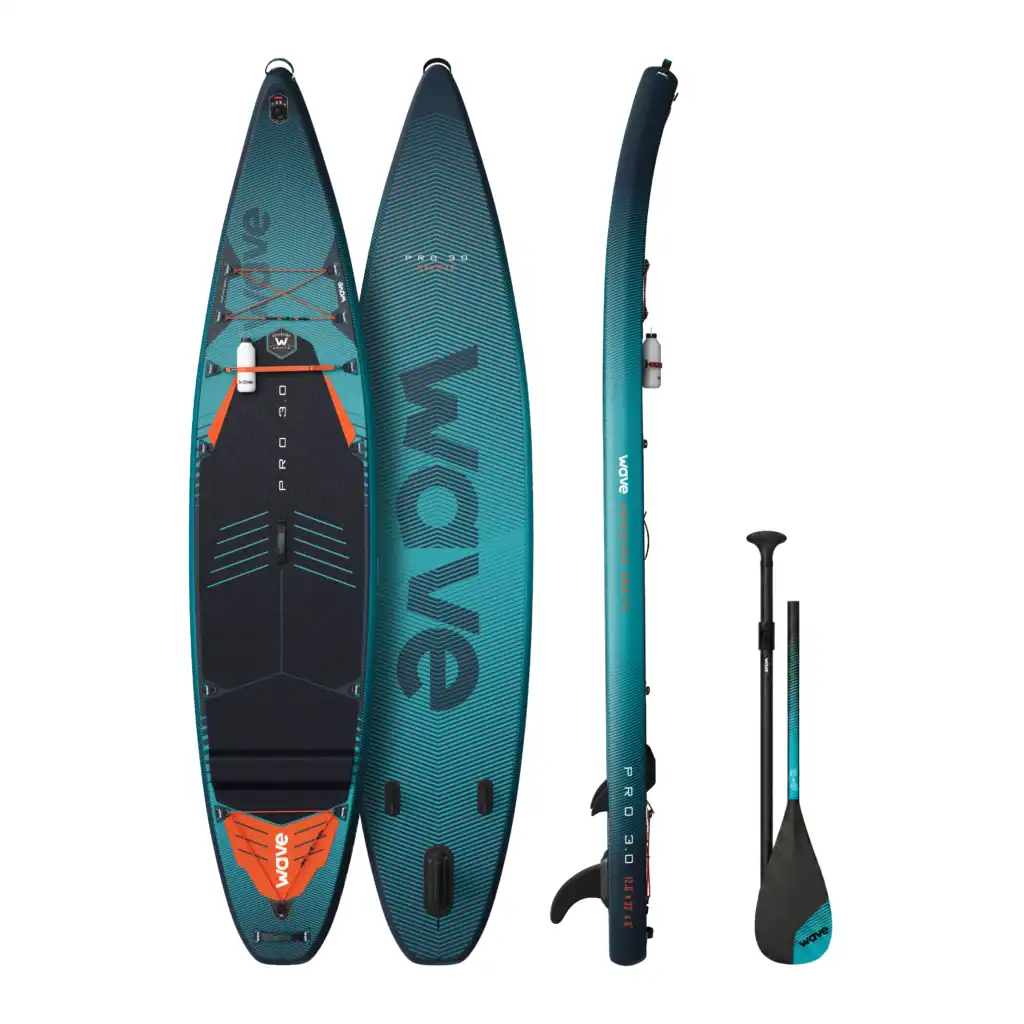
The biggest one is length. The Pro 3.0 is a full 12’6″ — that’s around 14 inches longer than the 11’3″ Tourer. On the water, that extra length translates directly into glide and tracking. It also means the Pro is a more committed board — less manoeuvrable, more directional, and better suited to paddlers who know where they’re going.
The second major difference is what comes in the box. The Pro 3.0 ships with a carbon-fibre paddle and a wheeled carry case, while the Tourer includes a standard paddle and a padded backpack. For an £80 price gap, that’s a reasonable trade-off — though as I’ll get to, the Pro’s wheeled bag has its issues.
Design and Build Quality
Both boards use Wave’s Welded Seam Technology (WST), which heat-fuses the military-grade PVC layers together rather than gluing them. The result is a stiffer, lighter construction than older drop-stitch designs, and both boards can be pumped to 20 PSI for a noticeably rigid ride.
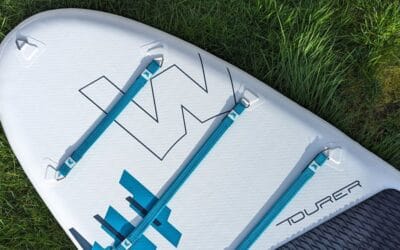
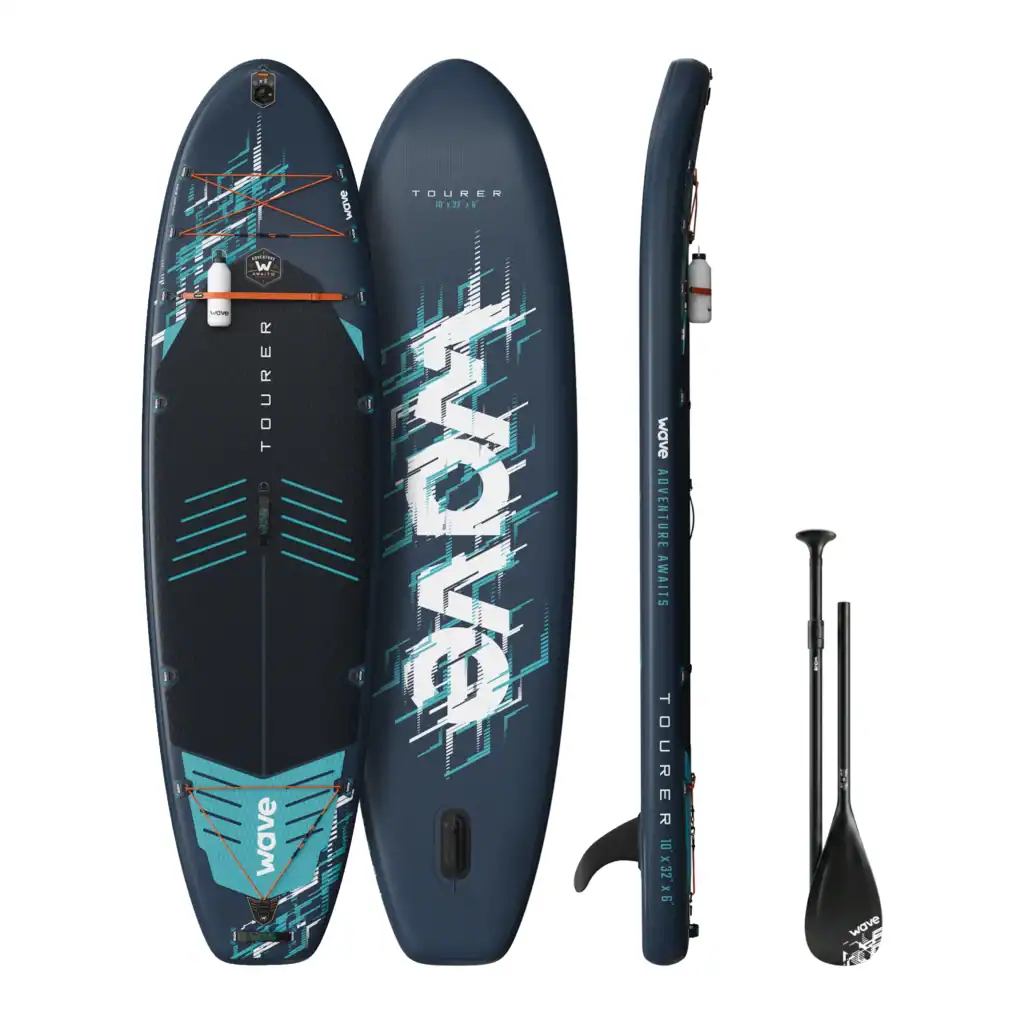
The Tourer 3.0 gets a 10% weight reduction over its predecessor, making it one of the lighter touring boards in this price range. The non-slip EVA deck pad uses a diamond-grooved design on both boards, and both feature D-ring attachments for bungee cords and mooring.
Where they differ slightly is in the fin setup. The Tourer runs a single quick-release fin — clean, simple, and tool-free. The Pro 3.0 runs a triple-fin system, which helps with tracking at speed. The main centre fin is a race-style design, though I did find the rear kicker is positioned slightly too far forward, which takes a little away from pivot turn performance.
Overall, the build quality on both boards is excellent for the price. These don’t feel budget in the hand.
Performance on the Water
This is where the two boards pull apart.
The Tourer 3.0 is a well-rounded board that handles lakes, rivers, and flat coastal water with ease. It’s stable, tracks reasonably well for its size, and inflates quickly to a rigid platform. If you’re doing casual touring, exploring calm waterways, or just getting more time on the water, it does the job without any fuss.
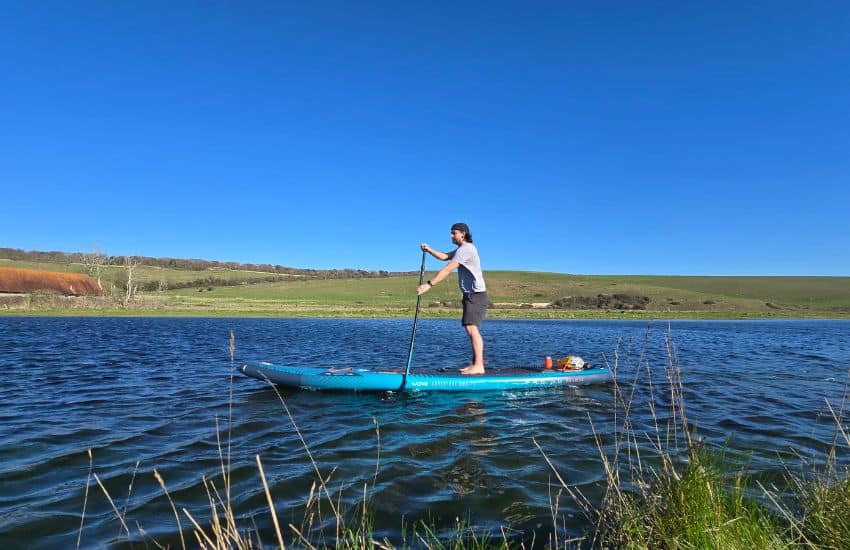
The Pro 3.0 is a noticeably different experience. The extra length and race-style tracking fin give it a smooth, efficient glide that rewards any paddler trying to cover real distance. Each stroke carries the board further, and maintaining a straight line takes less effort. It’s genuinely satisfying to paddle for longer stretches — you can feel the efficiency difference once you get up to pace.
That said, the Pro isn’t a board you’d choose for a tight estuary or a river with bends. It’s built for open water and distance, and that’s where it earns its stripes.
Stability and Who Each Board Suits
Both boards share a 32-inch width, so they’re closer than you’d expect in terms of stability. Standing up and finding your feet on either board isn’t intimidating.
That said, the shorter Tourer is the more forgiving option. If you’re a beginner, the 10’3″ or 11’3″ length is easier to control, simpler to turn, and less demanding in mixed conditions. It’s a board you can grow into rather than one that immediately exposes weaknesses in your technique.
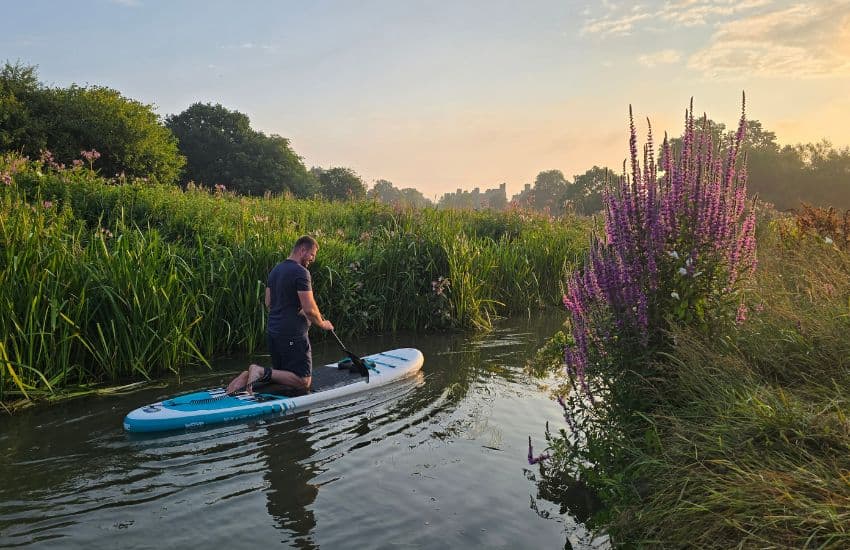
The Pro 3.0 at 12’6″ is better suited to someone who’s already comfortable on a paddleboard. The length makes it more sensitive to weight positioning, and if you’re new to the sport, that extra 14 inches can feel like a lot when a wake catches you sideways.
Wave Tourer 3.0 suits: Beginners, casual paddlers, those exploring varied waterways, and anyone who wants a versatile all-rounder.
Wave Pro 3.0 suits: Intermediate to experienced paddlers, those focused on distance touring, and anyone who wants a performance edge on open flat water.
Kit and Accessories
The accessories are where Wave has made some considered choices — and one or two less considered ones.
Wave Tourer 3.0 ships with:
- Double-action pump
- Standard 3-piece adjustable paddle
- Quick-release leash with padded ankle cuff
- Bungee storage at the front with integrated water bottle holder
- Padded backpack
The front bungee with water bottle holder is a nice, practical touch. It sounds small, but when you’re two hours into a paddle, having your water within easy reach without breaking rhythm actually matters.
Wave Pro 3.0 ships with:
- Triple-action pump (genuinely excellent — the best in this price bracket)
- 3-piece carbon-fibre paddle
- Quick-release leash with padded cuff
- Bungee storage at both front and rear
- Wheeled carry case and backpack
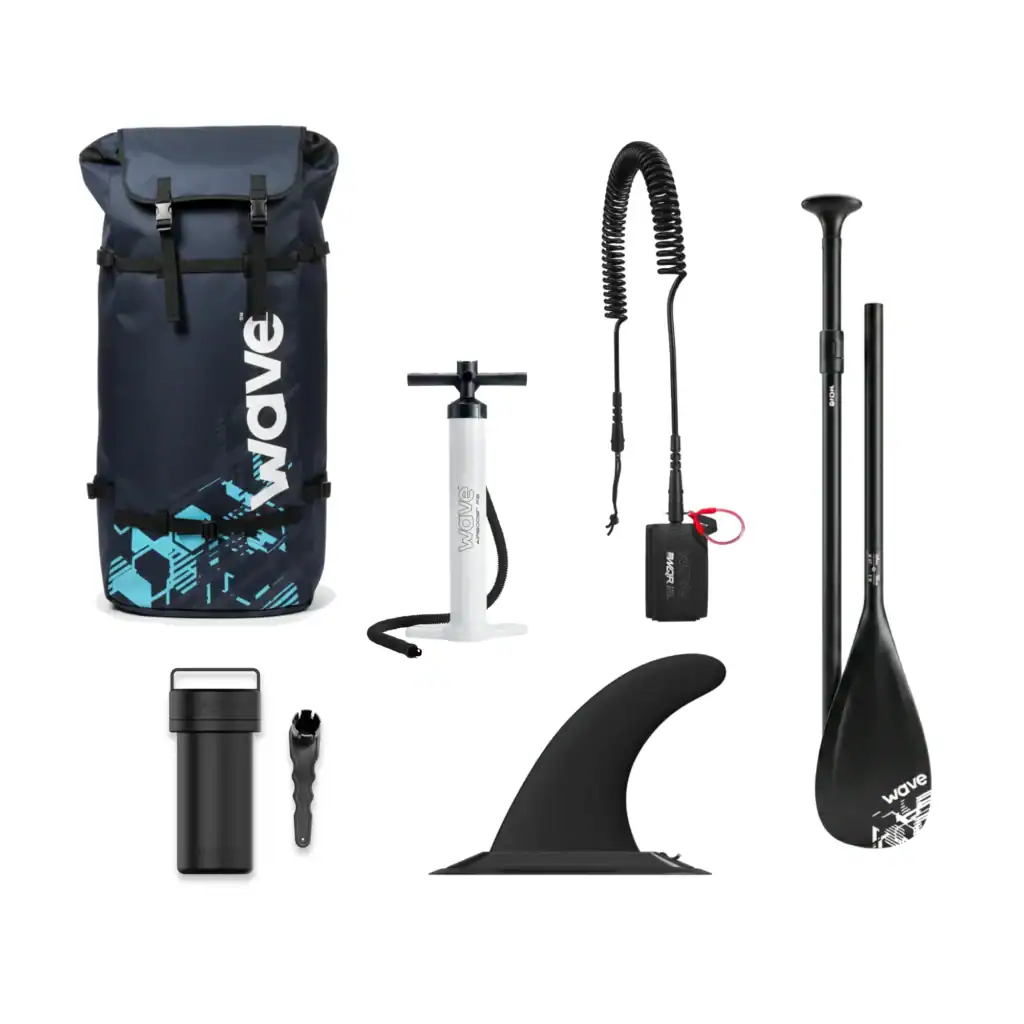
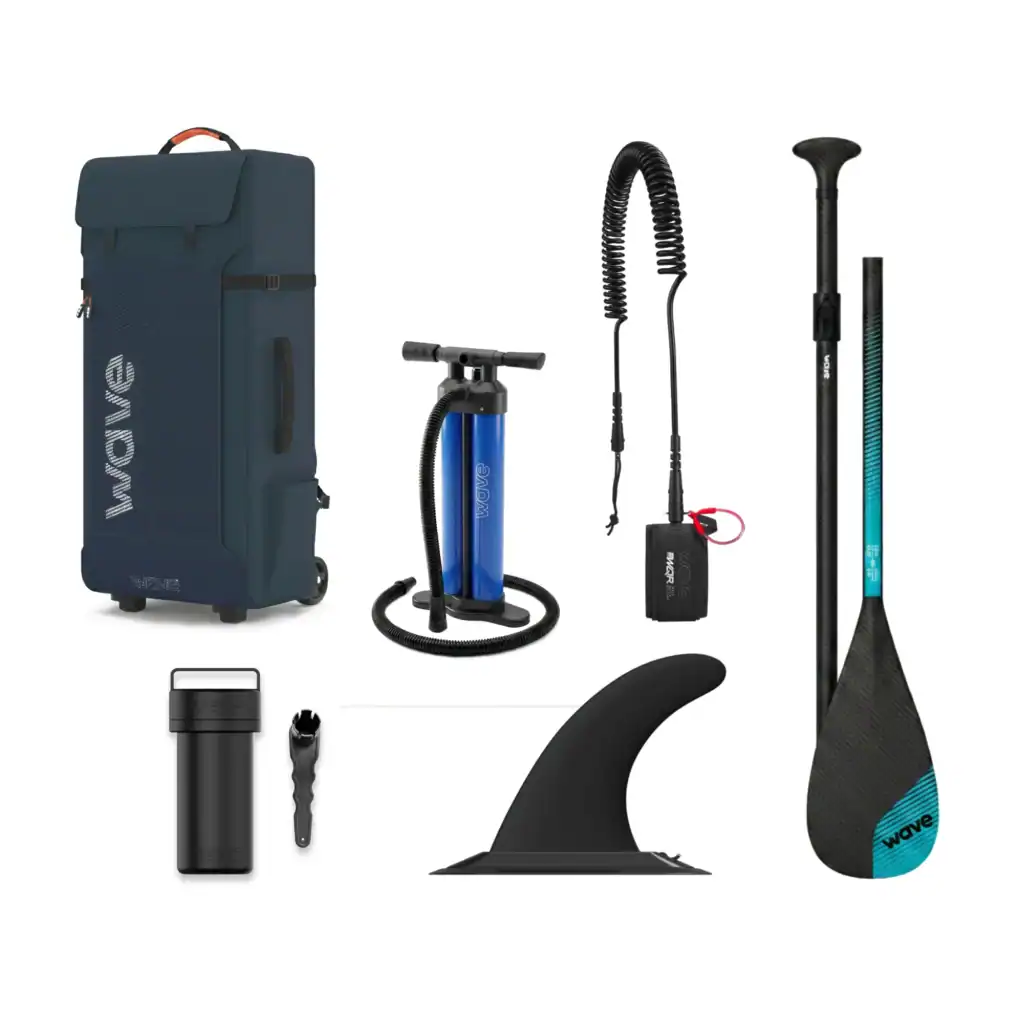
The triple-action pump on the Pro is a real highlight. Getting a 12’6″ board to 20 PSI isn’t trivial, and the pump makes it manageable. The carbon paddle is also a step up — lighter in the hand and more efficient over distance.
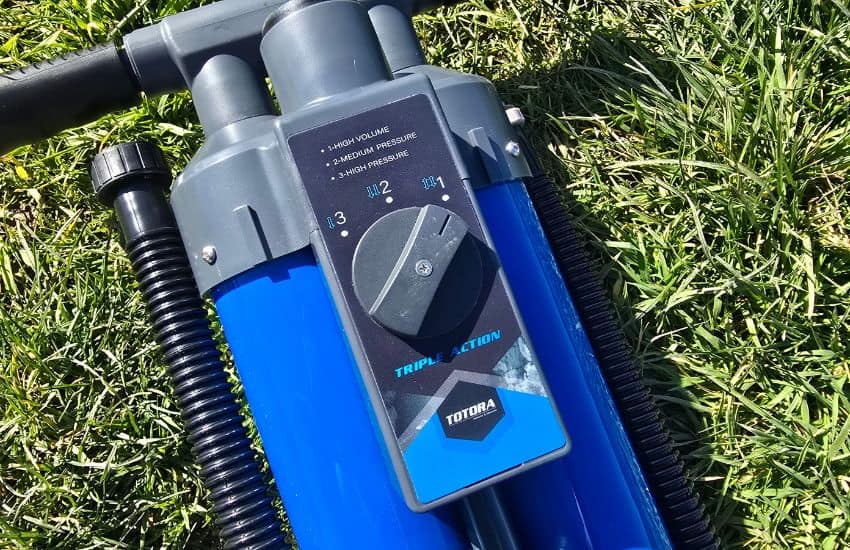
That said, if you’re going to be paddling regularly, an electric pump is worth thinking about for either board — I’ve reviewed the best options in my electric pump for paddle boards guide.
The one disappointment is the wheeled carry bag. The idea is sound — a 12’6″ board is a bulky thing to lug around — but the wheel design sits awkwardly, and the hard plastic base makes it uncomfortable to carry when the wheels aren’t rolling. It’s functional, but it feels like an afterthought compared to the quality of the board itself.

The Pro’s D-rings are also plastic rather than metal, which limits how much you can rig to them. For day touring that’s probably fine, but if you’re planning a multi-day trip with gear, it’s worth knowing.
If you’re thinking about building out your setup beyond what comes in the box, my guide to the best paddleboard accessories is a good place to start.
Value for Money
The Tourer 3.0 starts at £179.99 for the 10’3″ and £189.99 for the 11’3″. At that price, with the build quality and accessories included, it represents outstanding value. There’s very little at this price point that touches it — and it also features in my roundup of the best budget paddle boards in the UK if you want to see how it stacks up against the wider market.
The Pro 3.0 at £269.99 is a bigger outlay, but the carbon paddle alone would set you back a decent chunk of that difference if bought separately. When you factor in the triple-action pump and wheeled case, the package stacks up well. You’re paying for a meaningful performance upgrade, not just a longer board.
The question is whether you’ll use that performance. If you’re paddling open water regularly, covering distance, and you’ve already got the basics dialled in, the Pro earns its price tag. If you’re still building confidence or paddling mixed conditions, the Tourer gives you more board for your situation — and saves you £80.
Unlock 10% off automatically when you click through my links
The Verdict: Which One Should You Buy?
If you’re a beginner or improver who wants a capable, well-made board for general touring, buy the Tourer 3.0. It’s lighter, more versatile, and at under £190 it’s hard to fault. The 4.8/5 rating reflects that it delivers on every front that matters to most paddlers.
If you’re a competent paddler who’s specifically after open-water distance performance, and you want a proper touring setup with a carbon paddle and a board that genuinely rewards efficient paddling, the Pro 3.0 is worth the step up. Just go in knowing about the bag wheels before you get to the car park.
Both boards are built on the same solid foundation, and Wave’s WST construction means either one should last you years with reasonable care. You can’t make a bad call here — it really comes down to the paddling you actually do.
Wave Tourer vs Wave Pro FAQs
Related Guides & Reviews
The resources below cover the basics, common questions, and related kit to help you get more out of your time on the water.
- How To Paddle Board: Complete SUP Guide for Beginners
- Bluefin Cruise Paddle Board Review
- 19 Things I Wish I Knew When I Started Paddleboarding
- Paddleboarding Cuckmere Haven: A Complete Guide to One of Sussex’s Best SUP Spots
All images courtesy of Wave, All Rights Reserved.

About the Author
Steve Cleverdon is an outdoor adventure specialist with 15+ years of hiking, camping, and paddle boarding experience. He has conquered Europe’s toughest trails including the GR20 in Corsica, walked 3,000km solo across New Zealand, and worked professionally in the outdoors industry. Steve’s gear reviews and recommendations are based on real-world testing across four continents, from coastal waters to mountain peaks. Learn more about Steve or get in touch.