I first heard about the Wave Pro 3.0 at the end of June last year and have been looking forward to getting one on the water ever since. When it finally arrived, the timing worked out perfectly — the very next morning turned into one of those March days that makes you genuinely think spring has arrived early. Blazing sunshine, warm enough for shorts, and no reasonable excuse not to head to the water.
So I threw it in the car and drove down to Cuckmere Haven on the East Sussex coast, just along from Beachy Head. It’s a brilliant testing spot — a wide stretch of meanders that gives you a mix of calm flatwater sections and some wind exposure when the breeze comes in off the sea. After a full session, I’ve got a pretty clear picture of where this board sits.
I’ve now tested a good range of boards across the UK — from entry-level budget SUPs through to premium touring boards — and the Wave Pro 3.0 is one of the more impressive packages I’ve come across at this price point. Let me explain why.
This article contains affiliate links. If you buy through them, I may earn a commission at no extra cost to you. Learn more here
At a Glance
Rating: 4.7 / 5
Best For: Intermediate paddleboarders wanting a touring-capable board — and beginners who want something they’ll grow into
Price: £269.99 or just £243 when you purchase via this link! (10% instant discount)
Tested: March 2026 — Cuckmere Haven, East Sussex — mixed flatwater and light chop
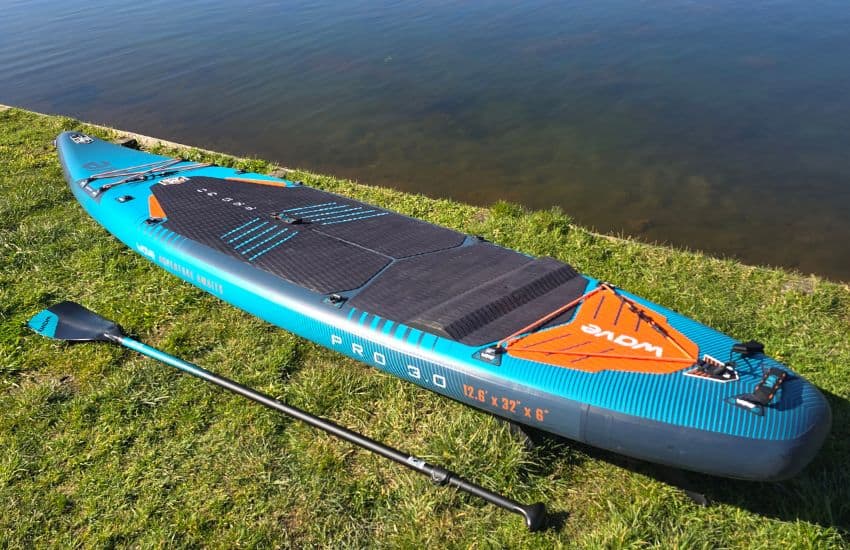
The Wave Pro 3.0 is a 12’6″ inflatable SUP designed for paddlers who want to cover distance without spending £500+ doing it. It comes complete with a triple-action pump, 3-piece carbon-fibre paddle, quick-release fins, padded coiled leash, and a top-loading wheeled bag — all for under £270. That’s a touring-length board with a full kit at a price most basic beginner boards struggle to match.
Unlock a 10% discount at checkout when you click through my link.
Top Features of the Wave Pro 3.0
A few things genuinely separate the Wave Pro 3.0 from the crowd of boards in this price bracket. Here’s what stood out after a proper session.
WST™ Welded Construction
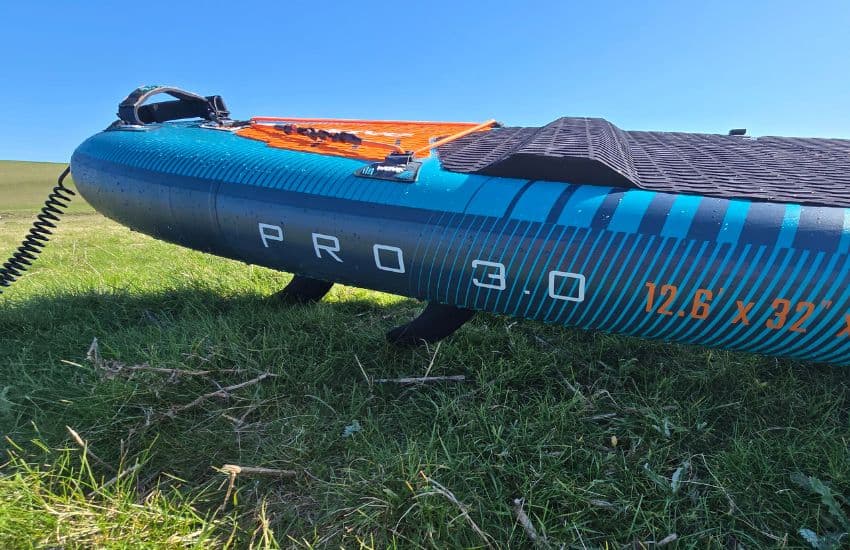
Wave’s Welded Seam Technology is designed to improve overall board rigidity compared to standard heat-bonded PVC construction. At full inflation pressure, it translates into a noticeably stiff deck underfoot — something you can’t take for granted on a board under £300.
Triple-Action Pump
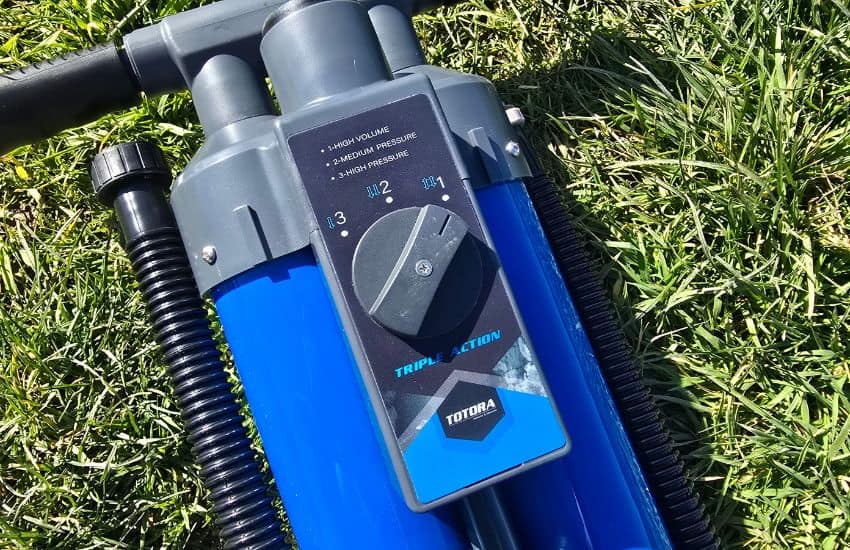
The headline accessory in the box. Using a dual-chamber, triple-action design with three selectable settings, you can push air in on both strokes during the early stages, then switch to a lower-resistance setting when you’re closing in on your target PSI. It’s the most effective manual pump I’ve used with any board in this category.
Quick-Release Triple Fin System
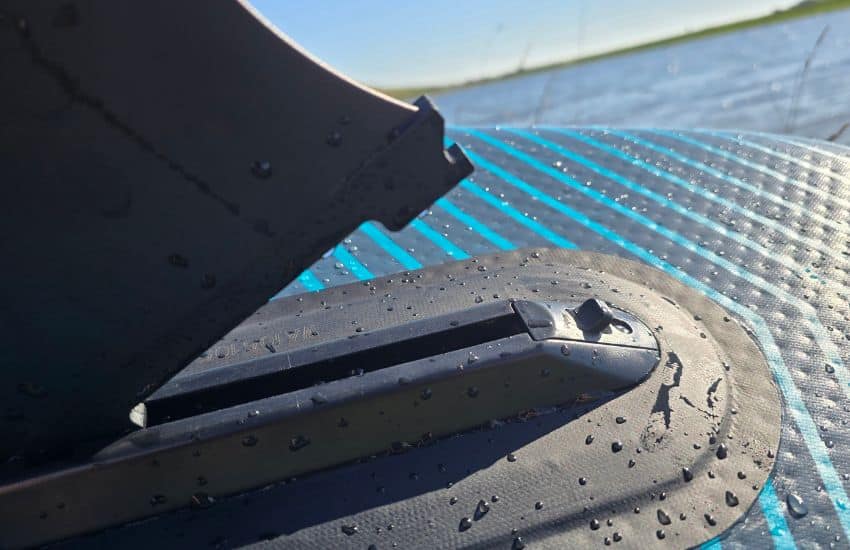
Three fins clip in and out without any tools — press, lock, done. To release them, a small slider pops them straight out. If you’ve spent time on your knees trying to screw in a traditional fin at the water’s edge, you’ll appreciate how much simpler this is.
12’6″ Touring Length with 32″ Width

At 12’6″, the Wave Pro 3.0 is in touring territory rather than the standard all-rounder category. You get better glide, more speed, and smoother tracking over distance. Wave have kept the width at 32″, though, which means it remains stable enough for less experienced paddlers to feel confident. A rare combination at this price.
WQR™ Padded Leash with Quick-Release
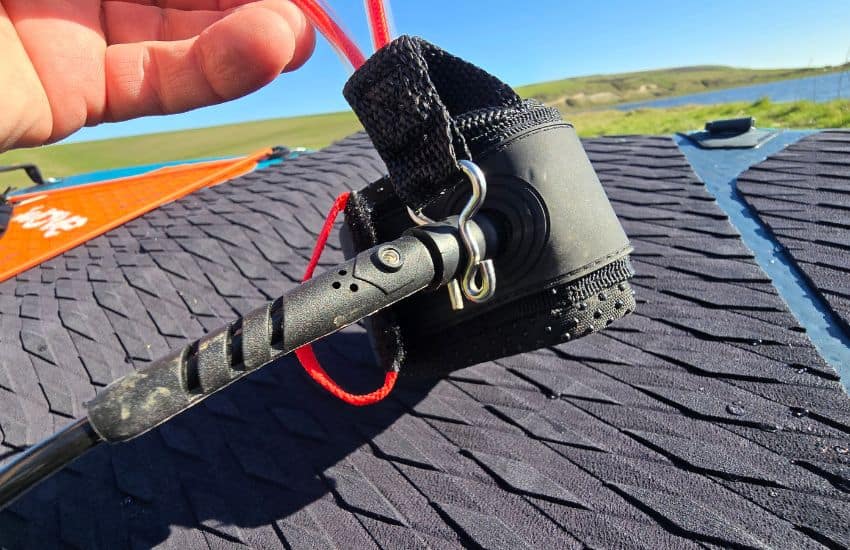
The ankle cuff on the coiled leash is nicely padded — not just a thin neoprene sleeve — with a quick-release pull tab so you can detach fast if you end up in trouble.
Dual Bungee Storage System
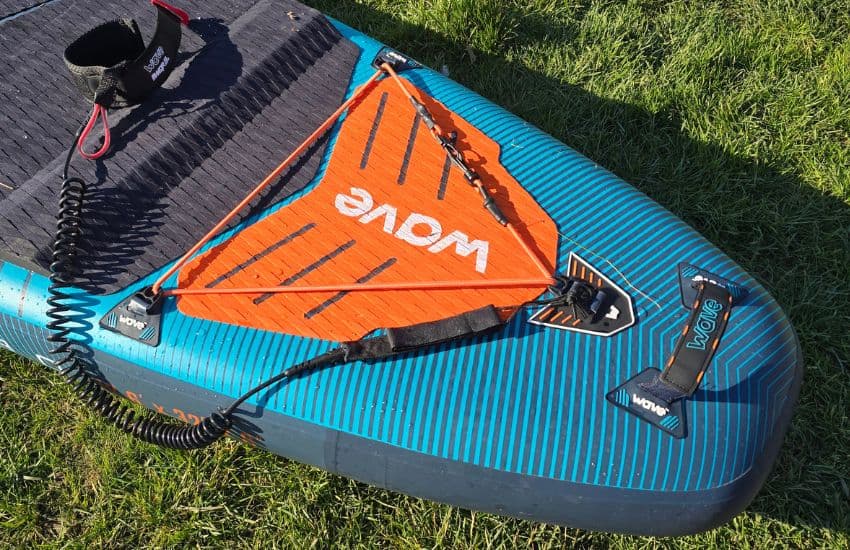
The Wave Pro 3.0 has bungee cords at both ends — a standard layout up front, and a bungee triangle behind the deck pad at the rear. Both ends use the same thinner, circular cord design, which is personally preferred over the chunky flat bungee you get on boards like the Wave Tourer 2.0. That circular style is noticeably more compatible with standard SUP accessories like cup holders, most of which are designed to clip onto that kind of cord rather than a thick flat strap.
Top-Loading Carry Bag

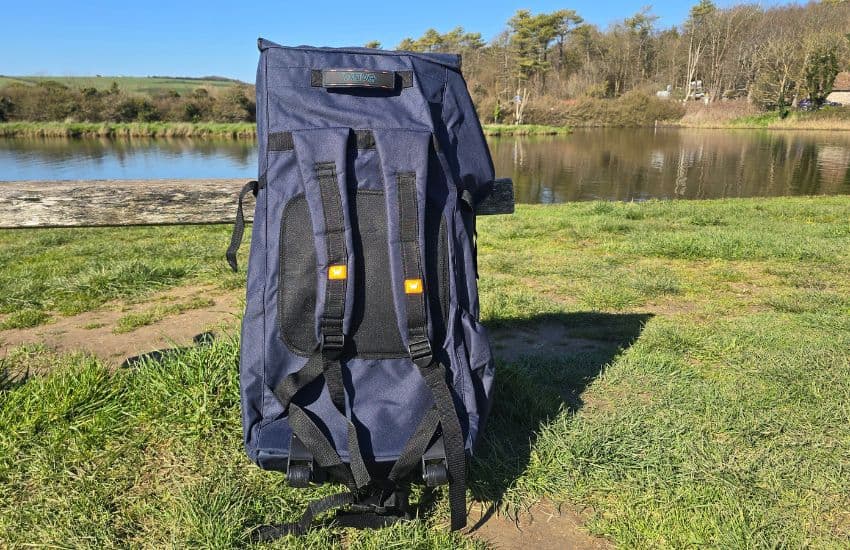
Rather than a front-zip panel, the bag uses a bucket-style top-loading design. You drop everything in from the top, pull the drawstring, and secure the flap. It’s faster and more intuitive than most carry bags shipped with boards at this price — think hiking rucksack rather than sports holdall.
Wave Pro 3.0 Specifications
| Spec | Detail |
|---|---|
| Length | 12’6″ (381cm) |
| Width | 32″ (81cm) |
| Thickness | 6″ (15cm) |
| Max Inflation | 20 PSI |
| Construction | WST™ Welded |
| Fins | Triple quick-release |
| Paddle | 3-piece carbon-fibre |
| D-Rings | 12 edge + 3 centred (front, carry handle and rear) |
| Included | Triple-action pump, paddle, fins, carry bag, coiled leash, repair kit |
| Price | £269.99 |
At 12’6″ x 32″ x 6″, the Wave Pro 3.0 is longer than a standard recreational SUP (typically 10’8″) but matches the same width and thickness profile — giving you the speed advantage of a touring board without sacrificing the stability that makes a 32″-wide iSUP beginner-accessible. For context, most touring-length boards of this size from well-known brands sit well above £400. For more detail on how length affects paddling, have a read of this paddleboard sizes guide.
My Personal Experience with the Wave Pro 3.0
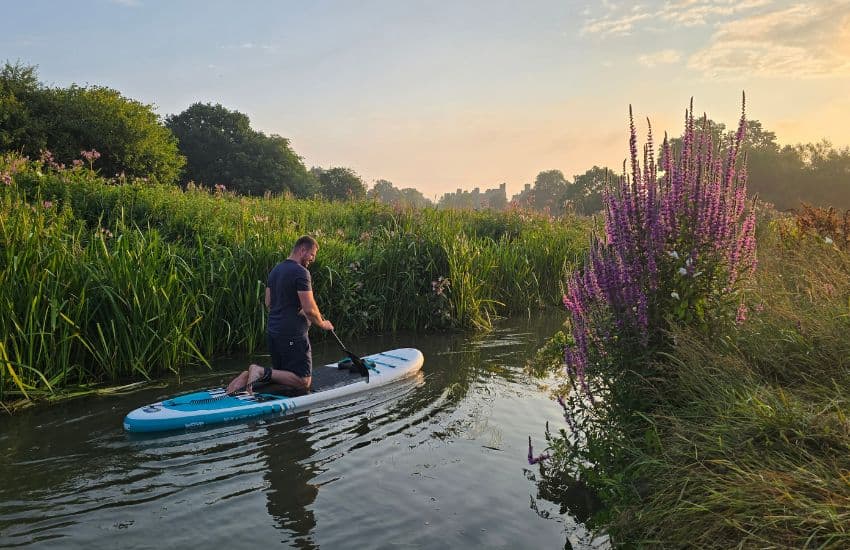
I received the board on 17th March 2026 and got it on the water the following afternoon, which just so happened to feel like the first proper spring day of the year. Bright sunshine, genuinely warm, and a light breeze rolling in off the coast. I headed to Cuckmere Haven, a wide stretch of meandering water near Seaford in East Sussex, just inland from Beachy Head. It’s an ideal testing location: calm in the sheltered sections, slightly exposed when the wind picks up, and open enough to get a proper feel for how a board moves at pace.

Unpacking and Setting Up
The Pro 3.0 kit packs neatly into the top-loading carry bag, and the very first thing I noticed was how much quicker and more logical it is to use compared to a standard front-zip bag. You open the top, drop the board and accessories in, pull the drawstring, and close the flap. Done. The board also comes with a small compression strap to wrap around the rolled board before it goes in, which helps keep it compact. Nice touch.

Setup took around 10 minutes. The pump is worth focusing on here, because it’s genuinely better than any manual pump I’ve used with a SUP. The triple-action design with three selectable settings means the early stages of inflation go quickly, and — more importantly — those last few PSI before you reach your target pressure are far less of an ordeal than with a standard single-barrel pump.

I’ll be honest with you: I stopped at around 10–11 PSI because at 65kg, that’s workable, and I was being lazy. But with this pump, pushing on to 14 or 15 PSI would have been far less of a struggle than it would be with a typical included pump. If you’re heavier or want the board as rigid as possible, you’ve actually got the tool to get there.

That said, if you’re inflating boards regularly, an electric pump is still my first choice — it’s just a different level of convenience. I’ve tested a range of them in my best electric pumps for paddle boards roundup if you want a recommendation.
On the Water
The moment you push off, you can tell this is a different kind of board from a standard 10’8″ all-rounder. The Wave Pro 3.0 tracks cleanly from the first stroke — the combination of the triple fin setup and the tapered nose means each stroke does more work, and the board carries momentum between strokes better than shorter boards tend to. On the flatwater sections of the Cuckmere, the glide was noticeably smooth and efficient.

Stability was solid throughout. Despite being 12’6″ long, the 32″ width does exactly what it should — the board sits planted in the water, and I can see a beginner feeling comfortable on it quickly. At 10–11 PSI, there was a very slight flex in the deck underfoot, but nothing that affected performance or confidence at my weight. Pump it higher and that would likely disappear entirely.
Performance in Different Conditions
The slightly more exposed section of the Cuckmere gave me a useful wind test. Into a headwind, the board cut through cleanly — the longer, narrower shape actually works in your favour here compared to a wider, shorter board that catches more resistance. Side-on to the wind, yes, you get pushed around a bit. That’s just the reality of paddling a board with more surface area exposed to a crosswind. But it wasn’t worse than any other board I’ve tested in similar conditions, and once I turned back into the wind it was comfortable again.

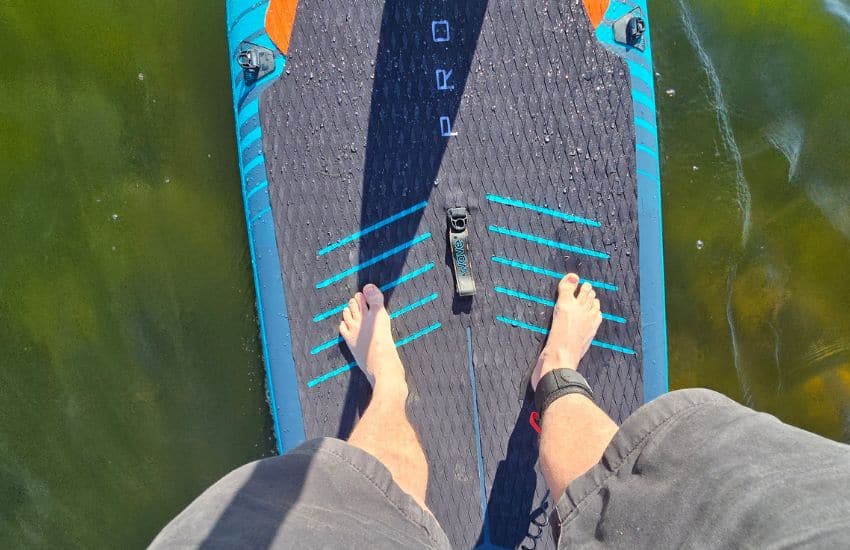
Turning is a little slower than on a shorter board — that’s expected with a 12’6″ hull. The rear kicker on the EVA deck pad is designed to help with step-back pivot turns, but it sits roughly 70–80cm forward of the tail. For casual direction changes while paddling, it’s fine. For proper pivot turns, you’d likely need to step behind the kicker entirely. That’s one area that could be better designed, and something I want to test further in conditions that actually demand it.

One detail I did appreciate on the deck pad: there are teal lines running across the EVA to indicate foot positioning. It’s a small thing, but it’s a genuinely useful touch — especially for beginners who aren’t sure where to stand. Most boards leave you to figure that out yourself. Having a visual reference baked into the deck pad is a nice bit of thoughtfulness from Wave.
The Fins and Leash
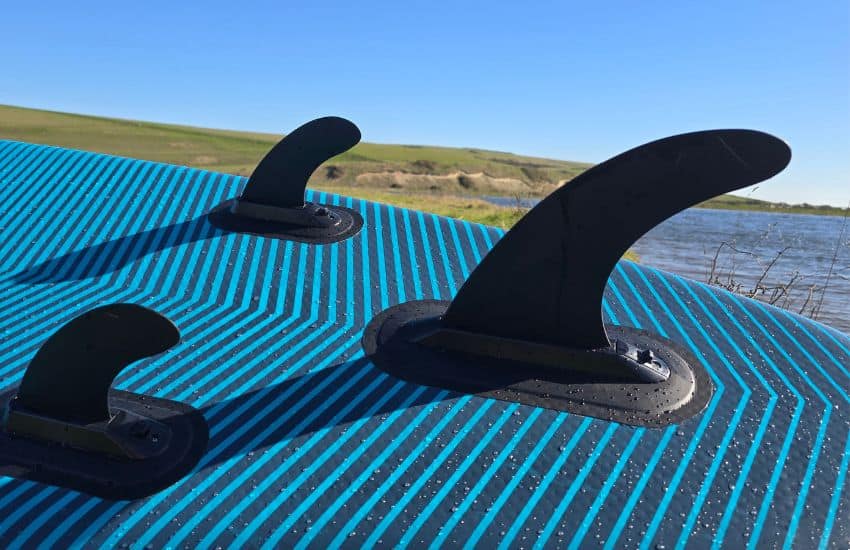
The quick-release fins are one of those quality-of-life improvements that you appreciate immediately. Cold hands, water’s edge, trying to fit a traditional fin — you know how that goes. These clip straight in and pop straight out. Brilliant.

The leash is also worth mentioning again in real-world context: the padded ankle cuff is comfortable enough that you forget it’s there, which is not something I can say about most included leashes.
The Bag — Mostly Good
The top-loading design works well. The wheels, less so. The board sits at a slightly awkward angle inside the bag, which makes rolling it a little awkward at times. And when you carry it as a backpack, those wheels press into your lower back. For a short walk from the car to the water, it’s fine. For anything longer, it becomes a minor annoyance. I suspect this is a design compromise that could easily be improved in a future version.
Unlock a 10% discount at checkout when you click through my link.
Wave Pro 3.0 Pros and Cons
Pros
- Exceptional value — touring-spec board with full kit at well under £300
- Best manual pump included with any board at this price — the triple-action design genuinely works
- Smooth, efficient glide — longer shape rewards paddlers who want to cover distance
- Stable despite the length — 32″ width keeps it accessible for beginners
- Quick-release fin system — clip in, pop out, no tools needed
- Bungee design at both ends — thinner circular cord works with standard accessories
- Padded leash with quick-release — quality detail that many brands skip
Cons
- Bag wheels are poorly executed — board sits awkwardly, hard plastic base digs into your back when carrying
- Plastic D-rings — fine for light use, but a concern if you’re running a kayak seat or heavier rigging
- Rear kicker sits too far forward — limits effectiveness for proper pivot turns

Top Alternatives to the Wave Pro 3.0
If the Wave Pro 3.0 isn’t quite the right fit, here are the boards I’d compare it against. You can also browse the full Wave paddle boards comparison for a broader look at how the range stacks up.
Wave Tourer
The Wave Tourer is Wave’s entry-level step-up board, typically priced around £180 and available in a range of sizes. If you want something a little more manageable in length — or if you’re not sure you need 12’6″ just yet — the Tourer is worth a proper look. It’s stable, well-made, and a great first progression board. That said, the Pro 3.0 is noticeably faster on the water and the pump is a meaningful upgrade.
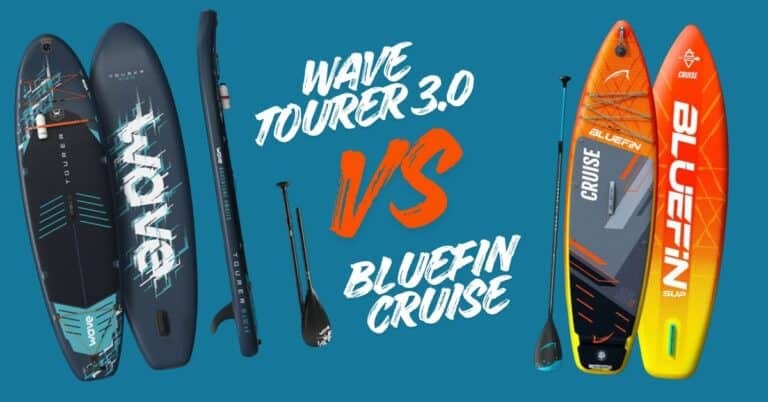
Bluefin Cruise

The Bluefin Cruise is probably the most frequently compared board in this category, but it sits at a very different price point — typically above £400 depending on size. You get metal D-rings, a 5-year warranty, excellent build quality, and one of the best reputations in UK paddleboarding. If you can stretch the budget, it’s a genuinely excellent board. But for most people weighing up the two, the Wave Pro 3.0 delivers comparable on-water performance at less than half the price. For the majority of recreational paddlers, that gap is hard to justify.
Red Paddle Co Sport 12’6″
The Red Paddle Co Sport 12’6″ is a premium touring board that sits in an entirely different price bracket — typically around £850 from UK retailers. It’s built with Red’s MSL construction (significantly lighter and stiffer than standard drop-stitch), metal D-rings, a 5-year warranty, and a reputation as one of the best inflatable touring SUPs available. If performance and build quality are the priority and budget isn’t the constraint, this is the board to shortlist. But it costs roughly three times as much as the Wave Pro 3.0 — and for most recreational paddlers, that gap is genuinely hard to justify on the water.
| Wave Pro 3.0 | Wave Tourer | Bluefin Cruise | Red Paddle Co Sport 12’6″ | |
|---|---|---|---|---|
| Length | 12’6″ | 10’8″ | 10’8″–15′ | 12’6″ |
| Price (approx.) | £270 | £180 | £400 | £850 |
| D-Rings | Plastic | Metal | Metal | Metal |
| Best For | Intermediate / Touring | Beginners / Progression | Intermediate / Touring | Intermediate / Advanced Touring |
Final Thoughts
The Wave Pro 3.0 is comfortably the best-value touring SUP I’ve tested at this price point.
For £269.99, you get a 12’6″ board that genuinely performs on the water, a manual pump that’s actually worth using, a quick-release fin system, a padded leash, and a practical carry bag. The plastic D-rings and the bag wheels are my only real criticisms, but neither undermines what is otherwise a very strong package for the money.
If I were recommending a board to someone who’s done a few sessions, found they actually enjoy paddleboarding, and wants to move beyond a basic beginner board into something capable of longer touring paddles — this would be my first suggestion.
It’s what I’d buy with my own money at this price, and at under £270 compared to the Bluefin Cruise at £400, it doesn’t take much working out. It also features in my best budget paddle boards UK roundup if you want to see how it stacks up against the wider field.
Rating: 4.7 / 5
Unlock a 10% discount at checkout when you click through my link.
Wave Pro 3.0 Paddleboard FAQ
More Photos of the Wave Pro 3.0


Related Guides & Reviews
The resources below cover the basics, common questions, and related kit to help you get more out of your time on the water.
- How To Paddle Board: Complete SUP Guide for Beginners
- Best Budget Paddle Boards in the UK
- Best Paddle Board Accessories
- Wave Paddle Boards Compared: Your Complete Guide to Every Wave SUP
- Wave Tourer SUP Review
- Bluefin Cruise Paddle Board Review
I was kindly gifted the Wave Pro 3.0 to test and review. My review is independent of the supplier and reflects my own unbiased opinions.

About the Author
Steve Cleverdon is an outdoor adventure specialist with 15+ years of hiking, camping, and paddle boarding experience. He has conquered Europe’s toughest trails including the GR20 in Corsica, walked 3,000km solo across New Zealand, and worked professionally in the outdoors industry. Steve’s gear reviews and recommendations are based on real-world testing across four continents, from coastal waters to mountain peaks. Learn more about Steve or get in touch.