

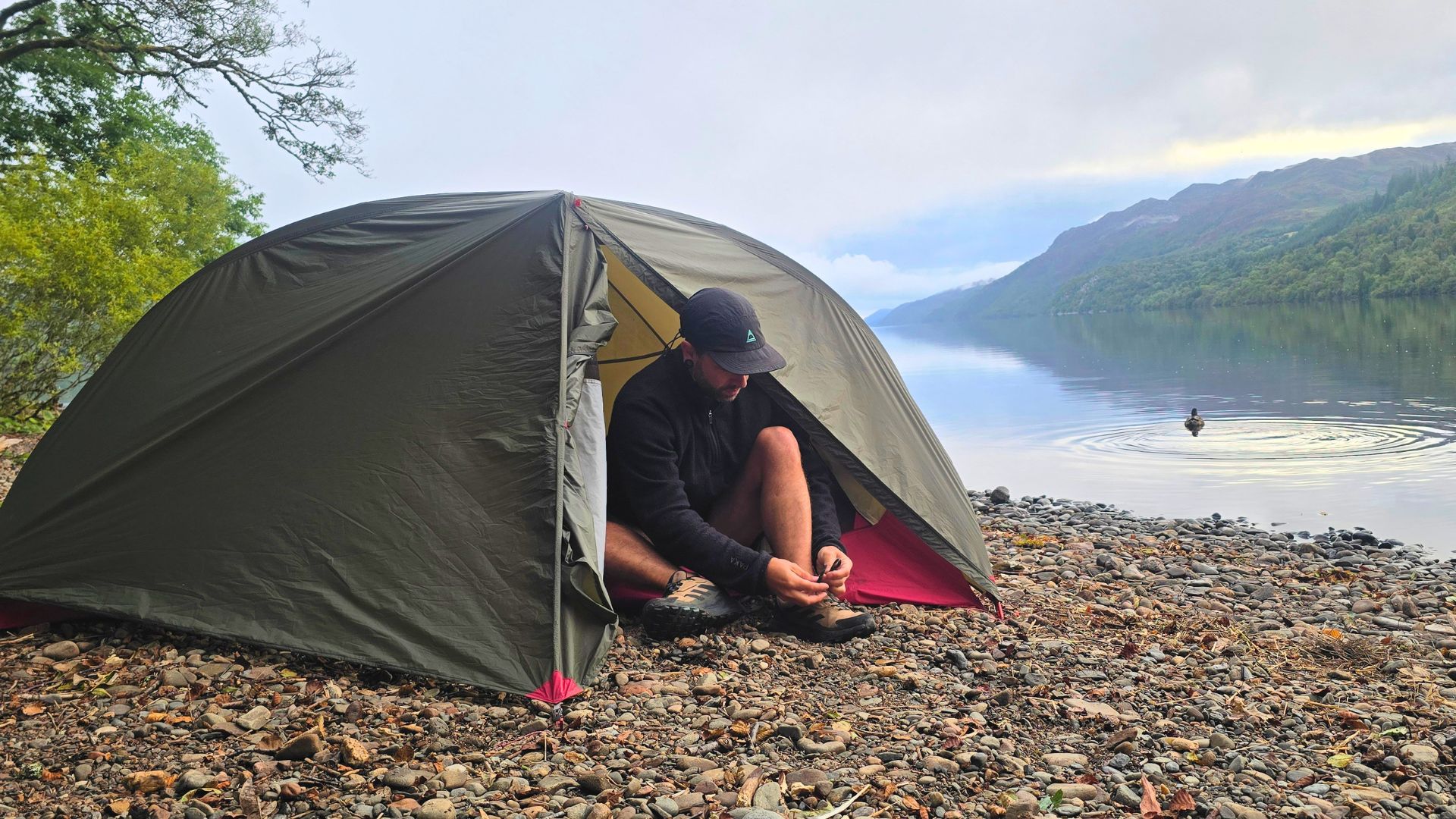
The Hubba Hubba has been one of the best ultralight tents on the market for years. Now the MSR Hubba Hubba Bikepack 1-person tent adds short DAC poles and a waterproof handlebar bag, weighing in at just over 1kg.
Thanks for your support – I may earn a small commission from affiliate links in this article Learn more
Cascade Designs gifted the Hubba Hubba Bikepack 1P for review. All opinions are my own.
- Weight & Size
- Weather Protection
- Durability
- Ease of Pitch
My Verdict
A seriously high-spec solo tent with the build quality to match. The freestanding pitch works exactly as it should, the roll-top bag keeps everything dry in transit, and the detailing is what you’d want at this price — reinforced guy points, anodised stake grommets, cable ports in every pocket. It’s hard to believe how much room there is inside compared to the packed size. Expensive – yes, and the 20D fabric feel delicate handling, but nothing here feels like a compromise.
Pros
Cons
Where to Buy
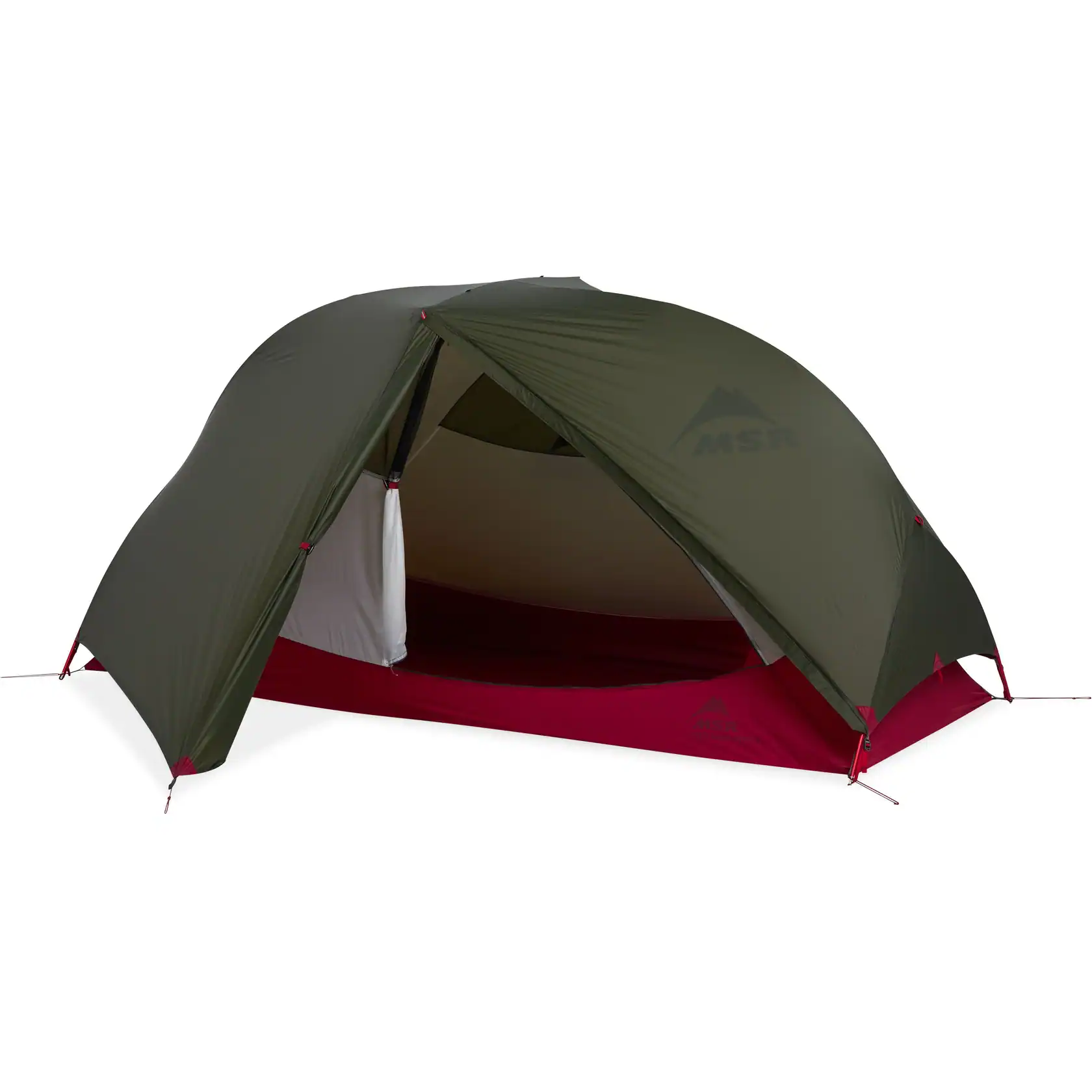
Hubba Hubba Bikepack Tent
My Verdict: “A seriously high-spec solo tent with the build quality to match. It’s hard to believe how much room there is inside for 1.27kg and a 36cm pack size.”
The Hubba Hubba Bikepack is MSR’s cycling-specific take on a tent line that has been around for years. It keeps the freestanding hub-and-pole design the range is built on, shortens the pole segments so the folded bundle fits between drop bars, and packs the lot into a waterproof roll-top bag that straps to your handlebars. At 1.27kg, with a true rectangular floor and 97cm of headroom, the idea is that it carries small and lives big. I tested the one-person model; a two-person version is also available.
Full Specifications
Price: £579.99 RRP (usually £490–£530)
Minimum Weight: 930g
Packaged Weight: 1.27kg
Packed Size: 36 × 17 × 11cm
Floor Area: 1.67 sq m
Peak Height: 97cm
Capacity: 1 person (2P version available)
Season Rating: 3-season
Freestanding: Yes
Warranty: 3 years
20D ripstop nylon rainfly (1200mm PU + silicone) / 10D polyester micromesh canopy / 20D ripstop nylon floor (1200mm PU) / C0 DWR throughout / poles, 8 stakes, guylines, bags, clothesline included
Who Is This For?
The Bikepack line suits anyone travelling under their own steam who needs a shelter that pitches anywhere, including ground you cannot get a peg into easily. It rewards gram-counters on multi-day trips, on or off a bike. I tested the solo model, and a two-person version is available if you need the extra room.
The Test – MSR Hubba Hubba Bikepack 1
When I found out I would be heading up to Scotland for a week-long coast-to-coast canoe trip, I knew I had the perfect excuse to upgrade my camping setup. Having long been on my wish list, I finally got my hands on the MSR Hubba Hubba Bikepacking tent.
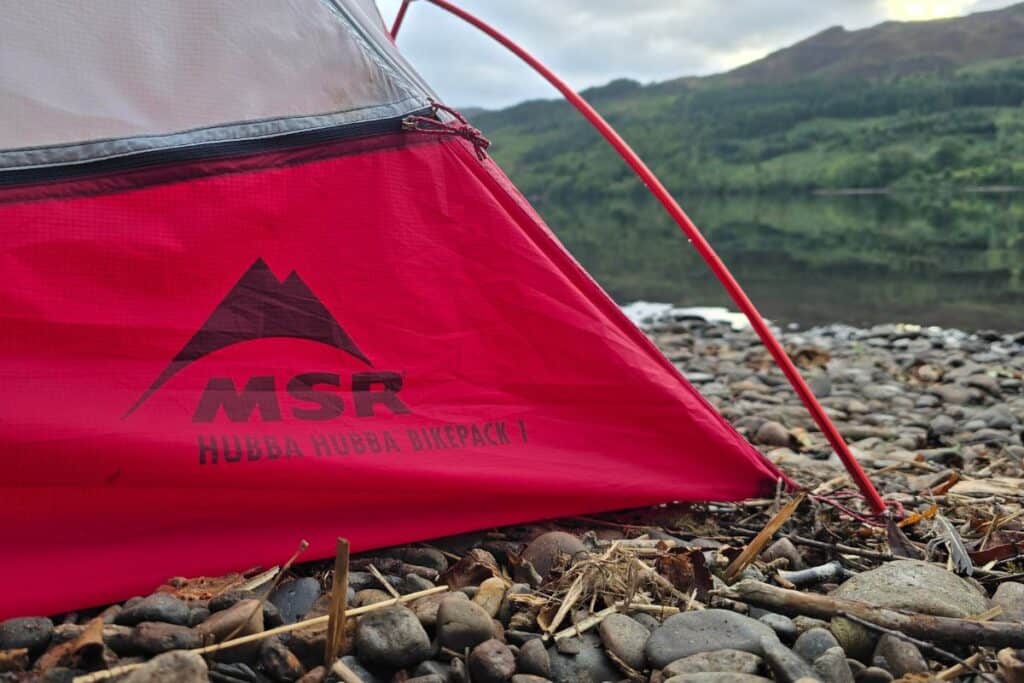
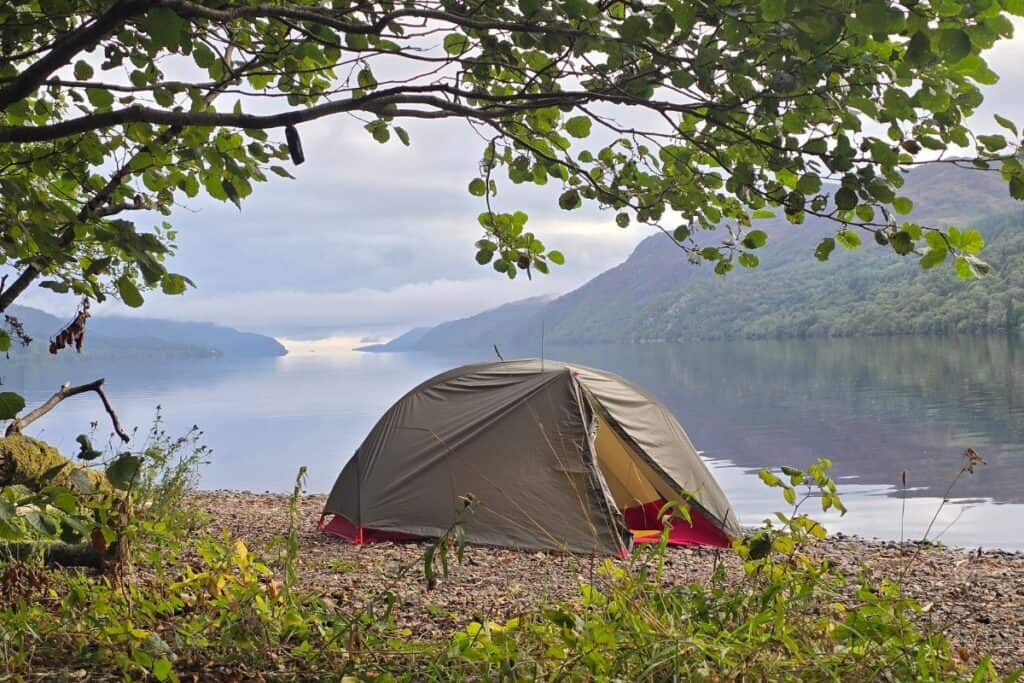
It was on our last night of the trip, on Loch Ness. We’d spent eight hours paddling into the wind and the waves and were past the point of being fussy about where we stopped. We just needed to rest at the first spot that was available, which ended up being a shingle beach barely big enough for the six of us.
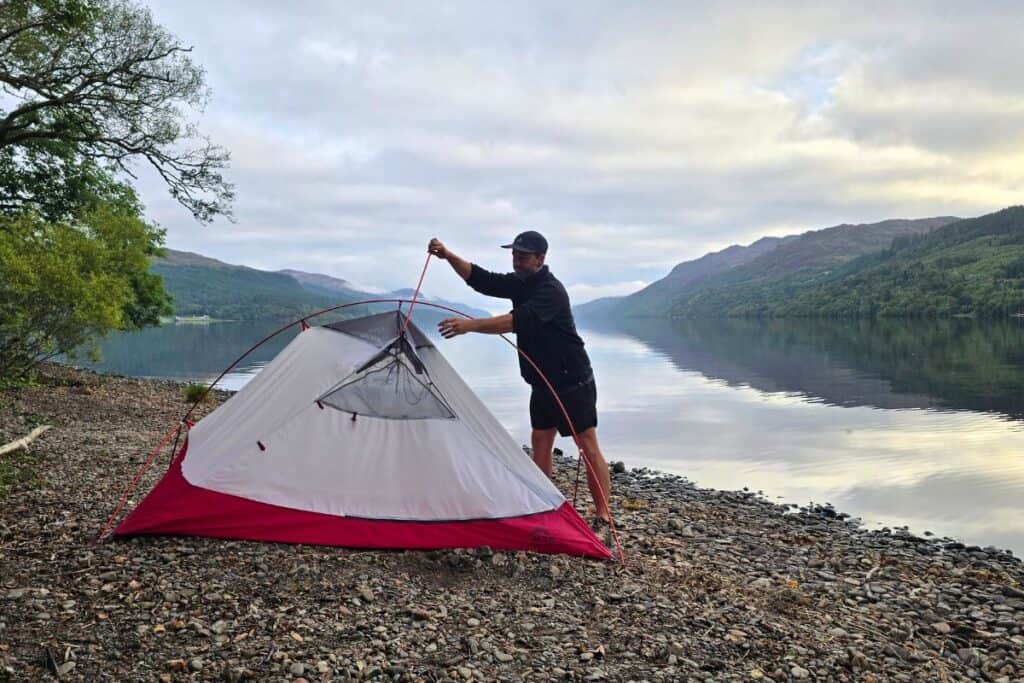
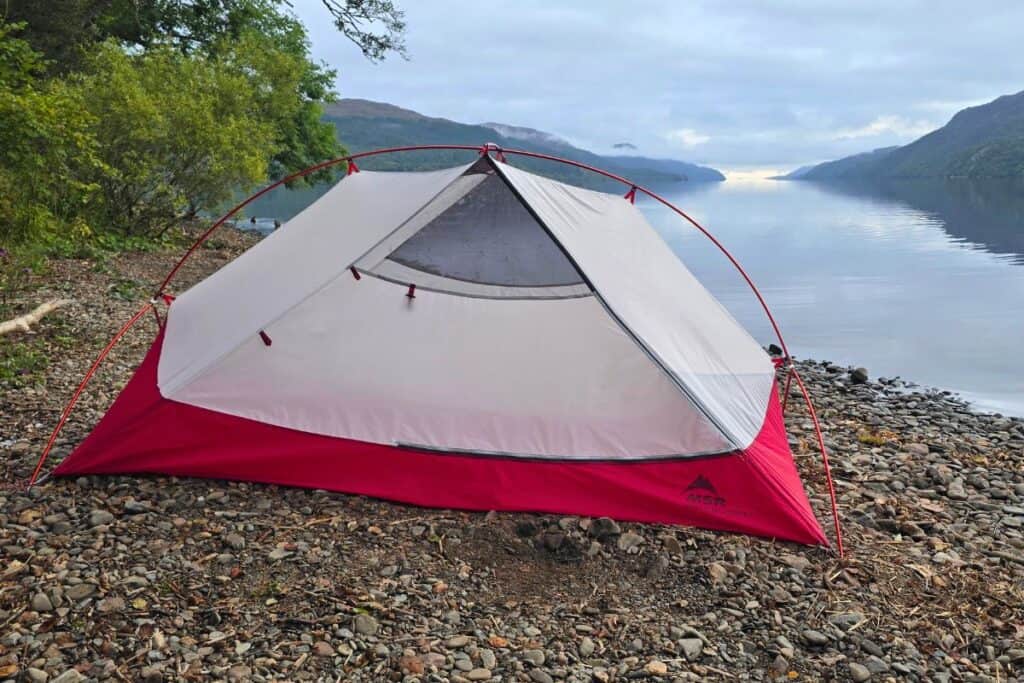
I’d purposefully gone for a freestanding tent, expecting ground conditions like this. Inner out, the long pole clipped into its four grommets, fly over the top and hooked under the pole ends- my tent was standing in minutes without a peg in the ground. The only anchor I needed was for the vestibule, so I threaded a stick through the peg loop and pinned it with a rock. Half an hour later, the others were still struggling with their single-pole tents, hauling rocks to weigh down all their guylines.
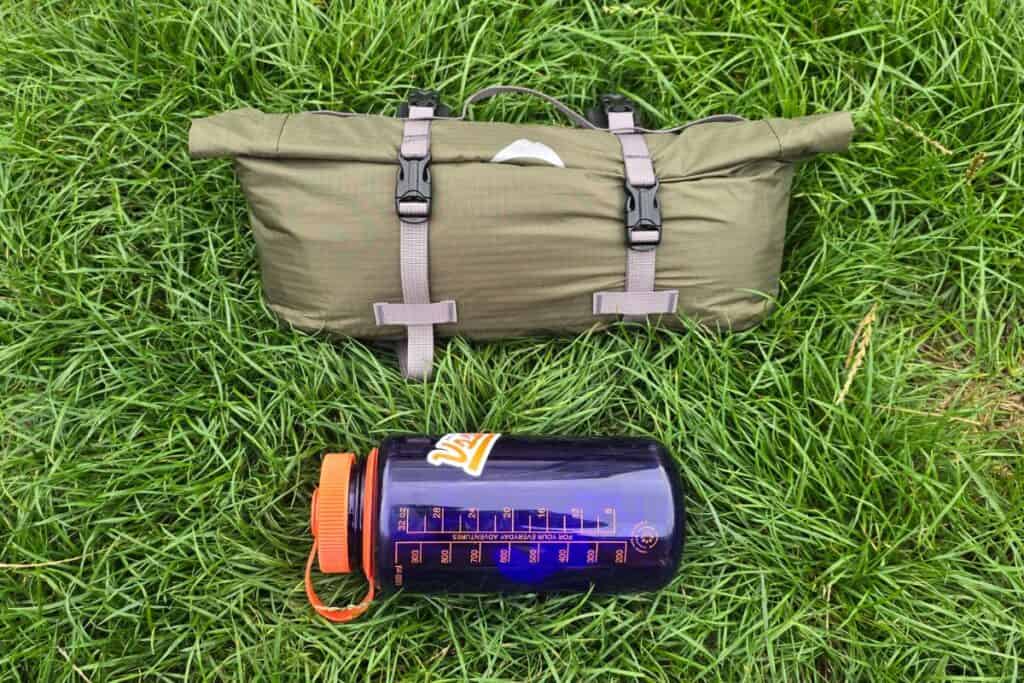
Out of the bag, the first thing I noticed was the size – the roll-top sack is 36cm long and barely thicker than a 2L bottle of pop, all 1.27kg of it. The fabric feels alarmingly thin. It’s made with 20D ripstop nylon, so it was more than tough enough for the job even though it feels really delicate.
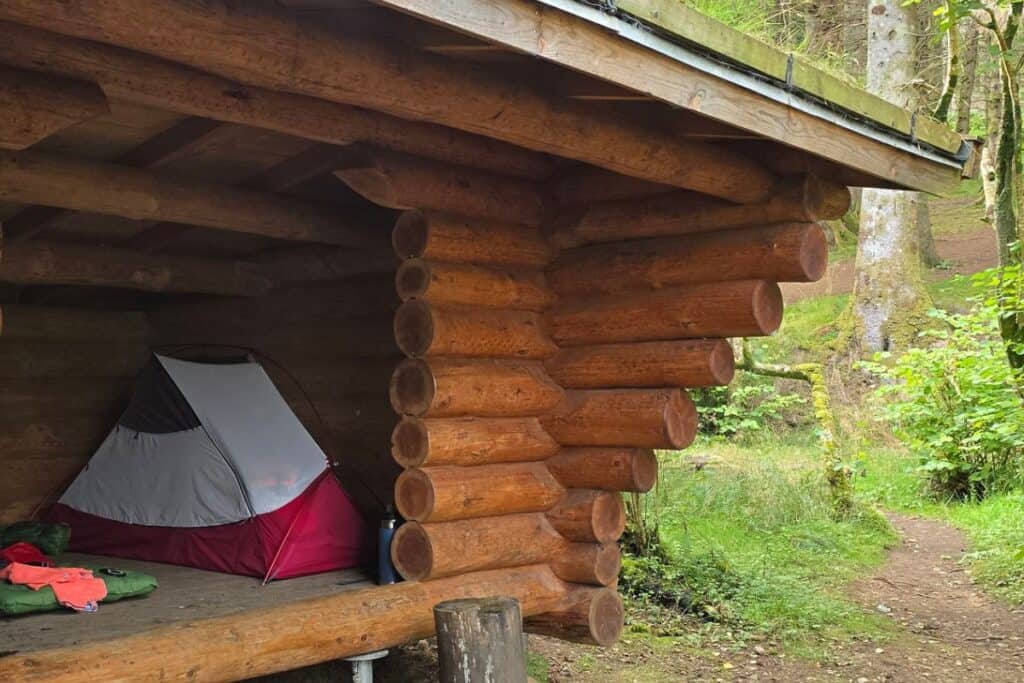
Five nights in total, three of them wet. The first was at a Trailblazer site on Loch Lochy with a wooden hut set back in the trees. The beach looked inviting to pitch for the night, but rain was forecast, so I instead opted to pitch the Hubba Hubba inner on the hut floor. This set up gave me protection from bugs and, more importantly, the infamous midges, and allowed me to pack away a dry tent the next morning while everyone else wrung out flysheets.
On the nights I did use the fly, it held firm. 1200mm hydrostatic head is not a big number, and I went in sceptical, but the inner stayed dry throughout, and the StayDry gutter kept drips off my kit getting in and out. A light film of condensation inside the fly most mornings, never enough to drip through, and it dried flat in the sun whilst I packed out the rest of my gear.
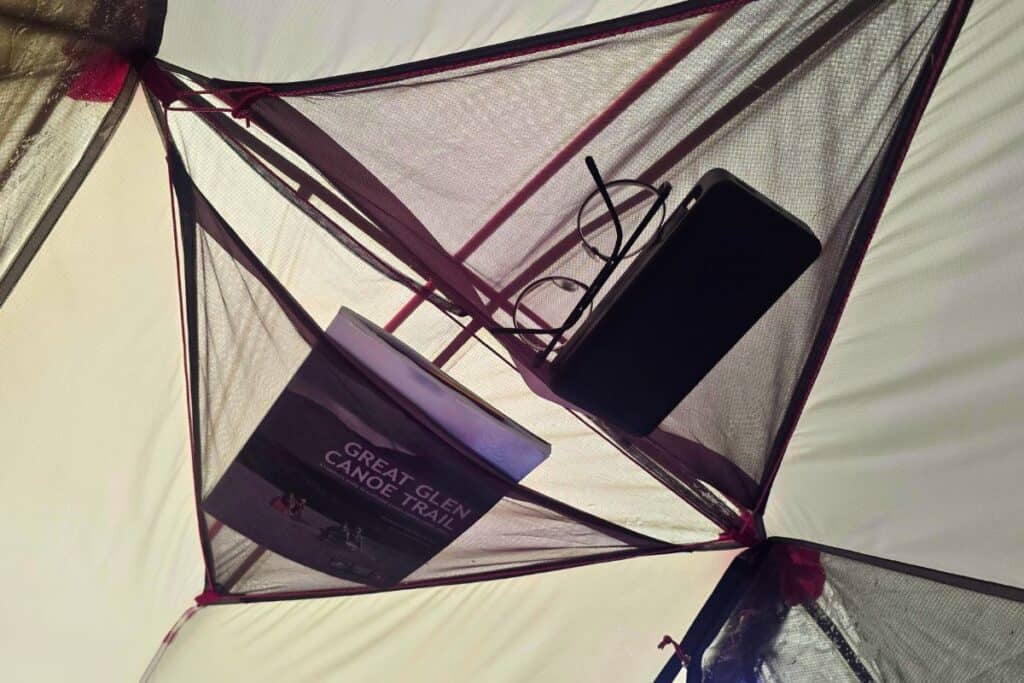
Inside is more tent than the pack size suggests. 97cm of headroom let me sit up and move around comfortably, though I’m only 163cm, so a taller camper might find the space tight – still beats a bivvy though. The base is rectangular, rather than tapered, meaning my Therm-a-Rest Neoair Xlite fit nicely. The foot-end pocket took my sleeping gear sacks, the head-end pocket held my phone and power bank, and the vestibule fit a 70L SealLine dry pack, boots, and my MSR Switch stove.
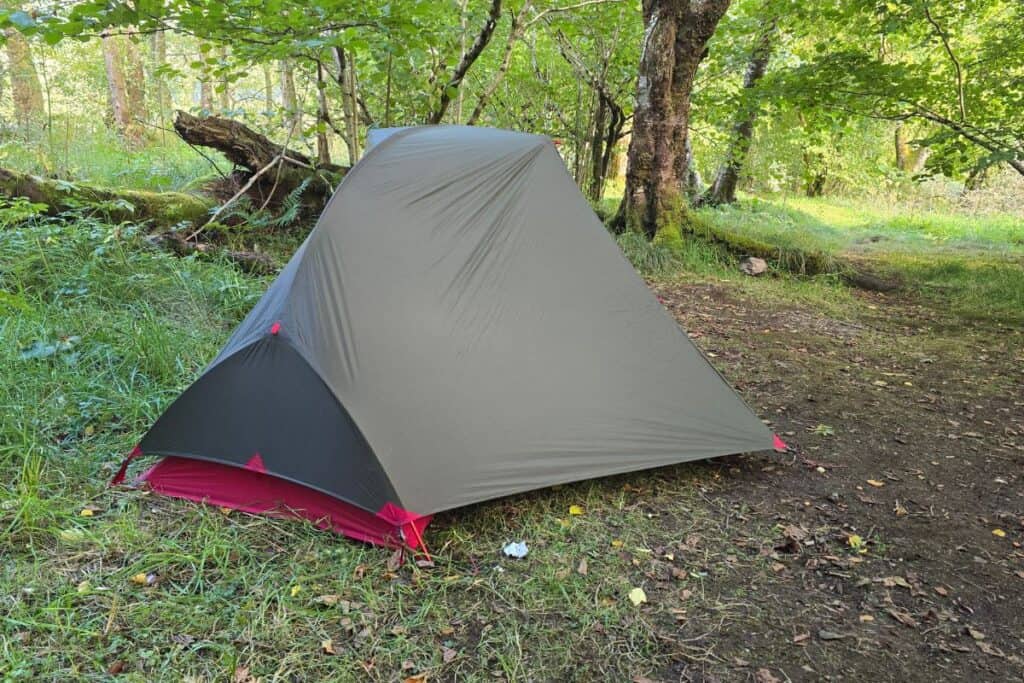
What I can’t tell you is how it holds up in serious wind. Loch Ness threw plenty at us on the water, but every night we camped, we were mostly sheltered enough that the tent never got a real test overnight. It feels solid when tensioned by hand, but I’m not calling it bombproof on that basis.
What Stands Out
Pack Size and Weight
930g minimum weight and a 36 × 17 × 11cm packed size, helped by DAC poles that fold down to 30cm. Short enough to sit between drop bars, and short enough to drop into a pannier, rucksack or boat hatch without a long pole tube sticking out the side.
Freestanding Pitch
A single hubbed DAC pole carries the shape and height, with a short second pole spreading the roof. The tent stands on its own before a peg goes near the ground, which turns rock, shingle, and other tough surfaces into workable pitches.
Waterproof Roll-Top Bag
The stuff sack is seam-taped and roll-top rather than a standard drawcord, with removable spacers for strapping it to flat or drop bars. It means the tent arrives dry, whatever the day has thrown at you.
Internal Storage and Clothesline
Deep pockets at either end take stuff sacks and loose kit, two flat pockets sit in the roof peak with cable ports for charging leads, and a clothesline runs the length of the ceiling with an optional exterior line included.
Final Thoughts
The Bikepack is the version of the Hubba Hubba built for two wheels, and I picked it over the standard models on purpose. The short poles, the freestanding pitch and the waterproof roll-top bag all exist to solve cycling problems, but none of them stop being useful when adventuring off the bike.
That was the whole point for me. It can go on the handlebars for a weekend of riding, into a rucksack for a hiking trip, or strapped down for a paddle board adventure — without needing three different tents to cover it.
It is a three-season tent, so deep winter is out. But through a wet August week in Scotland – it never gave me a reason to doubt it.
Where to Buy
Hubba Hubba Bikepack Tent
My Verdict: “A seriously high-spec solo tent with the build quality to match. It’s hard to believe how much room there is inside for 1.27kg and a 36cm pack size.”
Related Guides & Reviews
The resources below cover the basics, common questions, and related kit to help you get more out of your time on the water.
- Best Tents For Wild Camping
- Big Agnes Rapide SL Sleeping Mat Review
- Camping Sleep System Guide: Bags, Mats & More

Steve Cleverdon
Adventure-driven outdoor gear reviewer and paddleboarder, Steve has spent 20 years exploring rivers, coastlines, and trails across Britain and abroad, sharing what he’s learned along the way. Learn more about Steve or get in touch.


